How a surveying error preserved ancient pines in Minnesota’s Lost 40

It all began when a crew misplotted Coddington Lake in 1882.

The Minnesota Star Tribune
September 19, 2025 at 11:27AM
573513761
(Kelly Smith • Star Tribune/The Minnesota Star Tribune)

Listen and subscribe to our podcast: Apple Podcasts | Spotify

An unusual forest in northern Minnesota offers a rare glimpse of towering 200-year-old pines in a tract once mysteriously lost from the map.

It’s called the Lost 40, and some of its trees took root before the U.S. became a nation. It’s a place where visitors can walk through time, to an era before lumberjacks left their mark on the landscape.

Terry Kahl is captivated by this unique forest and its history. During an event at the Minnesota State Fair, he asked Curious Minnesota, the Strib’s reader-powered reporting project: “What’s the story of Minnesota’s Lost 40?”

The majestic red and white pine trees of the Lost 40 are some of the largest recorded in Minnesota. They owe their survival to something unexpected: human error.
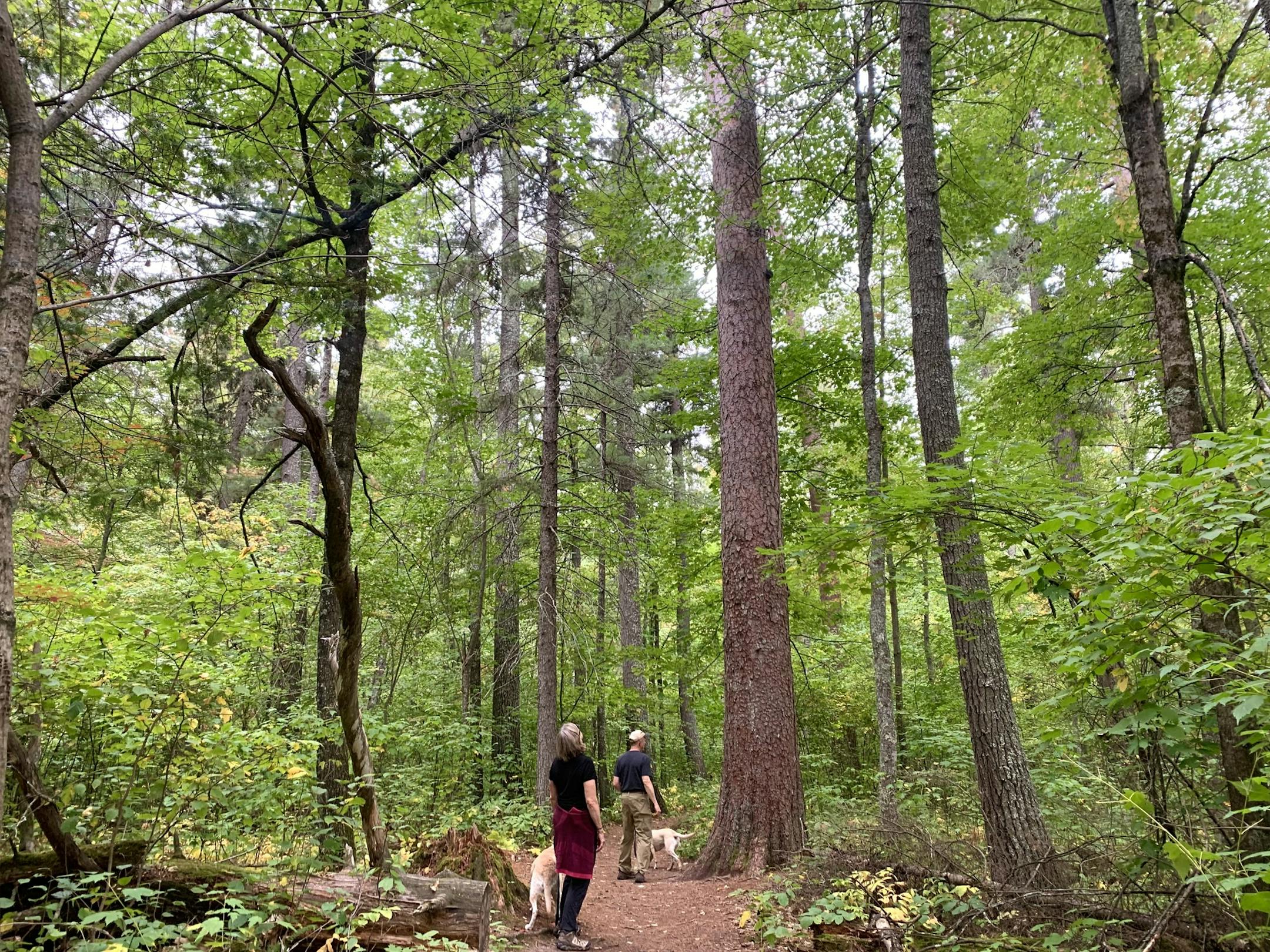
A surveying error in 1882 saved these trees from loggers and the 144 acres are now co-managed by the Minnesota Department of Natural Resources and the U.S. Forest Service. (Kelly Smith/The Minnesota Star Tribune)

A mistake in the map

On a snowy November day in 1882, Josiah King and his three-man crew were working on one of the first land surveys of northern Minnesota.

But they plotted out Coddington Lake farther northwest than it really was, effectively hiding acres of trees from loggers in the years to come. On a map, the area falsely appeared to be underwater.

Nearly eight decades later, officials finally realized the surveying mistake but opted to preserve the land.

Today, the Lost 40 is found about an hour’s drive northeast of Bemidji. It represents a dwindling example of an old-growth forest, which in the late 1880s made up a third of the state’s forests and now makes up less than 5%.

The Lost 40 likely got its name from the fact that 40 acres is the smallest subdivision in the land survey. It includes 32 acres of pine that are specifically designated as “old-growth,” according to the Department of Natural Resources, but the forest is actually much larger and is co-managed by Minnesota and the federal government.

The DNR manages 114 acres as a Scientific and Natural Area, one of more than 160 in the state. Another 169 acres are managed by the U.S. Forest Service, part of the Chippewa National Forest.

“This is the kind of a place with a lot of lore and a lot of mystery to it,” said AmberBeth VanNingen, the DNR’s northeast regional scientific and natural areas specialist.

VanNingen sees a lot of tree-huggers when she walks the 1.4 miles of smooth trails here. Visitors can’t resist wrapping their arms around the massive tree trunks, unable to reach the other side.

“Big trees are charismatic. People want to go see them,” said VanNingen. “It is that link to the past, that kind of imagination of ‘what if the whole northern Minnesota looked like this?’”

The pines have miraculously escaped both human and natural destruction.

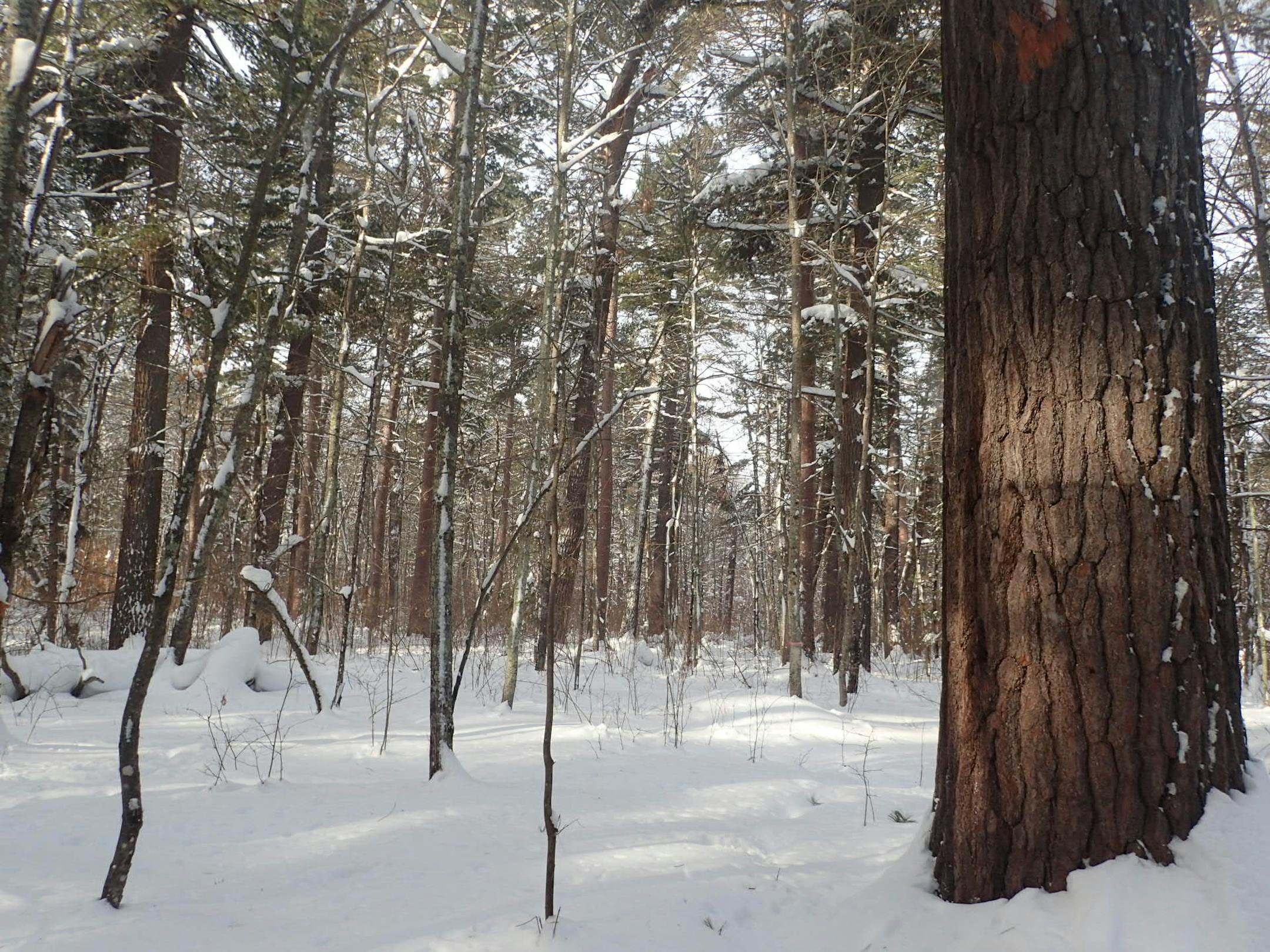
A massive trunk in the Lost 40. (AmberBeth VanNingen)

How old are the Lost 40’s trees?

Experts say some of the trees in the Lost 40 could be traced back to the 1740s, and a 307-year-old red pine was once recorded there until it fell. The oldest tree still standing is a record holder, a 250-year-old red pine that’s 120 feet tall and 115 inches around.

Because it’s free to visit, the agencies that manage the Lost 40 don’t track official visitor numbers. But Michelle Heiker, a recreation program manager with the U.S. Forest Service, estimated that more than 5,000 bird-watchers, hikers and others trek to the Lost 40 each year.

While the area doesn’t draw crowds like many state parks, it’s still among the most popular Scientific and Natural Areas in Minnesota and one of the most visited spots in the Chippewa National Forest, the smaller of the state’s two national forests.

“Just the name, it makes it seem like a secret spot,” Heiker said. “There’s something special, almost magical about seeing trees that have lived for centuries and are still standing tall. ... There’s not a lot of places in Minnesota you can go and see large trees like that.”

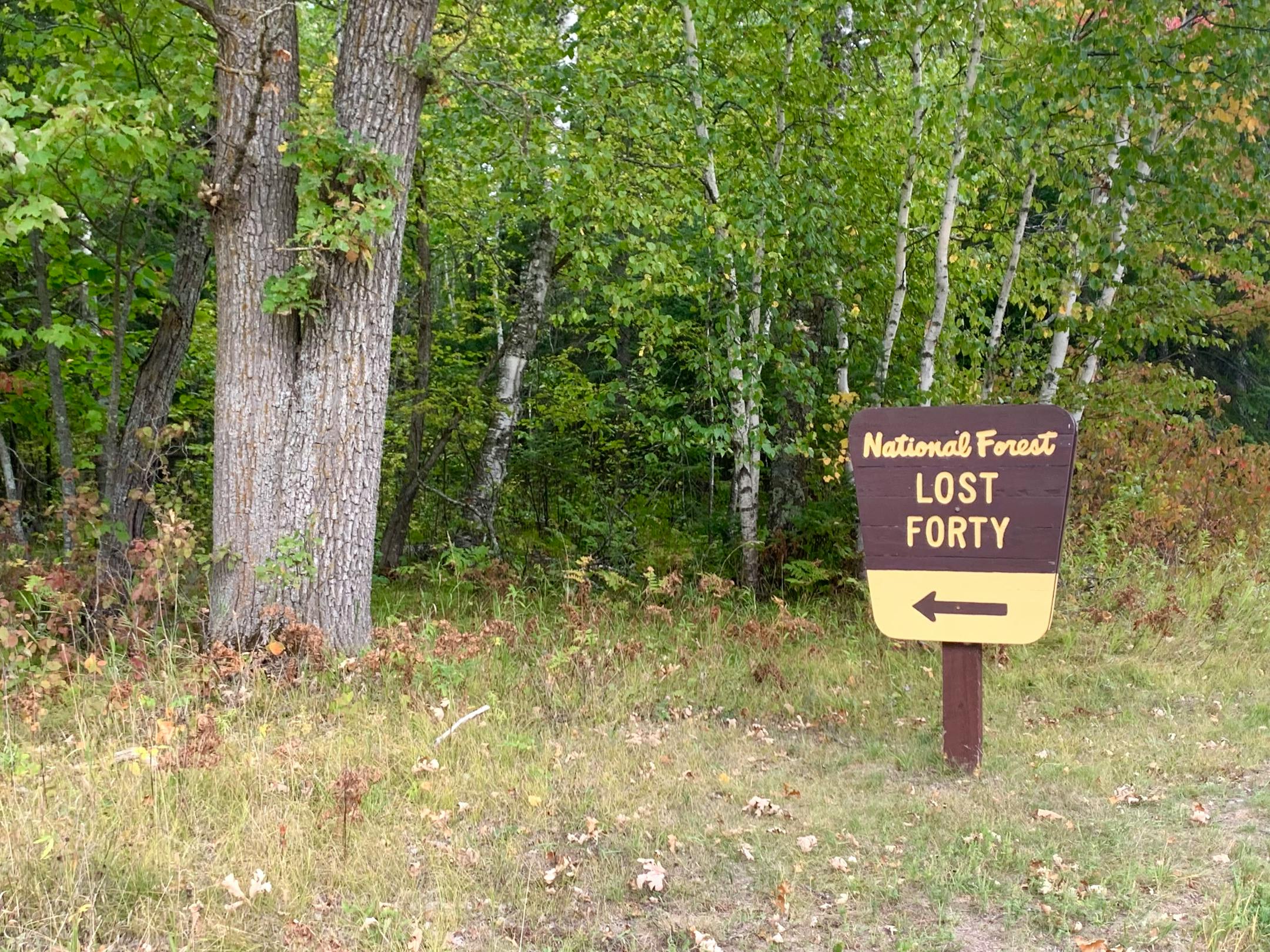
You won’t find many amenities at the Lost 40, just picnic tables, benches and an outhouse off a gravel rural road.

New educational signs were installed in 2020, adding Ojibwe terms for plants and flowers. The Leech Lake Indian Reservation, one of seven Ojibwe tribes in Minnesota, shares miles of land with the Chippewa National Forest.

Summer attracts the most visitors, but in the monochrome landscape of winter, the giant trees stand out even more, VanNingen said, providing a quiet refuge for snowshoers or hikers on the ungroomed trails.

“Not a lot of our old-growth [forests] in general — but especially our old pine — is left in this state,” she said. “That’s what again makes it special. ... It’s also just really important to us as people to remember and have these places that represent a different time period.”

The forest is exceptional and unique — and those aren’t just superlatives. The U.S. Forest Service designates it a “biologically unique area,” which prioritizes conservation of the land.

At the DNR, Scientific and Natural Areas have the highest level of protection of state public land, selected as exceptional because of the rare species there.

Besides the special pines, the Lost 40 is also ecologically significant for its esker, a sandy ridge that was formed some 14,000 years ago by glaciers.

The soil is perfect for growing those mighty red and white pines.

If you’d like to submit a Curious Minnesota question, fill out the form below:

Read more Curious Minnesota stories:

A version of this article was first published in 2021.

about the writer

about the writer

Kelly Smith

News team leader

Kelly Smith is a news editor, supervising a team of reporters covering Minnesota social services, transportation issues and higher education. She previously worked as a news reporter for 16 years.

See Moreicon

More from Curious Minnesota

See More
"Santa" waved to people as he made his way to the Christmas photo booth at Southdale Mall, Friday, December 4, 2015 in Edina, MN.
Elizabeth Flores/The Minnesota Star Tribune

Southdale’s architect had a vision to thwart the cold and create an indoor town square in Edina where it was always 75 degrees.

card image
card image