
Minnesota Rusco’s demise came under private equity ownership

The company’s jingle touted being around “since 1955,” but the home renovation company was actually part of a network of parents and subsidiaries, starting with Dallas’ Renovo Home Partners and ending with New York’s BlackRock.

The Minnesota Star Tribune
October 30, 2025 at 5:03PM
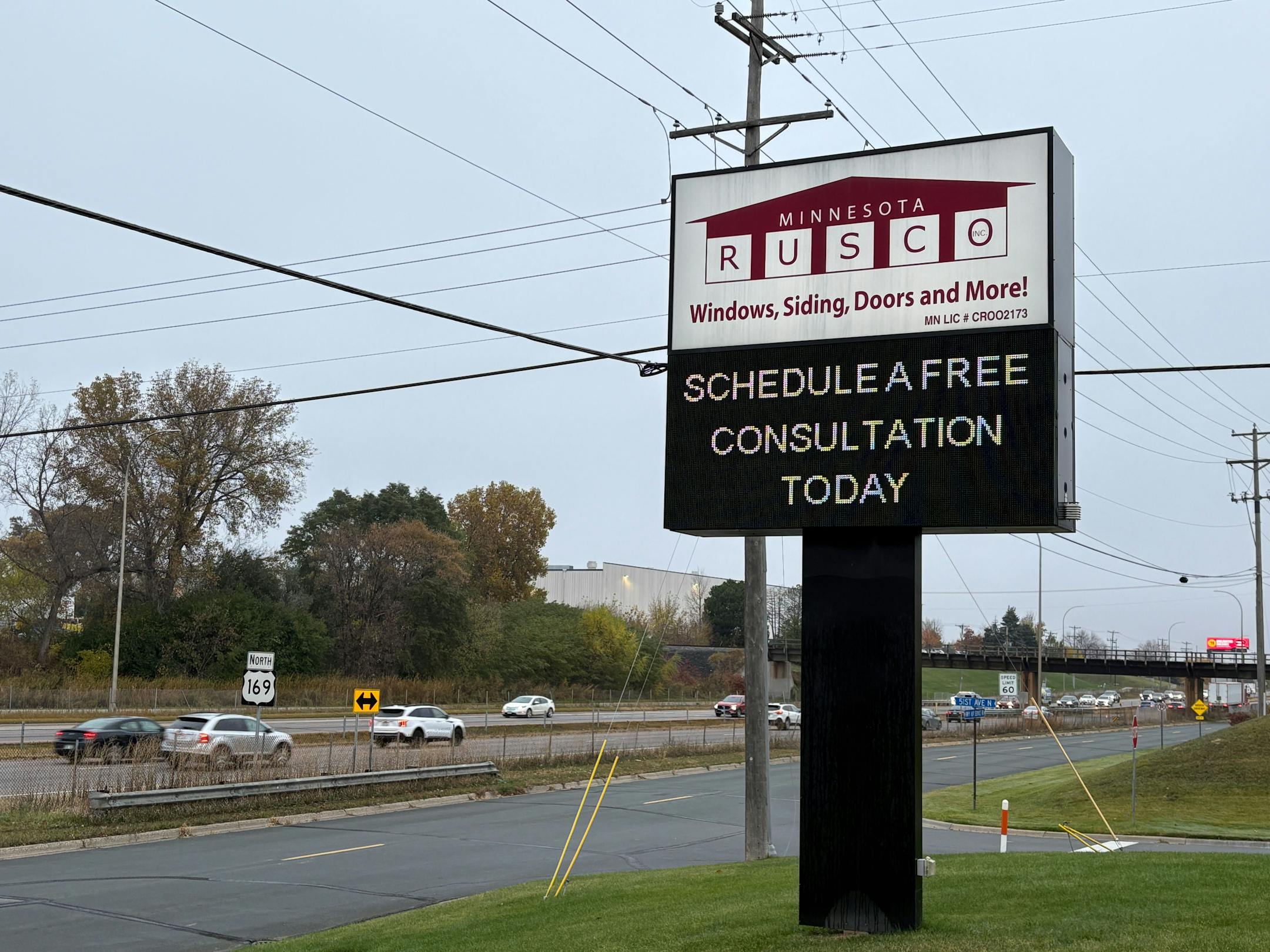
A digital sign outside Minnesota Rusco’s New Hope office still flashed, “Schedule a free consultation today,” despite the company’s abrupt closure. (Evan Pederson)

Minnesota Rusco, a longtime Twin Cities home remodeling company, has closed its doors after 70 years, according to a message posted on its website.

“With heavy hearts, we regrettably inform you Minnesota Rusco, a Renovo Home Partners company, has ceased all operations,” the statement said. “We would like to wish our staff and their families the best as they navigate these difficult times and thank all of Minnesota for their 70 years of support and trust.”

The company’s New Hope office was dark Thursday morning, though several branded work trucks remained in the parking lot. A digital sign outside still flashed, “Schedule a free consultation today.” Customers who had already paid for projects have been left in limbo.

Brian Evans, press secretary for the Minnesota Attorney General’s Office, said AG Keith Ellison and his consumer protection team are aware of the issue.

“They are committed to helping consumers who have suffered financially due to this closure if at all possible,” Evans said in an email.

While the company’s well-known jingle touted being around the Twin Cities “since 1955,” Rusco had not been locally owned since 2022, when Dallas-based Renovo Home Partners acquired it.

The parent company appears to have shut down as well, with its website taken offline Thursday morning. On LinkedIn, Vince Nardo — former head of California-based Reborn Cabinets, another Renovo subsidiary — said Renovo, Minnesota Rusco, Reborn Cabinets and at least two other affiliated remodeling firms had ceased operations.

Renovo Home Partners launched in 2021 as a national home renovation platform, acquiring several regional remodeling brands. Audax Private Equity originally backed the company. Its current owner is BlackRock TCP Capital Corp., whose investment adviser is an indirect subsidiary of global asset manager BlackRock, based in New York.

A spokesman for BlackRock declined to comment.

As of Thursday, no bankruptcy filings or layoff notices were publicly available. However, trade publication Qualified Remodeler reported a former Renovo manager expected a Chapter 7 bankruptcy, or “liquidation,” filing as soon as Friday.

Edward Adams, a University of Minnesota law professor who studies bankruptcy, said a Chapter 7 liquidation — rather than a Chapter 11 reorganization — signals the company likely sees no realistic path forward.

“Maybe they don’t even think there’s a way they can reorganize successfully and that they would get approval to reorganize, so they’re just skipping that step, which can be the prudent approach,” Adams said.

He added some entities file right away, while others might be gathering the money they need to file bankruptcy. It’s not unusual for a company to stop operations before filing, he said, though the timing can raise questions.

Adams said customers who made down payments or have unfinished projects are considered unsecured creditors in bankruptcy, which often means they recover little, if anything.

Evans encouraged those who the closure has financially harmed to file a complaint with the AG’s office. He said the office’s consumer action division works on similar situations and can help.

Consumers who made down payments by credit card can dispute those charges, Evans said, and it might be possible to file a claim in Rusco’s bankruptcy, too. He advised consumers to keep their contracts, receipts and other financial documents from Rusco.

Homeowners who lost money after Rusco’s closure might be eligible for reimbursement through the Minnesota Department of Labor and Industry’s Contractor Recovery Fund. The fund repays direct losses, such as down payments for unfinished work, up to $100,000 per homeowner and $550,000 per contractor. But homeowners must first win a civil court judgment before applying, said Sean O’Neil, the department’s director of licensing and enforcement.

Signs of financial trouble at the home improvement companies became clear as early as a year ago. During a late 2024 earnings call, BlackRock executives said Renovo’s performance had slowed, and they had placed it on non-accrual status — meaning the lender had stopped recognizing interest income on its loan. They attributed the slowdown to challenges integrating acquisitions, a cooling home-remodeling market and homeowners delaying projects amid inflation.

In its second-quarter 2025 earnings report, BlackRock TCP Capital said it recorded $66 million in realized losses related to several restructured portfolio companies, including Renovo. The firm also reversed $9.5 million in previously recognized unrealized losses connected to the restructuring.

Chief Executive Phil Tseng told investors Renovo was among four large investments removed from non-accrual status that quarter, signaling progress on turnaround efforts. But he added “progress is not linear, and situations can remain dynamic as the companies implement their turnaround plans.”

Adams said private equity ownership likely shields investors from any liability for Rusco’s collapse, since the remodeling company was a corporate subsidiary. He explained private equity firms typically finance acquisitions with heavy debt, a strategy that can boost returns when times are good but leaves companies vulnerable when business slows.

Adams also said roll-up strategies, in which private equity firms buy multiple local businesses in the same industry, can produce efficiencies and give longtime owners a way to sell. But that sometimes erodes the local character and relationships that made those businesses successful in the first place.

Student reporter Evan Pederson and staff writer Elliot Hughes contributed to this report.

about the writer

about the writer

Emmy Martin

Business Intern

Emmy Martin is a business intern at the Minnesota Star Tribune.

See Moreicon

More from Small Business

See More
card image
Elizabeth Flores/The Minnesota Star Tribune

Annual manufacturing survey finds companies are worried about increased costs from new state family leave policy, health care and tariffs.

card image
card image