Minneapolis’ Witch’s Hat has a fascinating history. Will it ever reopen to the public?

The Prospect Park tower is one of three historic structures that haven’t held water for years, but are now city landmarks.

The Minnesota Star Tribune
October 3, 2025 at 11:00AM
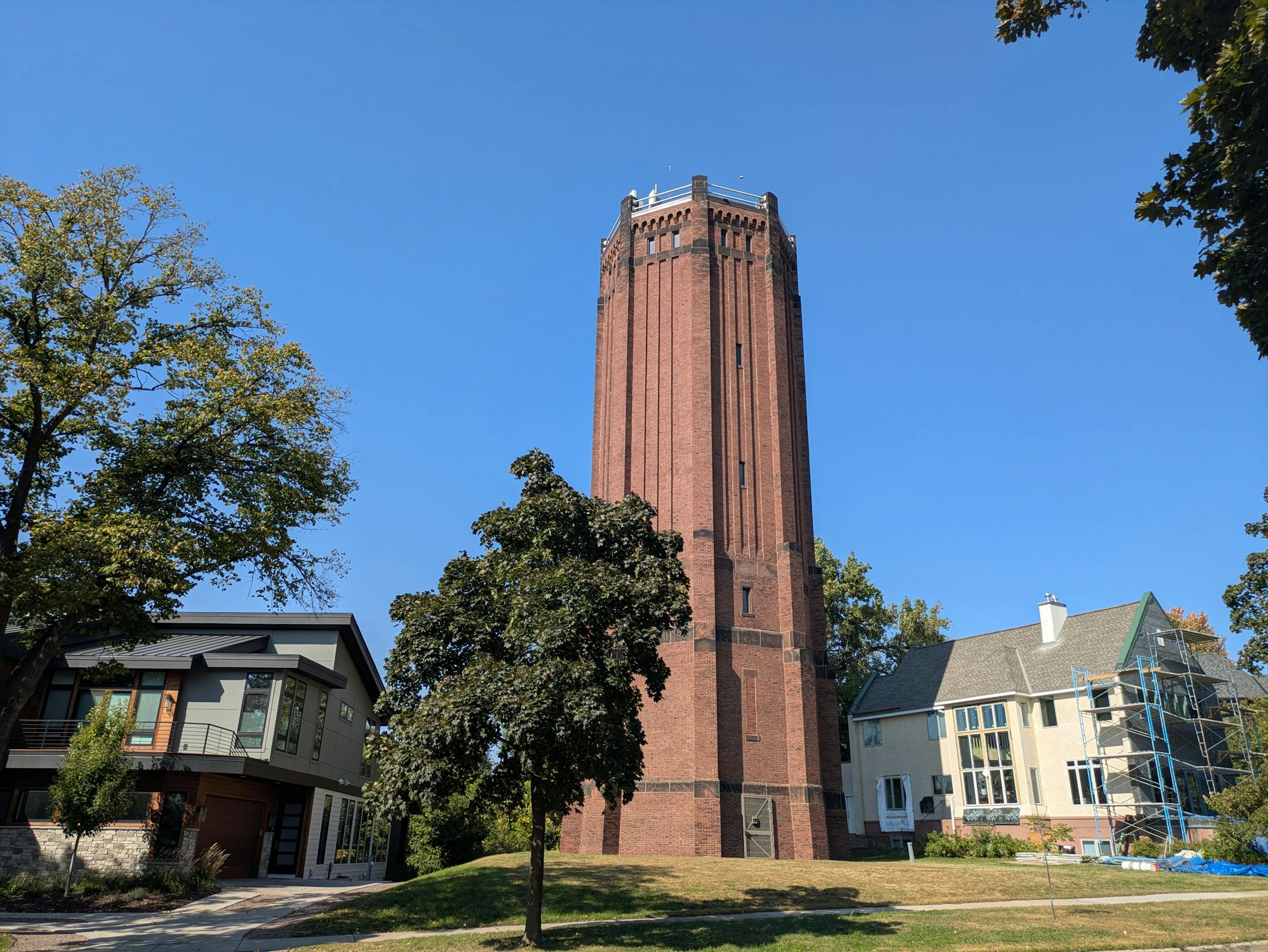
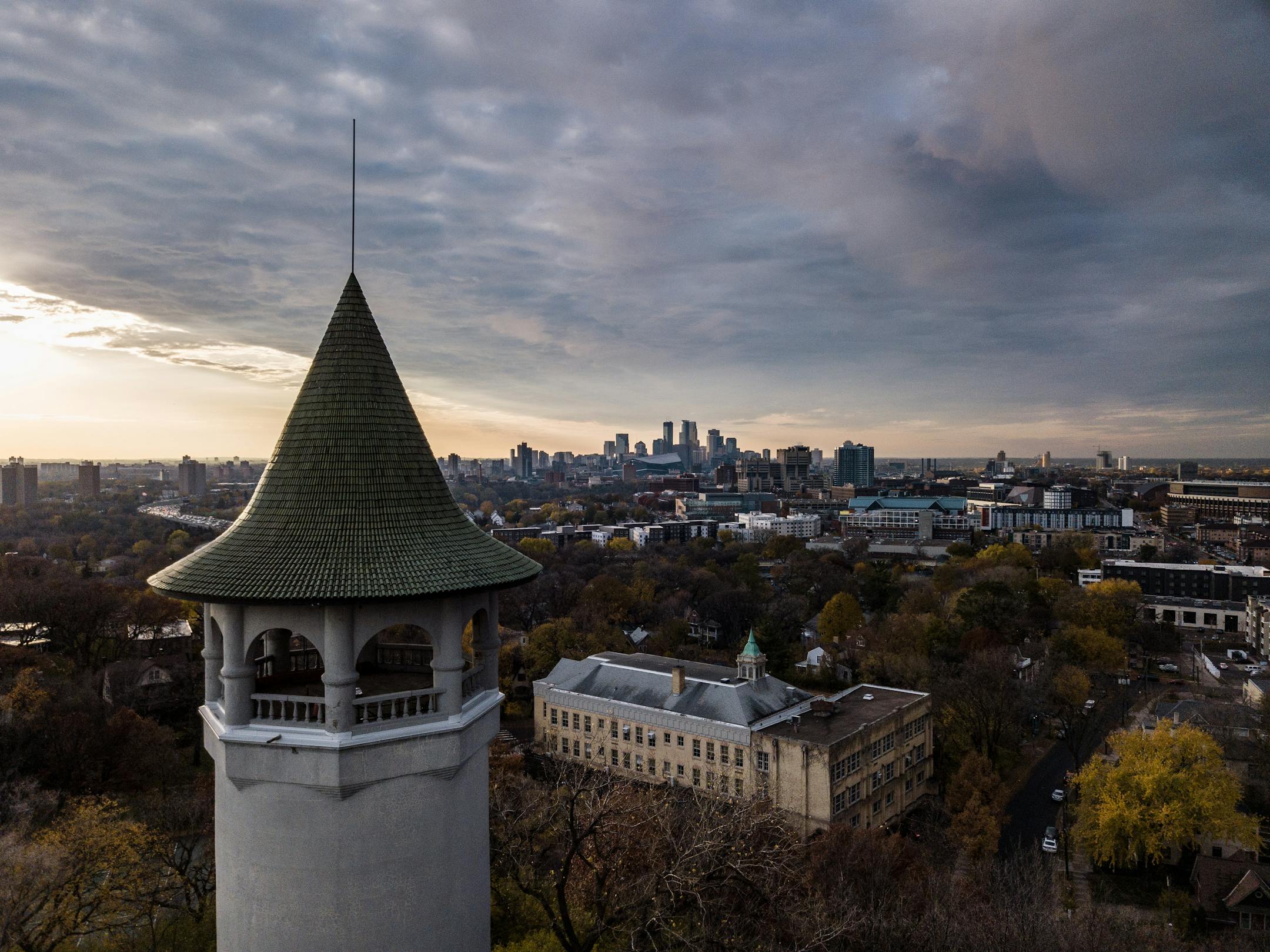
Dark October clouds give way to a last gasp of sun over Minneapolis near the Witch’s Hat water tower. (Mark Vancleave/The Minnesota Star Tribune)

Listen and subscribe to our podcast: Apple Podcasts | Spotify

Its moment has come around again.

Each October, the tall, slender water tower in Minneapolis’ Prospect Park neighborhood fits right in with spooky season. Its pointy, wide-brimmed green tile roof gives it its nickname — the Witch’s Hat.

Noah Becker lives near the striking tower and has always loved its quirky design. He recently learned that Minneapolis has two other historic water towers: the Kenwood tower near Lake of the Isles and the Washburn tower in Tangletown.

Becker wrote to Curious Minnesota, the Strib’s reader-powered reporting project, to ask: “Why do these exist?”

The short answer: The towers, all located in hilly, elevated neighborhoods, boosted drinking water capacity and pressure at a time when Minneapolis residents needed it. New technology later made their use obsolete.

None of the towers store water anymore.

All three city landmarks have intriguing histories. Through the decades, neighbors and local officials have mobilized to keep them around even though they no longer serve their historic purpose.
Most recently, residents and local politicians have been working to reopen the inside of the Witch’s Hat tower, which has been closed since 2019.

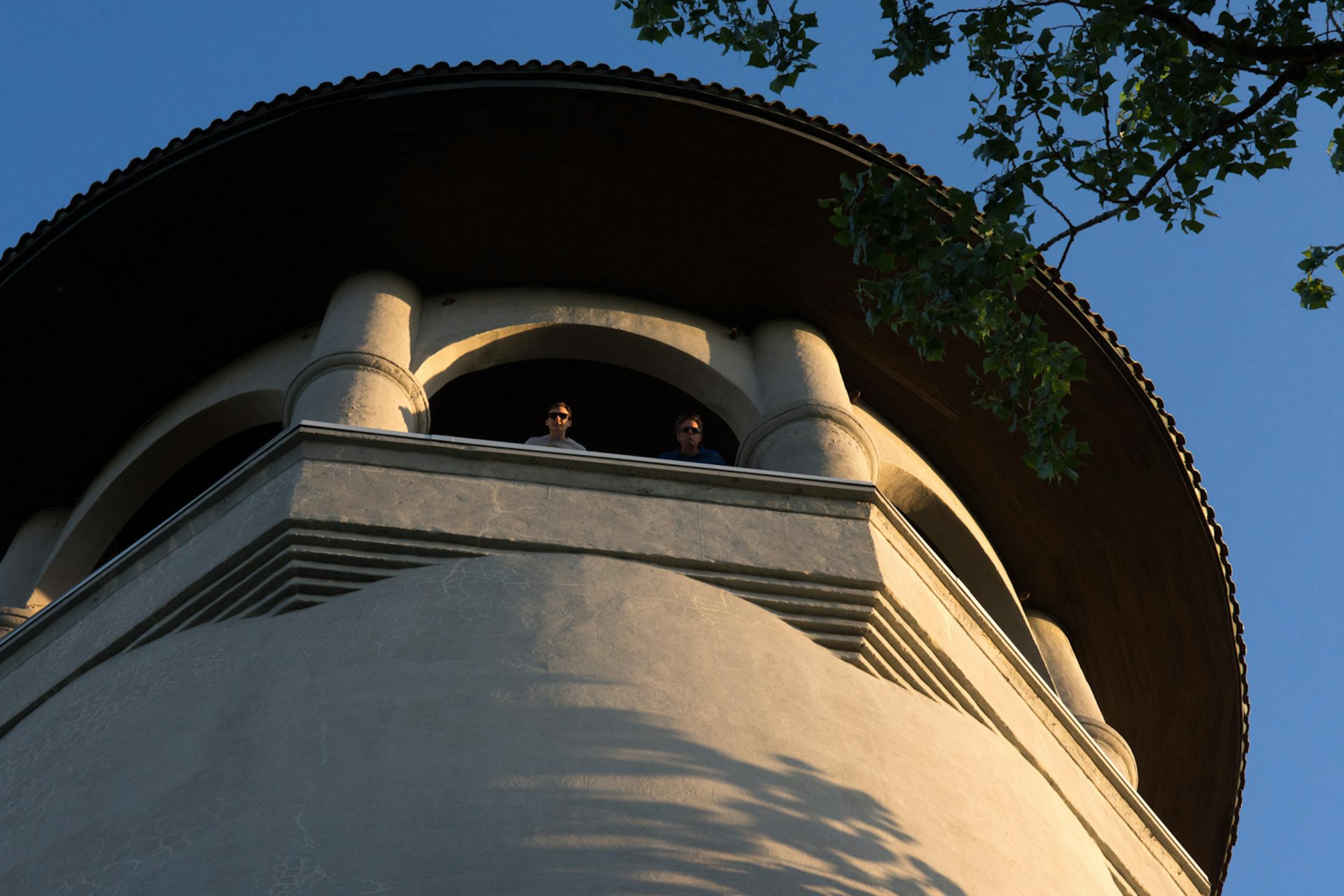
A view of the tower's brim from below. (Jay Boller — Steve Cohen/The Minnesota Star Tribune)

Pumping water from the river

The historic towers were all once a part of Minneapolis’ public waterworks.

The system dates back to 1867, when the city first started pumping water from the Mississippi River to be used by firefighters in emergencies, according to a history published in the Minnesota Department of Health’s Waterline newsletter.

A few years later, the city began pumping water to homes and businesses, and the network of piped-in water grew.

By the early 20th century, Minneapolis was using basins to allow water to settle and clear, and built its first sterilizing plant in 1910. The city began storing drinking water in Columbia Heights reservoirs, but needed more capacity and pressure.

That’s where the towers came in.

The Kenwood Water Tower in 2025. (Erica Pearson)

A fortress above Kenwood Park

The Kenwood Water Tower was built first, in 1910. It rises at the top of a hill above Kenwood Park, looking like a medieval fortress. Its designer is unknown, according to the city’s historic preservation department.

A steel tank surrounded by brick and stone, the octagonal tower supplied water to Lowry Hill residents until 1954.

In 1979, a pair of neighbors worked with an architect to draw up a new plan for the tower. They proposed the city give the tower and land to developers to convert it into one-bedroom apartments.

“I don’t think there’s a person in Kenwood who hasn’t driven past that building and wanted to do something with it,” Dorothy Parker told the Minneapolis Tribune. “But nobody ever tried before.”

Parker’s “lofty aspirations,” as the paper called them, did not come to pass.

In 1996, cellphone carrier Sprint (now a part of T-Mobile) made a bid to use the tower as the base for a bank of 21 antennas. Neighbors worried the landmark would be reduced to an “antenna farm” and collected signatures opposing the idea, the Star Tribune reported at the time.

The Kenwood Water Tower is shown in this photo from the 1930s or 1940s. (Hennepin County Library)

The opposition prevailed, although the tower does have some hardware up top, including radio equipment and a civil defense siren. Today the tower, nestled in a lot between homes on Kenwood Parkway, is used for storage, according to the city.

A ‘wizard’ in the tower

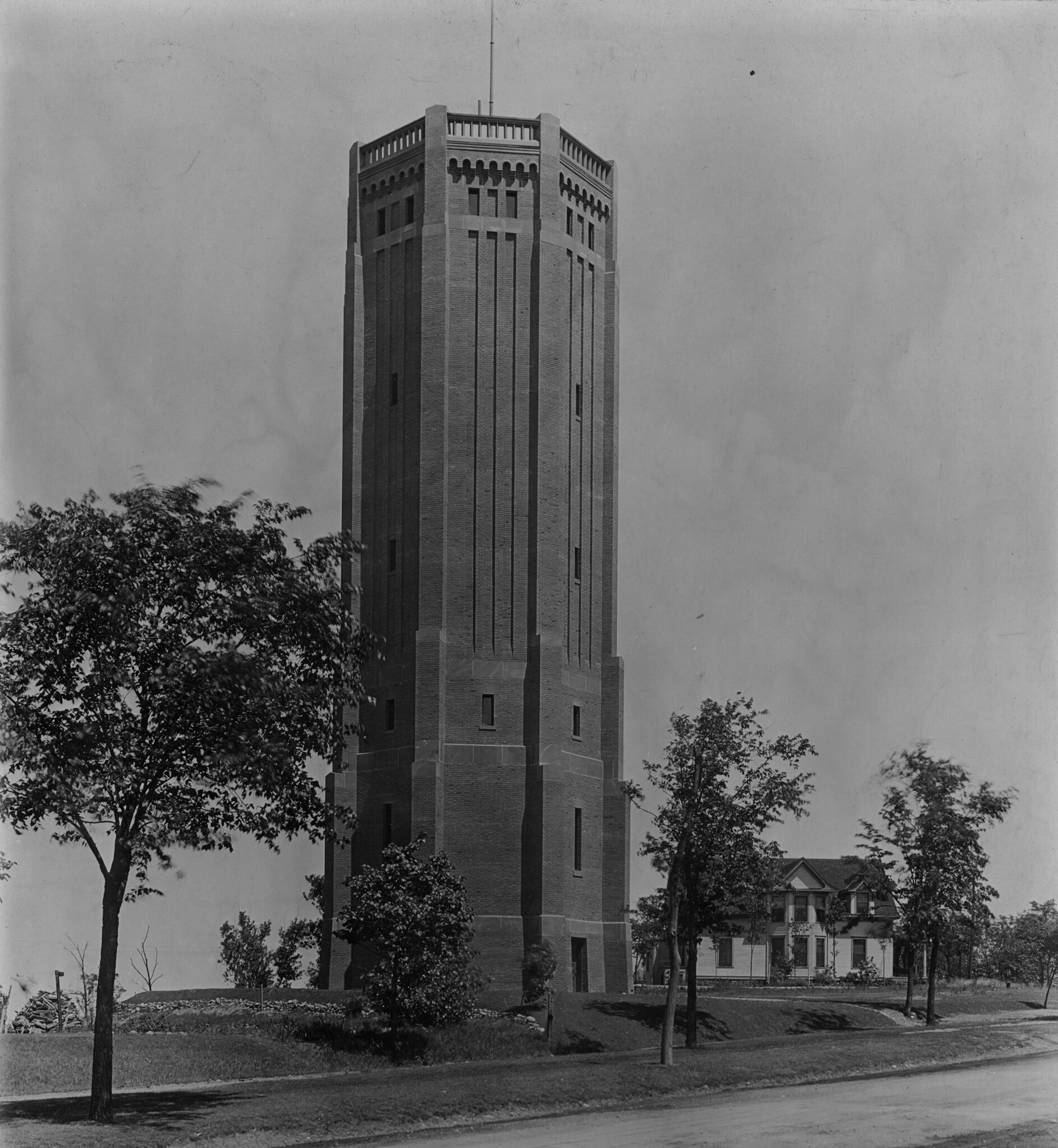
The Prospect Park Water Tower was finished in 1914. It stands at one of Minneapolis’ highest elevation points, nearly 1,000 feet above sea level in Tower Hill Park, according to the city’s historic preservation department.

The tower was designed by F.W. Cappelen, the city engineer at the time. For a time, the Park Board hired a tower caretaker who kept the tower and its observation platform open to visitors during the week, according to parks historian David C. Smith. Neighborhood kids called the caretaker “the wizard,” according to local lore.

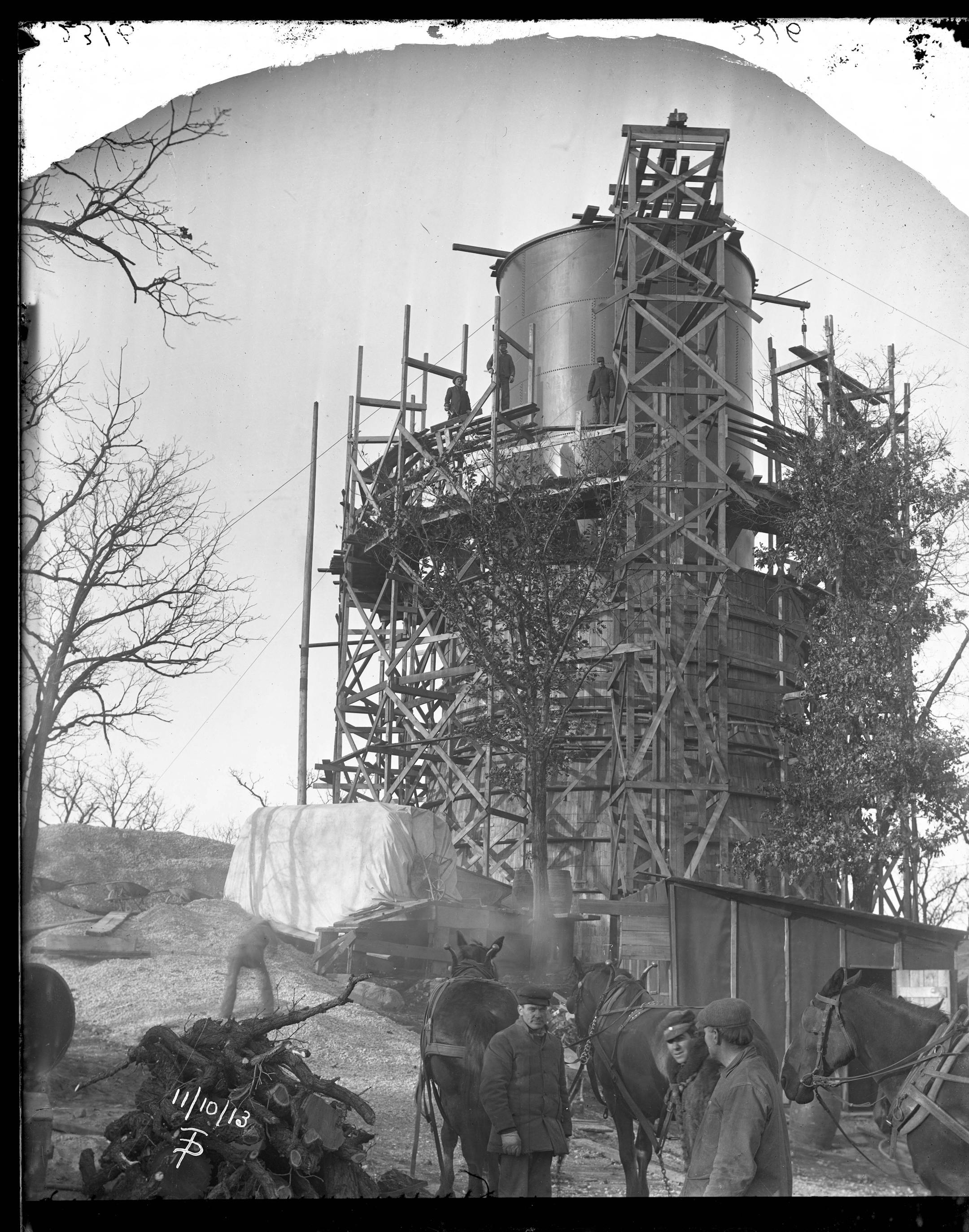
The Prospect Park Water Tower under construction in 1913. (Hennepin County Library)

By 1952, the tower was no longer needed — but it had become a beloved part of the neighborhood.

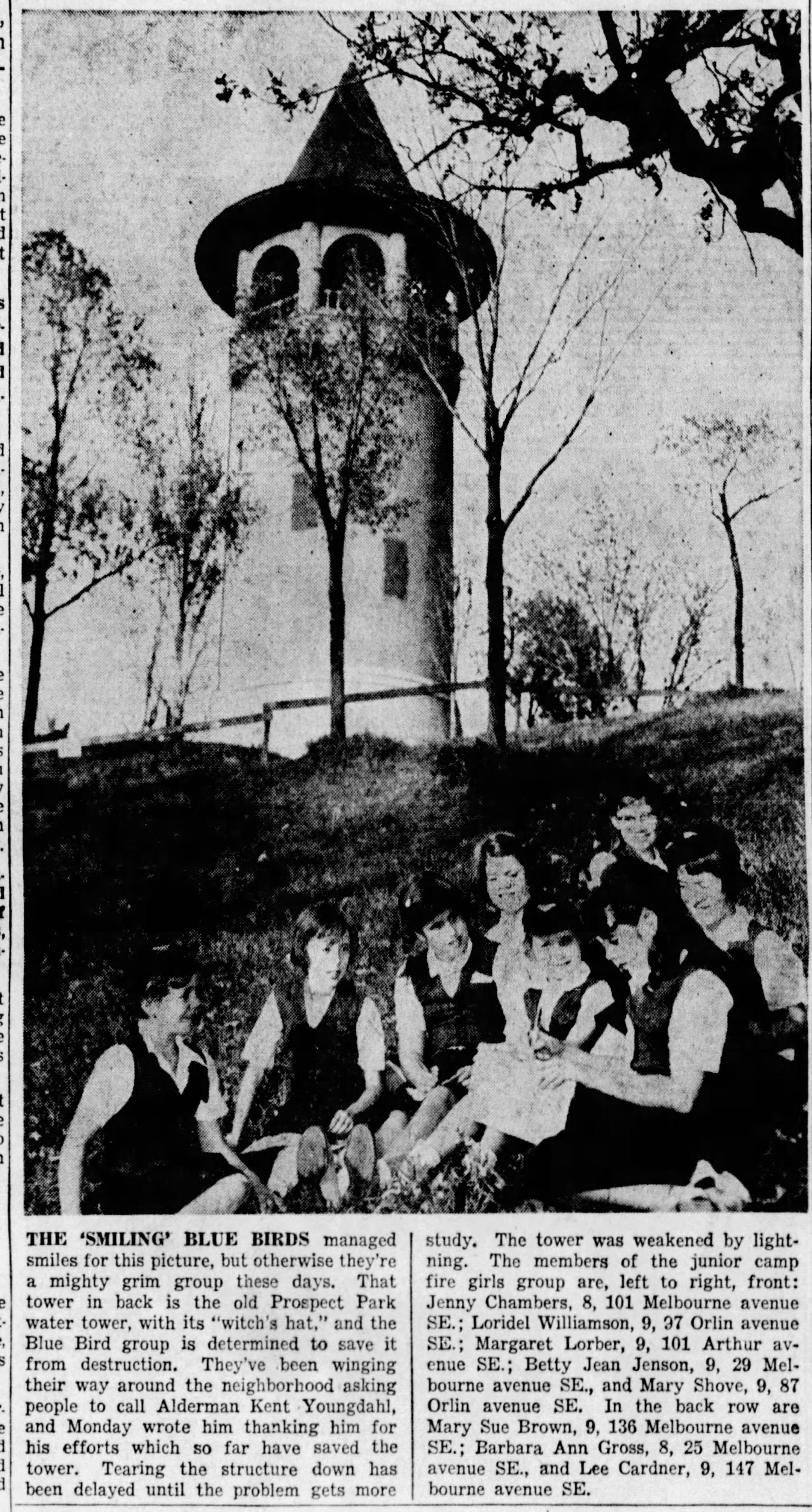
When a fall storm damaged the top of the tower in 1955, the city’s water department prepared to demolish the structure instead of fixing it, newspapers reported at the time. Local children led a campaign to save the Witch’s Hat.

“There’s a revolt among the Prospect Park small fry as the tower faces demolishment and the forces of revolution are being led by nine-year-old girls in a Blue Bird group,” the Minneapolis Star wrote that October.

The Camp Fire Girls group worked with kids at nearby Pratt Elementary School to write letters. They convinced their local alderman to step in, and the tower escaped demolition. It landed on the National Register of Historic Places in 1997.

The Minneapolis Star covered the efforts of Blue Birds to save the Witch's Hat tower.

In the 1970s, the Pratt school began holding an annual ice cream social fundraiser in Tower Hill Park. As part of the celebration, volunteers would open up the tower on that day each year.

More recently, it was also accessible during the city’s annual “Doors Open” event. In 2019, a step in the tower’s internal staircase broke and it has been closed to the public ever since.

The City Council allocated $350,000 to rehabilitate the tower in 2023. However, when the Mayor’s Finance and Property Services Department attempted to solicit bids for the work, they didn’t receive any, according to Council Member Robin Wonsley.

“They plan to do a formal bid later in the winter for work to begin in the spring of 2026. They apologized to our office and residents for this delay, stating ‘unfortunately we are at the whims of the marketplace,’” Wonsley wrote in a Ward 2 update bulletin to residents in September.

‘Romance’ in the water business

In 1915, Minneapolis bought the water tower that milling tycoon and former U.S. Sen. William Washburn built in the neighborhood he called Washburn Park. Today, it’s called Tangletown.

At first, the city extended the tower’s height. Then, still seeking greater water pressure, the city demolished the old tower and built a new one in 1931.

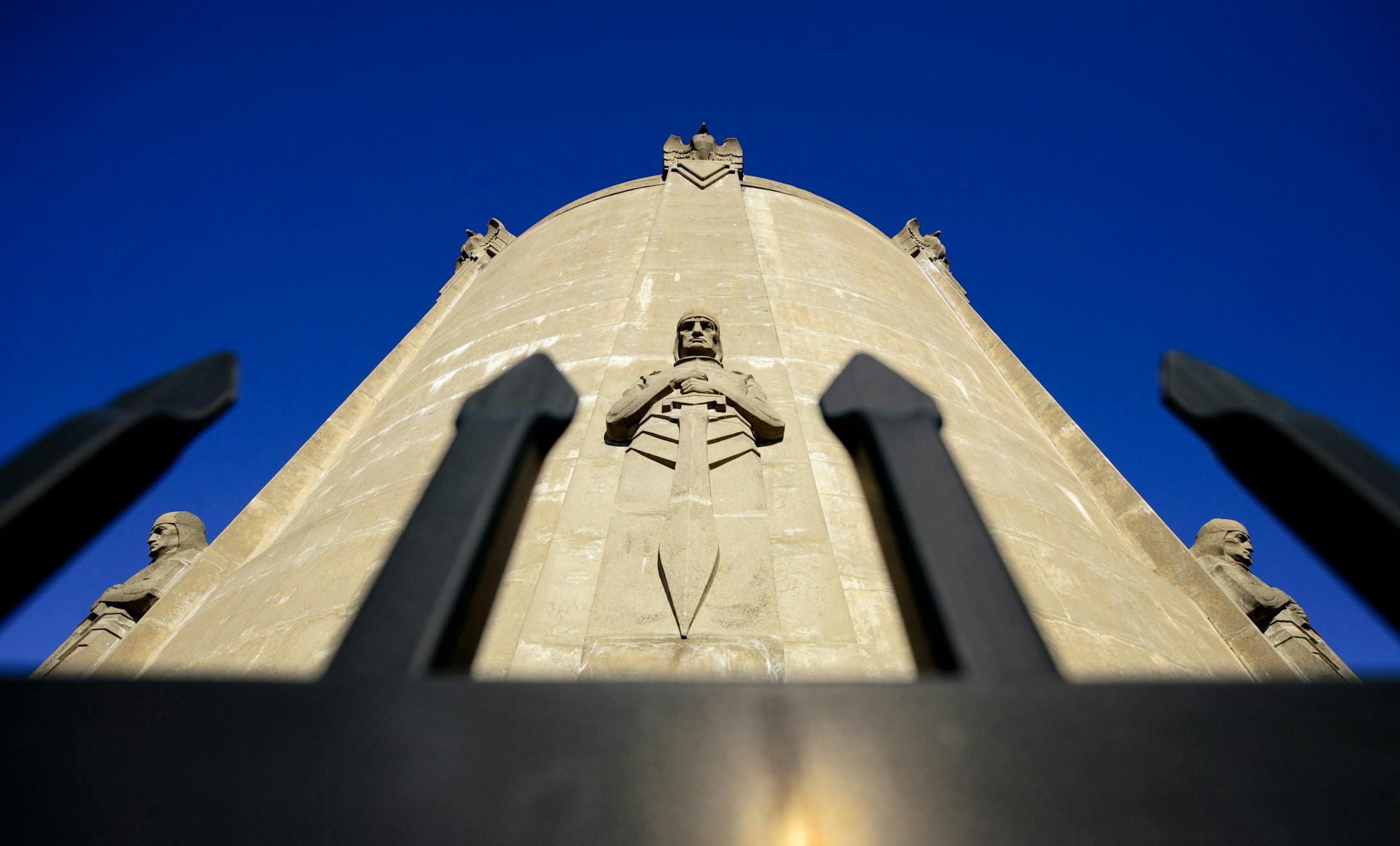
The Washburn Water Tower in Tangletown is guarded by eight “guardians of health” and eagles on top to keep a watchful eye. (Glen Stubbe/The Minnesota Star Tribune)

Architect Harry Wild Jones and sculptor John Daniels designed the 110-foot tower.

Daniels, who also tried his hand at butter sculptures at the Minnesota State Fair, surrounded the tower with giant eagles and stern figures called guardians of health.

“Romance is being put into the water business,” the Minneapolis Journal wrote about the tower as it was being built.

The Washburn tower was in use for the longest out of the three towers, storing water into the 2000s.

If you’d like to submit a Curious Minnesota question, fill out the form below:

Correction: This story has been updated. Tower Hill Park is one of Minneapolis' highest elevation points.
about the writer

about the writer

Erica Pearson

Reporter

Erica Pearson is a reporter and editor at the Star Tribune.

See Moreicon

More from Curious Minnesota

See More
"Santa" waved to people as he made his way to the Christmas photo booth at Southdale Mall, Friday, December 4, 2015 in Edina, MN.
Elizabeth Flores/The Minnesota Star Tribune

Southdale’s architect had a vision to thwart the cold and create an indoor town square in Edina where it was always 75 degrees.

card image
card image