Raspberry Island was once home to curling rinks, a Navy training center, even an R.E.M. concert

The tiny Mississippi River isle under the Wabasha Street Bridge in St. Paul has a surprising history.

The Minnesota Star Tribune
September 26, 2025 at 11:00AM
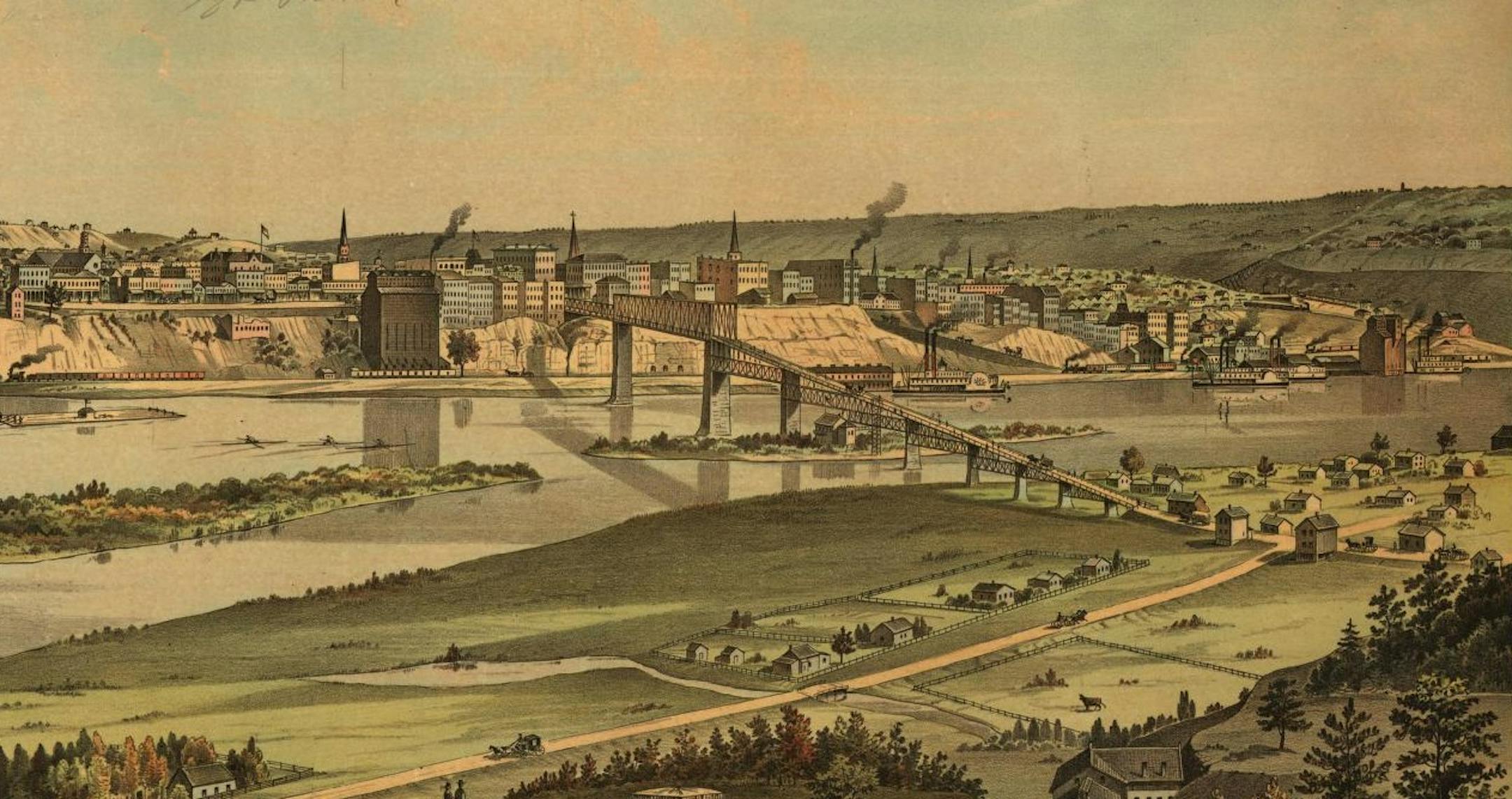
Little Raspberry Island can be seen at the center of this 1874 view of St. Paul by Geo. H Ellsbury and Vernon Green. (Library of Congress, Geography and Map Division)

Listen and subscribe to our podcast: Apple Podcasts | Spotify

St. Paul’s Raspberry Island has been reinvented again and again.

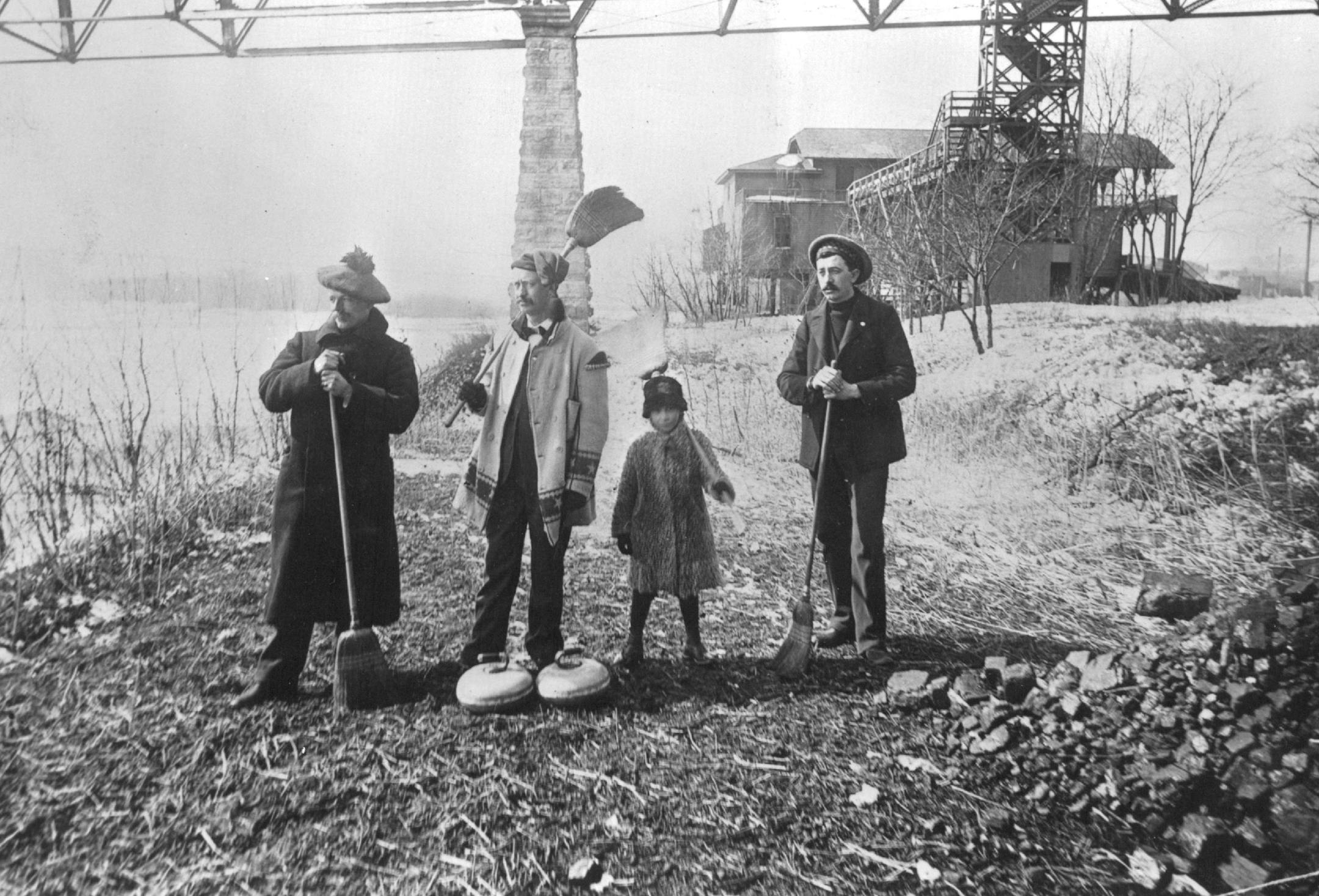
In the 1890s, it was a popular spot to take a dip in the Mississippi River in summer and home to curling rinks in winter.

Later, it was the site of a U.S. Navy training base. Its historic boat club housed a series of nightclubs with colorful names: Tugboat Annie’s, Golden Garter, River Serpent.

It became an outdoor concert venue, hosting bands like R.E.M. and Aerosmith before spending a sad stretch of years as a parking lot.

Today, the tiny 2-acre island underneath the Wabasha Street Bridge is a park, planted with ornamental grasses and small oak trees.

On a recent morning, it was filled with visitors snapping photos with their phones. They were there to see an exhibit of fantastical Mexican folk art sculptures called alebrijes. (The giant creatures are staying through Oct. 26.)
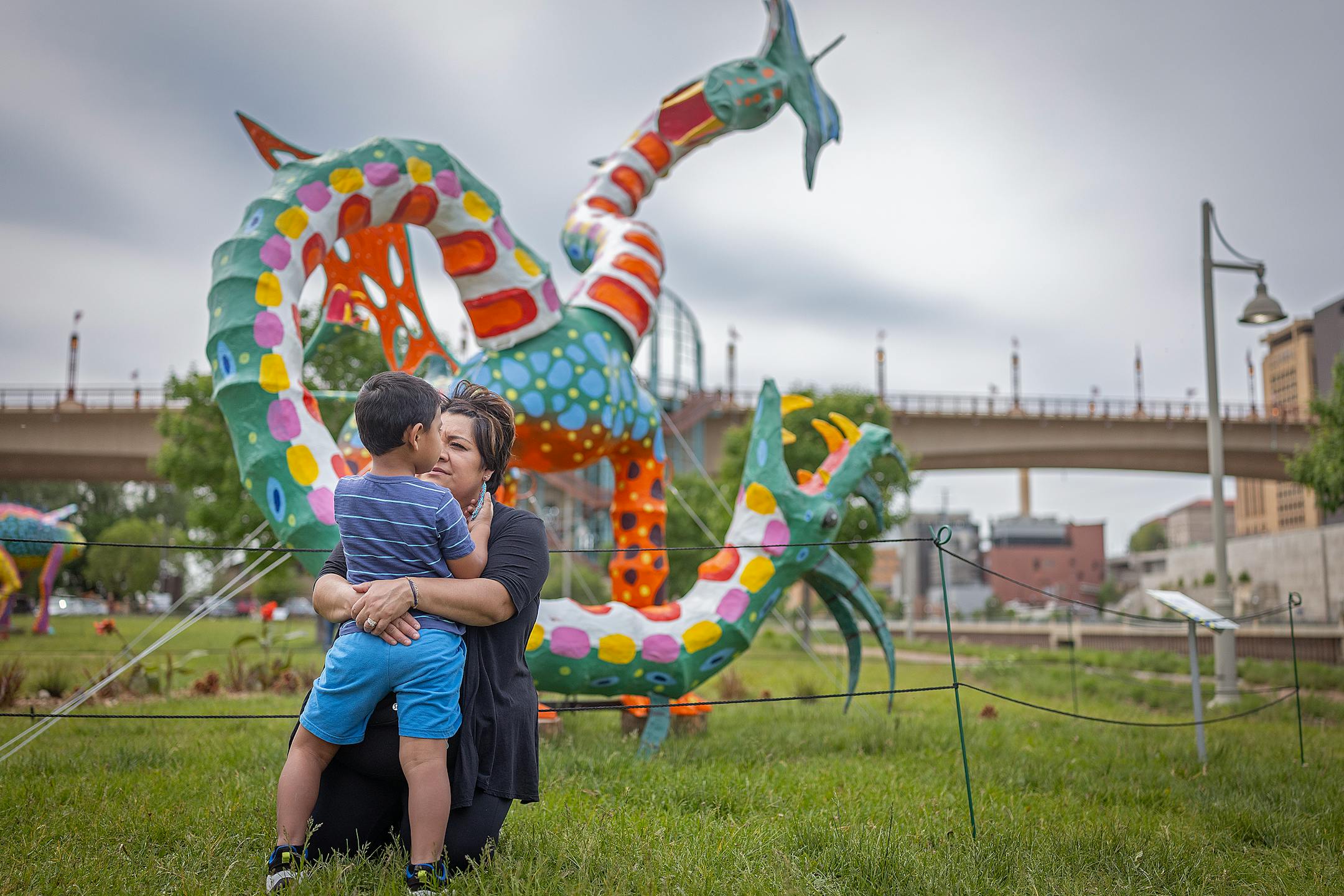
Margarita Sandoval plays with her son at the exhibit “Alebrijes: Keepers of the Island,” on Raspberry Island in May 2025. (Elizabeth Flores/The Minnesota Star Tribune)

But when a young Anthony Thompson made a memorable visit to the island with his family in 1965, it looked very different. It even had a different name: Navy Island.
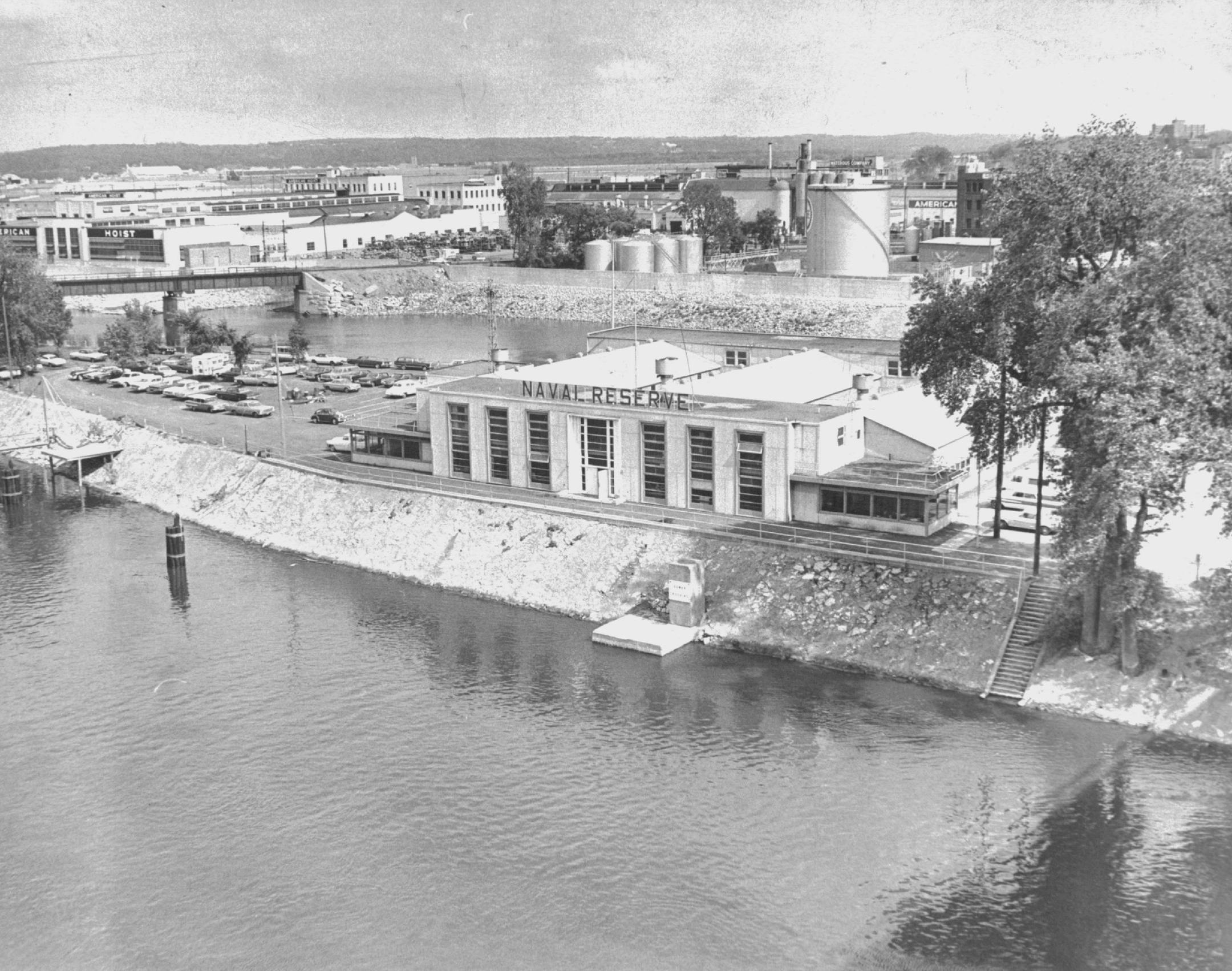
That year, the Mississippi rose and flooded the little island. When Thompson’s family visited after the river had subsided, Thompson spied the old Navy buildings through a chain-link fence.

“Even as a 10-year-old, I wondered about those buildings,” said Thompson, who grew up in St. Paul and now lives in Big Lake. “Later the seeming incongruity of a naval facility on the Mississippi intrigued me.”

He wrote to Curious Minnesota, the Strib’s reader-powered reporting project, to ask: “Why was downtown St. Paul once home to U.S. Navy facilities? What was the purpose? And when was it active?”

The short answer: From 1949 to 1965, the little island housed an active training facility for Navy reservists. It was full of top-of-the-line equipment so that the “bluejackets,” as newspapers described them at the time, could get a feel for Navy life at sea.

A view of Navy Island and its training center building in the 1960s. (Larry Schreiber/The Minnesota Star Tribune)

But by the time it was renamed Navy Island, the little spit of land had already seen a lot.

Tiny isle in the Mississippi

The isle is often described in newspaper accounts as a one-time meeting place for Native Americans. It was already labeled Raspberry Island in some of the earliest published maps of the area.

“It’s fascinating, the changes that have happened” around the little island, said Anna Olson, research associate at Ramsey County Historical Society.

An 1857 map of St. Paul shows the island with the city’s first bridge to span the Mississippi, the Wabasha Street Bridge (then under construction), rising above it.

“The lower end of Raspberry Island is nightly the scene of the aquatic sports of scores of bathers,” the Saint Paul Weekly Minnesotian wrote that July.

Soon, rowers with the Minnesota Boat Club, incorporated in 1873, chose Raspberry Island as their base. They built a clubhouse and held races in front of the island, drawing crowds who watched from the bridge above. (The club is still around today — but the current building on the island dates back to 1910.)

In 1890, the St. Paul Curling Club bought land on the island and built a structure big enough to house five natural ice rinks.

St. Paul curlers in 1891 were checking to be sure the Mississippi River ice below the Wabasha Bridge was smooth, flat and strong. (Minnesota Historical Society)

“Raspberry Island rung with the shouts of the curlers all day,” the Irish Standard wrote in December 1893.

The curling club on Raspberry Island closed in 1904, but made a comeback — with a new clubhouse on Selby Avenue — less than a decade later, according to the club’s website.

The Navy Island years

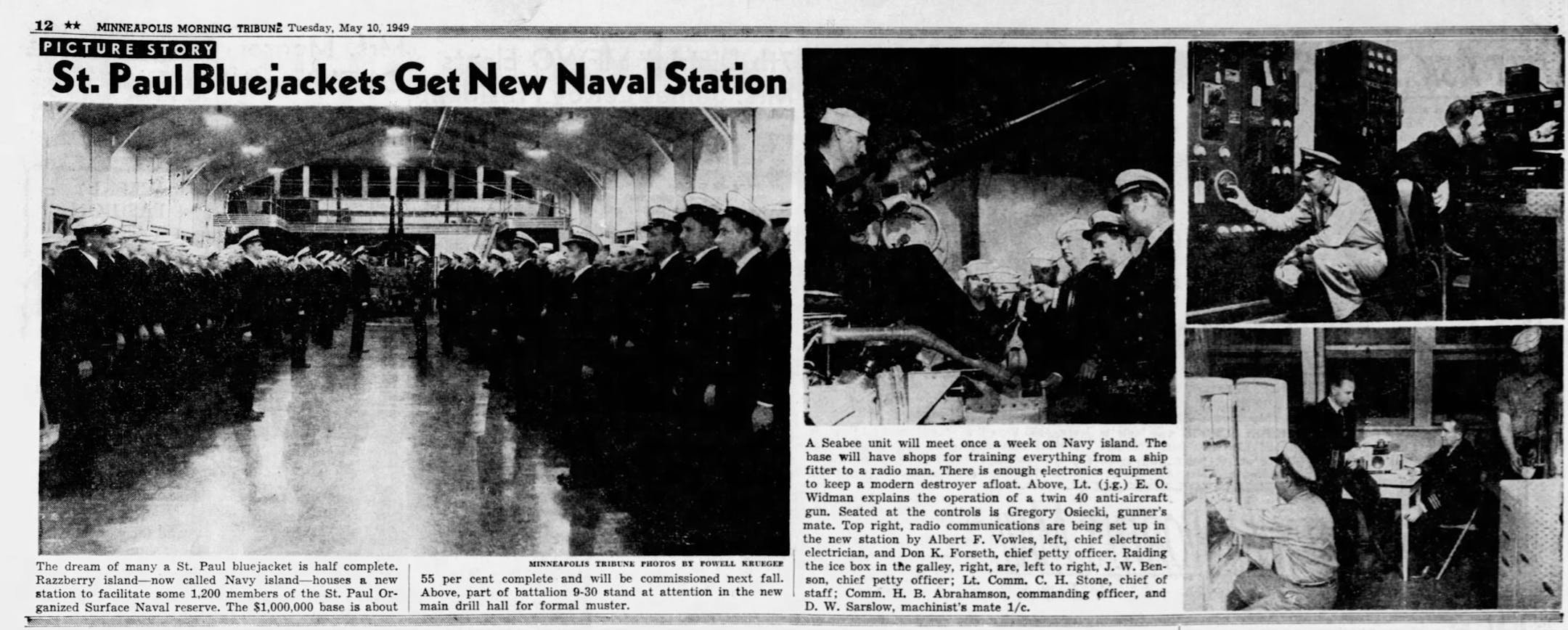
In 1949, the Navy first leased part of the island for $1 a year from the city, building what the Minneapolis Tribune called a “drill ship.”

It was a $1 million training center and meeting place for a unit called the St. Paul Organized Surface Naval Reserve, which had more than 1,100 men and officers at the time. The unit had been meeting in the naval air station that was housed at Wold-Chamberlain Field, the precursor to Minneapolis-St. Paul International Airport.

The Minneapolis Morning Tribune got a tour of the new facility in 1949.

“The magnitude and power of electronic equipment which the new center is to house will surpass that of a modern navy destroyer,” the newspaper wrote. It had equipment to train the men on everything from radio communication to anti-aircraft guns.

“Raspberry Island will be called Navy Island by the bluejackets,” the paper added.

In 1965, U.S. Defense Secretary Robert McNamara included the Navy Island training center in a list of 126 domestic military bases across the country to be shut down as part of budget cuts, the Duluth News Tribune reported.

The facility was still in operation that April when floodwaters completely surrounded it. Everyone evacuated, filling boats with records and equipment.

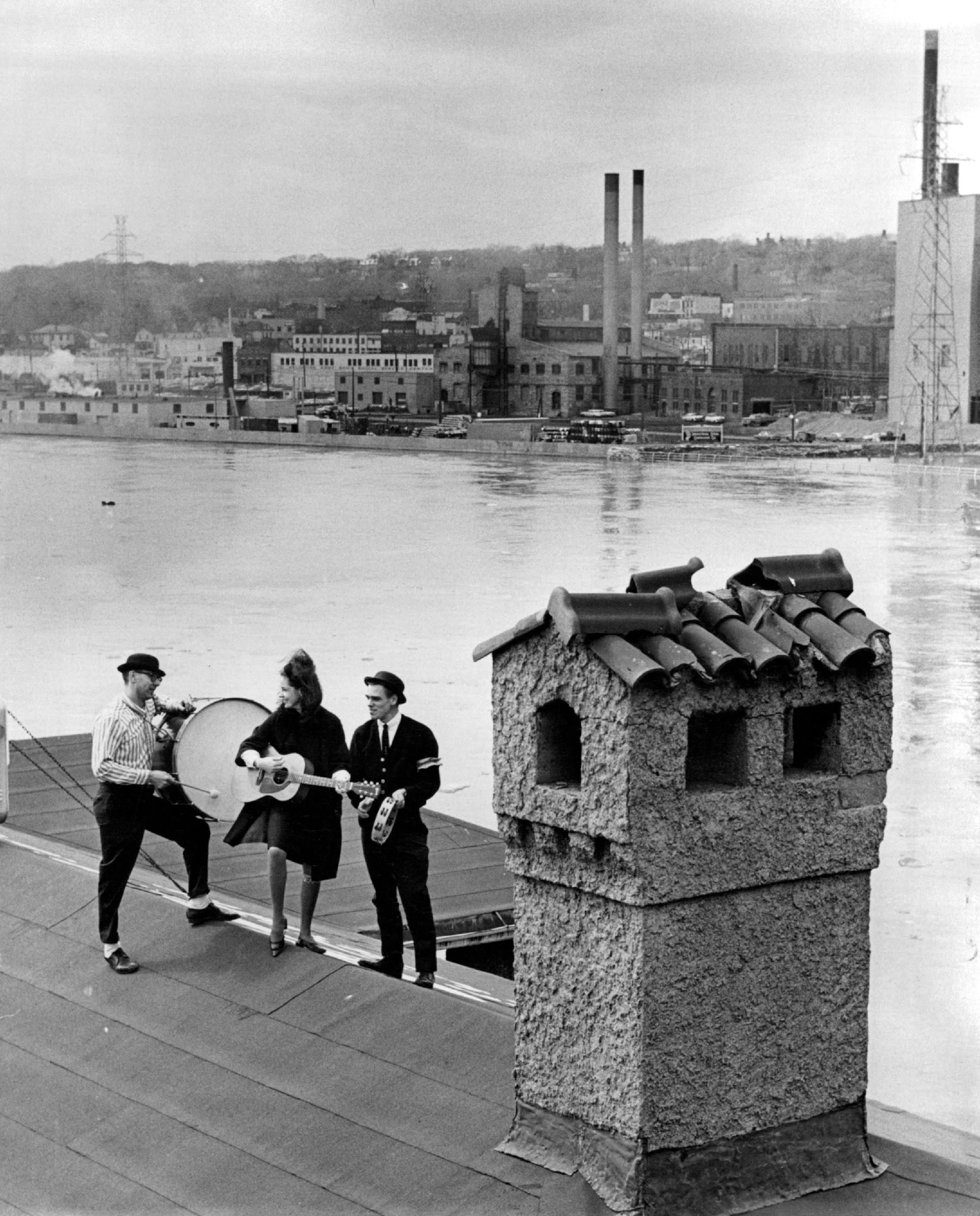
On the little island’s west side, however, the owner of the Golden Garter saloon inside the boat club refused to close. “We’ll be open until the power shuts off,” Jim Drake told the Minneapolis Star.

When the river flooded the island in 1965, band members played on the roof of the Golden Garter. (Art Hager/The Minnesota Star Tribune)

A band crawled out onto the rooftop to play a set, while a worker painted “Open as usual” on the roof.

A return to Raspberry Island

In 1968, the Navy’s lease ended, and they tore down the training building.

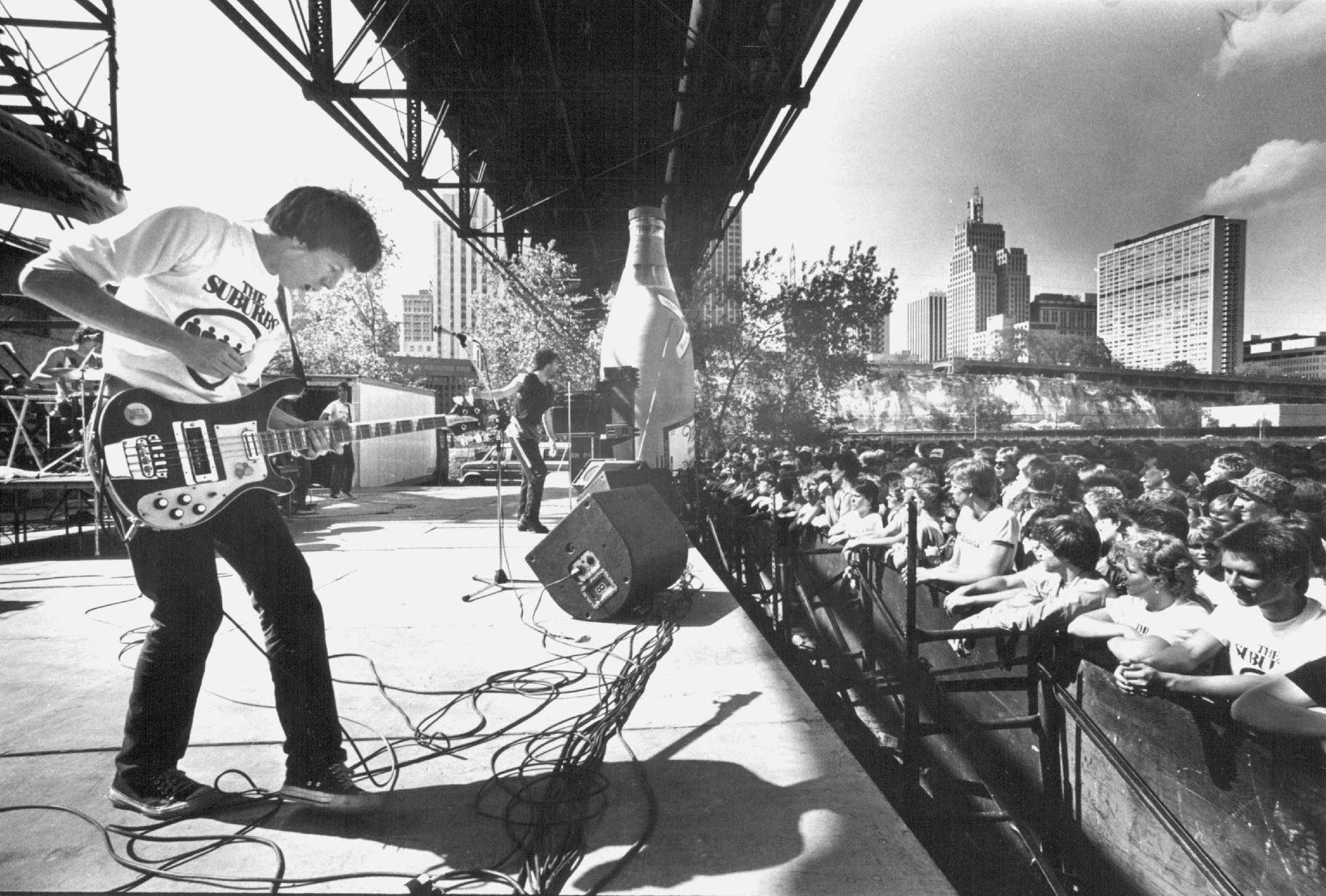
In later decades, the island’s open acres became a popular spot for concerts. The biggest concert series, Rockin’ the River, kicked off in May 1983 with R.E.M. as headliners and local bands the Suburbs and the Replacements.

“Pale-faced punks with Mohawk hairdos, heavily made up disco divas and bronzed, scantily clad beach bums basked in the long awaited spring sunshine and new wave music that is seldom heard in outdoor festival settings,” Minnesota Star Tribune music critic Jon Bream wrote at the time.

Mike Mills, foreground, of R.E.M. in concert at the Rockin' the River open air music festival at Navy Island in 1983. (Marlin Levison/The Minnesota Star Tribune)

In 1995, the St. Paul City Council moved to change the island’s name back to Raspberry, and in 2002, the Schubert Club commissioned a fanciful bandstand for the park, designed by architect and glass artist James Carpenter.

A few years later, the city invested $5 million in a major redesign of the little island’s parkland, giving it the feel it has today.

If you’d like to submit a Curious Minnesota question, fill out the form below:

Read more Curious Minnesota stories:

about the writer

about the writer

Erica Pearson

Reporter

Erica Pearson is a reporter and editor at the Star Tribune.

See Moreicon

More from Curious Minnesota

See More
"Santa" waved to people as he made his way to the Christmas photo booth at Southdale Mall, Friday, December 4, 2015 in Edina, MN.
Elizabeth Flores/The Minnesota Star Tribune

Southdale’s architect had a vision to thwart the cold and create an indoor town square in Edina where it was always 75 degrees.

card image
card image