
Minneapolis City Council approves 2026 budget, spares mayor’s office major cuts

Mayor Frey has five days to decide whether to sign the spending plan, which will increase property taxes.

The Minnesota Star Tribune
December 10, 2025 at 1:34PM
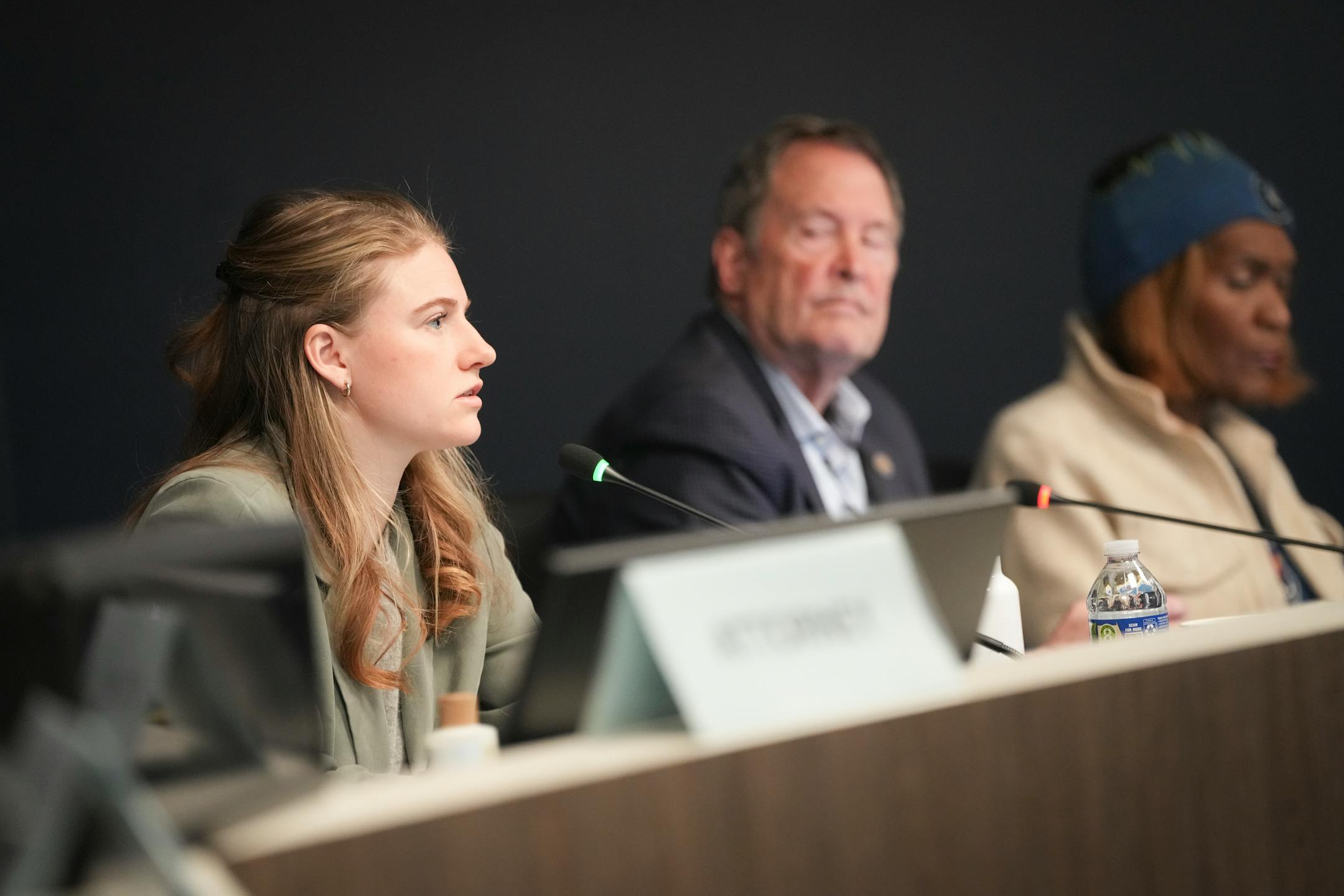
During a Minneapolis City Council meeting on Monday, Council Member Katie Cashman asks Minneapolis Police Chief Brian O’Hara about $19.6 million in overspending in the Police Department's budget. (Renée Jones Schneider/The Minnesota Star Tribune)

After a week of arguing and horse-trading, opposing factions of the Minneapolis City Council came to an accord Tuesday on a 2026 city budget that raises taxes to maintain staffing levels, invests in public bathrooms downtown and sidesteps a contentious proposal to slash the mayor’s staff.

The $2 billion budget fully funds the charter-mandated police force, but it doesn’t implement any sweeping new initiatives as the city continues to implement court-overseen police reforms five years after the murder of George Floyd amid a sobering fiscal climate.

The council also approved a roughly $46,000 raise to the mayor’s salary of nearly $141,000, and will increase council members’ salaries in two years.

The budget, which the council passed on an 12-0 vote, will require an 8% increase in the city’s property tax levy. Under the plan, the owner of a median-value $333,000 home would pay $2,272 in city property taxes in 2026, an increase of $242. Other taxing entities, like the county and school district, set their levies separately. The city levy pays for services including policing, firefighters and street repairs.

The council also considered several amendments that would have eliminated the jobs of up to eight people in the office of Mayor Jacob Frey, creating some drama between Frey and the majority of the council, with whom he has frequently been at odds for the past two years.

At one point in three days of budget-markup sessions, City Operations Officer Margaret Anderson Kelliher begged the council not to lay off anybody.

“I plead with you, the mayor’s bright fluorescent line has been no layoffs,” she said.

In the end, all but one media relations position in the mayor’s office were spared. Other changes were still being reviewed late Tuesday, including to the police department and the city attorney’s office.

The council’s changes to the budget include:

  • $700,000 to set up public restrooms along Nicollet Avenue downtown.
    • $1.2 million to implement the 38th Street Thrive community-led plan to preserve the historically Black corridor.
      • $595,000 for a pilot program to plow the city’s busiest sidewalks.
        • $1.7 million in the police budget to start a nonfatal shooting task force, like St. Paul’s unit, which has been credited with improved clearance rates.
          • $237,000 for a downtown street outreach pilot program, with two unarmed security guards, four ambassadors and a late-night dispatcher working in the First Precinct to address livability and safety issues on weekends.
            • $200,000 to help a nonprofit or community group develop a city-owned grocery store in areas with high food insecurity, such as Dinkytown near the University of Minnesota.

              Police overspending prompts changes

              In the wake of the police department going $19.6 million over budget, the council approved a policy Tuesday seeking more transparency around overspending in the future.

              Under the new plan, departments must alert the council to budget shortfalls, and if a department exceeds its budget, its leaders must report monthly to the council.

              Departments won’t be allowed to amend their budget without council approval, with some exceptions, such as to meet payroll.

              Council Vice President Aisha Chughtai said the council wants to emphasize to departments that “their budgets are not suggestions.”

              A new hammer

              Out of frustration that the Frey administration has not carried out some of their legislation in past years, the council also approved a budget policy aimed at forcing the mayor’s hand when he disagrees.

              The new policy would not allow earmarked funds to be used for other purposes without the council’s approval, and would require that the council be notified if legislation can’t be carried out.

              Last year, the council voted to remove funding for the Minneapolis Police Department’s mounted patrol, but the department found alternate funds to keep the horses anyway. Council Member Katie Cashman said, once again, MPD “just didn’t do it,” and that’s “incredibly wrong.”

              It was at least the third time since 2009 that council members had unsuccessfully tried to defund the unit.

              Council Member Robin Wonsley said the Frey administration also didn’t implement emergency housing vouchers or hire all of the civilian investigators and crime prevention specialists the council approved last year. She said if the council passes something, it should be implemented.

              When they called the final vote on the budget, it was 11-0, with Council Members Jamal Osman and Jeremiah Ellison absent. Osman arrived later and had his yes vote recorded.

              Clarification: This story has been clarified to reflect that Council Member Jamal Osman voted after the initial vote.
              about the writer

              about the writer

              Deena Winter

              Reporter

              Deena Winter is Minneapolis City Hall reporter for the Star Tribune.

              See Moreicon

              More from Minneapolis

              See More
              card image
              Provided

              Attorneys for the family say they were asylum-seekers who were pulled over without a warrant. The girl has since been reunited with her mother.

              card image
              Renee Nicole Good stands on a beach at sunset. She wears a red gown and is smiling into the camera.