Some Minnesota families now have another option to get help for kids in crisis

A new Hennepin County stabilization center hopes to serve kids with complex mental health needs who otherwise end up in an ER or detention center.

The Minnesota Star Tribune
December 9, 2025 at 8:57PM
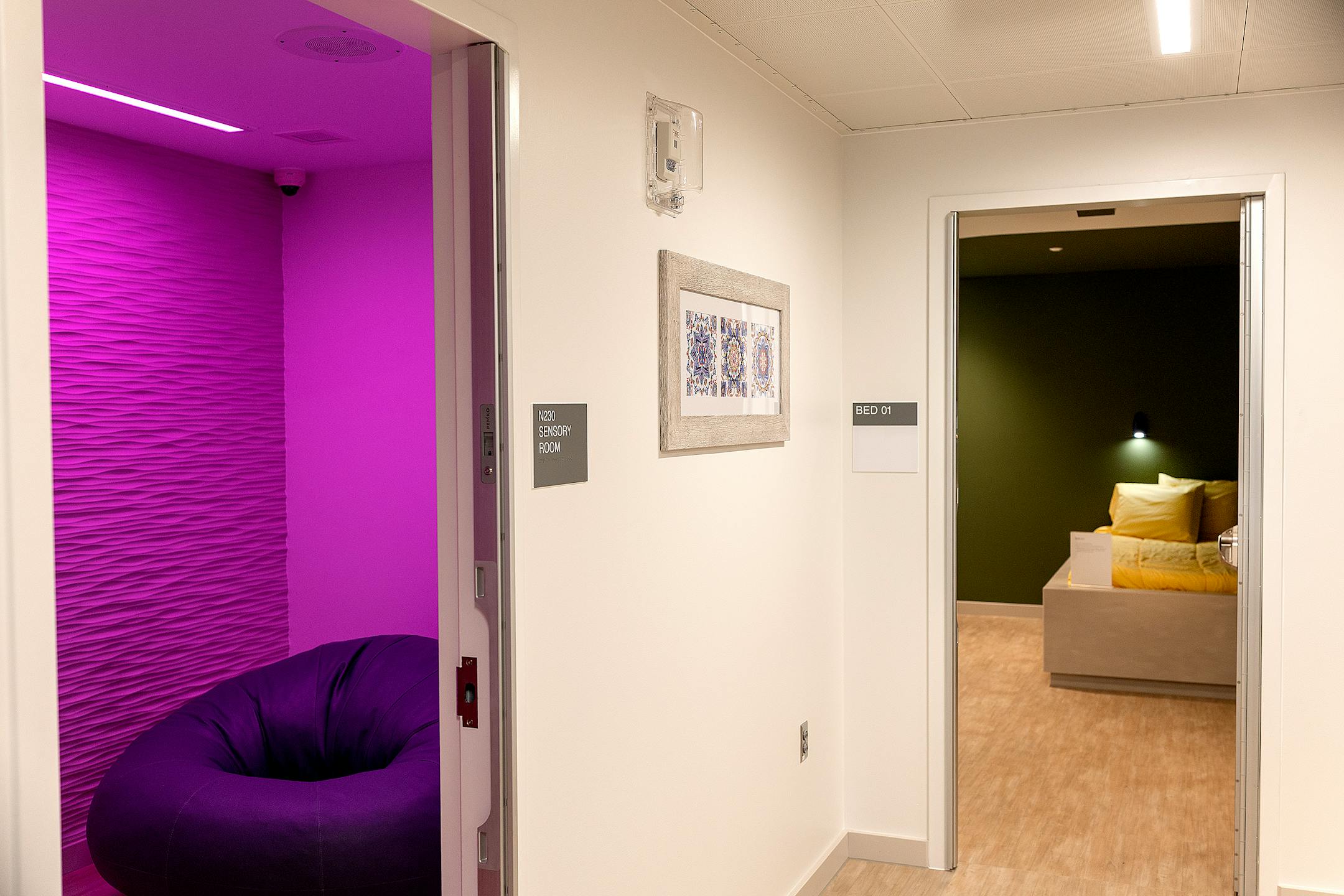
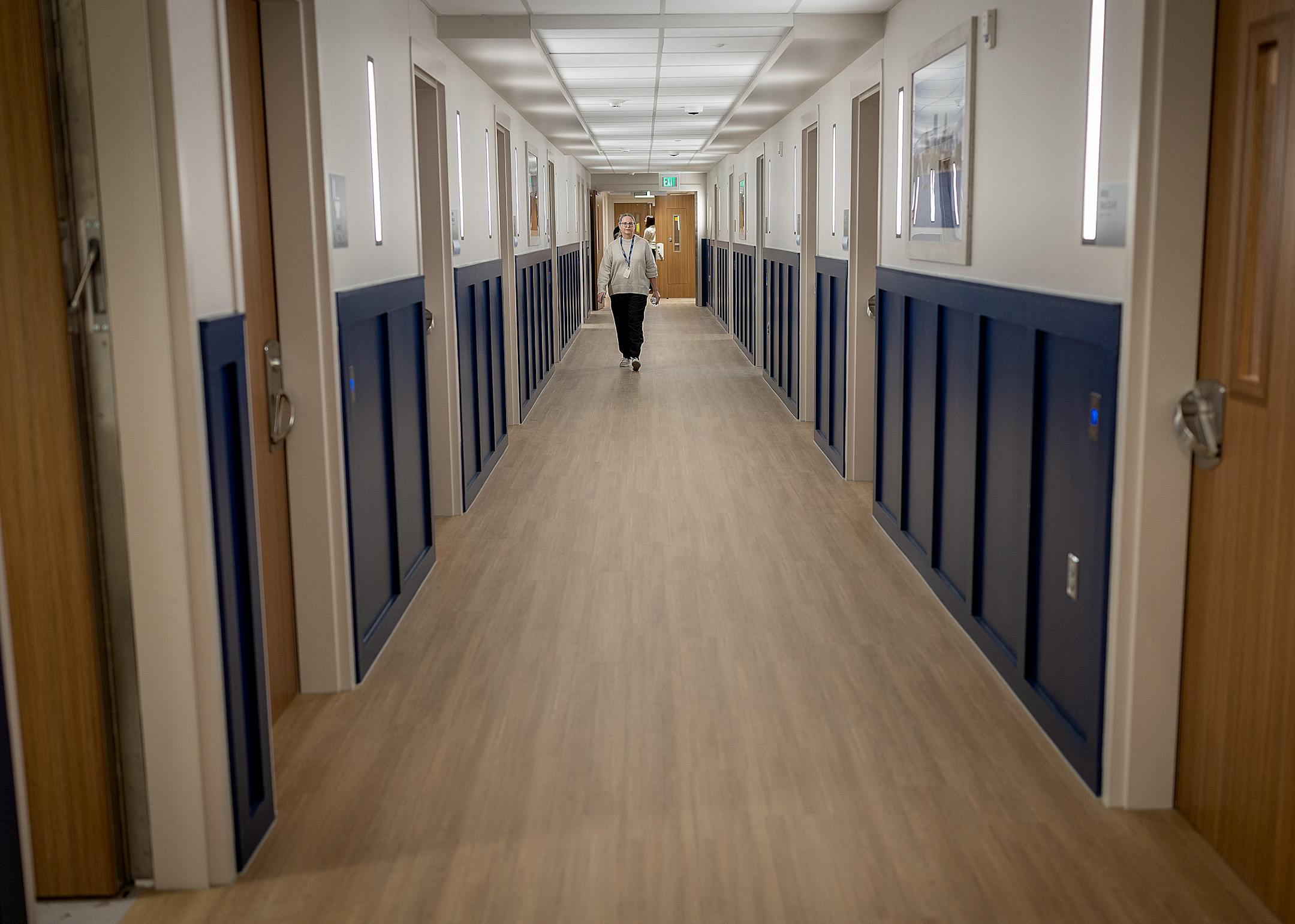
The new youth behavioral stabilization center on Chicago Avenue in Minneapolis is designed to help youth with complex mental and behavioral health conditions. It will open later in December. (Elizabeth Flores/The Minnesota Star Tribune)

Kids with complex mental and behavioral health needs who have long been stuck between emergency rooms and juvenile dentition have a new treatment option in Hennepin County.

A 13-bed youth behavioral health crisis stabilization center is opening later this month for kids ages 8-17. It’s not a long-term treatment facility but a calm place to stay for a few weeks and get help while figuring out what to do next.

Minnesota has struggled for years to find options for kids with complex needs, including sending them out of state for treatment. After the pandemic exacerbated mental health issues for young people, the new stabilization center aims to help them get better.

“Kids need more options,” said Tricia Johnson, executive director of the Hoffman Center, which offers longer-term psychiatric rehabilitation treatment for kids. “There are not enough options to make sure they have a place to go, where they are safe and they’re getting the treatment that is essential for their growth and development.”

At Hennepin County’s new facility, kids can stay for up to 45 days in the building on the edge of downtown Minneapolis.

Leah Kaiser, Hennepin County’s behavioral health director, said the space was intentionally built with feedback from families and youth. Providing a calming, quiet space to recharge can be a game-changer for kids, she said.

Local hospitals have seen more children coming to the emergency room since the pandemic, seeking treatment for anxiety and depression. But, she said, that environment is chaotic.

“[That] is not a setup that will allow a young person to calm and move into a space where they can think clearly,” she said. “This environment is designed to give these kids a safe, therapeutic environment.”
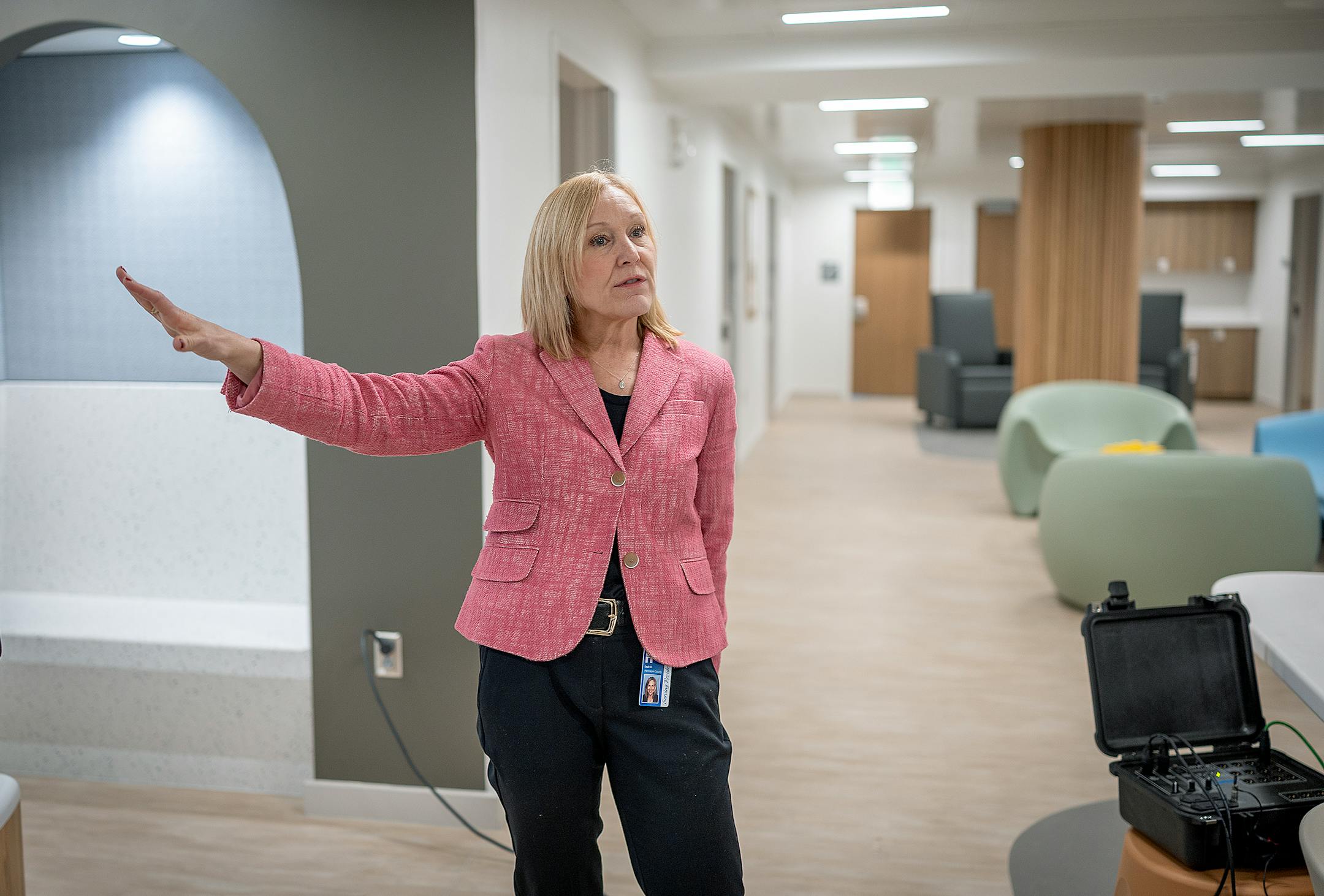
Leah Kaiser, the behavioral health director for Hennepin County, gives a tour of the new youth behavioral stabilization center. (Elizabeth Flores/The Minnesota Star Tribune)

The youth mental health care system over the last decade has been under transition and stress, Kaiser said. The center is one solution to lengthy waitlists for longer term treatment options, she said.

The facility has two “neighborhoods” to promote a familial vibe to the space, including a dining room area in each of them. Every room has a personal bathroom and desk.

Kids will be referred to the program by county case workers and receive multiple types of therapy while there. A nurse will be present every day for any medication needs, Kaiser said. Kids will also be taught by a Minneapolis Public Schools teacher while they stay.

Margaret Vimont, chief operating officer of Nexus Family Healing, which partnered with the county to build and staff the center, said her organization hears from other Minnesota cities and counties regularly.

“I don’t know of a county that couldn’t use the resource,” she said.

Ramsey County is looking to operate secure youth treatment homes to keep those with intense mental health needs out of juvenile detention centers. The Washburn Center for Children hired an acute response therapist who will go to Children’s Minnesota ERs in the Twin Cities to work with families in such crisis situations.

Vimont said the main issue is funding. Hennepin County spent $20 million just to build the new space alone. Another $7 million will go to maintaining the program and staff every year.

The new youth behavioral stabilization center on Chicago Avenue in Minneapolis has individual rooms for 13 kids. (Elizabeth Flores/The Minnesota Star Tribune)

Emergency rooms and detention centers focus on calming kids and keeping them safe, Johnson said, but often cannot provide mental health services.

Stabilization centers provide both, she said, and additional family involvement. Giving kids more skills and guardrails when they move into a longer care option or go back home, she said, is essential to improving their lives.

“[Kids] are not an island, they’re part of a whole system,” she said. “For the kiddo to get the changes and supports they need, you have to add that family component. That’s the biggest part.”

about the writer

about the writer

Eleanor Hildebrandt

Reporter

Eleanor Hildebrandt is a reporter for the Minnesota Star Tribune.

See Moreicon

More from News & Politics

See More
card image
card image