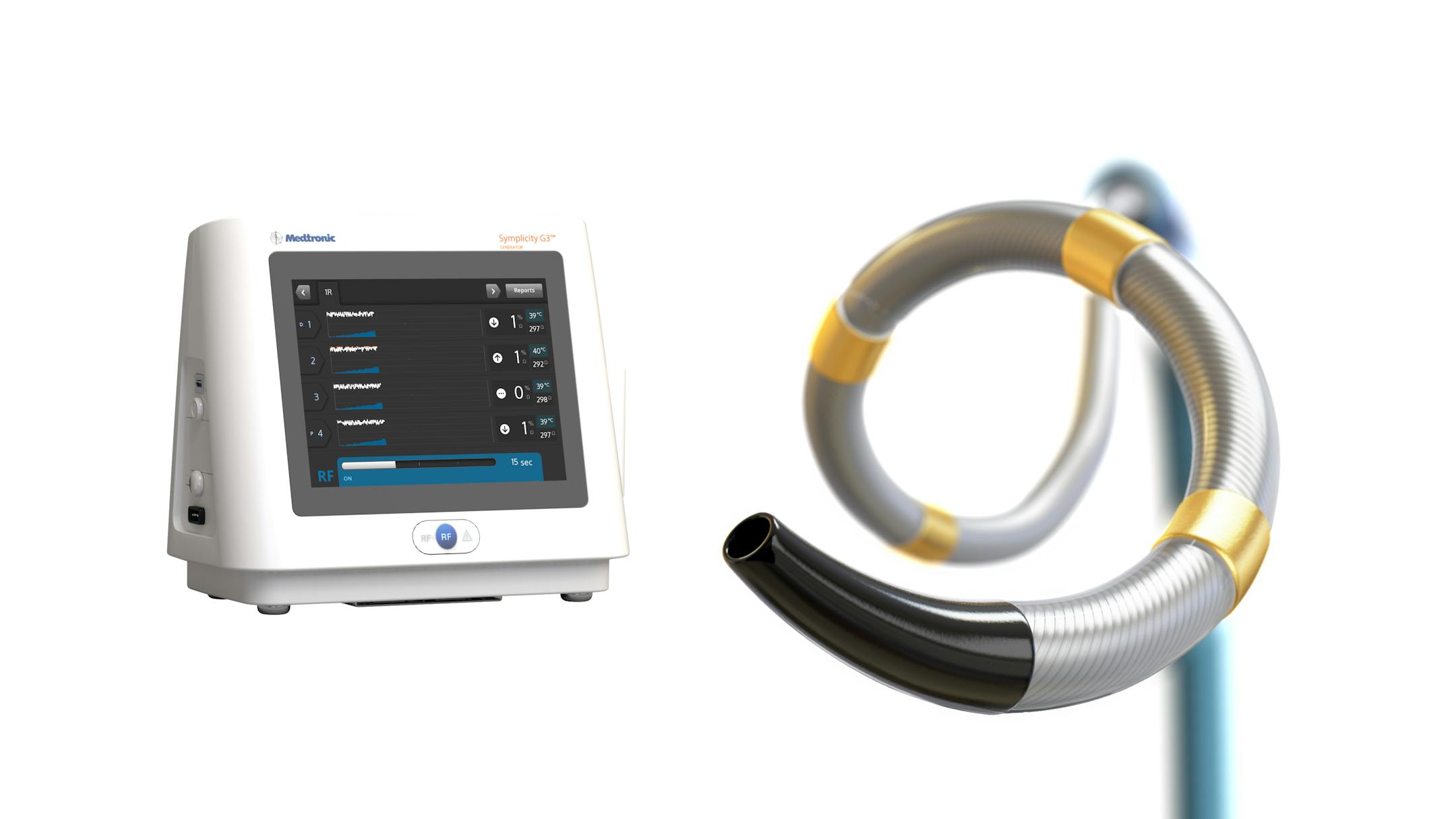
A Medtronic hypertension procedure that can provide last-resort treatment for a condition that affects nearly half of all U.S. adults received Medicare coverage Tuesday, presenting a possible new revenue stream for the Minnesota-run medtech company.
Dr. Joshua Jennings, a TD Cowen analyst, said in a note he expects the “very reasonable” terms of the Medicare coverage to “support a major growth opportunity” for Medtronic, as about 50% of American patients with uncontrolled hypertension are Medicare recipients. Medtronic has been under pressure from shareholders to make the company’s stock price more competitive, and CEO Geoff Martha has cited this technology among several growth-fueling innovations.
The procedure, called the Symplicity Spyral Renal Denervation System, delivers radiofrequency (heat-creating) energy that stuns overactive nerves near the kidney, which contribute to high blood pressure. Having high blood pressure increases the odds of heart disease and stroke, and only about 25% of people with hypertension have it under control, per a Centers for Disease Control and Prevention estimate.
Researchers previously reported drug and lifestyle treatment options have not slowed the growing prevalence of hypertension. Symplicity provides another option for patients who haven’t improved with medication, diet or exercise.
Analysts originally expected the Centers for Medicare and Medicaid Services to grant coverage for Symplicity on Oct. 8, but the government shutdown likely delayed the timeline, Jennings and a colleague said in a separate note. The agency temporarily sent its furloughed employees back to work Monday to manage the open enrollment period for health insurance, the Associated Press reported.
Broad insurance coverage of the procedure will likely follow the Medicare approval. California-based Recor Medical also competes in the renal denervation field and will benefit from the Medicare decision.
Jason Fontana, renal denervation general manager at Medtronic, said in an email that the company is the market leader in the category. For Medtronic, commanding just 1% of the market for this procedure could generate $1 billion in revenue, a company spokeswoman previously said.
“We are actively building out this new market in the U.S., including training physicians, building referral pathways and establishing Symplicity clinics,” Fontana said. “Our commercial teams will be actively leveraging this milestone, collaborating closely with health care providers and health systems as we accelerate the adoption of this transformative growth opportunity for Medtronic.”