
Burcum: Is there finally momentum to curb Medicare Advantage waste and abuse?

Elon Musk’s DOGE missed a key opportunity for massive savings. But the Trump administration and Congress commendably appear to be pursuing it.

Columnist Icon
The Minnesota Star Tribune
August 3, 2025 at 9:00PM
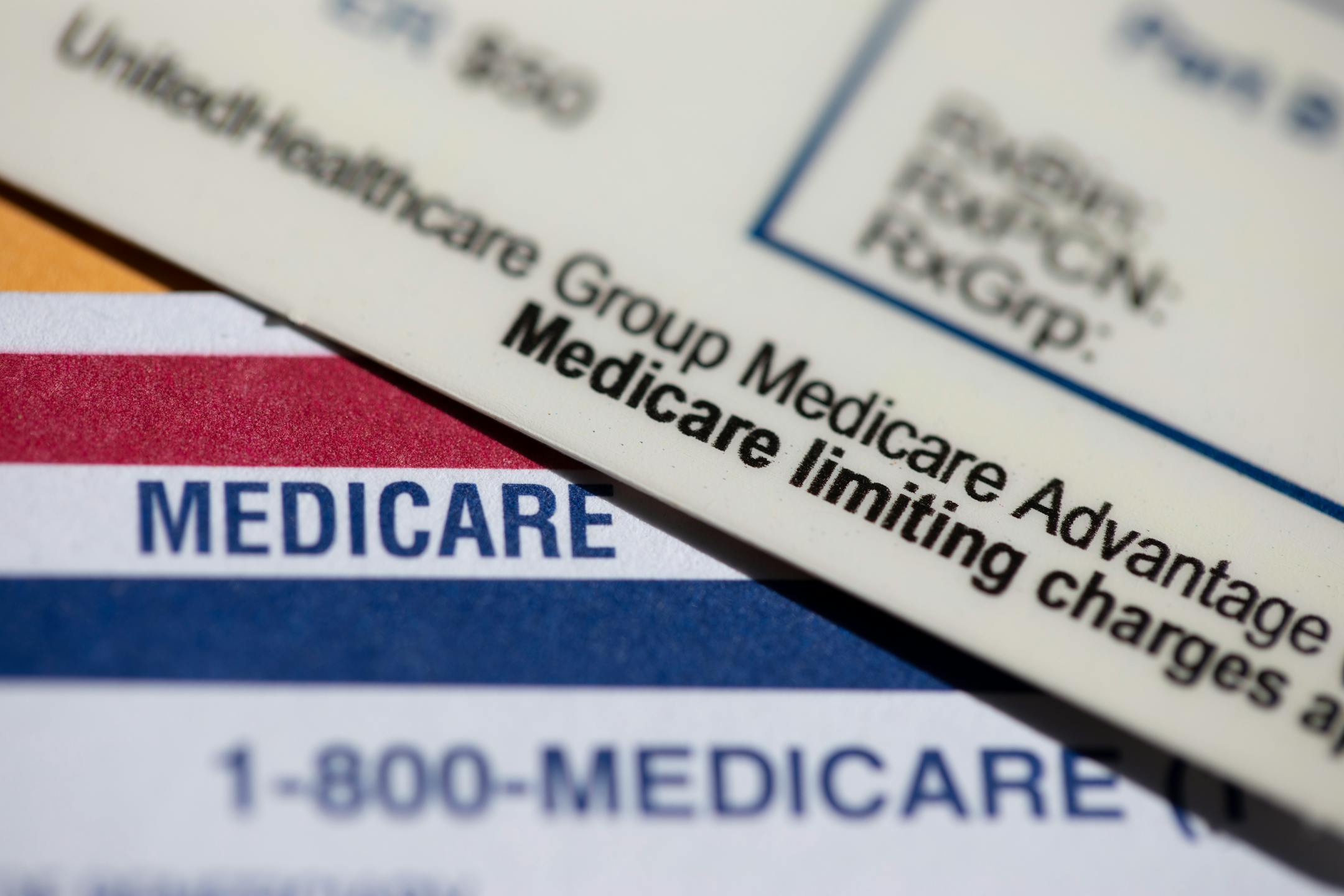
A UnitedHealthcare Group Medicare Advantage PPO card rests on top of a Medicare card. (Jenny Kane/The Associated Press)

Opinion editor’s note: Strib Voices publishes a mix of commentary online and in print each day. To contribute, click here.

•••

Look over here, at the Medicare Advantage program!

If I could have spoken directly with Elon Musk in late 2024 as he launched his Department of Government Efficiency (DOGE) to reduce spending, that’s the direction I would have urged the tech billionaire to pursue. (For the record, I did write a column about this.)

The reason: There’s massive savings to be found, roughly $83 billion a year, along with an existing roadmap how to do so from the Medicare Payment Advisory Commission. Known as MedPAC, this is a congressionally authorized nonpartisan agency that provides deeply researched recommendations and analysis to lawmakers on the federally run health program for seniors.

Nearly 70 million Americans, most of them 65 and up, rely on Medicare for coverage. An increasing number of them are enrolling in Medicare Advantage (MA), meaning their plans are administered by private insurers, with Minnesota-based UnitedHealth Group the nation’s largest MA provider. More than half, 54%, of Medicare enrollees choose an MA plan, up from 32% a decade ago, according to KFF, a respected health policy group.

I understand why the shift is happening. MA plans often have lower premiums and extra benefits, and combine medical and drug coverage compared to traditional Medicare. It feels more like the employer plans with which retirees are familiar. But there are trade-offs. MedPAC’s March 2024 report states the federal government spends an estimated 22% more for MA enrollees than for traditional Medicare enrollees.

It estimated the difference added up to extra costs of $83 billion in 2024. One key reason: what MedPAC politely calls “coding intensity,” an insurer practice that involves documenting more patient health risks, which in turn boosts the amount the government pays to insurers to cover them. It’s also unclear how much enrollees utilize the extra benefits, such gym memberships.

Elon’s young techies disappointingly didn’t look to MA for savings as much as they should have. But I’ve been pleasantly surprised by the apparent tough-minded scrutiny of MA by the Trump administration and congressional Republican majorities.

Dr. Mehmet Oz, the TV doctor appointed by President Donald Trump to run the Centers for Medicare and Medicaid Services (CMS), said during a U.S. Senate hearing in March that there’s a “new sheriff in town.” As part of that, he pledged to address potential MA waste and abuses.

On May 21, the agency Oz now leads issued a news release touting its new “aggressive strategy to enhance and accelerate Medicare Advantage audits.” As part of that, CMS took direct aim at coding intensity.

The agency noted that it is several years behind on the audits that verify the more serious diagnoses triggering higher payments to MA insurers. To address this backlog, the agency said it has a plan to complete all remaining audits by early 2026.

To do so, it will wield enhanced technology and will expand its team of medical coders from 40 to roughly 2,000 by Sept. 1 of this year.

A U.S. House hearing on July 22 put a harsh spotlight on MA as well. Expert witnesses included Matthew Fiedler of the Brookings Institution. His written testimony notes that the extra costs of MA coverage are borne not just by taxpayers but by all Medicare enrollees through higher Medicare Part B premiums.

In addition, Fiedler states that “Paying an MA plan an additional dollar delivers much less than a dollar of value to enrollees. As a result, only part of the resulting increase in payments to plans (evidence suggests about 50 cents) finances extra benefits, such as reduced premiums, reduced cost-sharing, or coverage for services that Medicare does not cover (e.g., dental services). It is unclear how insurers use the amounts that are not passed through to beneficiaries, but at least part is likely captured as profits or spent on marketing.”

A July 24 Star Tribune news story also notes that Minnesota-based UnitedHealth announced it is “cooperating with a U.S. Department of Justice investigation into its Medicare business.”

From my perch, this looks like a serious effort toward curbing waste and potential abuse in a huge taxpayer-funded program, a welcome contrast from DOGE.

I’m not a fan of other Trump-era health policies, particularly the devastating cuts to Medicaid, the nation’s safety net program for the needy, included in the “Big Beautiful Bill.” But the recent momentum on MA reforms is encouraging.

The $83 billion in annual savings potentially from MA, if it really happens, could be repurposed to offset the Medicaid reductions, for example. It could also be used for deficit reduction, to address Medicare Part A solvency concerns, or to head off other harmful health cuts, such as the rollback of expanded subsidies to make coverage affordable for those who buy health plans in the individual insurance market.

That said, experts I reached out to were less optimistic about whether this is a real MA reform moment.

Robert Weissman is co-president of Public Citizen, a nonprofit consumer advocacy group. He recently testified before a U.S. Senate health committee. He told me I was probably being a “little bit naive.”

While he appreciates the bipartisan focus on MA reforms, he said congressional grandstanding on issues like this is too often commonplace and doesn’t lead to remedial legislation. He’s also doubtful that an administration that has treated corporations with kid gloves will follow through with real enforcement actions.

David Lipschutz, the co-director of the Center for Medicare Advocacy, is skeptical, too. He noted Oz’s CMS could do more to account for coding intensity in the rates paid to insurers, but hasn’t, continuing an unfortunate trend that spans administrations.

Lipschutz, though, sees the intensifying spotlight as useful, a sentiment I share. Health care is complex and reforms don’t happen overnight. Recent developments increase awareness about how the system works and how it might be gamed. That’s a step forward that hopefully will pressure policymakers for real reform.

about the writer

about the writer

Jill Burcum

Editorial Columnist

See Moreicon