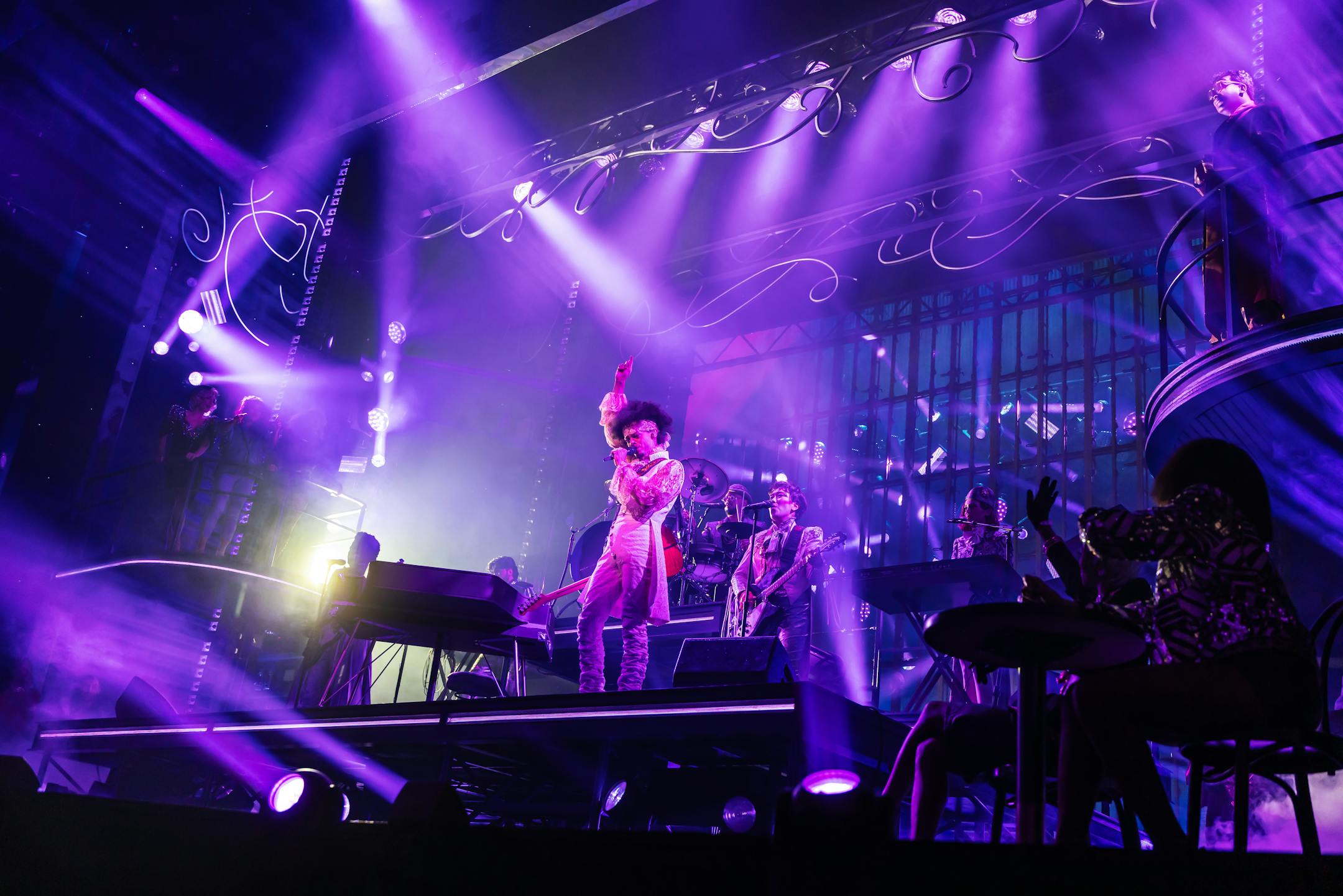
For Branden Jacobs-Jenkins, the playwright who wrote the book for the musical version of “Purple Rain,” theater is a place of solitude.
“I like to think of the theater as a gym for the emotions,” he said during an interview on CBS Evening News earlier this year. “I think, in its best iteration of itself, it’s where we go to feel things safely — that maybe we don’t feel safe feeling out in the world. And to also experience each other experiencing those things collectively.”
Since Prince’s death in 2016, fans of the music icon and innovator have searched for that special bonding moment that the new musical “Purple Rain” hopes to offer. It officially opened last Wednesday at Minneapolis’ State Theatre and will run through Nov. 23.
I believe in preserving the legacies of our musical heroes. And that ambition is even more precious for Black legends.
Last year, I visited Graceland in Memphis because my daughter saw a few movies about Elvis Presley and decided she had to see it firsthand, so I added the stop to a family reunion trip to Mississippi.
Presley’s legacy included problematic moments — see: accusations of cultural appropriation — that the long-running museum at his former home does not highlight. But Graceland is an experience that makes you feel like he’s still walking around somewhere, living and breathing. At Graceland, Elvis hasn’t left the building.
As a music connoisseur, I haven’t enjoyed that same experience with any deceased Black artist. Sure, you can visit the Stax Museum in Memphis and see a display that shows Isaac Hayes’ gold Cadillac twirling around, sparkling in a corner. In the American Jazz Museum in Kansas City, you can put on a pair of headphones and listen to Charlie Parker and John Coltrane and other jazz greats. And the Museum of Pop Culture in Seattle boasts a collection of Jimi Hendrix memorabilia that pays tribute to the brief time he graced this planet with his magical strings.
The greatest Black artists, however, are often remembered only in moments. Memorable performances shown on YouTube. Great songs played on the radio. Notable albums that are sometimes rereleased. And documentaries aired years after their deaths. But most of these phenomenal artists do not have the same staying power as many white music legends who are gifted tangible testaments of their legacies.