
Bloomington clears way for tax subsidy for $432 million Mall of America water park

A financing plan that includes private loans and a tax subsidy could pay for the Mystery Cove water park, which is slated to open in 2029.

The Minnesota Star Tribune
October 1, 2025 at 2:42PM
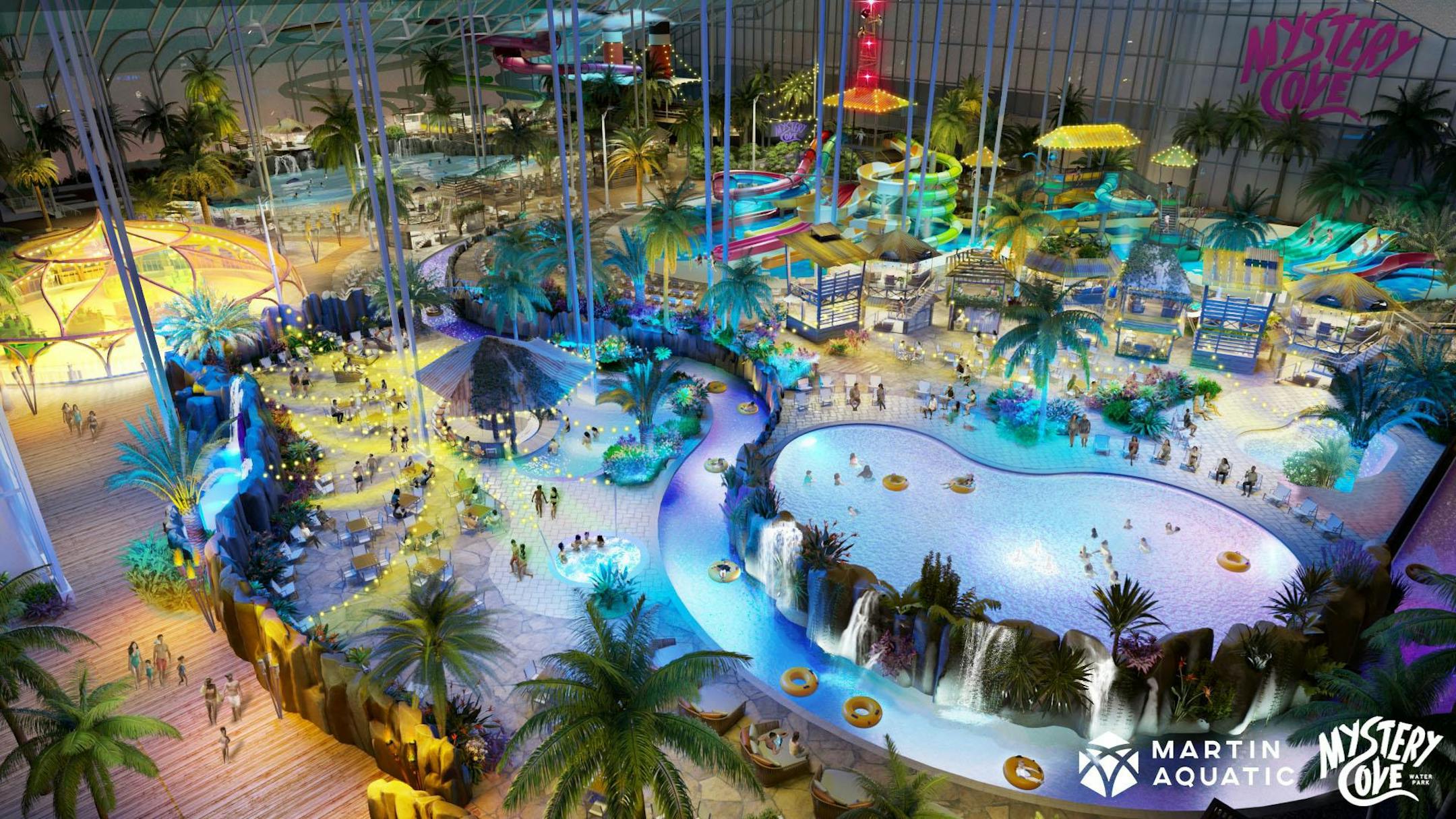
A rendering of the planned Mystery Cove water park at the Mall of America.

A $432 million water park at the Mall of America slid closer to reality Tuesday when the Bloomington City Council approved a tax subsidy that’s key to financing the project.

The approval marks a major victory for the Mall of America, which has been working for years to bring the flashy amenity to the megamall. Executives hope the project, which they say will boost tourism and tax revenue in Bloomington, inaugurates a new era for the shopping destination as it seeks to supplant stores with updated forms of entertainment.

After city approvals, construction on the water park could begin as early as this spring, with the water park slated to open in 2029.

Some Bloomington residents, however, are less enthusiastic about the water park’s complex and somewhat controversial funding approach, which will pour $160 million in property taxes generated by the mall into the project.

“This is really money that’s been made available to Bloomington for working on the Mall of America development, and it was done because of the unique nature of the project,” Port Authority President Bob Erickson said at the meeting.

Money raised through a method known as tax increment financing (TIF) can only be used to pay for projects in the mall’s “district,” ruling out its use for schools, social programs or other endeavors elsewhere in Bloomington.

The Minnesota Legislature in June passed a bill extending pandemic-era rules that loosened restrictions on the types of projects that cities can fund with TIF.

That move made it possible for the Mall of America to use that financing method to pay for the water park, and Bloomington approved that extension Tuesday night.

But officials at the meeting were quick to note that the approval doesn’t commit the city to funneling the TIF money toward the Mall of America water park. For that to happen, Bloomington officials will have to approve a redevelopment agreement at another meeting — something that appears likely to occur.

“This is technical stuff,” Bloomington Mayor Tim Busse said. “We’re not obligating any specific project here. What we’re doing is simply restating this spending plan and having that money available for an extended period of time.”

No one spoke at the public hearing that preceded the vote.

Paying for the water park

The property tax subsidy is just one part of the financing plan for the privately owned and operated park, which will feature coiling slides, a meandering lazy river and a whitecapped wave pool under a retractable roof.

Two private loans to be taken out by mall owner Triple Five Group would cover much of the rest of construction, though the ownership group hasn’t finalized them.

One of those loans, for $133 million, would be administered by the St. Paul Port Authority over 30 years. It would have a roughly 7% interest rate, according to Bloomington city documents describing the preliminary details of the private financing.

A spokeswoman for the St. Paul Port Authority said the agency hasn’t received a formal application that includes the loan amount and term.

“Those and other details such as interest rate and annual payment would be negotiated between the private parties entering into the loan financing,” she wrote in an email.

The other, a $120 million loan from a real estate company with a roughly 14% interest rate, would span at least two years. The relatively high interest rate caused some concern among mall executives and city leaders at a recent meeting.

A Mall of America spokeswoman declined to say what Triple Five’s annual loan payments will be when asked by the Minnesota Star Tribune. A Bloomington spokeswoman said the city would share more information about the terms of the loans once the city finalizes a redevelopment agreement.

The water park financing plan includes several backstops if Triple Five can’t repay the loans, including a $20 million lender-controlled securities account that can be converted into cash if the project doesn’t perform. The Ghermezian family, the developers behind megamalls in Minnesota, Canada and New Jersey, have agreed to personally guarantee the project for an unspecified amount.

Kurt Hagen, the senior vice president of development for Triple Five Group, previously said those terms protect taxpayers should the water park go into foreclosure, allowing a new ownership group to swoop in. Even if the project were to face that undesirable outcome, it would still generate jobs, tax revenue and tourism for the time it remains open, he said.

Bloomington benefits

For months, city leaders have touted the benefits the Mystery Cove water park could bring to Bloomington, including 700,000 annual visitors and millions in tax revenue.

Mall leaders, meanwhile, are optimistic that the amenity will produce profits they can invest in other projects. Ideas include an athletic facility, exhibit hall and sports medicine space.

“We’ve been talking about those about as long as we’ve been talking about a water park,” Hagen said at a September meeting. “But we’ve never had a funding source to move them forward.”

A portion of the water park’s profits could also be used to boost affordable housing and climate resiliency projects in the city.

about the writer

about the writer

Eva Herscowitz

Reporter

Eva Herscowitz covers Dakota and Scott counties for the Star Tribune.

See Moreicon