
These six charts show the Lynx’s playoff challenges aren’t imaginary

September 30, 2025
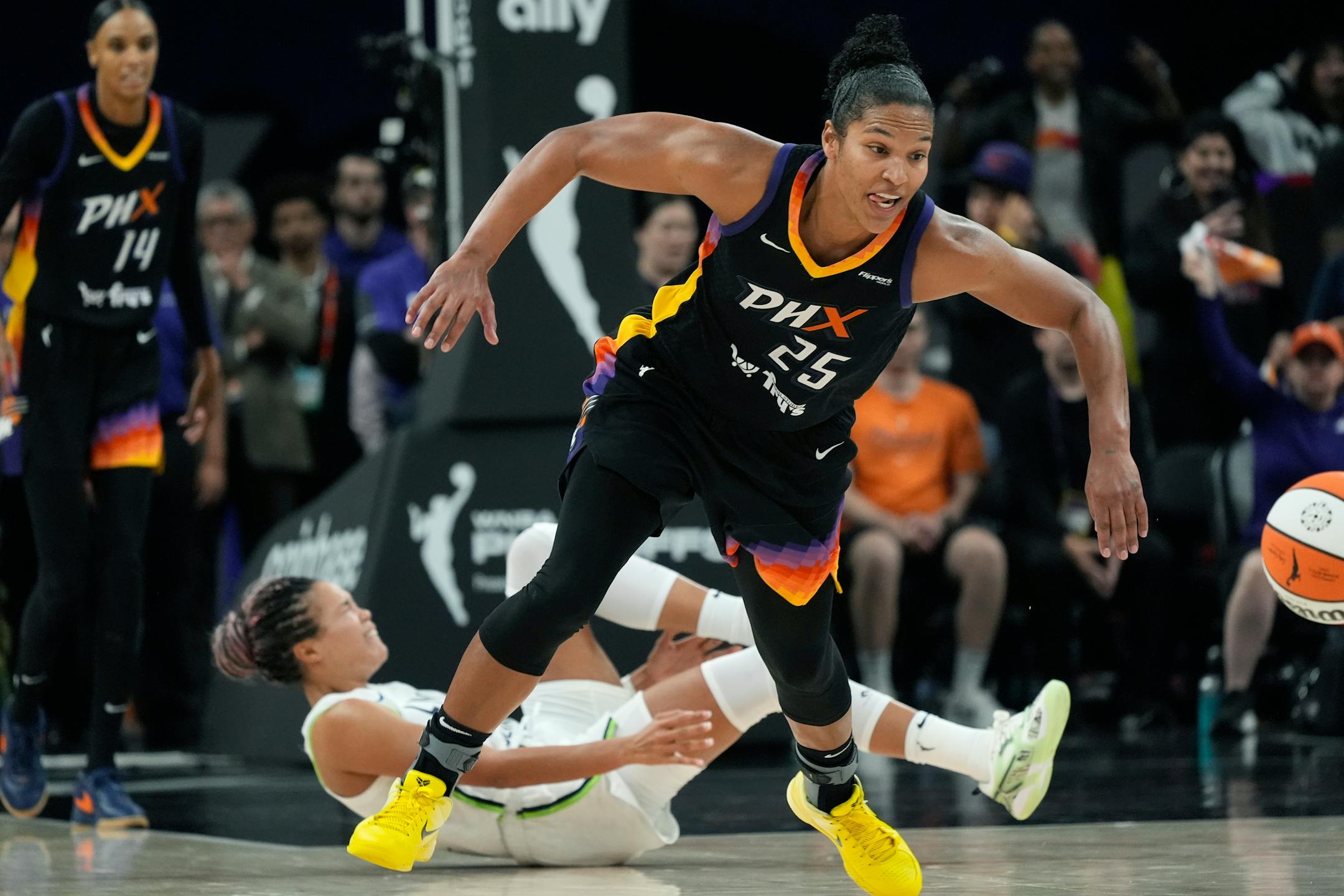
Napheesa Collier of the Lynx goes down after colliding with Mercury forward Alyssa Thomas in Game 3 of the WNBA semifinal series Friday in Phoenix. Collier was injured on the play, tearing ligaments in her left ankle. (Ross D. Franklin/The Associated Press)

Comparing their regular season stats to the playoffs show how the game’s shift to more physicality in the postseason is harder on the Lynx.

The Minnesota Star Tribune

The Lynx’s recent playoff ouster, in Game 4 of the WNBA semifinals in Phoenix, highlights a trend that has affected the franchise since it last won a WNBA championship 10 years ago: A team built more on finesse and ball movement has found the going tougher in the playoffs, which in recent seasons have seen much more physical play.

Coach Cheryl Reeve, who saw her attempt at a fifth title thwarted last season with late game calls, exploded during a Game 3 loss at the lack of calls.

Fewer fouls called

It’s true that the team has been seeing fewer free-throw opportunities in the playoffs than they do in the regular season.

Lynx star Napheesa Collier, who during the regular season attempted about five free throws each game, shot just just two in three games against the Mercury before being injured at the end of Game 3.

Having made the playoffs in 14 of the past 15 seasons, the Lynx have only shot more free throws per game in the playoffs compared to the regular season four times, including three of their championship seasons.

Collier wasn’t the only star player not getting calls. Las Vegas Aces center A’ja Wilson, who averaged 7.3 free throw attempts during the regular season, had just one on the same night that Collier didn’t attempt any.

That trend works both ways, though. The Lynx often have fewer personal fouls called on them in the playoffs compared with the regular season, too.

Rebounds gain importance

Fewer fouls on physical play means rebounding becomes a more important factor.

ADVERTISEMENT

The Lynx improved their rebounds per game in the playoffs ever so slightly this year for the first time since a one-game playoff loss in 2019.

The other two years they improved late in the season were championship years: 2017 and 2011.

Tougher defenses lead to fewer assists

The Lynx offense is largely predicated on ball movement and passing to open players for shots, often looking inside to former post players like Sylvia Fowles and Rebecca Brunson for easy baskets.

But in the playoffs, as defenses stiffen and offensive possessions are more closely contested than in the regular season, assists decrease almost every time they enter the postseason.

During the 2016 run to the WNBA Finals, the Lynx averaged 0.9 more assists per game than they did during the regular season, the only time they averaged more assists in the playoffs than the regular season.

Despite the increase in assists that year, the Lynx fell to the Los Angeles Sparks in Game 5 of the Finals.

Rarer 3s don’t always mean losses

Ball movement often leads to good looks beyond the 3-point arc, but facing stronger defenses in the playoffs, the Lynx often struggle to improve their made 3s into the postseason. They’ve only done it four times.

Last year’s team saw their biggest drop in 3-pointers in the playoffs and yet nearly turned it into a championship.

It’s worth noting that in 2018, 2019 and 2021, the Lynx lost single-elimination first-round playoff games, making the per game averages for those seasons a very small sample size.

Points on the board is more consistent

If there’s one metric that has become more even over time, it’s points per game. In 2012, 2013 and even 2018, the Lynx were struggling to put up as many points in the playoffs as they did in the regular season.

Now? They’re nearly even.

about the writer

about the writer

Jim Foster

Graphics Producer

Jim Foster is a graphics reporter/producer who began his career at the Minnesota Star Tribune in 1985. He specializes in graphics for the Business section.

See Moreicon

More from Lynx

See More
card image
Adam Hunger/The Associated Press

The WNBA and players union agreed to an extension of the current collective bargaining agreement to Jan. 9 just before their current deadline ran out Sunday night.

card image
card image