The last bite: Where’s the beef ceiling? Demand rising even at record prices

Also, the latest dire farm forecast, a sorghum superfood study and USDA reorganization concerns in this week’s food and ag news roundup.

The Minnesota Star Tribune
August 29, 2025 at 11:01AM
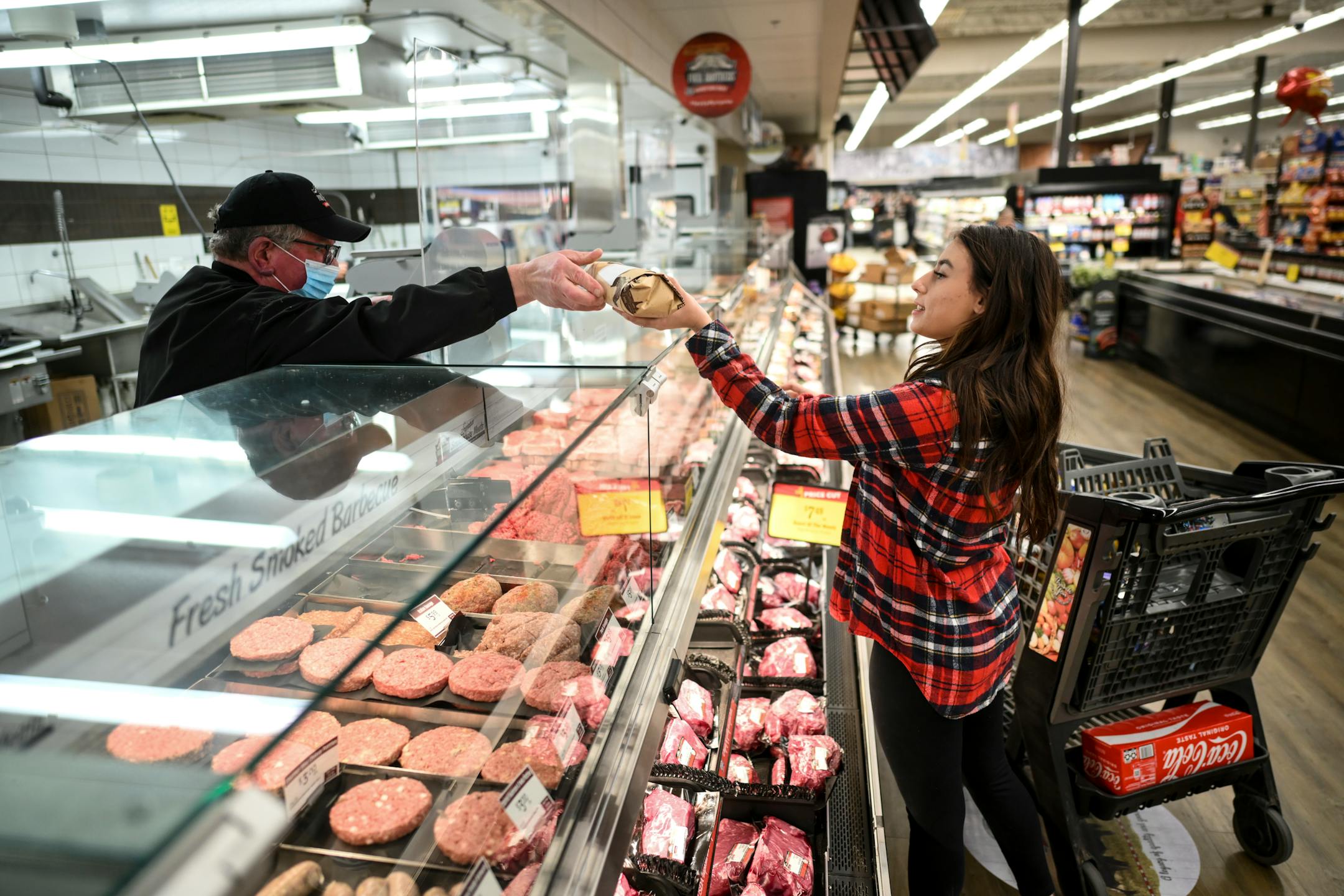
The meat counter at Coborn's in Delano, Minn., in early 2022. Even as beef prices continue hitting record highs, demand for the red meat is also reaching a modern record. (Aaron Lavinsky/The Minnesota Star Tribune)

Welcome to “the last bite,” an end-of-week food and ag roundup from the Minnesota Star Tribune. Reach out to business reporter Brooks Johnson at brooks.johnson@startribune.com to share your news and sorghum recipes.

Typically, when some product becomes too expensive, people buy less of it.

Not so with beef. Despite record high prices for the red meat — thanks to a record low number of cattle raised for slaughter — demand for the fresh protein keeps rising.

Folks are more interested in a Jucy Lucy than following the law of supply and demand, it seems.

A recent report from CoBank said the “remarkably steady allure of beef, even at current prices” stems from “heightened interest in dietary protein, changing health perceptions surrounding beef and the availability of restaurant-quality beef at retail grocery stores.”

The ag-lending cooperative found beef demand is at the highest level this century even as average fresh beef prices across all cuts have hit a record $8.90 per pound nationally, 9% above prices last summer.

Brian Earnest, CoBank’s lead animal protein economist, wrote budget-conscious grocery shoppers are looking for cheaper cuts or more ground beef instead of the more spendy steaks. But that helped push ground beef prices to a record of $6.25 per pound in July.

A pound of ground ran around $3.80 before the pandemic, according to the Bureau of Labor Statistics.

“This consumer pressure on ground beef supply has contributed to tighter availability and interest from other top-producing nations,” Earnest wrote.

On the demand side, it’s similar to the high egg prices conundrum: If consumers bought fewer cartons when eggs were hitting records this spring, prices might have come down faster.

Cattle at the Little Timber Farm in Blackduck, Minn., in February. (Anthony Souffle/The Minnesota Star Tribune)

But the inelasticity — a term for the willingness of consumers to accept price increases for goods they consider necessities — means there might be more records set for beef prices in the months and years to come.

“While larger macroeconomic shifts could influence purchasing behavior in the future, so far, consumers have shown little appetite for sacrificing beef,” according to CoBank.

On the supply side, the U.S. beef herd is at a 75-year low, and slaughter rates are dropping. Imports, especially from Brazil, are incurring higher tariffs.

“Most observers suggest the nation’s cattle supply will remain strained through at least 2026 and likely through 2027,” CoBank’s report found. “That means retail beef prices will remain elevated for the foreseeable future.”

One winner in all this: Ranchers. Drought and poor forage conditions in some areas made for a few lean years, but they’re now lassoing a good bounty for their bovines.

Data dish

As for the row croppers of the great middle-west, the latest farm credit survey from the Federal Reserve Bank of Minneapolis indicated it’s been a tough season.

In Minnesota, nearly every banker surveyed said farm income had fallen and will continue to fall, while farm capital spending had dried up compared to last year. And a majority said the rate of loan repayments has also ebbed.

“Prices are below break-even for most producers,” a Minnesota banker told the Minneapolis Fed. “A majority will have to refinance [loans].”

Another banker raised the specter of broader financial trouble.

“Another poor year with low profitability will put significant pressure on financial conditions for 2025,” the report read, “which will create significantly more credit issues across the banking industry.”

Commodity catch-up

Sorghum, a nutrient-packed ancient grain, is looking to earn its superfood status.

The Sorghum Checkoff, an industry advocacy group, has already trademarked it as “nature’s super grain.” A new human study will look at how daily whole-grain sorghum consumption can help with insulin resistance, inflammation and gut health. The high-fiber, high-protein ingredient can be a healthier alternative to rice or quinoa in dishes like grain bowls and stir-fries.

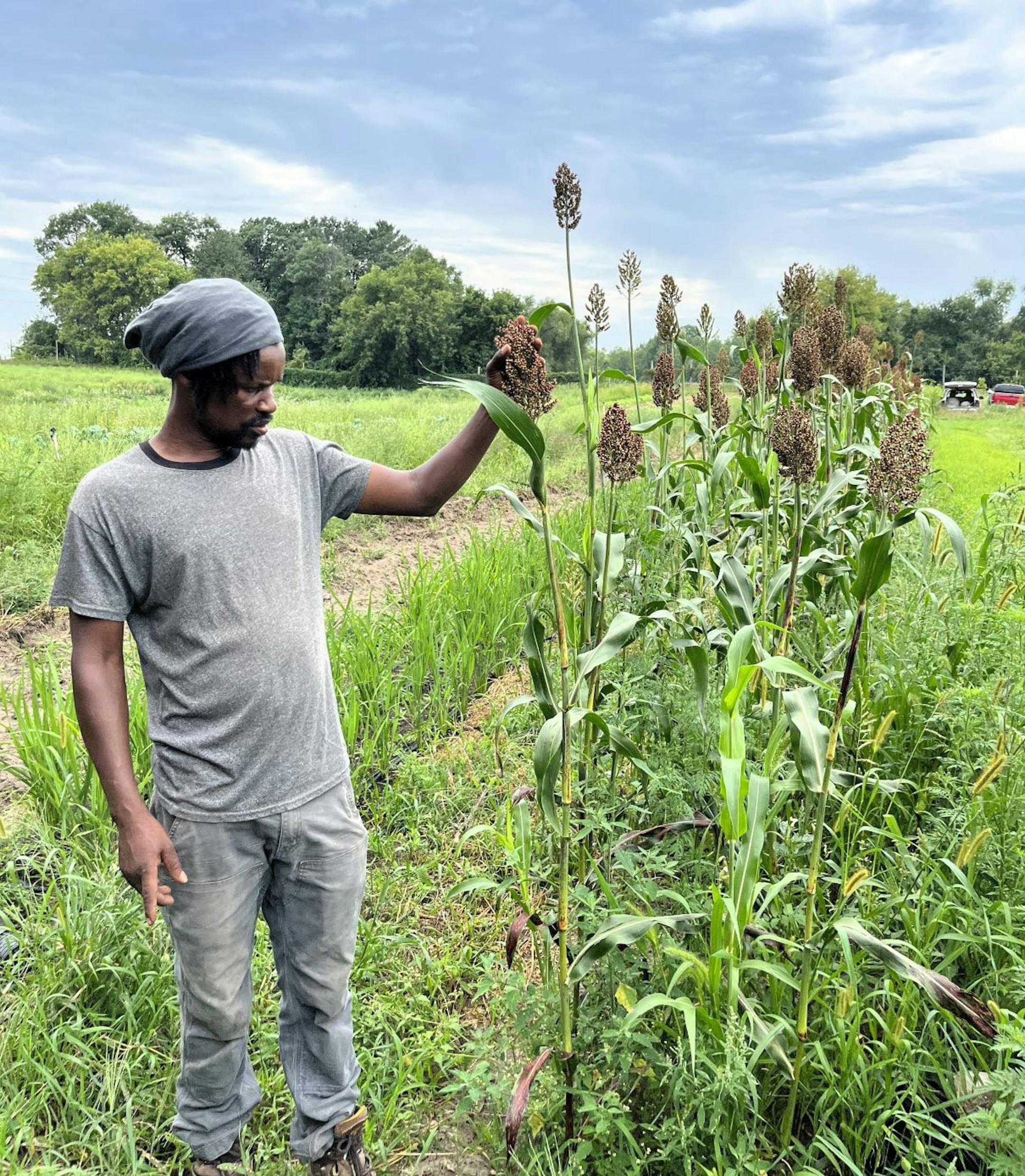
Moses Momanyi grew an experimental row of sorghum at his Dawn2Dusk farm outside Cambridge, Minn., this year. (Brooks Johnson/The Minnesota Star Tribune)

“Sorghum farmers have always known this crop is special, and now we’re proving it on the biggest stage: human nutrition,” Sorghum Checkoff CEO Tim Lust said in a statement. “This groundbreaking trial is not just a research milestone; it’s laying the groundwork for sorghum’s future.”

The few sorghum farmers in Minnesota mostly grow it as forage for livestock rather than as grains for humans. Most of the country’s production is in Kansas and surrounding states within the Sorghum Belt. A majority of harvested sorghum exports to other countries or becomes animal feed.

But if the new study can prove health benefits and garner the same kind of attention as kale, acai berries and other superfoods, sorghum could end up in more Minnesota crop rotations.

“The data will be crucial as we pursue qualified health claims for sorghum with the FDA and collaborate with food companies on new sorghum-based products that deliver on nutrition and sustainability,” Lust said.

National nugget

A handful of Democratic senators are trying to slow down the U.S. Department of Agriculture’s big reorganization into five regional hubs. They argue employees need more information, time and say.

“Providing clarity on the specific plan, sufficient time to formulate comments and a transparent, familiar process will improve the final outcome and provide confidence that all opinions were considered,” wrote Sen. Amy Klobuchar in a letter that fellow Minnesota lawmaker Sen. Tina Smith and others signed.

Ag Secretary Brooke Rollins told employees in a video message the change is about moving “key services outside Washington, D.C., to ensure that USDA is located closer to the people” it serves “while also providing a more affordable cost of living for employees and their families.”

Klobuchar is the top Democrat on the Senate Ag Committee and has called the administration’s proposed reorganization a “half-baked plan.”

“This reorganization was developed without the input of Congress or the very stakeholders the USDA aims to serve,” she said at a recent hearing.

about the writer

about the writer

Brooks Johnson

Business Reporter

Brooks Johnson is a business reporter covering Minnesota’s food industry, agribusinesses and 3M.

See Moreicon

More from Agriculture

See More
card image
card image