
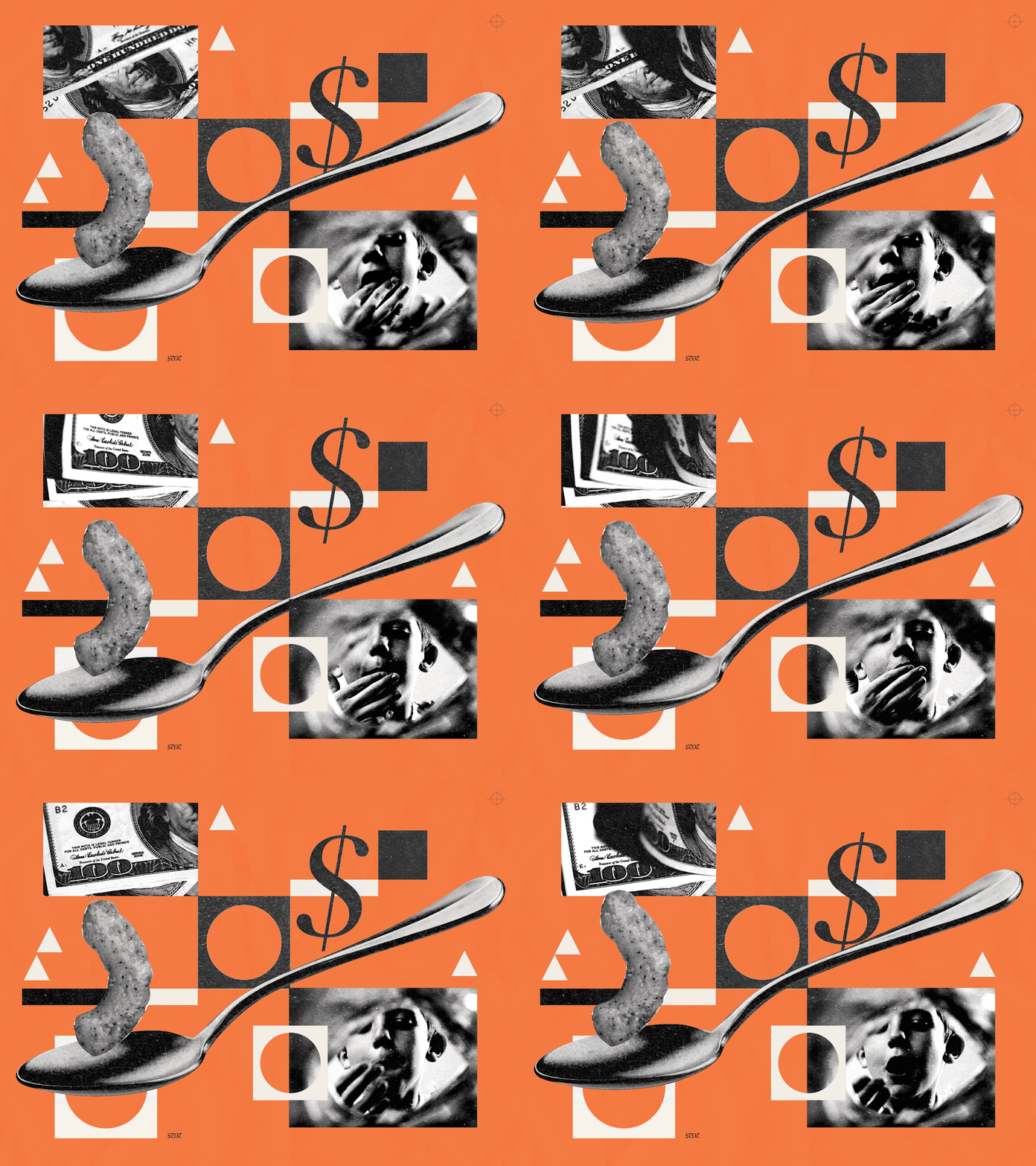
America’s ‘inflation diet’ is starving junk food sales at Minnesota food companies

October 27, 2025
(Brock Kaplan/The Minnesota Star Tribune)

Consumers are rebelling against higher food prices by leaving more of those tasty wants on the shelf in favor of satiating needs, denting the bottom line of companies like General Mills.

The Minnesota Star Tribune

Half of the cheap-and-tasty paradigm that makes junk food so appealing is collapsing: Many of those guilty-pleasure treats aren’t so cheap anymore.

More than any impact weight-loss drugs like Ozempic are having on big food companies, “America’s best ‘diet’ may seem to be inflation, as stretched consumers cut back,” wrote Piper Sandler food industry analyst Michael Lavery.

Researchers are still studying if there are health benefits to higher prices on not-so-good-for-you food. Food executives have made it clear those higher prices are hurting their companies’ financial health. And that could have implications for Minnesota’s economy, home to food giants like General Mills.

Irresistible sweets, savory snacks and fast food have shaped the American diet with big flavors and minimal nutritional value for a century now. The emergence of healthier alternatives combined with consumers who now routinely read labels, shop with technology and pay attention to diet have chipped away at that. But most of all, shoppers seem to be collectively drawing the line of how much is too much for junk food.

Rising food prices remain the top concern among consumers globally, according to a recent NielsenIQ study. Food inflation ranked higher than war, job security, housing costs and climate change.

Almost all food is noticeably more expensive now compared with five years ago. And healthy substitutes for convenient packaged foods are still usually pricier. But the first items inflation-burdened shoppers cut from their grocery lists to stay under budget seem to be the less-healthy wants instead of the satiating needs.

So when a big bag of Cheetos costs more than $7 at some retailers when it was around $4 a few years ago — and that “party size” is also a few ounces lighter than it used to be — the mouthwatering appeal is a little easier to resist.

“Once people start getting into tradeoffs, they’re going to have to prioritize ‘food’ over ‘junk,’” said Harvard sociologist Caitlin Daniel, a Minneapolis native who has researched the link between food costs and healthy eating.

Lower prices lure back

Overall, big food companies have struggled to sell more food in recent years. Any revenue growth tends to come from price increases, not more unit sales.

But higher prices for food are unpopular and became a key campaign issue in the presidential race last year.

“We have the expectation that food is inexpensive, and we operate on anchors like that,” Daniel said.

General Mills is clawing back some higher prices, which revived shelf appeal for its Totino’s brand.

Company leaders recently boasted a 20% increase in big bags of pizza rolls sold after price reductions earlier this year. About two-thirds of the Golden Valley-based company’s retail portfolio will also see prices fall in the coming months.

“We have a really surgical answer for every brand,” said Dana McNabb, head of the North America pet and retail divisions at General Mills, at the company’s investor day last week.

But many food companies, like Hormel and Oreo-maker Mondelez, are still raising prices to preserve their profit margins in the face of record costs of cocoa, coffee and beef.

Hormel president John Ghingo said in August the Austin, Minn.-based company behind Spam, Skippy and Planters has to be “very mindful of consumers, what they’re willing to pay and [the company’s] brand strength.”

All different kinds of Spam are displayed on shelves at a grocery store in Schaumburg, Ill., in September. (Nam Y. Huh/The Associated Press)

Then there is “shrinkflation,” where prices are stable, but packages contain less food. PepsiCo, which owns Frito Lay and Cheetos, had to start filling some chip bags a little fuller last year after consumer backlash over smaller portions.

What has been successful are smaller sizes for the right price. Not quiet shrinking but a new packaging scheme altogether, like a three-pack of Gushers for $1.

“Brands can really lean into making consumers feel like they’re heard,” said Matt Adams, a principal at Deloitte’s retail consultancy. “Companies figuring out the balance between price and value perception are the ones really winning.”

The future of processed food might feel low stakes for many consumers. But already, General Mills is laying off staff as part of a broader “transformation” to manage falling sales. Deeper cuts could have painful impacts for Minnesota.

Cheetos, too, has a Minnesota connection: Land O’Lakes supplies the cheesy powder that coats the corn snacks. A decline in orange dust-coated fingers can ripple all the way back to the cooperative’s dairies and plants.

Without sales growth comes a hunt for productivity. Nestle, the world’s largest food company, recently announced it’s cutting 16,000 jobs, about 6% of its workforce, and will bring in more automation in office jobs and at factories to become “an agile company.”

The Swiss giant’s stock price rose 10% on the news.

What’s left behind

Food prices aren’t rising as fast as they did in the later years of the pandemic. But they haven’t fallen, causing accumulated sticker shock at the grocery store.

“Inflation has really turned consumers into value skeptics,” Adams said. “They feel like they’re paying more and getting less.”

That’s true for Evan Perera and his family in the Twin Cities, who have cut out “non-necessities” from their grocery shopping.

“If it were just food prices going up, we might be able to make it work,” he said. “But with the cost of everything else going up, too, we can’t justify buying treats or going out to eat very often.”

Adams said younger shoppers especially are more attuned to the health-and-wellness trend in food and beverages. But the search for the best price cuts across paycheck amounts.

“At every income level, what consumers want is to feel like they’re getting a good deal,” Adams said. “They’re taking the wins where they can get them.”

Convenience remains a major driver for packaged-food sales. But Daniel, the Harvard sociologist, found that foods have to satiate when consumers are making budget tradeoffs: “Chips don’t get you full. Ramen doesn’t get you full.”

When she went shopping with lower-income families as part of a study, the last-second decisions at the register often resulted in the less-nutritious, nice-to-have indulgences going back on the shelf, not the essentials.

“Food is an affordable luxury,” Daniel said. “But you can only splurge so much.”

Aldi customers Cindy Goodrich and Jeannie Murdock peruse the aisles during the grand opening for a new Aldi store last year in Ramsey. (Anthony Soufflé/The Minnesota Star Tribune)
about the writer

about the writer

Brooks Johnson

Business Reporter

Brooks Johnson is a business reporter covering Minnesota’s food industry, agribusinesses and 3M.

See Moreicon

More from MN Fortune 500

See More
card image
Carlos Gonzalez/The Minnesota Star Tribune

From past iterations of shopping carts to a salvaged Target Center “T,” these researchers can trace the Minneapolis-based retailer’s roots back to Dayton’s department store in the early 1900s.

card image
card image