Advertisement

How two small suburban districts became the face of the school response to ICE

Immigration enforcement has had an outsized impact on two Twin Cities-area school districts, propelling the superintendents of Columbia Heights and Fridley into the national spotlight.

The Minnesota Star Tribune
February 25, 2026 at 11:00AM
Flags representing the countries from which students and their families hail are displayed in the lunchroom at Valley View Elementary School in Columbia Heights on Feb. 19. (Leila Navidi/The Minnesota Star Tribune)
Advertisement

Some of the sharpest pushback against the tactics in the recent immigration enforcement surge in Minnesota have come from two surprising voices: the leaders of small neighboring suburban school districts that rarely make headlines.

In the north metro, Fridley and Columbia Heights superintendents Brenda Lewis and Zena Stenvik lead districts that each span less than 6 square miles and serve fewer than 3,500 students. But their diverse schools have experienced an outsized impact during Operation Metro Surge, with the detention of several students and dozens of parents.

As a result, the two school leaders were among the first — and most outspoken — educators in Minnesota to oppose the immigration crackdown, which propelled the two women to national attention. They’ve been flooded with media requests from across the world in the past two months, with Stenvik giving multiple interviews about 5-year-old Liam Conejo Ramos, whose detainment drew widespread condemnation.

On Tuesday, Lewis flew to Washington, D.C., to attend a counter-rally to President Donald Trump’s State of the Union speech as a guest of U.S. Sen. Tina Smith.

While other school leaders were more reluctant to speak publicly, the stories the two women shared helped transform scattered reports of detentions into a broader public understanding of how the federal surge affected children and classrooms, and inspired parents to action.
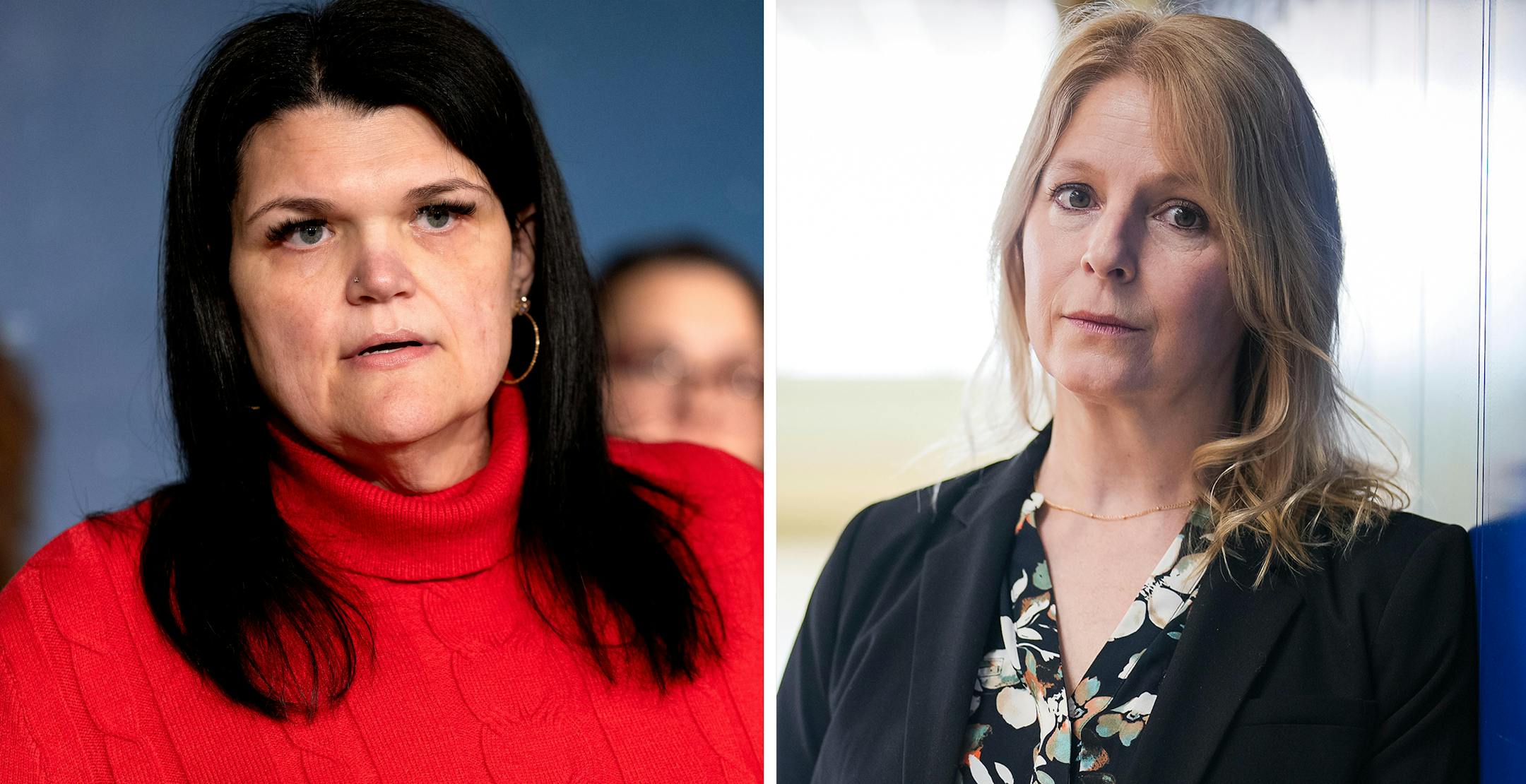
Superintendents Brenda Lewis of Fridley, left, and Zena Stenvik of Columbia Heights. (Carlos Gonzalez/The Minnesota Star Tribune, Leila Navidi/The Minnesota Star Tribune)

Now the superintendents are trying to turn that attention into long-term support — to address learning loss, rising mental health needs and the potential financial hit from enrollment declines.

Speaking up

When the first Columbia Heights student was detained in January, Stenvik stayed quiet. When Liam was taken, something shifted, she said. That same morning, another student was detained without a parent.

With Liam’s mother’s blessing, Stenvik and school board Chair Mary Granlund decided to share his story and reveal that several Columbia Heights students had been detained over a matter of weeks.

Advertisement

Inside Liam’s classroom on Jan. 21, flanked by his teacher and principal, Stenvik led her first-ever news conference. Behind her, a screen displayed what became the iconic image: Liam in a blue bunny hat and Spider-Man backpack.

“Although I didn’t want to speak up, it just became so obvious that we needed to,” Stenvik said.

She’s remained outspoken, even after Liam was returned home and news of the federal drawdown, she said, because she knows that Liam’s story isn’t an isolated one, even in her own district.

In addition to the experiences of the six other Columbia Heights students who were detained, Stenvik thinks of students she’s heard from who weren’t taken because they hid in closets or outside in the cold when federal agents arrived at their door.

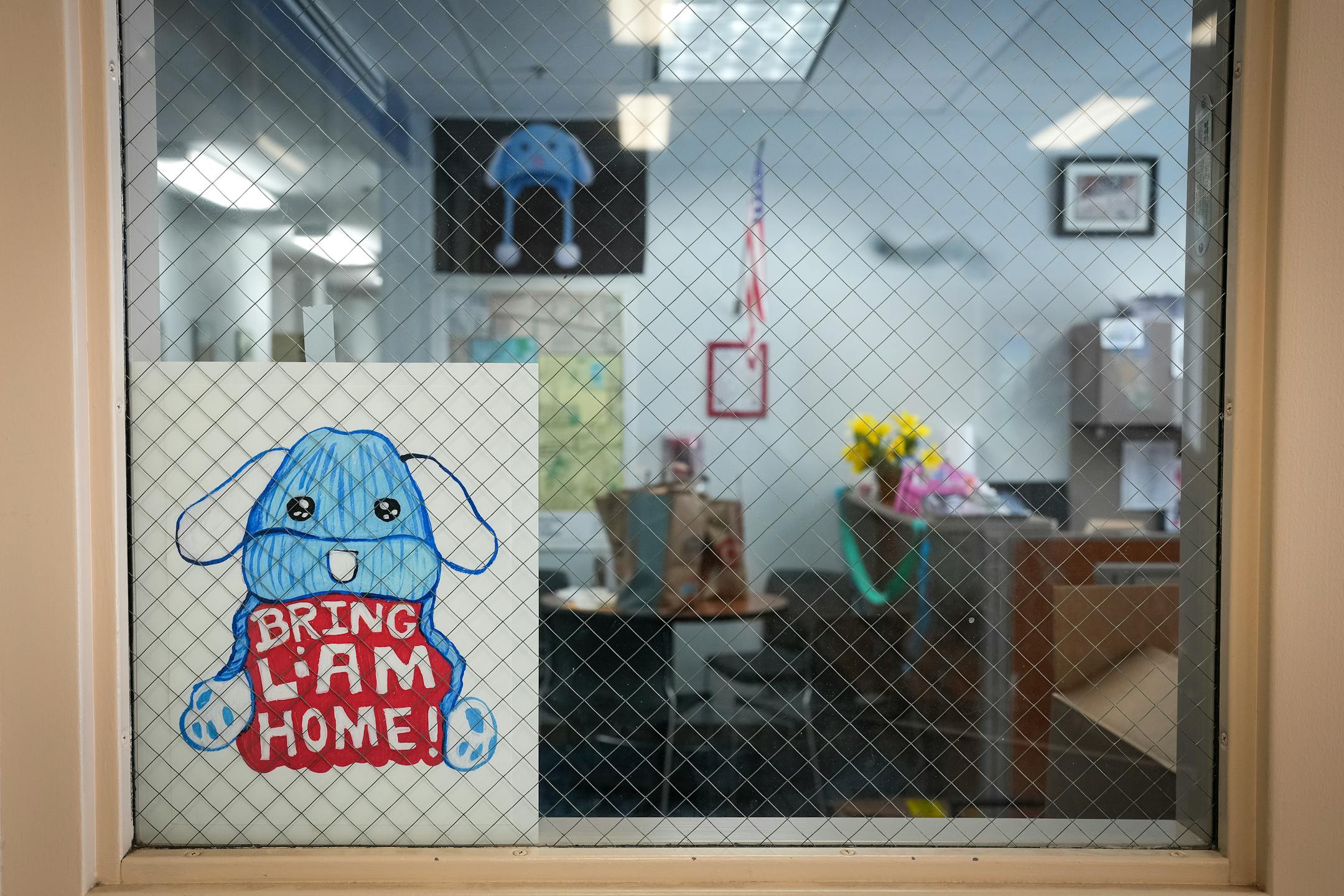
A sign for Liam Conejo Ramos is displayed in the office at his school, Valley View Elementary, in Columbia Heights on Feb. 19. (Leila Navidi/The Minnesota Star Tribune)

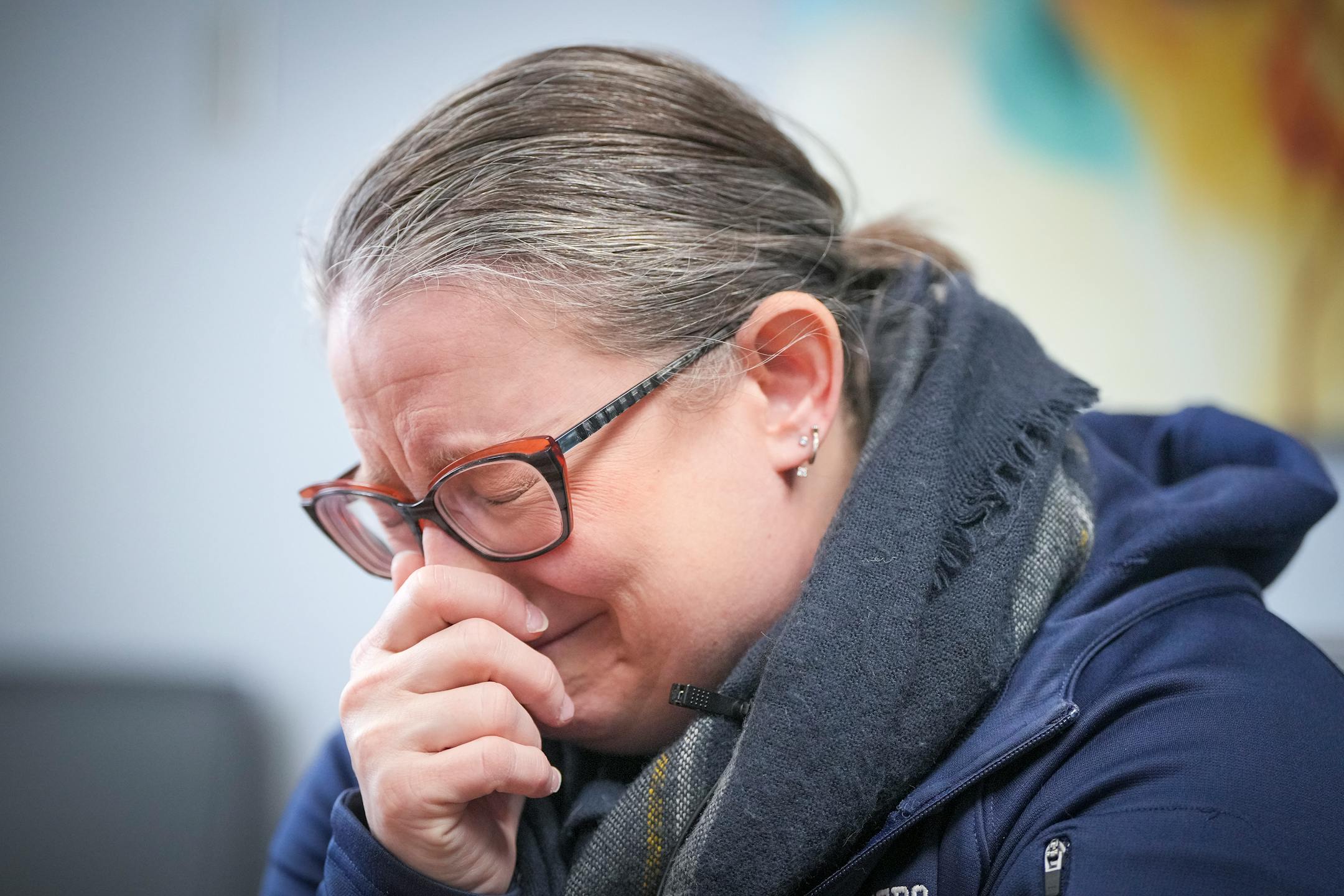
Granlund said she has “horrible guilt” that sharing Liam’s story may have put a larger target on Columbia Heights and its schools.

At one point after Liam’s bunny-hat photo went viral, Granlund said community members saw 100 ICE agents in the city of just 3 square miles. That’s nearly four times the number of full-time officers on the Columbia Heights Police Department. In early February, the district had to close its schools for a day due to a bomb threat.

Advertisement

“I worry that it had a negative impact on our community and also, I know that had we not spoke up, this would be continuing in other places around the metro and possibly in other states,” Granlund said. “I don’t think we had any other choice.”

Columbia Heights school board Chair Mary Granlund chokes up while talking about what her community has been through at the district office in Columbia Heights on Feb. 19. (Leila Navidi/The Minnesota Star Tribune)

Granlund attended the State of the Union on Tuesday as a guest of U.S. Rep. Ilhan Omar.

Disrupted schools are “persuasive’'

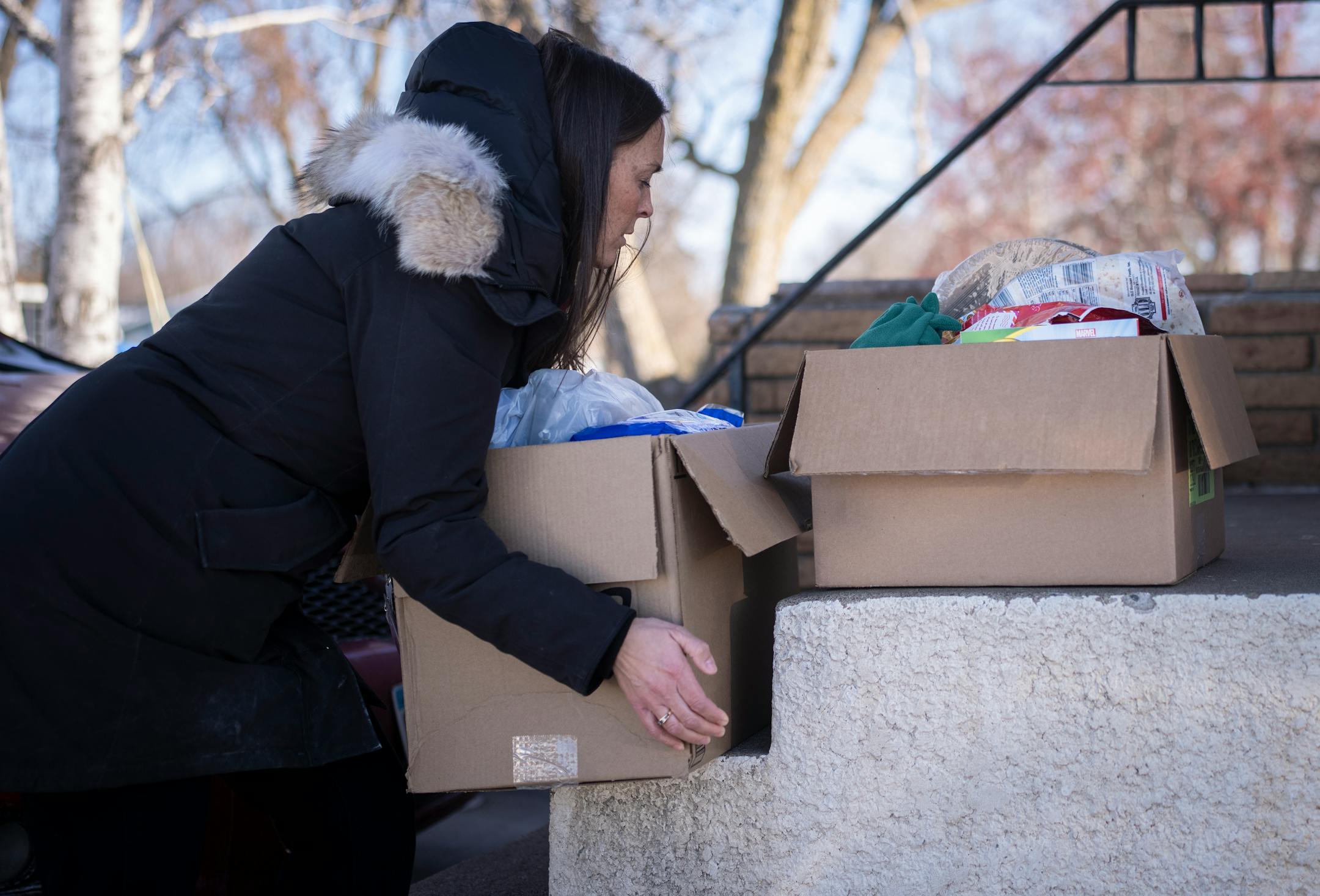
Across the Twin Cities, superintendents’ work has expanded the last three months to include coordinating grocery deliveries for families in hiding, scanning parking lots and bus stops for ICE vehicles and scrambling to confirm which students or parents had been detained overnight.

At the same time, school leaders were quietly conferring with each other and parents about how the surge was affecting their schools.

David Law, Minnetonka superintendent and president of the national School Superintendents Association, said he’s heard through an informal survey that, in recent weeks, local superintendents spent a third to a half of their days communicating with families about or responding to immigration enforcement issues.

Law said superintendents generally avoid politics. But when operations disrupt learning, it’s a school leader’s job to protect students, he said.

Advertisement

He’s felt pressure from both sides to “use our schools as the lever to get attention,” but also heard from others who felt school leaders should not get involved.

“I think people have a lot of respect for our public education system in general so when it’s disrupted, it’s persuasive,” he said.

School districts sue ICE

In Fridley, Lewis decided early in Operation Metro Surge that the public needed to know all the ways it was affecting schools.

She started documenting the many times that ICE vehicles were on or near school property and talked publicly each time she or other staff members saw ICE vehicles outside their homes or tailing them to and from school. She believes that some of those actions were in retaliation after she spoke out.

In one instance, she says, a group of men in a vehicle with out-of-state plates repeatedly drove by an elementary school and circled a nearby roundabout while the men inside taunted school staff and claimed they were members of the press.

In early February, Fridley Public Schools, along with Duluth Public Schools and the state teachers union, Education Minnesota, filed a federal lawsuit against the Trump administration, seeking to keep immigration agents off school properties.

Advertisement

Lewis invited reporters and lawmakers on ride-alongs as she patrolled neighborhoods near schools. She extended the same offer to Trump administration border czar Tom Homan, repeatedly requesting a meeting.

“We took a different approach than Columbia Heights, but in the same token, I think that gave the public a multifaceted look at what was happening,” Lewis said. “It was like this horrible yet complementary way that both our districts went about it.”

She and Stenvik have recently fielded calls from school leaders across the country asking for advice on how to prepare for immigration crackdowns in their cities.

Fridley student support services director Danielle Thompson delivers groceries to a family in need on Jan. 27. (Renée Jones Schneider/The Minnesota Star Tribune)

The aftermath

Like many other districts, Fridley and Columbia Heights started offering online learning in January for students too afraid to attend school.

Both districts are slowly welcoming back students, but neither is pressuring fearful kids to return. Staff continue to collect and distribute groceries and rental assistance. Online learning is still being offered.

Lewis said it’s been more than two weeks since she last saw federal agents on school property. She’s stopped her daily patrols and pulled back some extra security efforts.

At Valley View Elementary in Columbia Heights, where Liam attended, Principal Jason Kuhlman is still lending his office to a teacher who needs it for online lessons.

Hanging near an American flag is another flag, pinned to the wall, featuring a portrayal of Liam’s blue bunny hat against a black background. It was one of many items and notes of support sent to the school from those moved by Liam’s experience.

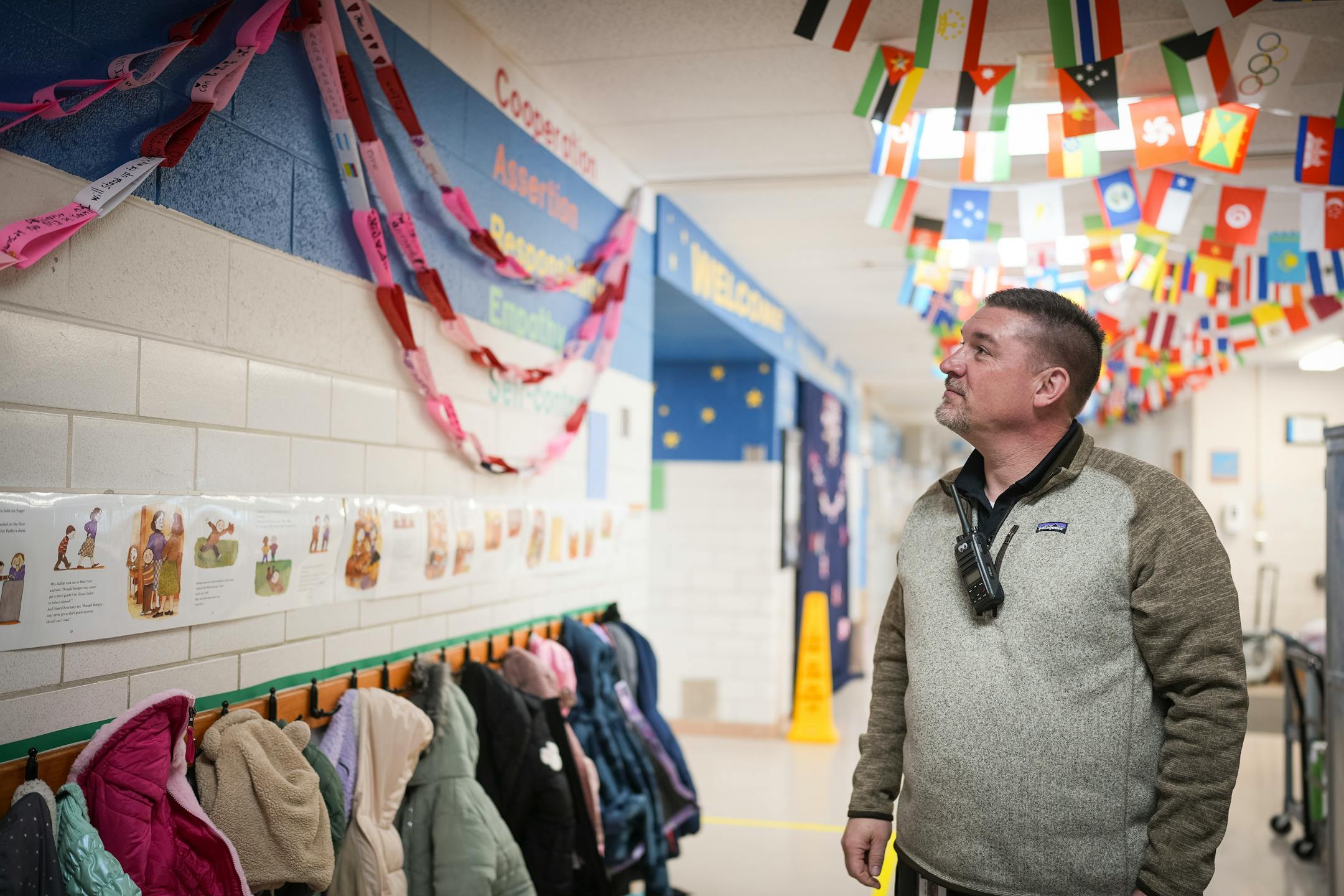
Valley View Elementary principal Jason Kuhlman looks at artwork made by students for Liam Conejo Ramos in Columbia Heights on Feb. 19. (Leila Navidi/The Minnesota Star Tribune)

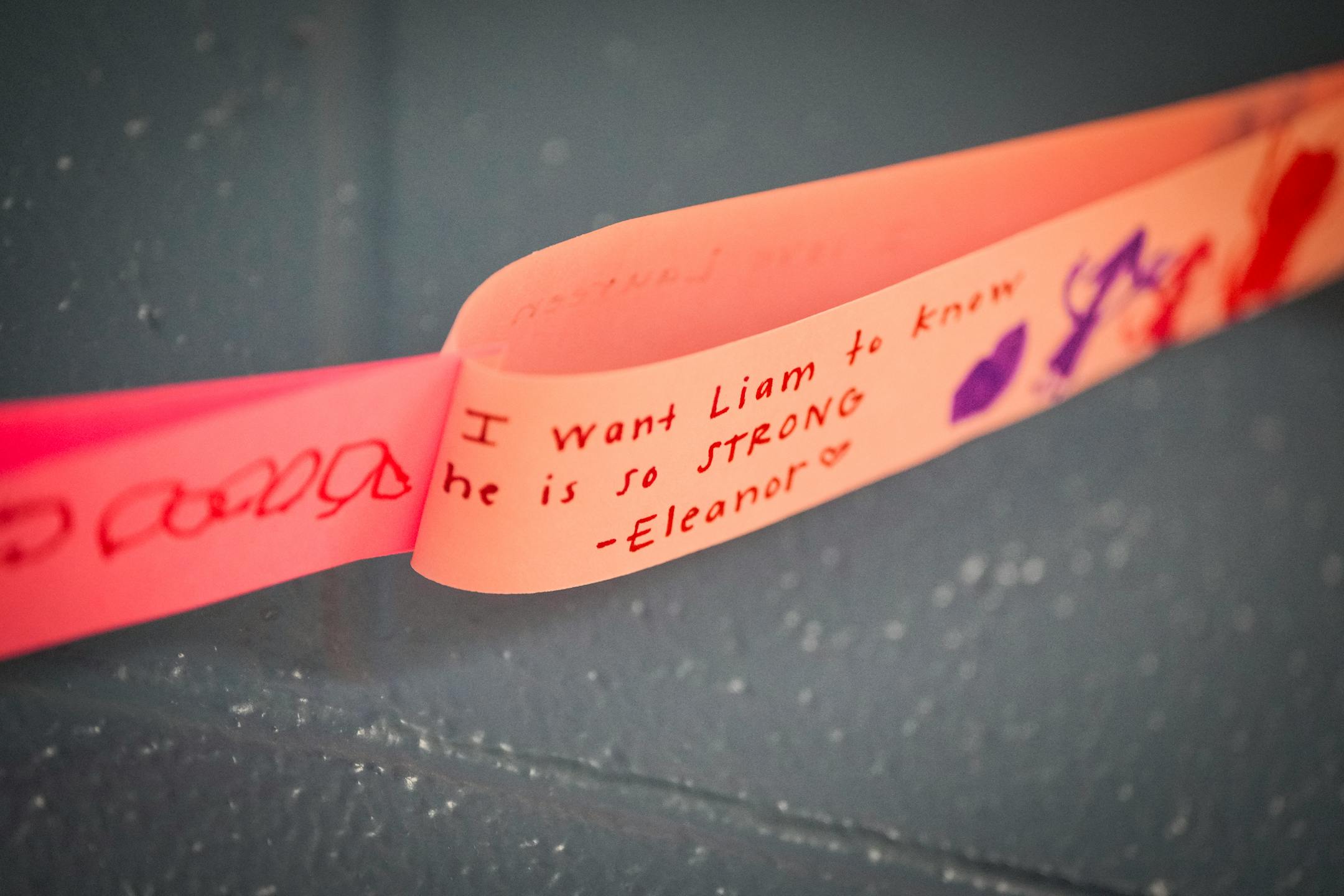
One of the school’s hallways is decorated with a long paper chain of hearts with notes from students — “I want Liam to know he is so strong,” read one. Another said, “I hope the world can be a better place.”

Liam recently joined a video call with his classmates and is eager to come back to school when his family is ready, Kuhlman said.

Donations continue to pour in. A front area at Valley View has turned into an donation processing center with boxes of food and supplies and even a fridge to keep jugs of milk chilled before they go out to more than 150 families each week.

“I think sharing Liam’s story was a catalyst,” Kuhlman said. “It set up a stage for us to speak from. Now it’s about all of our families and our staff who came together to show up in ways that just are not long-term sustainable without help.”

Detail of artwork made by students for Liam Conejo Ramos at Valley View Elementary School in Columbia Heights. (Leila Navidi/The Minnesota Star Tribune)
about the writer

about the writer

Mara Klecker

Reporter

Mara Klecker covers suburban K-12 education for the Star Tribune.

See Moreicon

More from Twin Cities Suburbs

See More
card image
With permission from GoFundMe

Alexif Loeza Galvan was killed when a drug deal went sour and the buyer sped off with Loeza Galvan leaning into the window of an SUV.

card image
card image
Advertisement