Roper: Sheriff Witt’s decision raises tricky questions about how to end this nightmare

Hennepin County’s top law enforcement officer is mulling limited cooperation with ICE to help wind down the federal government’s immigration surge.

Columnist Icon
The Minnesota Star Tribune
February 7, 2026 at 8:00PM
Hennepin County Sheriff Dawanna Witt speaks to reporters on Feb. 6 at Minneapolis City Hall. (Eric Roper/The Minnesota Star Tribune)

Sign up here to follow this column by email.

Hennepin County’s top law enforcement officer is publicly mulling over whether to agree to limited cooperation with Immigration and Customs Enforcement (ICE) as a means to end the federal government’s disastrous intrusion into the Twin Cities. And the reaction from immigrant rights groups has been swift.

“[It is] bowing down. It’s caving to these racist demands and racist rhetoric of the Trump administration," said Erika Zurawski, cofounder of the Minnesota Immigrant Rights Action Committee.

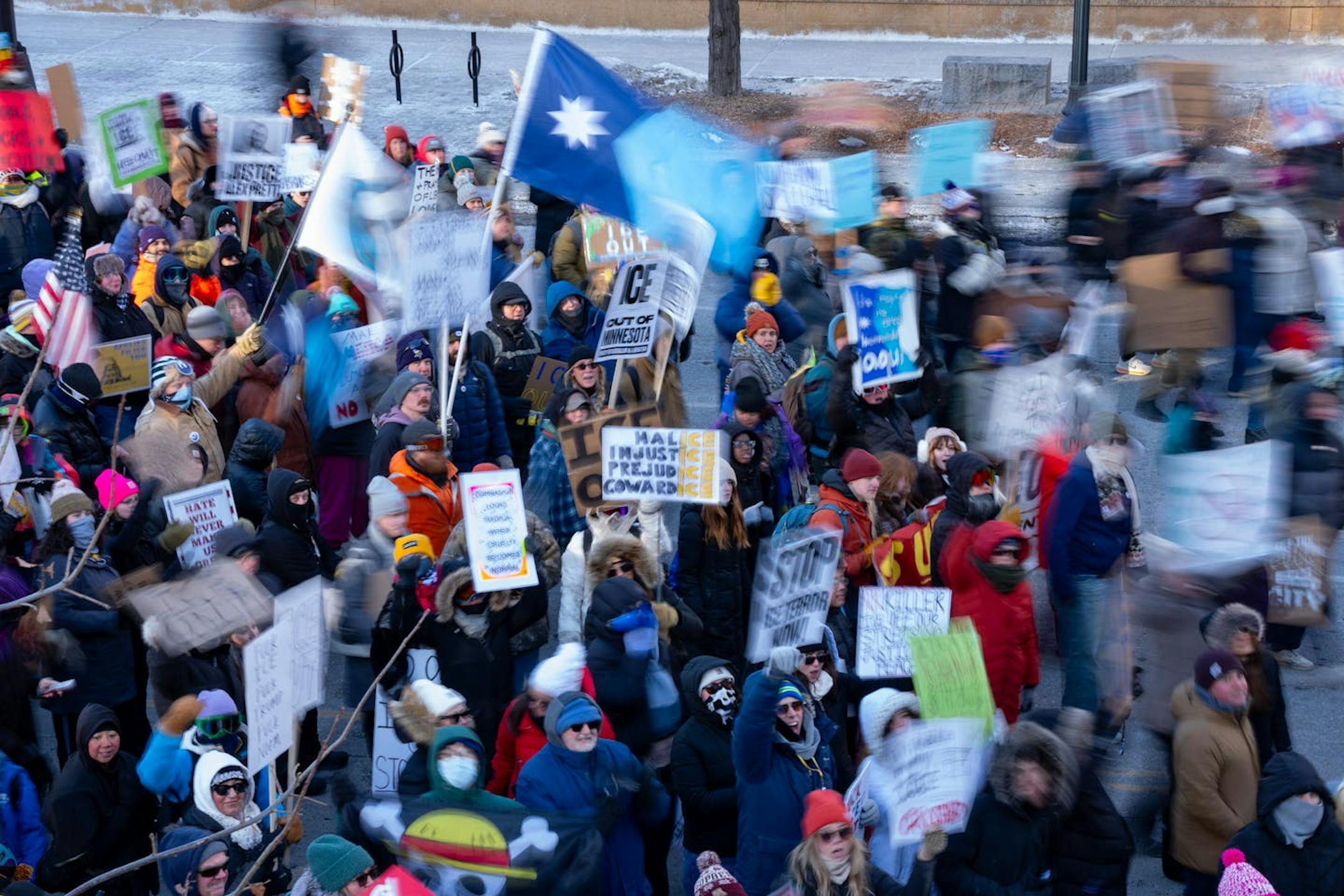
The racist and violent excesses of Operation Metro Surge have fueled a powerful resistance, uniting typically divided urban liberals under the banner of “ICE OUT.” But Sheriff Dawanna Witt’s quandary raises a tricky question for everyone carrying a whistle or watching from the sidelines: What is an acceptable price to wake up from this nightmare?

Intense local blowback has put the feds into dealmaking mode. The Trump administration wants access to immigrants in the jails. It tried to project movement this week by announcing the drawdown of several hundred agents — celebrating cooperation from unnamed law enforcement officials.
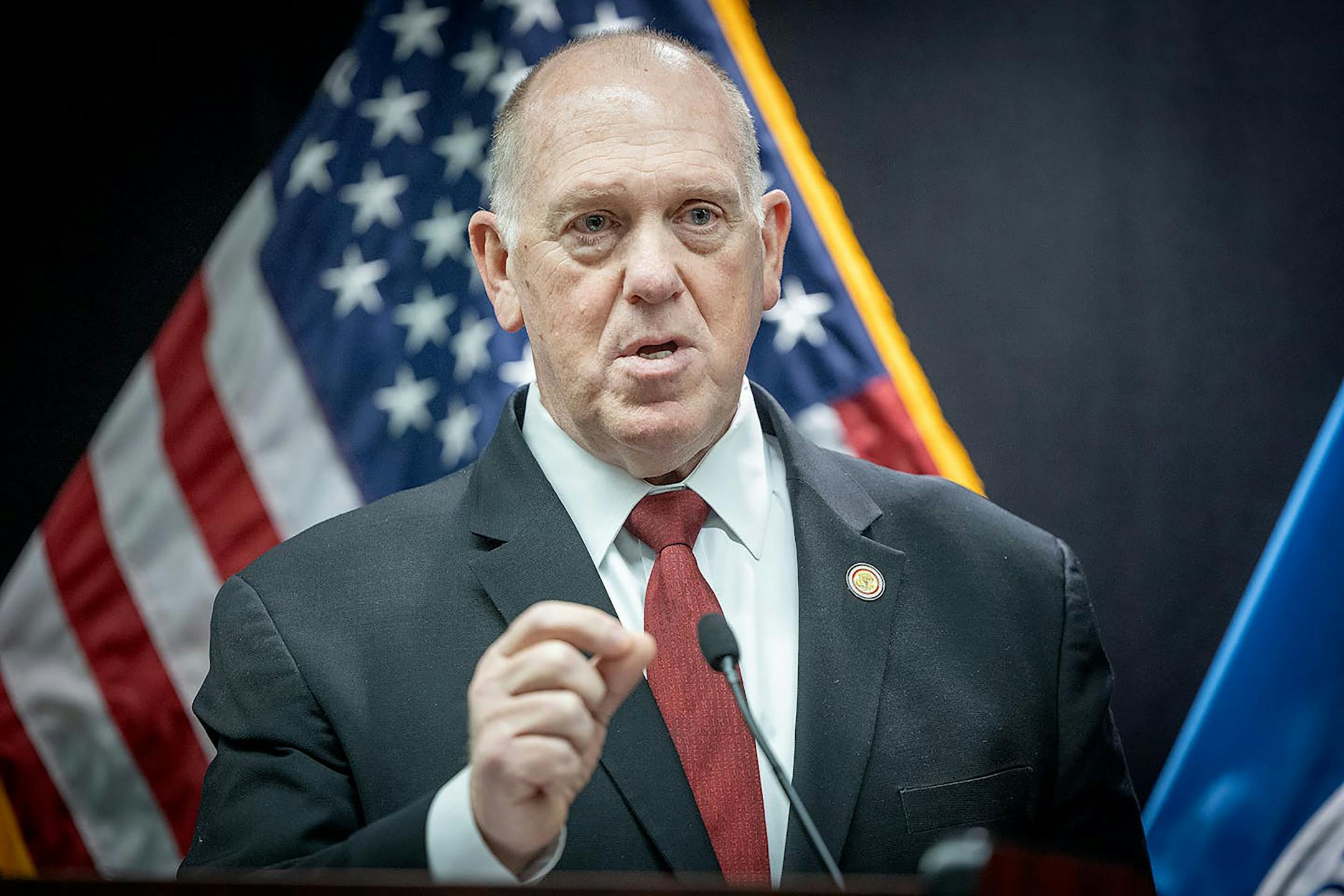
Border czar Tom Homan speaks at a news conference at the Whipple Federal Building in Minneapolis on Feb. 4. (Elizabeth Flores)

Sheriffs across the state, including Ramsey County, are grappling with how to respond. But the Hennepin County jail in downtown Minneapolis is in some ways the center of the storm.

It stopped cooperating with ICE several years ago with the exit of Sheriff Rich Stanek. Witt, who is up for re-election in November, told news outlets this week that she is considering notifying ICE about the release of certain people it seeks — like those booked for violent crimes.

She emphasized to reporters on Friday, Feb. 6, that she has been “throwing out different ideas” and hasn’t made any decisions. She has had four meetings with border czar Tom Homan, who is now leading the federal operation.
“There seems to be this overwhelming thought that somebody is going to win all and go home,” Witt said. “That’s not going to happen. There has to be a give and take. There has to be room for some kind of negotiations.”

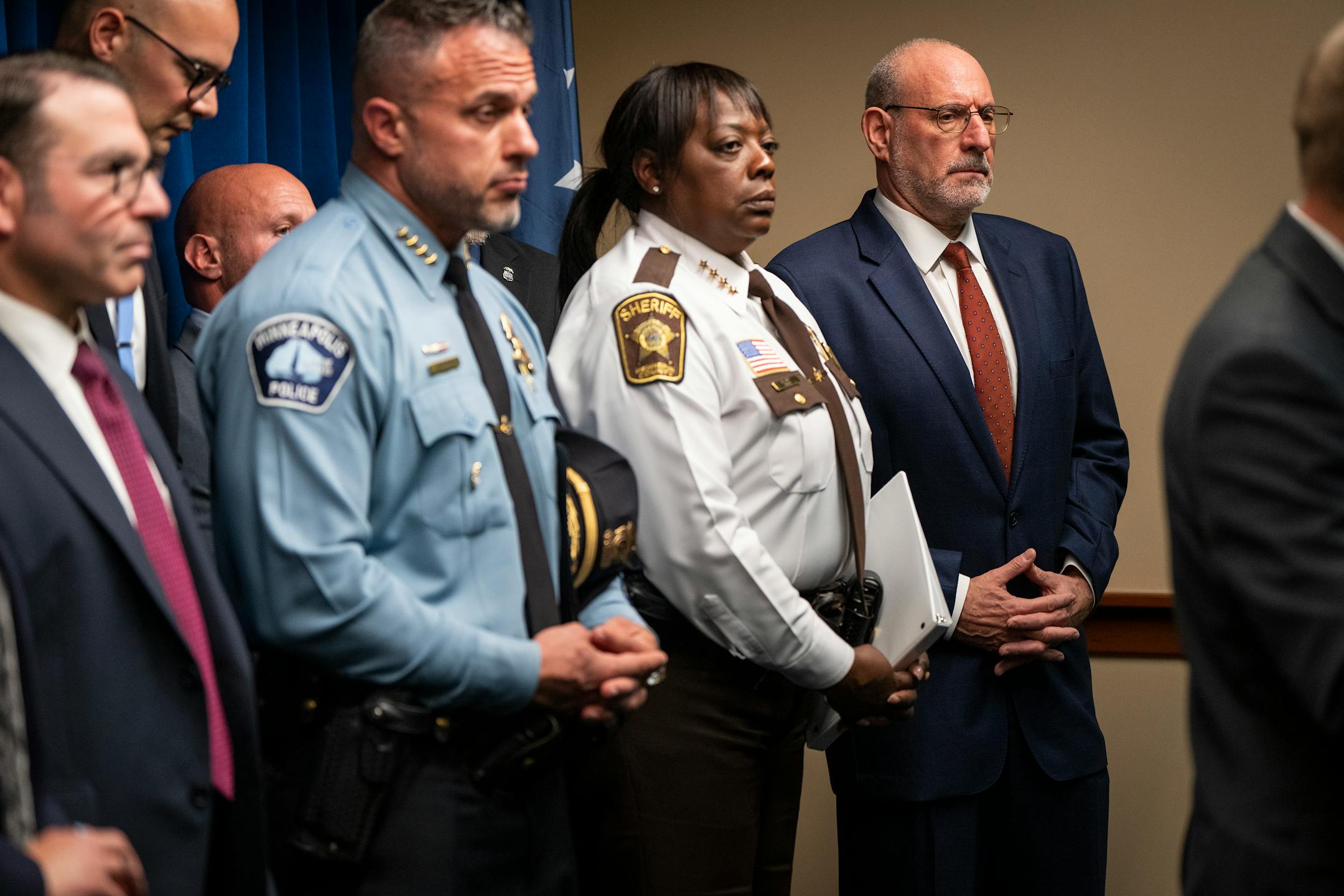
Hennepin County Sheriff Dawanna Witt, second from right, stands alongside Minneapolis Police Chief Brian O'Hara and then-U.S. Attorney Andy Luger during a news conference in October 2024. (Leila Navidi)

Zurawski sees it differently, highlighting the well-known mantra in American government and culture that “we don’t negotiate with terrorists.”

“Well guess what? Neither do we,” Zurawski said. “ICE agents are terrorists, and we are not negotiating for them to draw back or slow down, or any of that. What we are saying is: You will never be welcome in our city in any way, at all.”

One major concern raised by advocates is that people in jail have generally not been convicted of crimes.

“In a democracy, due process exists precisely to prevent any one official from deciding who is suspect, who is credible, and who is expendable,” Emilia Gonzalez Avalos, executive director of Unidos MN, an immigrant rights group, said in a statement.

Homan told Witt that ICE would not prevent someone from attending their hearings. But Julia Decker, policy director of the Immigrant Law Center of Minnesota, said that is not what has historically happened.

“It’s very unlikely that those folks [in federal detention] are going to be brought back to the county or the state for future hearings,” Decker said.

Immigrant advocacy organizations represent a significant voice in this debate. But it’s unclear what share of the ICE resistance movement, and the broader local public, agrees with some of their hardline views — like abolishing ICE altogether. These political nuances could prove to be an important storyline in the coming weeks.

Many will also argue that the Trump administration’s dishonesty over this campaign has broken trust that the government is negotiating in good faith. And despite Witt’s assertion that no one will “win all,” the administration’s social media post this week that “Thanks to President Trump, Minnesota is now COMPLYING” illustrates its eagerness to claim total victory.

Witt’s trial balloons highlight the significance of the decision she is weighing, which could be a crucial chapter in the history of this painful event. In addition to the political arguments, a community’s pride is on the line after such a bruising fight. How this is resolved may also be an important signal to cities across the country girding to be the administration’s next target.

Thousands of anti-ICE protesters march through the streets of downtown Minneapolis on Jan. 30. (Alex Kormann)

Yet this prolonged ordeal has also become a full-blown crisis for the region, with few ideal solutions. The economic toll is rapidly growing, especially on immigrant-owned businesses. Local governments are stretched thin and facing massive staff costs. Many people are afraid to leave their houses. Private fundraising is trying to keep up with an expanding need.

This community has exhibited a lot of strength and unity in the past several months, inspiring people around the country. Regardless of Witt’s decision, that will be the most important legacy of this devastating saga.

about the writer

about the writer

Eric Roper

Columnist

Eric Roper is a columnist for the Star Tribune focused on urban affairs in the Twin Cities. He previously oversaw Curious Minnesota, the Minnesota Star Tribune's reader-driven reporting project.

See Moreicon

More from Twin Cities

See More
card image
Shoppers made their way through a parking ramp at the Mall of America, Tuesday, November 13, 2018 in Bloomington, MN. A new camera-based parking system, currently up and running at the mall, is expected to help shoppers have an easier time finding a place to park. ] ELIZABETH FLORES ï liz.flores@startribune.com