Roper: How Minnesota’s civic culture fueled a tough ICE resistance and took the feds by surprise

It’s not pleasant for people to go toe-to-toe with the federal government. But in this case, it’s very Minnesotan.

Columnist Icon
The Minnesota Star Tribune
January 29, 2026 at 12:00PM
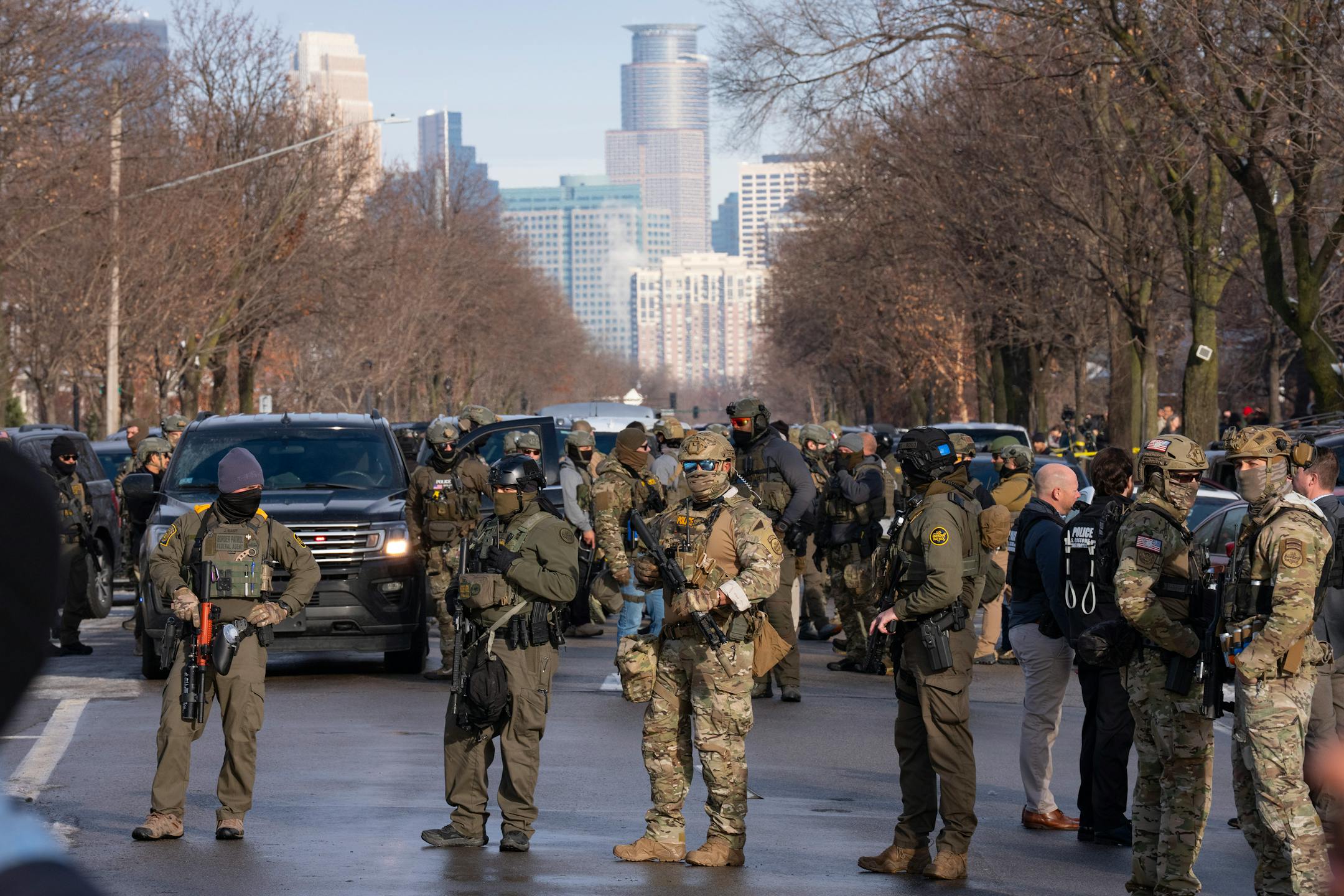
Federal immigration agents stand with weapons drawn along Portland Avenue Jan. 7 near the scene of Renee Good's killing earlier that day. (Alex Kormann/The Minnesota Star Tribune)

Sign up here to follow this column by email.

They can’t seem to believe it. Federal officials, talking about Minneapolis all over the place, keep stressing just how unusual this resistance is.

They’ve never seen anything like it.

“In one city — in one city we have this outrage and this powder keg happening," Deputy Attorney General Todd Blanche said recently on Fox News. “And it’s not right. And it doesn’t happen anywhere else.”

Blanche and all the others have been blaming Gov. Tim Walz and Mayor Jacob Frey. Alternatively, they smear “paid agitators.”

But the federal cowboys who flooded Minnesota streets actually ran headfirst into the state’s formidable civil society — a network of civically engaged people and organizations that makes this a risky place for the federal government to pick a fight with its own citizens. And the bold response has set an example for the rest of the country that may complicate the Trump administration stomping on some other state.

Just listen to the protestors in Boston chanting: “We’re not cold, we’re not afraid! Minnie taught us to be brave!” Or Bruce Springsteen’s new protest song, “Streets of Minneapolis.”

The resistance movement rooted in Minneapolis went mainstream because the Trump administration overplayed its hand, deploying its largest-ever surge of immigration agents as part of a “retribution” campaign.
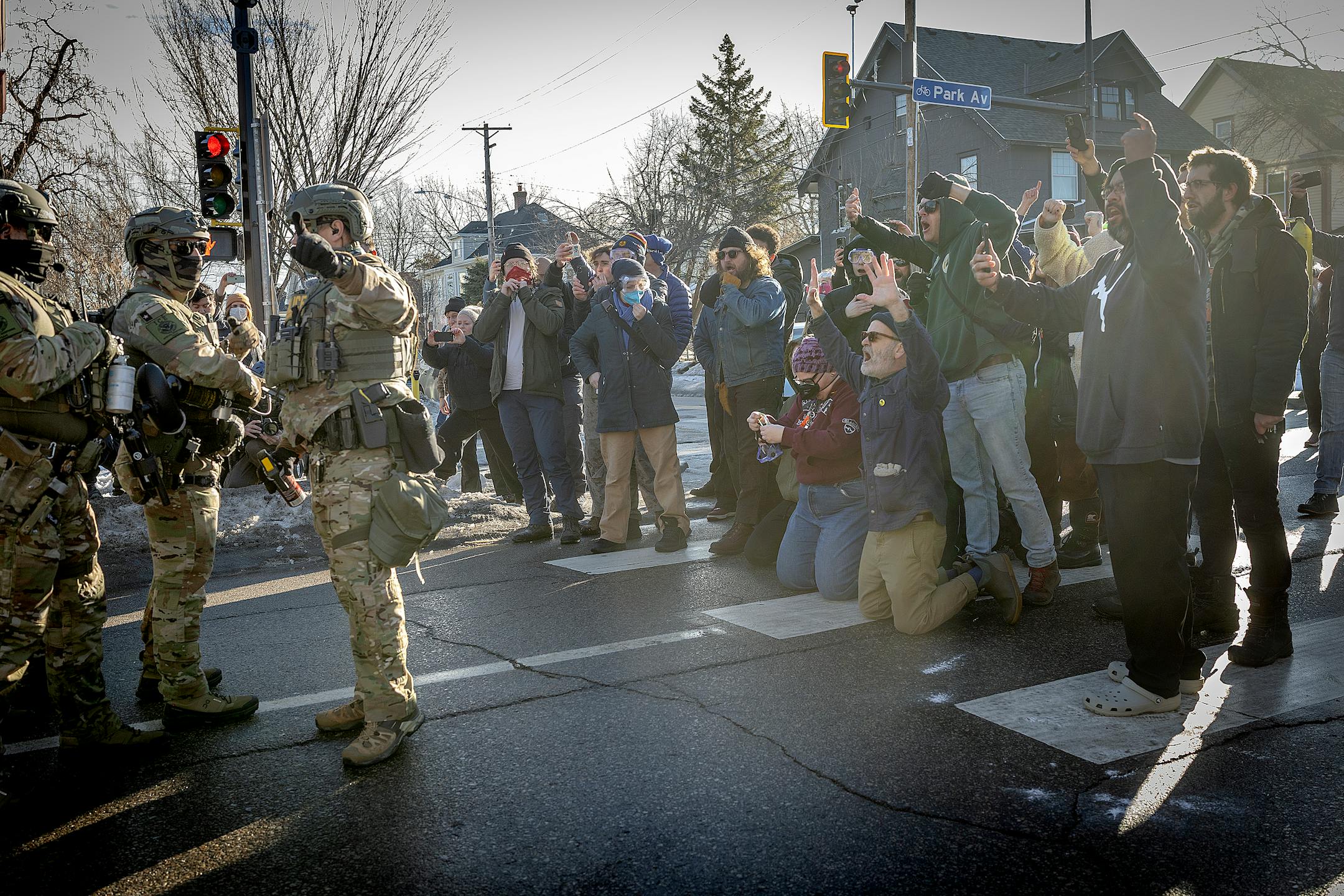
Protestors and ICE collide in Minneapolis on Jan. 13 near the site of Renee Good's killing by a federal agent. (Elizabeth Flores/The Minnesota Star Tribune)

That outsized intrusion was ostensibly payback for the massive theft of federal welfare dollars by members of a refugee community, through a state bureaucracy overseen by Walz, a Trump nemesis — a tidy storyline that revealed vulnerabilities in Minnesota’s culture of generosity.

The resulting racial profiling and excessive violence by federal agents became an urgent call to action for a community that, not long ago, drew a line in the sand over race and policing — sparking 2020’s worldwide reckoning. And the administration appeared to underestimate the power of the blowback, perhaps mistaking the state’s passive aggressive reputation for weakness.

More importantly, they didn’t grasp that Minnesotans are unusually plugged in. They vote and volunteer more than almost any other state’s residents do, a reflection of Minnesota’s participatory and collectivist Scandinavian roots. They support a robust local media ecosystem to foster community and scrutinize the government. And as a nonprofit CEO told the Star Tribune in 2024, “We find this unifying thread of Minnesotans caring about their neighbors, and being willing to show up and help.”

This civic attitude kicked into high gear as ICE bore down on the state. Minnesotans, who have a high bar for government competency and transparency, could see something was very wrong with this operation. And unlike 2020, when Minneapolis last became a international spectacle, city residents and leaders were largely united against an external threat.

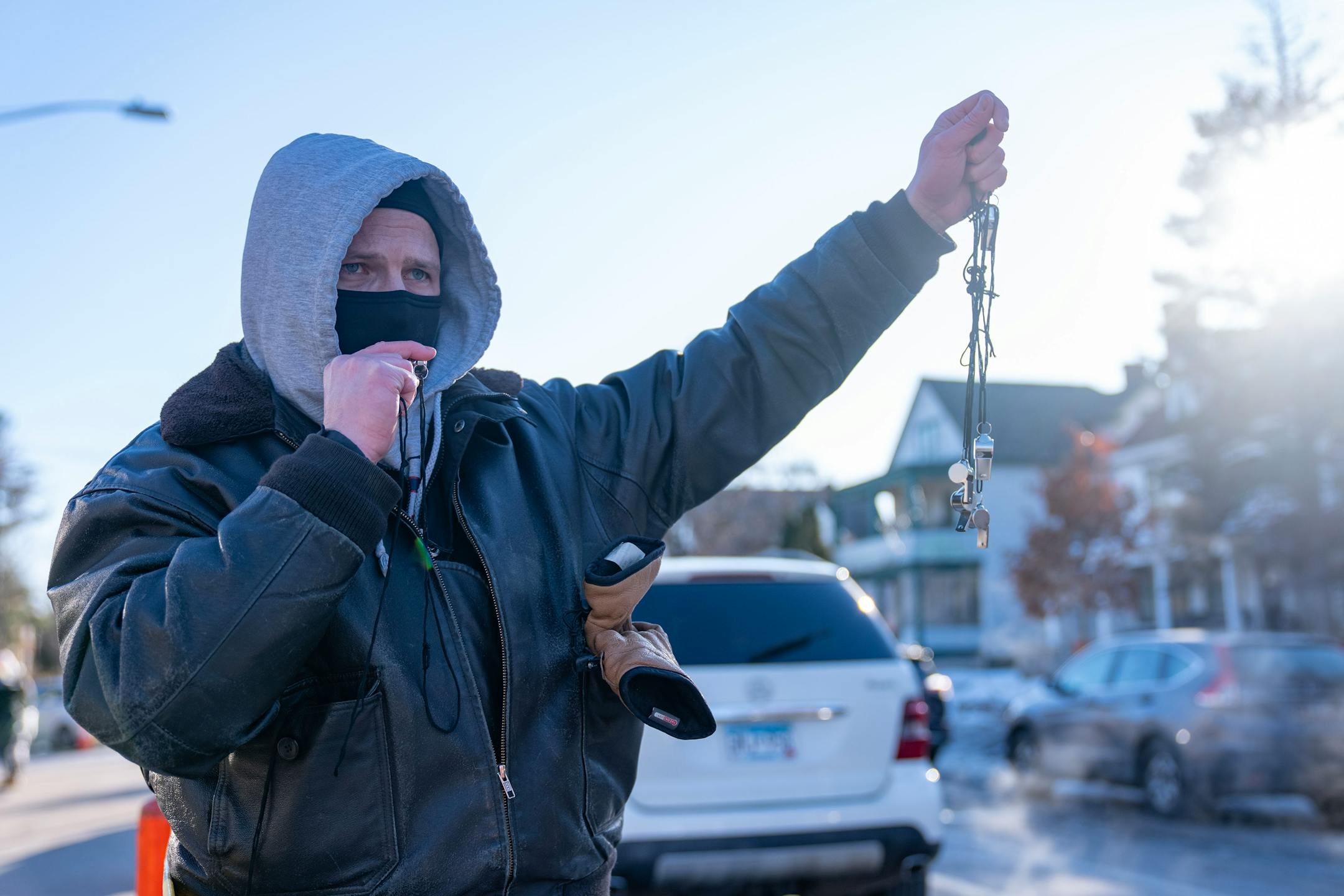
Loads of people grabbed whistles and joined encrypted chats to follow and document ICE activity. As far back as December, a reader emailed me in disbelief at the hundreds of people who packed into an ICE observation training at a church in Uptown — trainings that are now common.

A Minneapolis resident offers free whistles to cars driving past the memorial site for Renee Good near 34th Street and Portland Avenue on Jan. 14. (Alex Kormann/The Minnesota Star Tribune)

All these vigilant eyeballs left few shadows for ICE to operate in. This vast situational awareness reflected a level of organization that even Cmdr. Greg Bovino, then the leader of the immigration operation, conceded he hadn’t seen in other cities. “They’ve got some excellent communications,” he said Jan. 20.

And videos started pouring in showing just how messy and hostile the surge was.

Renee Good’s killing raised the profile of the resistance, as well as questions about the lines between observation and obstruction. People’s politics dictated whether they viewed it as righteous or riotous. Either way, confronting federal agents was clearly dangerous.

The federal force grew along with the conflicts, resulting in an unusual and volatile situation for a state without an exceptionally large undocumented immigrant population. This reached another crescendo on Jan. 24 with the killing of Alex Pretti, and extensive video evidence convinced even some Republicans that the administration wasn’t being honest.

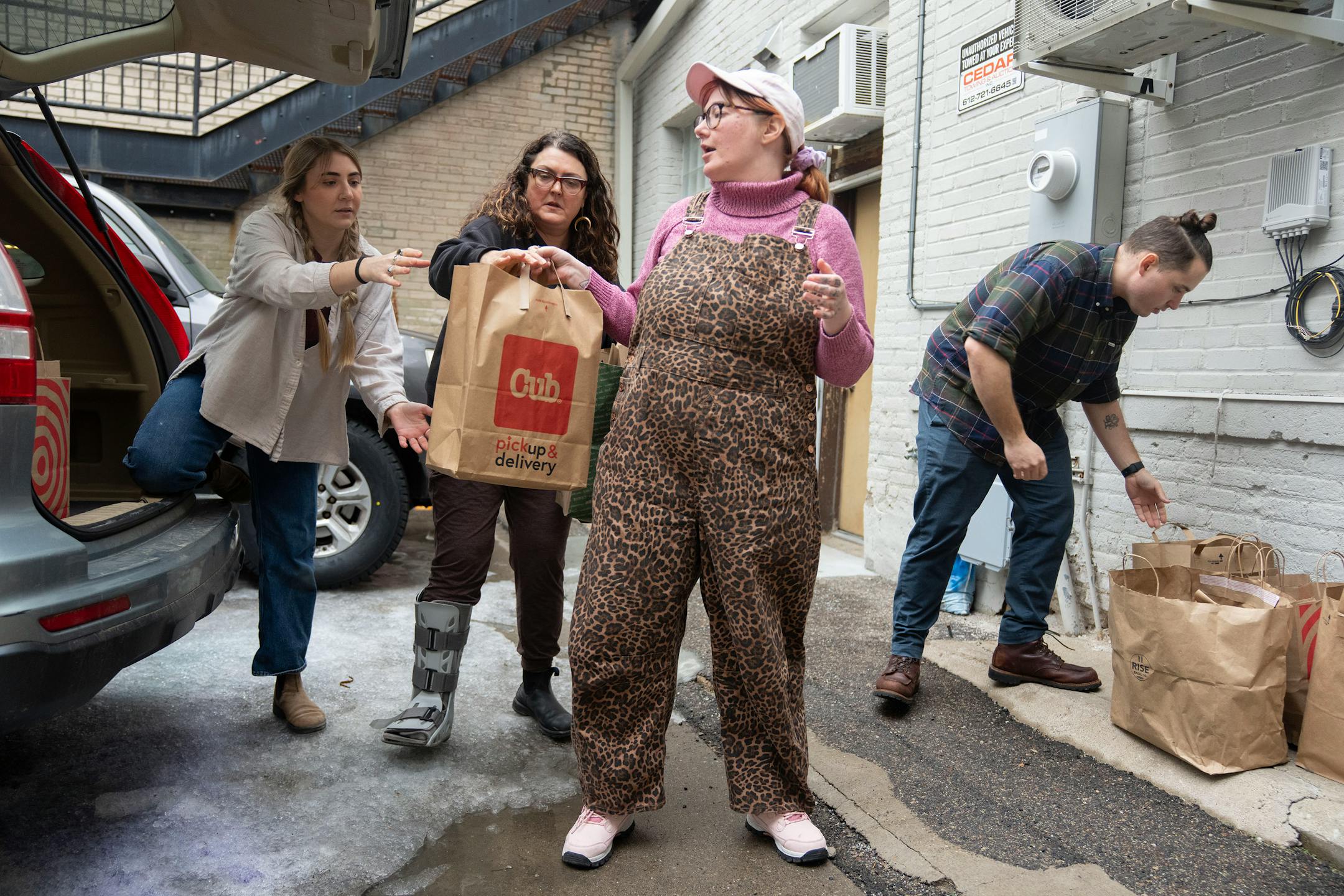
Behind all this conflict have been extraordinary efforts of neighborly support, such as the massive food collection drives to benefit immigrants unable to work or leave their homes. Or the large employers who chipped in to help struggling small businesses. Or the people escorting kids to school to protect their parents.

“This is such a deeply moving experience to watch a community that has had such divisions find each others’ hands,” said former Minneapolis Mayor R.T. Rybak, who grew up in the city. “It is the most powerful collective experience I’ve ever been part of.”

People form a line to load bags of non-perishable goods into the back of a car at Moona Moono in Minneapolis on Jan. 13, as part of an effort to help the city's immigrants stay home from grocery stores. (Alex Kormann/The Minnesota Star Tribune)

Rybak said that Minnesota established, early on, a culture of compassion toward people from elsewhere in the world.

“The U.S. lost Vietnam because they didn’t understand the culture,” Rybak said. “And Trump is losing this battle because he doesn’t understand the culture.”

The Trump administration’s relentless focus on Walz and Frey, who have become household names for Fox News viewers, reflects a very Trumpian philosophy about who holds the power in a democratic society. The Minnesota resistance to ICE has been a bottom-up movement driven by constituents, who have emboldened their leaders to stand their ground.

“This [culture] is uniquely collaborative and community-based,” Rybak said. “An awful lot of this momentum has not started in the city halls and capitols, but in coffee shops and senior centers and parents at schools.”

We saw just how many of those constituents were tuned in — and alarmed— the day before Pretti’s killing, when many thousands of people converged on downtown Minneapolis in negative temperatures to protest ICE’s tactics.

What we haven’t seen is a repeat of 2020. Bovino said on Jan. 20 that he hears echoes of the political rhetoric of that year, “when they decided to try to burn the city down.”

Anyone who lived through that traumatic unrest knows just how different this feels. Rather than destroying the city, people are banding together to protect its residents.

It’s not pleasant for people to go toe-to-toe with the federal government.

But in this case, it’s very Minnesotan.

about the writer

about the writer

Eric Roper

Columnist

Eric Roper is a columnist for the Star Tribune focused on urban affairs in the Twin Cities. He previously oversaw Curious Minnesota, the Minnesota Star Tribune's reader-driven reporting project.

See Moreicon

More from Twin Cities

See More
card image
Richard Tsong-Taatarii/The Minnesota Star Tribune

President Trump sent Homan to Minnesota to manage immigration operations in the state following a second fatal shooting involving federal agents.