

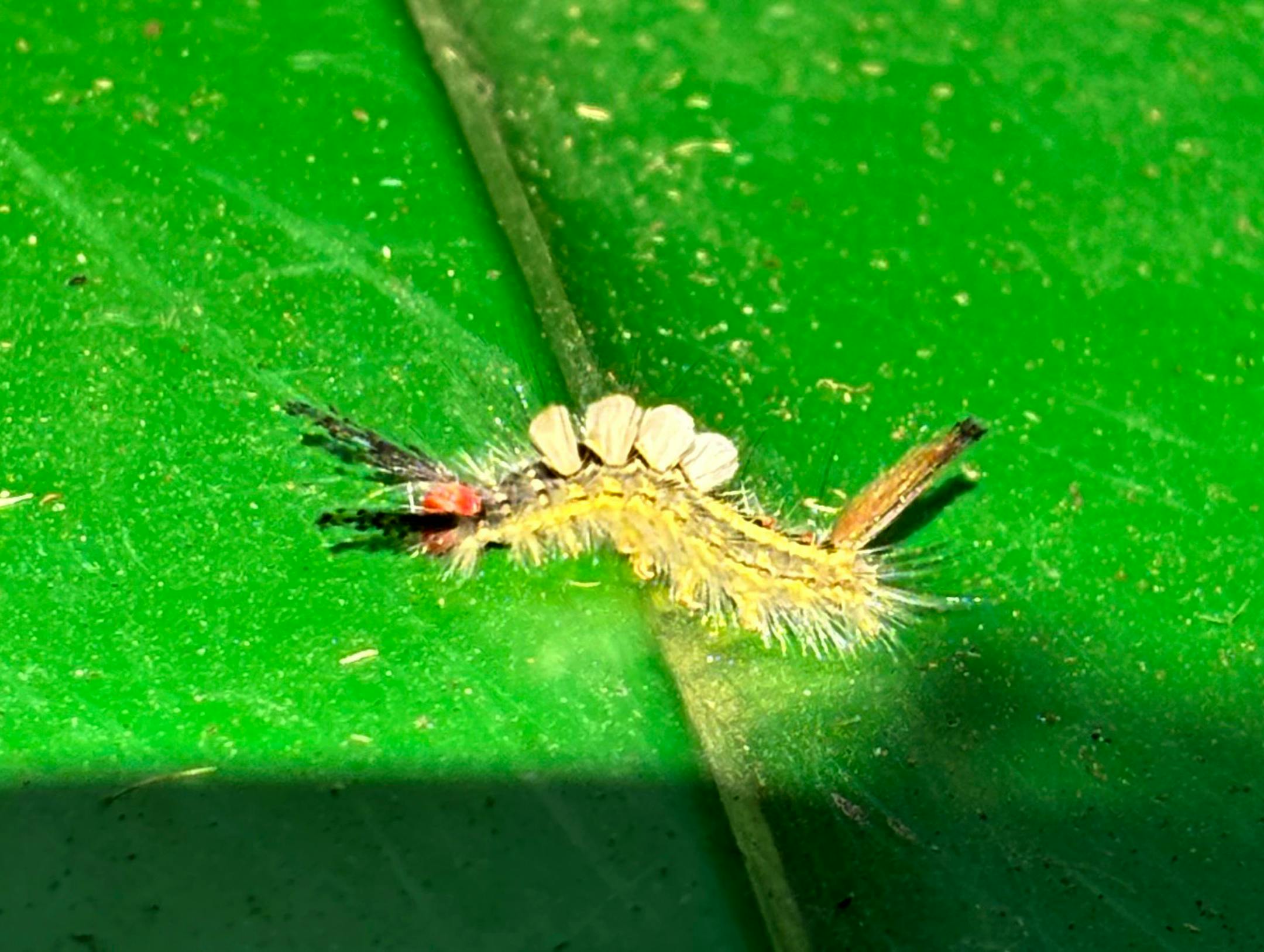
Most people recognize the brown-and-black striped woolly bear caterpillars crawling around these days, but late summer and early fall bring out more than one species of furry crawlers.
Among the commonly spotted fuzzies are tussock moth caterpillars. With fur that looks like a cozy fall sweater, they may be oh-so-tempting to touch or pick up.
Don’t fall for it.
The bristly hairs are protective, meant to ward off birds and bats. They can ward off humans, too, stinging and causing a burning rash when hairs break off and imbed into sensitive skin.
Their hairy defense system lets them more boldly inch their way across plants, home exteriors and sidewalks.
Study them closely to see the clustered hairs that resemble a bottle brush or pipe cleaner. They also sport telltale tall tufts of hair near the head and posterior. Those tufts, or tussocks, resemble rogue grasses that grow taller than everything around it.
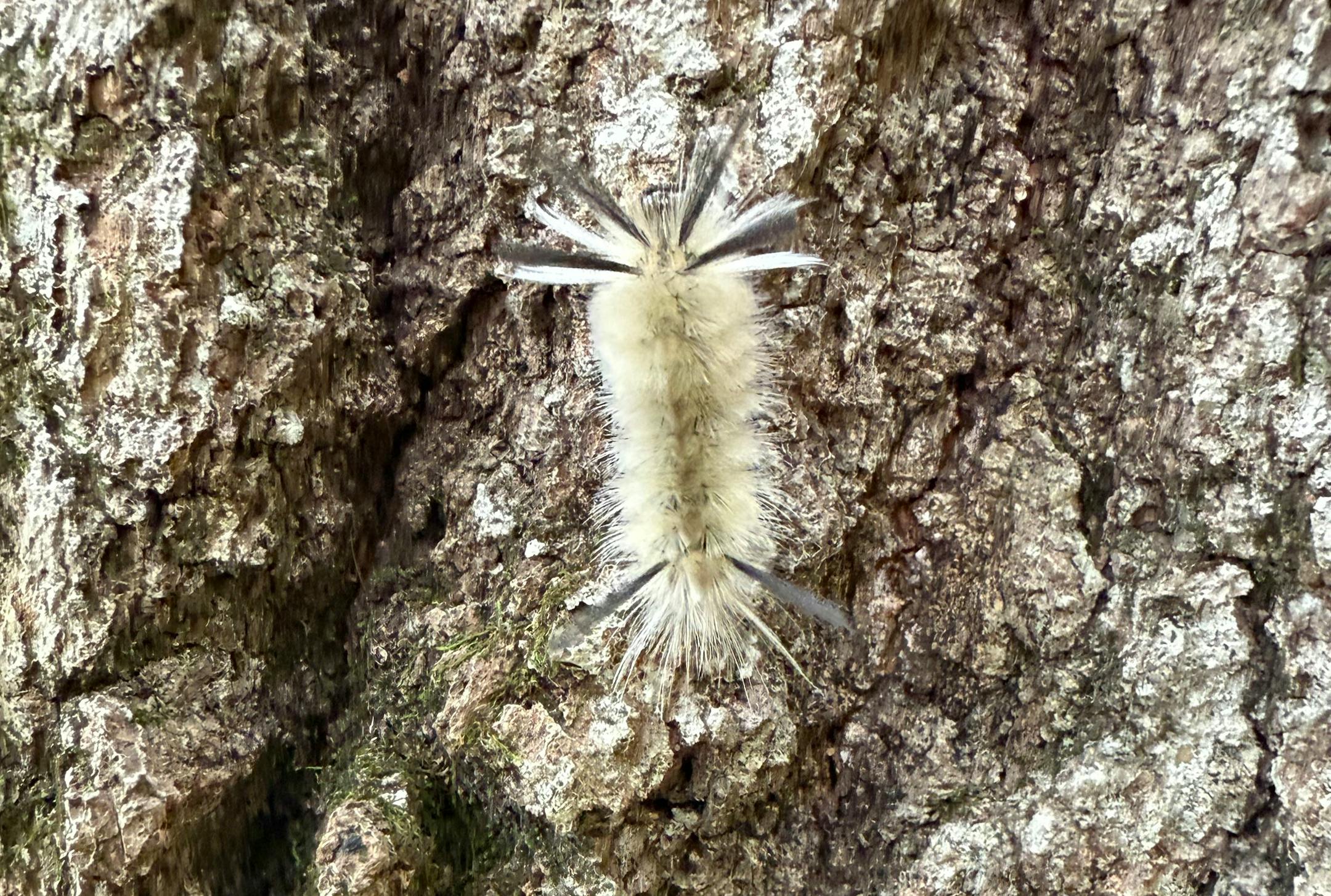
Among the many varieties of tussock moth caterpillars are the white-marked tussock moth, the milkweed tussock moth and the banded tussock moth. Others may be fuzzy as well, including the dagger moth caterpillar.
The banded tussock moth caterpillar, for instance, emerges from eggs under leaves in mid-summer and stays active throughout the fall feeding on a variety of deciduous leaves such as oaks, willows, ash, alder, hickory, hazel, walnut and birch.


