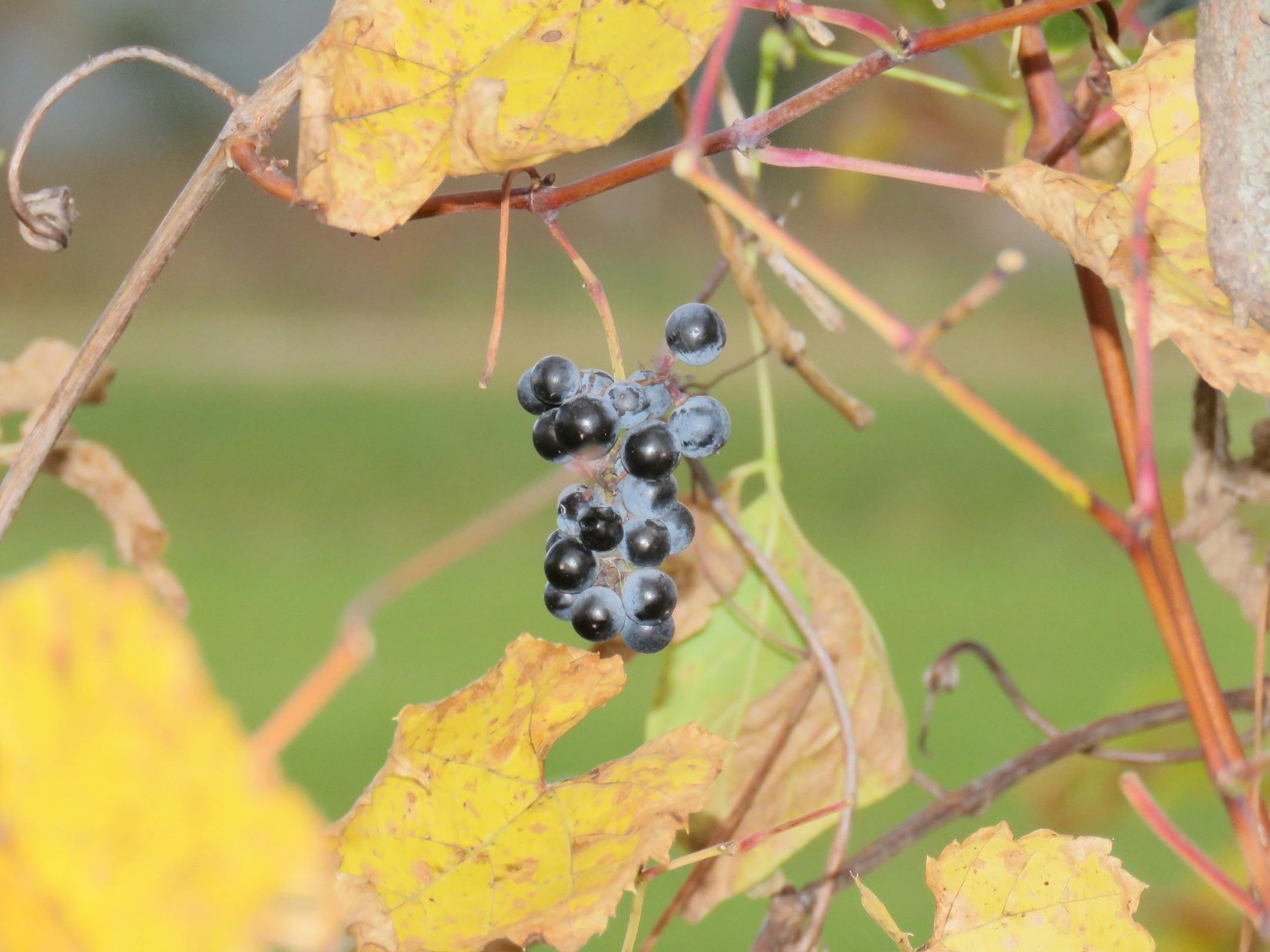
Among early fall colors that can be seen right now, here’s a shout-out to purple. Minnesota’s wild grapes are ripening, hanging in clusters and found throughout much of the state.
Native grapes spread easily, with birds helping to disperse the seeds. With their own sturdy woody trunks anchored in the ground, grape vines twine up trees, crawl across embankments, flank fences like leafy tents, smother small trees and cascade across conifer branches like over-eager Christmas garland.
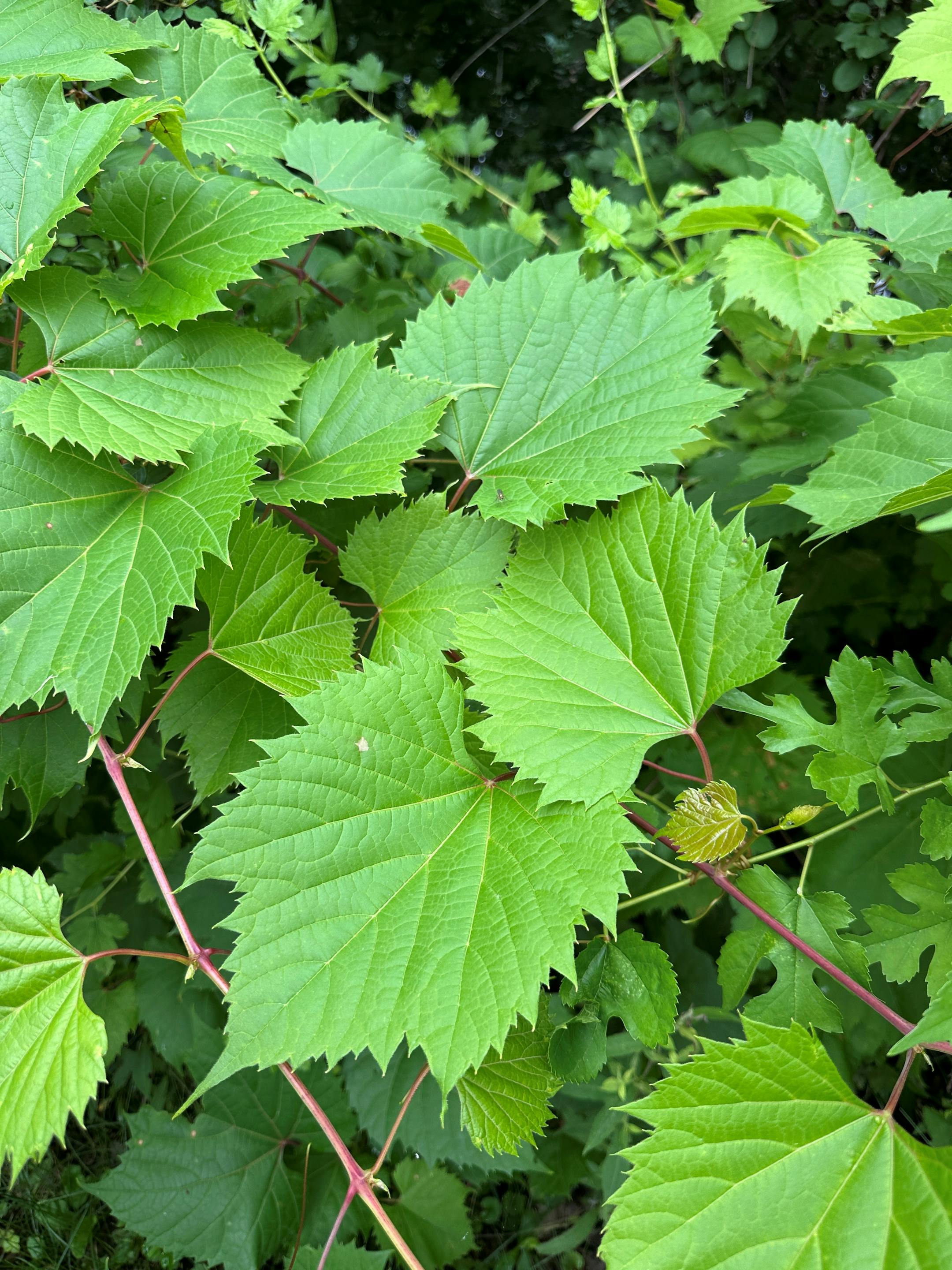
Vines can be slow to leaf out in the spring, but later their leaves grow to palm-sized and offer dense, shady cover for wildlife. The fruits — more petite than domestic Concord grapes but hanging in similar clusters with similar leaves — offer an important early-fall food source for birds and mammals.
Listen for birds fluttering among the leaves during the day. At dusk or late evening, you might hear a deer or a raccoon raiding the harvest. Any fruits they miss dry into raisins that can be eaten in the winter months.
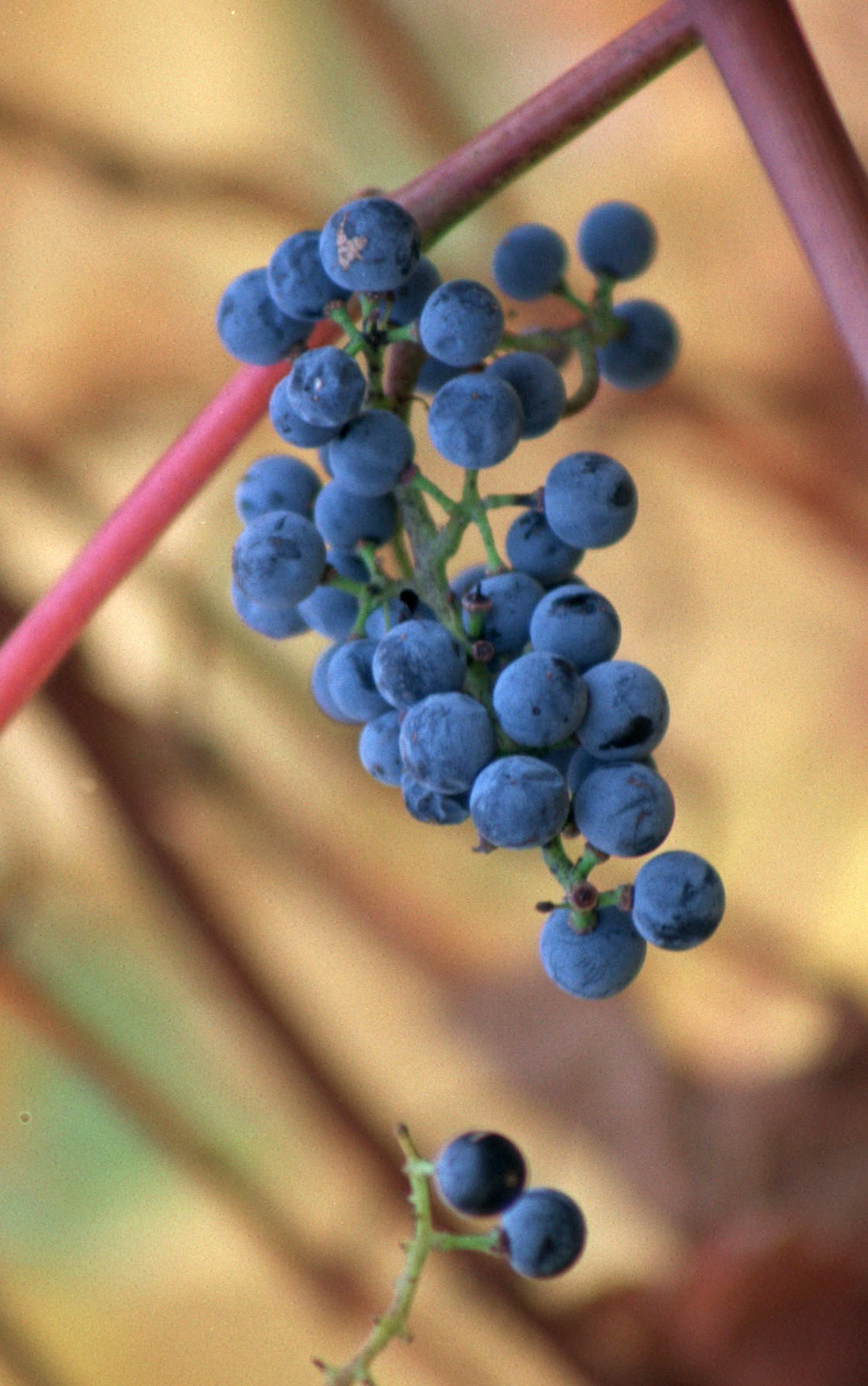
There are about a dozen native grape species in North America with the Riverbank grape (vitis reparia) dominating Minnesota and thriving along waterways, as the name suggests. Summer grape (vitis aestivalis), a rare species, might be spotted in the southeastern corner of the state.
Foragers make jellies, juices, wine and sauces with wild grapes. But if you’re not 100% confident of a plant’s identity, skip the sampling and simply enjoy the discovery.
Other vines with purple fruits this time of year include moonseed (with smooth-edged leaves and crescent-shaped seeds within the fruit) and Virginia creeper or woodbine, which have red stems on their fruits and clusters of five leaves that turn red soon. These are all toxic.
To distinguish grapes, look for shredded bark on its thickest limbs, toothy-edged leaves, and corkscrew-like tendrils that attach to whatever they’re climbing. Those curly tendrils also make this vine popular for crafting fall wreaths.