

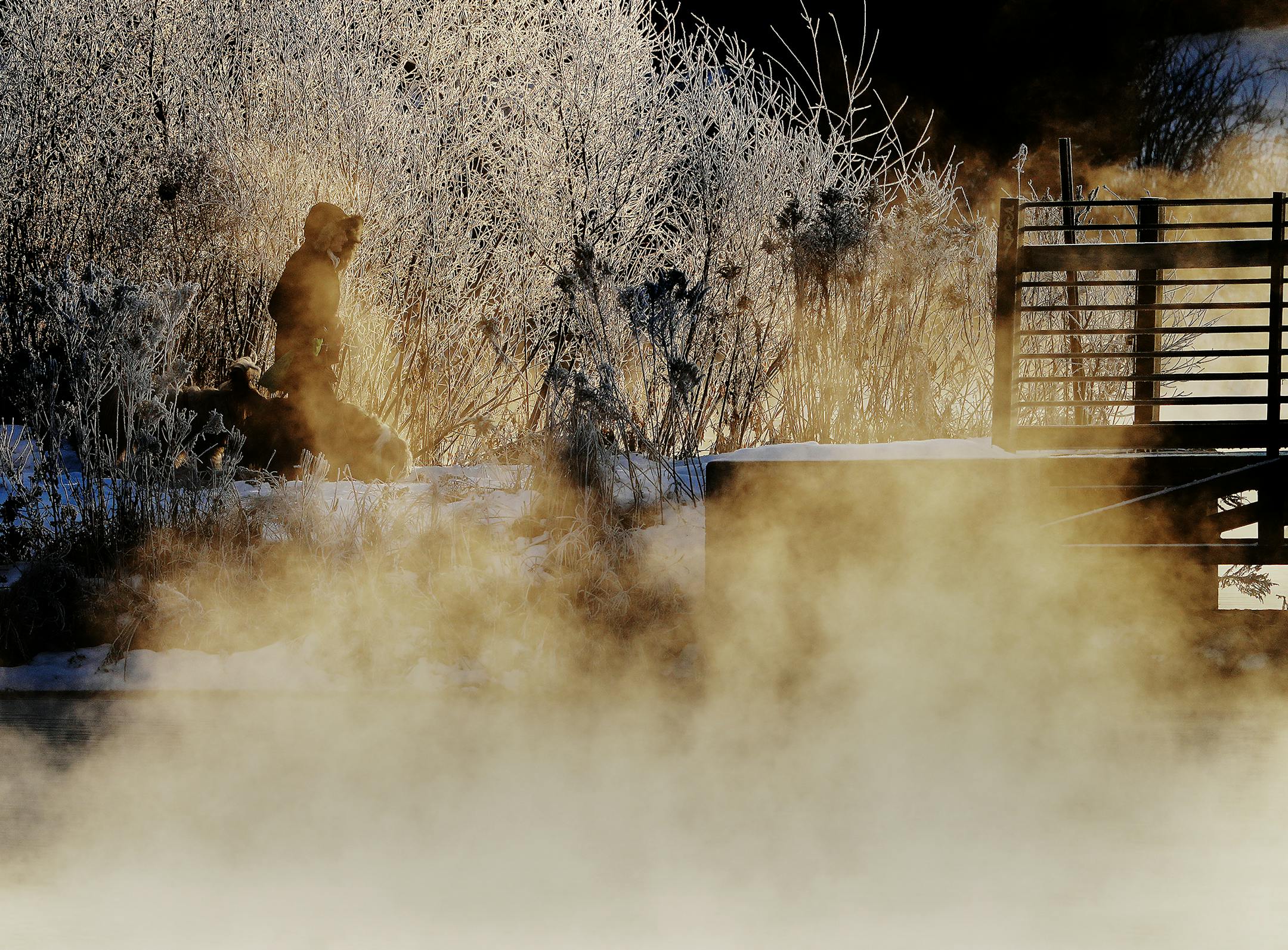
Dropping temperatures delivered some of the season’s best scenery this past week, with landscapes glittering from hoarfrost.
Blue-sky mornings with frosty forests can deliver a stunning commute or a chance to study this meteorological marvel more closely in your own backyard.
“Hoar” or “hoary” are old English words that can mean gray or whitened, grizzled, or weathered by age. It can also refer to white or grayish hairs on native plants such as hoary puccoon, hoary vervain or hoary alyssum.
The word doesn’t quite capture the fresh, fantastical nature of frost formed from water vapor on calm, often foggy winter nights, when temperatures range from minus-five to 10 degrees.
In those conditions, water vapor freezes and crystalizes on any object it encounters, such as branches, pine needles, brush and wires, said Bob Weisman, a longtime St. Cloud State University meteorologist and professor emeritus.
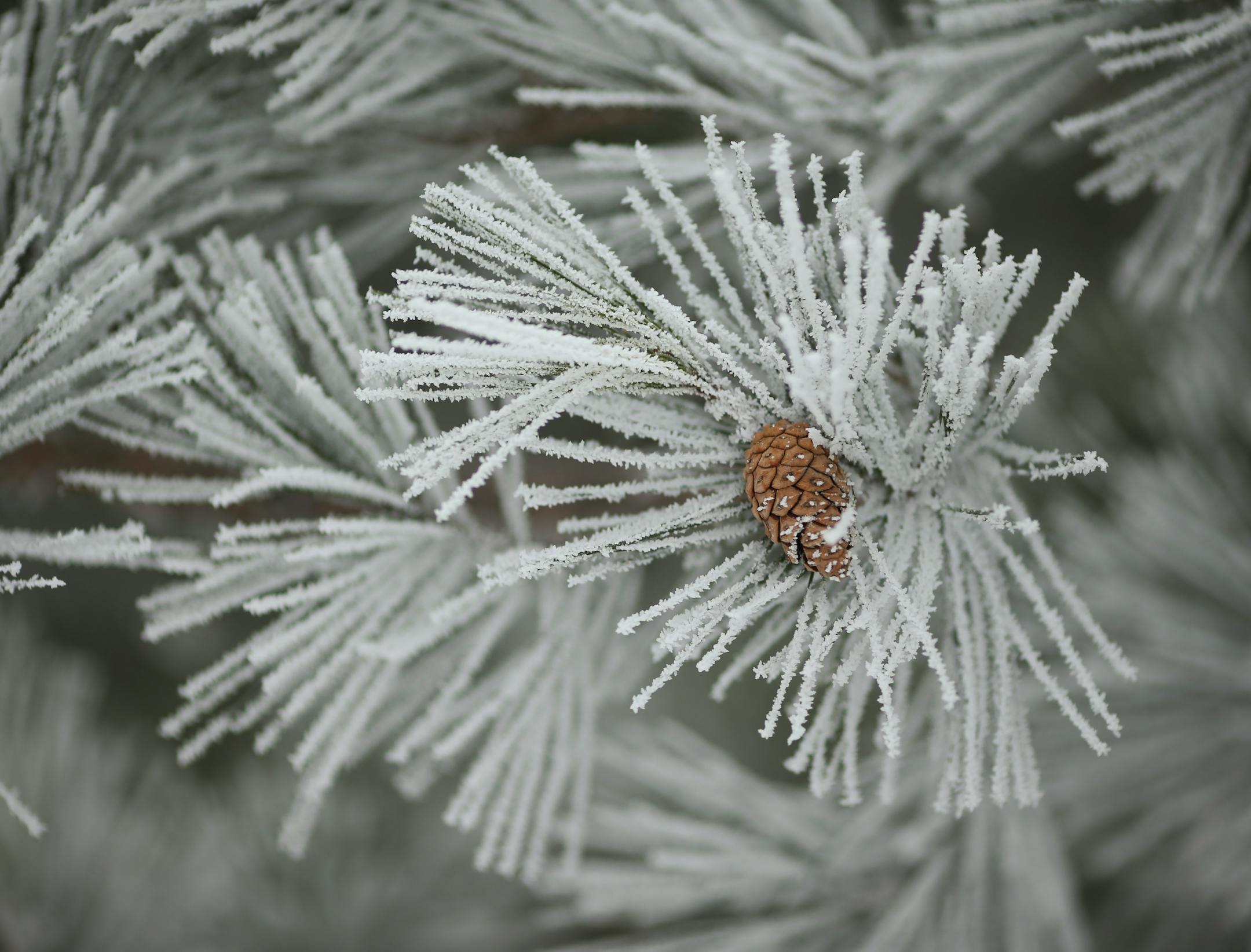
Weisman said water vapor in the clouds also needs something to attach to — such as microscopic dust or salt particles — to form ice crystals and fall to the ground as snow.
When Minnesotans awoke to hoarfrost and fresh snowfall on Tuesday Dec. 2, snowflakes continued to flit through the air. Those came from water vapor that connected with particles in the lower atmosphere.
“I like to call those the Charlie Brown snowflakes — the doilies,” Weisman said, adding that those delicate, flat flakes remain light and fluffy rather than sticking together. “You can sneeze and clear your driveway,” he joked.


