

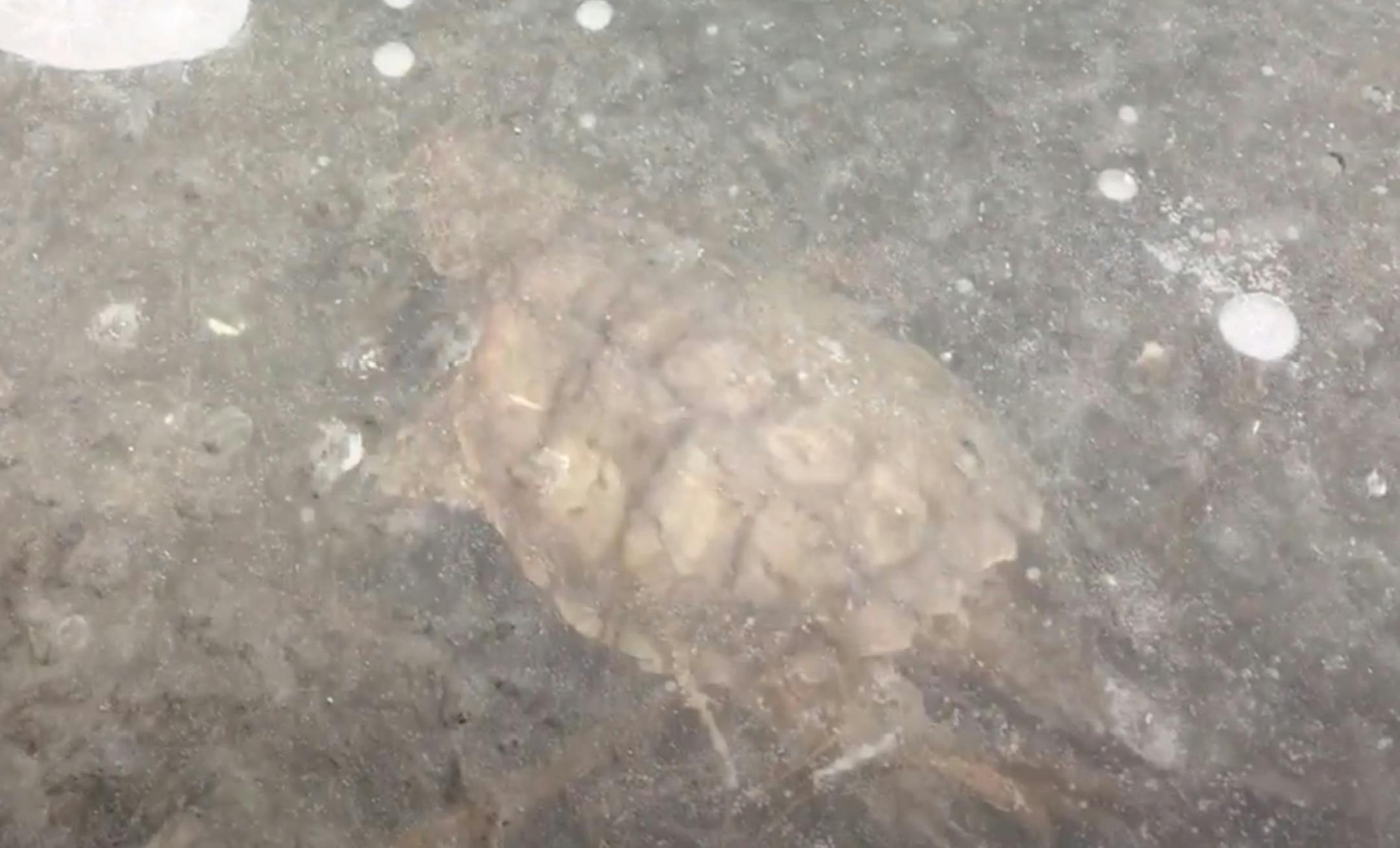
As Minnesota flaunts freezing temperatures and people take post-holiday walks along ponds and lakes, keep an eye out for turtles tucked underwater for the winter — even after it freezes.
“If the ice is clear, you can sometimes see snapping or painted turtles moving slowly under the ice,” said Jeff LeClere, zoologist and amphibian and reptile specialist with the Minnesota Biological Survey.
“All of Minnesota’s nine species of turtles overwinter aquatically,” he said.
This winter dormancy, called brumation, requires them to be deep enough to avoid being fatally frozen in ice and to slow their metabolism drastically to conserve energy. Most don’t move at all once this turtle equivalent of hibernation begins. It also minimizes their need for oxygen, which they absorb from the frigid water through a process called cutaneous respiration.
Research once sparked the simplified belief that turtles breathe through their butts in the winter. It’s more complex than that. Turtles have a cloaca, an all-purpose organ for excretion and mating. The cloaca includes sac-like organs called bursae that are rich in blood vessels. These help to better absorb oxygen in the water.
Not all species, though, do well with this method, LeClere said. Species such as softshell turtles rely on vascular tissues along their throats.
Softshell turtles tend to bury themselves about an inch beneath sand, silt or gravel, while other species sidle under logs or rocky nooks. Map turtles like to congregate along the wing dams, which are rock structures along navigation channels of the Mississippi River, LeClere said. Having shelter can lessen the threat of winter predators such as otters.
River locations have the added benefit of being less likely to freeze thanks to more moving water, which also provides better oxygen.


