Editor's Pick

Editor's Pick

How a foreign firm’s high-dollar investment became a Minnesota startup’s nightmare

Grand Pharma’s initial $12 million investment into FastWave Medical helped the medtech startup flourish. Now, the China-based company is allegedly a hurdle while it invests in a competitor overseas.

The Minnesota Star Tribune
November 20, 2025 at 1:08PM
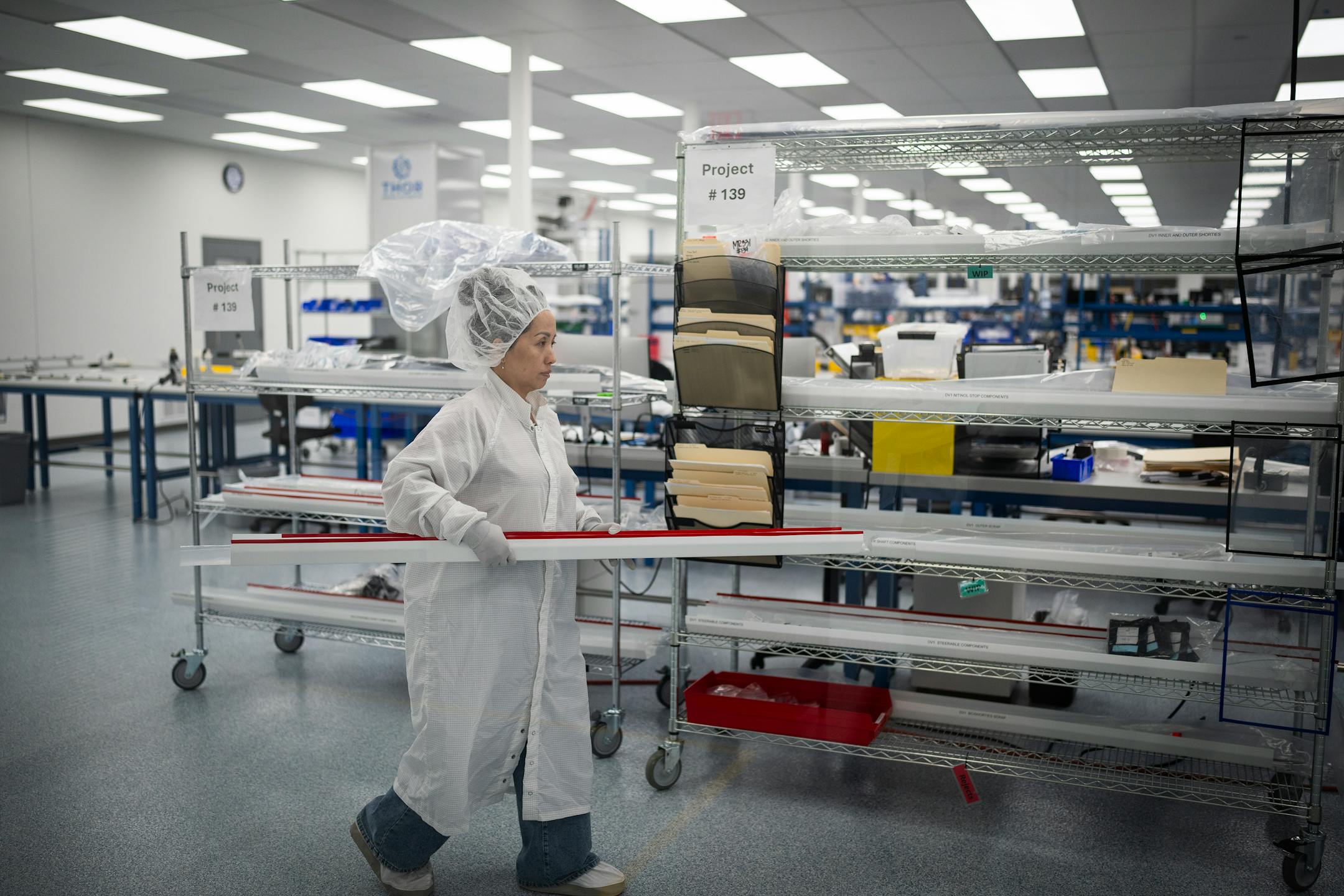
The production area at FastWave Medical headquarters in Brooklyn Park on Sept. 17. (Leila Navidi/The Minnesota Star Tribune)

A multimillion-dollar investment should supercharge an early-stage startup. But for one Minnesota medtech company, such a cash infusion has felt like poison.

In 2021, Brooklyn Park-based FastWave Medical received a $12 million investment from Grand Pharmaceutical Group as it set about creating a surgical technology to make treatment of serious arterial diseases easier.

Since then, FastWave co-founder and CEO Scott Nelson said Grand has pulled back, refusing to provide additional funding or cooperate with a regulatory proceeding that would allow the startup to raise additional money from other investors.

Instead, the large China-based firm has started investing in a Chinese company that appears to be building similar technology as FastWave.

Why would it do this? “To this date, I really don’t know,” Nelson said.

But Grand’s unwillingness to sign some crucial documents is making it difficult for Nelson to continue raising money from other investors. He also fears his company’s technology could end up in the hands of a foreign competitor, at a time when American medtech companies have grown concerned overseas firms could copy their intellectual property.

Grand Pharma has not responded to multiple emails from the Minnesota Star Tribune seeking clarity on its intentions.
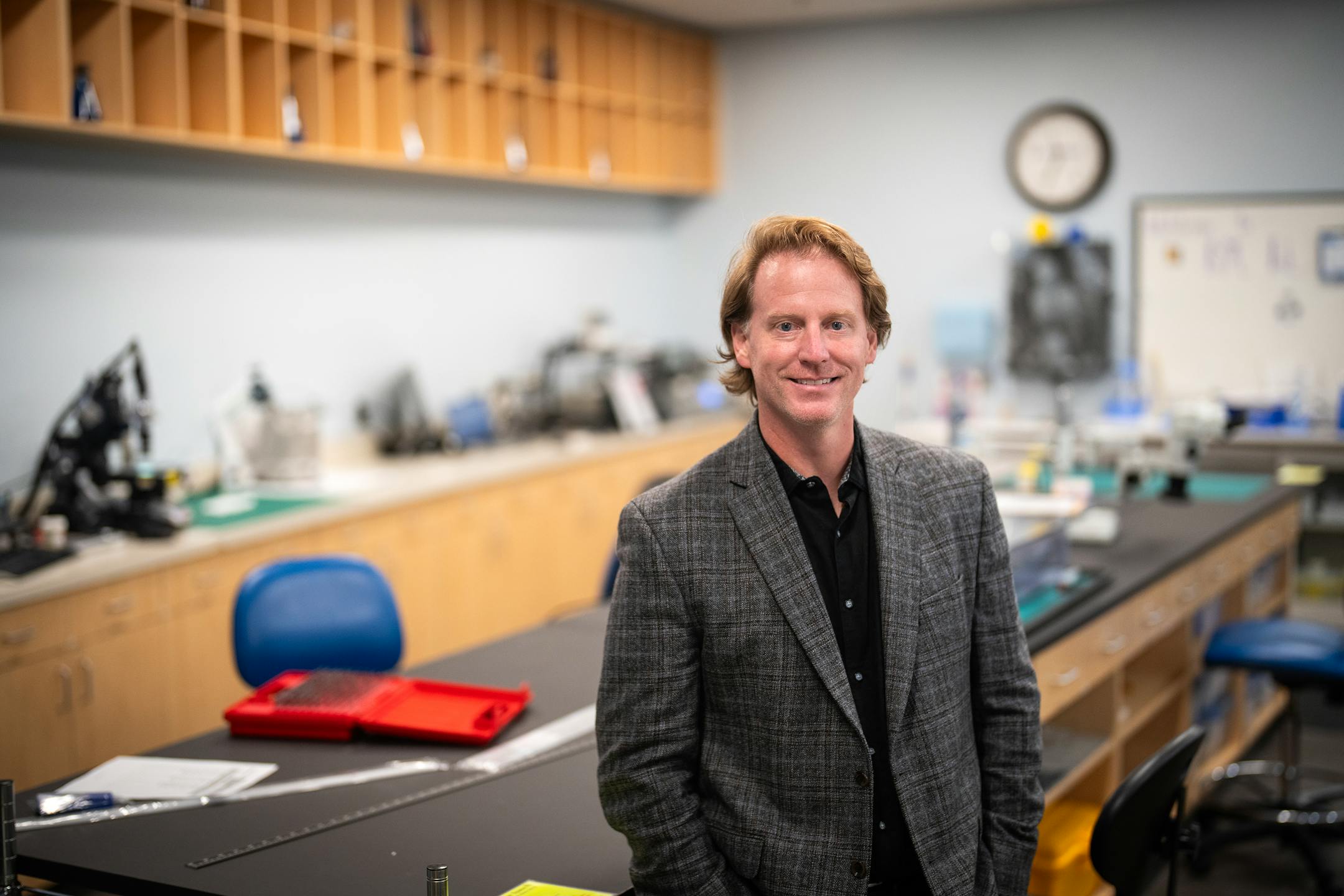
Scott Nelson, cofounder and CEO of FastWave Medical, at its headquarters in Brooklyn Park on Sept. 17. (Leila Navidi/The Minnesota Star Tribune)

Now, FastWave must solve a regulatory puzzle on its own to allow future investors — who Nelson said are eager to back the company — to buy in.

“To see the behavior and the action on their part — it’s bizarre,” Nelson said.

From warm to cold

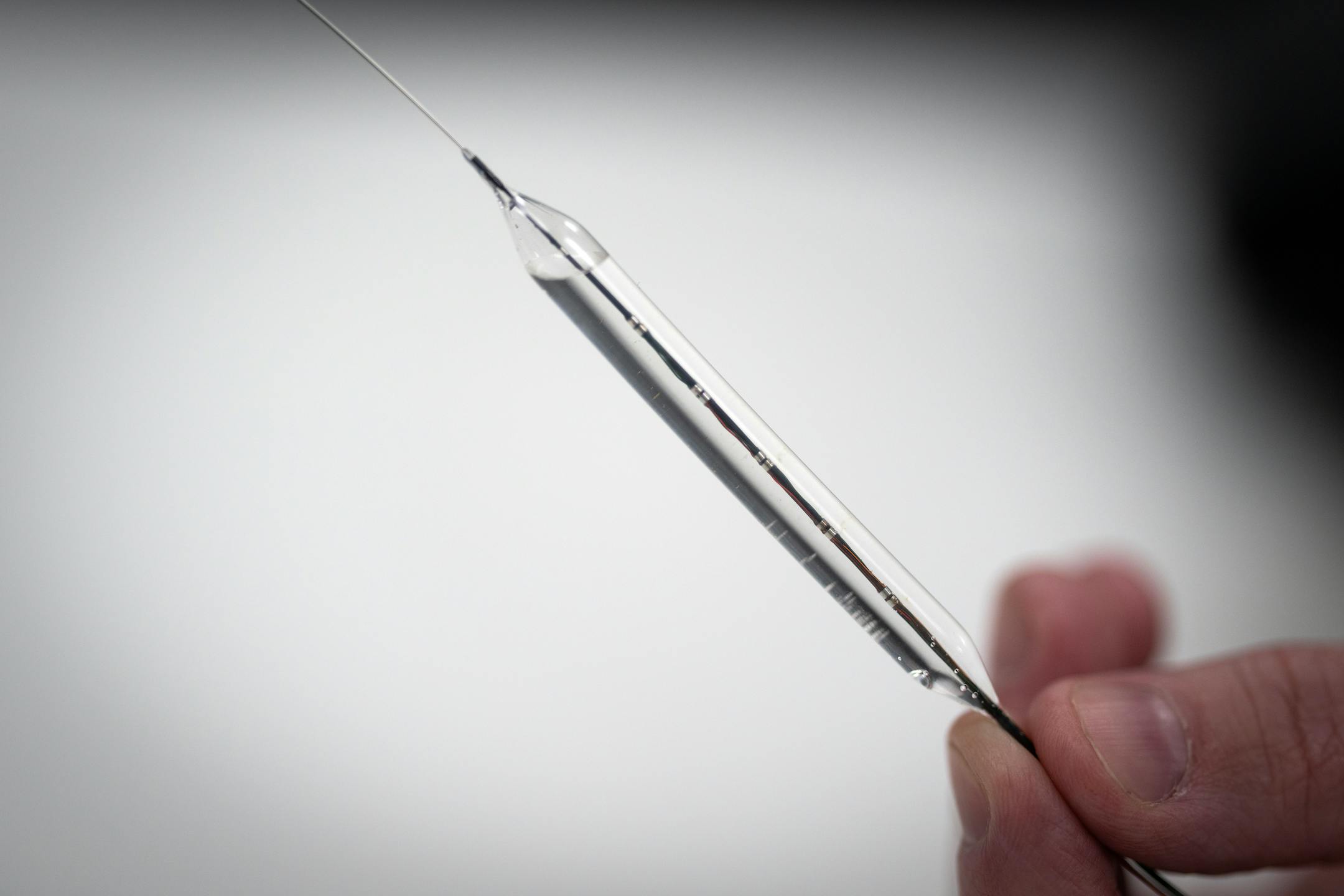
In a Brooklyn Park office one recent day, the push of a button fired off the pen cap-sized surgical balloon at the end of FastWave’s Artero device. Within this rupture-resistant bubble, tiny emitters pulsed with energy, producing an electric shock wave that can fracture hard surfaces it touches.

“If you were to hold this in your mouth, it’s going to crack your teeth,” Nelson said.

When a surgeon navigates this balloon inside a leg’s artery and activates it, its shockwaves break up the stiff calcium plaque that hinders the treatment of peripheral artery disease, a common low-blood-flow condition that can lead to an amputation if untreated.

Artero, a peripheral IVL catheter, is demonstrated by FastWave Medical co-founder Scott Nelson. (Leila Navidi/The Minnesota Star Tribune)

Nelson started working on FastWave in 2020 as regulators invalidated some of a competitor’s patent claims, opening the door to challengers. Nelson’s founding team, he said, became convinced that the calcium-shattering technology, called intravascular lithotripsy (IVL), could prove hugely successful.

Since 2020, Nelson’s company has raised more than $50 million without issue. Nelson wants to raise an additional $25 million to $30 million in a round of financing in the coming months to complete a clinical trial testing FastWave’s technology on peripheral artery disease. He also aims to start a clinical trial evaluating IVL for coronary artery disease, which can eventually lead to a heart attack because vessels that supply blood to keep the heart muscle pumping become blocked.

Attracting new investors is not a challenge, Nelson said. Instead, Grand Pharma remains his greatest hurdle.

Nelson’s team set out in early 2021 to raise their first round of investment after spending their own money to expand the company. While U.S. companies showed interest, Nelson said, FastWave caught Asian investors’ attention. A co-founder introduced the team to Grand Pharma.

Grand has more than 10,000 employees, is based in Wuhan, China, and specializes in drug development. The $12 million it invested into FastWave funded the entire Series A round and gave it an option to acquire the company down the line, Nelson said.

Grand appointed two people to FastWave’s board, and the relationship felt normal for the first year or so, Nelson said.

In 2022, Grand Pharma’s leaders asked FastWave to prioritize securing regulatory permission to use its products in China rather than the U.S.

Nelson’s team reallocated resources to make this pivot, building many catheters over six months to try to meet Grand’s expectations.

“We did that with their commitment to continue to capitalize the company,” Nelson said. After FastWave had spent millions to change course, Nelson said, Grand suddenly “pulled the rug out from underneath us.”

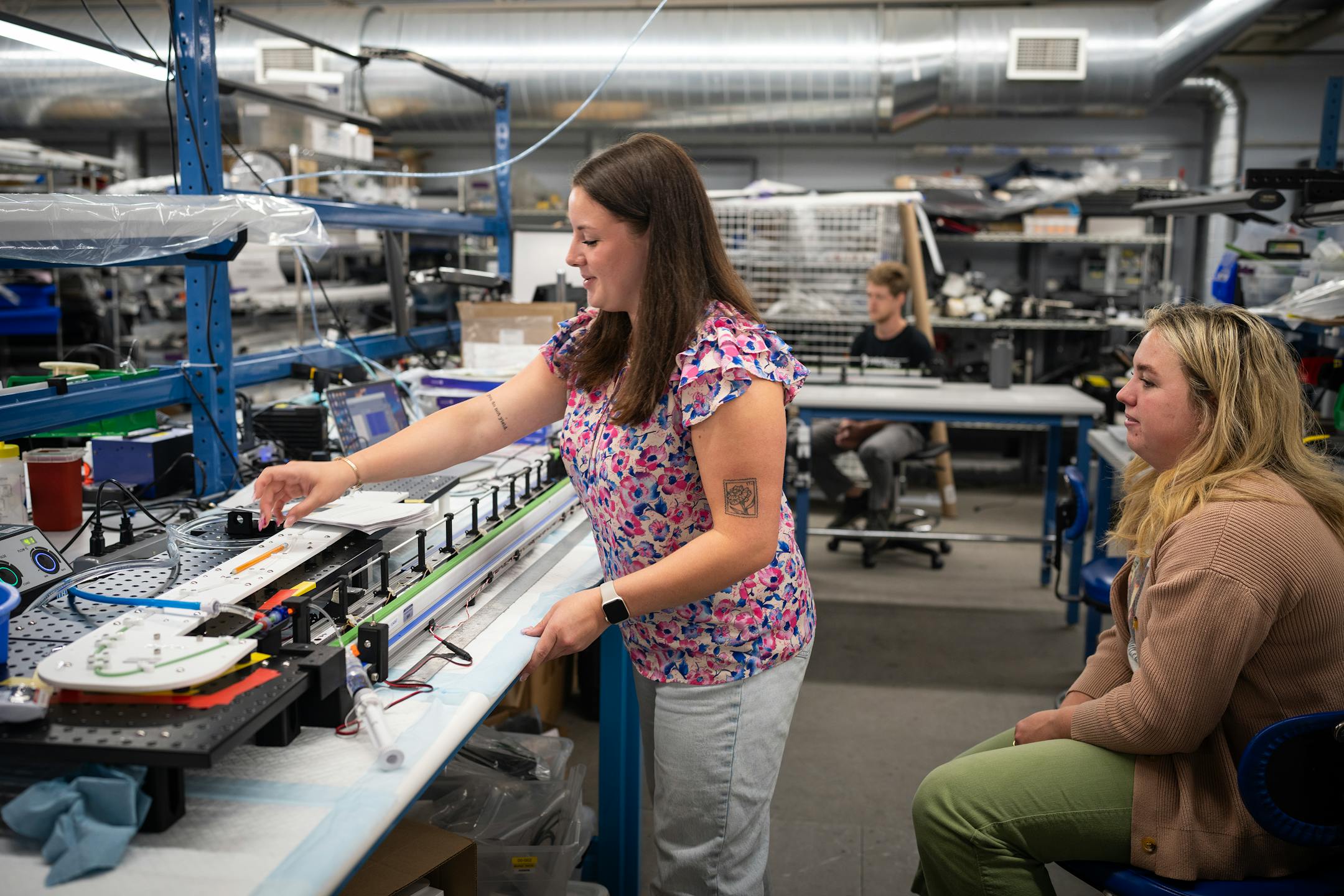
Ryleigh Furlong, left, a design quality engineer, and Mia Pensa, a process engineer, test products at FastWave Medical headquarters in Brooklyn Park. (Leila Navidi/The Minnesota Star Tribune)

In late 2022, Grand told FastWave that it would not provide additional funding to the company, providing no further context, Nelson said. The company never sent its catheters to Grand.

“We sort of as a founding team really just said, ‘OK, that’s really disappointing. You left us in a very, very difficult position, but we’re very optimistic around the technology we’re developing,’” Nelson said.

FastWave turned largely to U.S.-based investors to continue to operate. Their No. 1 question for Nelson, he said, is: “Why are they doing this?”

The path forward

To secure its next round of financing, Nelson said FastWave must submit a regulatory filing to the Committee on Foreign Investment in the United States (CFIUS) disclosing Grand’s involvement.

Elizabeth Hodgson, a partner at the law firm Duane Morris, said CFIUS’ purpose is to protect the national security of the U.S., reviewing transactions to ensure that foreign adversaries do not access novel or critical technologies.

Nelson explained that safeguarding FastWave’s technology is critical for national security. In the wrong hands, the system’s laser components could be repurposed for defense or semiconductor manufacturing, he said.

Typically, the foreign company collaborates with the American firm to submit a CFIUS filing, but Nelson said this has not occurred yet. FastWave now has to submit this on its own, he said.

Hodgson said interacting with the U.S. government can spook some foreign investors. Yet none of her clients have made a totally unilateral filing, as the process requires information from foreign investors that the American companies wouldn’t have available, she said.

Grand has signed an agreement with Chinese company Jiangsu Zhenyi Medical Technology, which makes its own peripheral vascular shock wave system, to “engage in in-depth cooperation in areas such as innovative product research and development and production,” a translated news release said.

Grand did not disclose that partnership to FastWave, Nelson said.

Nelson said he’s worried about protecting his company’s technology, though he’s not seen any evidence to suggest it’s been shared with any other company that Grand has invested in.

Tom Hipkins, chair of the patents department at the law firm Fredrikson & Byron, which is not representing FastWave, said intellectual property theft is a significant problem that impedes efficient investment and makes startups nervous to share information with prospective investors. Legal action to fight back is expensive, he added.

Nelson said startups such as FastWave try to avoid litigation, due to cost and time. “That said, Grand Pharma’s corporate governance abuses have been so excessive that FastWave is fully prepared to take proactive legal action if necessary to protect the company and its stakeholders,” the CEO said in an email.

These dealings have reminded Nelson of the risks that come with accepting investments from outside the U.S., he said.

“We’ve got these mostly U.S.-based investors — a lot of them extremely familiar with IVL and the clinical space — that are very positive and very optimistic about what we’re building at FastWave," Nelson said. “And then you contrast that to this Chinese investor that’s almost done everything they can to block our ability to kind of continue to operate the company.”

about the writer

about the writer

Victor Stefanescu

Reporter

Victor Stefanescu covers medical technology startups and large companies such as Medtronic for the business section. He reports on new inventions, patients’ experiences with medical devices and the businesses behind med-tech in Minnesota.

See Moreicon

More from Business

See More
card image
Spencer Platt

The U.S. stock market roared back on Friday, as technology stocks recovered much of their losses from earlier in the week and bitcoin halted its plunge, at least for now.

Attendees of Frostbike made their way through the convention Saturday at the Quality Bike Products campus in Minneapolis. ] (AARON LAVINSKY/STAR TRIBUNE) aaron.lavinsky@startribune.com Frostbike 2016 was held at the Quality Bike Products Campus on Saturday, Feb. 27, 2016 in Bloomington, Minn.
card image