
Editor's Pick

Editor's Pick

In a surprise, abortions in Minnesota declined in 2024

Instead of a 30-year high, Minnesota showed a dip in abortions in 2024 after correcting the report it first issued Dec. 31.

The Minnesota Star Tribune
January 5, 2026 at 4:58PM
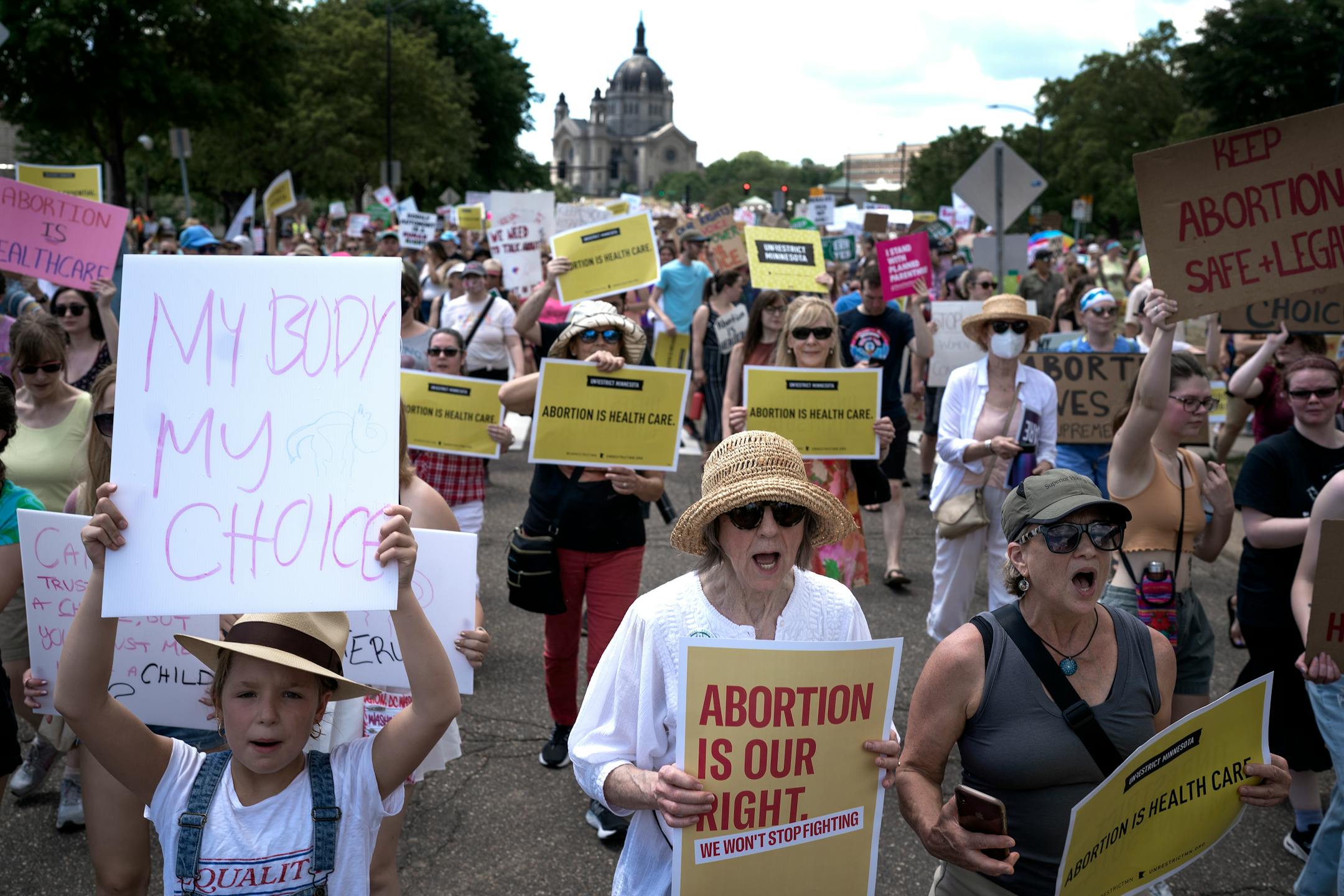
Thousands of people march to the State Capitol in St. Paul for a rally supporting abortion rights on July 17, 2022. (Jerry Holt/The Minnesota Star Tribune)

Minnesota mistakenly claimed a 30-year high in abortions in a report it released on New Year’s Eve before discovering an error and determining the total actually declined in 2024.

The corrected total of 13,729 represents a more than 6% decline from the number of elective abortions in 2023, according to an update the Minnesota Department of Health published late Friday, Jan. 2. A double-counting of data provided by St. Paul-based Planned Parenthood had initially resulted in the state reporting 16,315 abortions in 2024, which would have been the highest total since 1990.

The decline caught state advocates by surprise. New restrictions in Iowa and other nearby states had sent more women to Minnesota for abortions in 2023, and many expected that trend to continue in 2024. But the report showed a decline in abortions both among Minnesota residents and women traveling to the state.

The 2024 figures might be a blip, according to Planned Parenthood North Central States, which provided 8,052 abortions in Minnesota that year, or 59% of the statewide total.

Planned Parenthood’s internal data shows that more women from other states received abortions at its Minnesota clinics in 2025 than in 2024 or even 2023, said North Central States chief executive Ruth Richardson.

“Since the near-total abortion ban was passed in Iowa, Planned Parenthood North Central States has seen more and more Iowa patients traveling north to get care in Minnesota,” she said.

The DFL-led state legislature in 2023 reduced the amount of information women seeking abortions needed to report to providers in an attempt to make the process less invasive. Women are no longer asked the reasons why they are seeking abortions, for example.

But lawmakers also reduced the timeliness of the report by pushing its release from July 1 to a year-end holiday date of Dec. 31.

Cathy Blaeser, director of Minnesota Citizens Concerned for Life, addresses the crowd attending the 50th March for Life at the State Capitol in St. Paul on Jan. 22, 2023. (Jeff Wheeler/The Minnesota Star Tribune)

“The delay in the reporting time means that 2024 data isn’t really known until 2026, and policymakers are unable to address problems in a timely way,” said Cathy Blaeser, director of Minnesota Citizens Concerned for Life, an anti-abortion lobbying organization.

Blaeser said the corrected 2024 report is still wrong because it omits any abortions at Robbinsdale Clinic, which closed in 2025 but was active in 2024.

The former clinic’s director, Dr. June Fahrmann, said her clinic supplied its 2024 data to the state and she was surprised it wasn’t included in the report. The clinic provided around 750 abortions that year, she estimated, which would have lessened the decline in Minnesota but not enough to reverse the overall trend.

Abortions have been declining each year since 1998 in Minnesota, where state leaders credit the effectiveness of goal-setting classes that teach high school students the impacts of unplanned pregnancies on their futures.

More than 2,000 abortions were reported each year in Minnesota among teenagers until 2008. The total reached a low of 809 in 2018, before rising in subsequent years. There were 908 abortions among teens in Minnesota in 2024.

Access to medication options rather than surgical abortions contributed to a reversal in abortion trends over the past decade. Medications such as mifepristone made up 67% of the abortions in Minnesota in 2024. Five years ago, only 37% of abortions involved medications.

“These are patients who want to end their pregnancy in a comfortable setting, at home or a place of their choosing outside a health center — with access to the medical support and information they need," Richardson said.

Providers such as Just the Pill and Carafem exclusively operate by online visits with patients and mail-order access to abortion medications. Those two providers didn’t appear on Minnesota reports three years ago, but they collectively provided 1,629 abortions in 2024.

Abortion reporting has been an uncomfortable burden for the Minnesota Department of Health. While it typically issues news releases and interpretations to put other public health topics in context, it posts the legislatively required abortion report each year without any announcement.

State health leaders were planning to go beyond legislative requirements and publish data about the number of births, miscarriages and abortions that women had before their abortions in 2024. Historically, about 60% of women receiving abortions in Minnesota had prior births, and 40% had prior abortions.

However, state health leaders decided to pull that data from the public report after receiving contradictory guidance from the Centers for Disease Control and Prevention about whether they should still be collecting it. The federal agency is having its own struggles, delaying its annual public report on abortions from last fall to the upcoming spring amid staffing cuts that limited its ability to fact-check state data.

Blaeser said the gaps and omissions in the state report make it harder to identify populations who might benefit from information on alternatives to pregnancy terminations.

“There’s now less support and empowerment for pregnant women and less protection for vulnerable women and children,” she said.

Minnesota has corrected its abortion data before. The Minnesota Star Tribune alerted the Department of Health to errors in its 2020 report, which initially led advocates to believe that the onset of the COVID-19 pandemic had suppressed abortion activity in the state. Abortions actually increased in 2020.

The state this year also increased the abortion total in 2023 by about 600 after receiving some belated information from providers.

The 2024 report showed that 898 women traveled to Minnesota from North Dakota for abortions, partly because the Red River Women’s Clinic moved in 2022 from Fargo to Moorhead. In 2024, abortions were provided in Minnesota to 754 women from Wisconsin and 524 women from Iowa.

About 40% of the women who received abortions in 2024 in Minnesota were 30 or older. About 20% were college graduates or had advanced degrees.

about the writer

about the writer

Jeremy Olson

Reporter

Jeremy Olson is a Pulitzer Prize-winning reporter covering health care for the Star Tribune. Trained in investigative and computer-assisted reporting, Olson has covered politics, social services, and family issues.

See Moreicon

More from Business

See More
card image
card image
