
Brown: Bad omens and big ideas at the Port of Duluth

Minnesota struggles with weather and the changing nature of legacy industries. But our ability to ship worldwide from the middle of the continent is a huge advantage.

Columnist Icon
The Minnesota Star Tribune
September 20, 2025 at 2:48PM
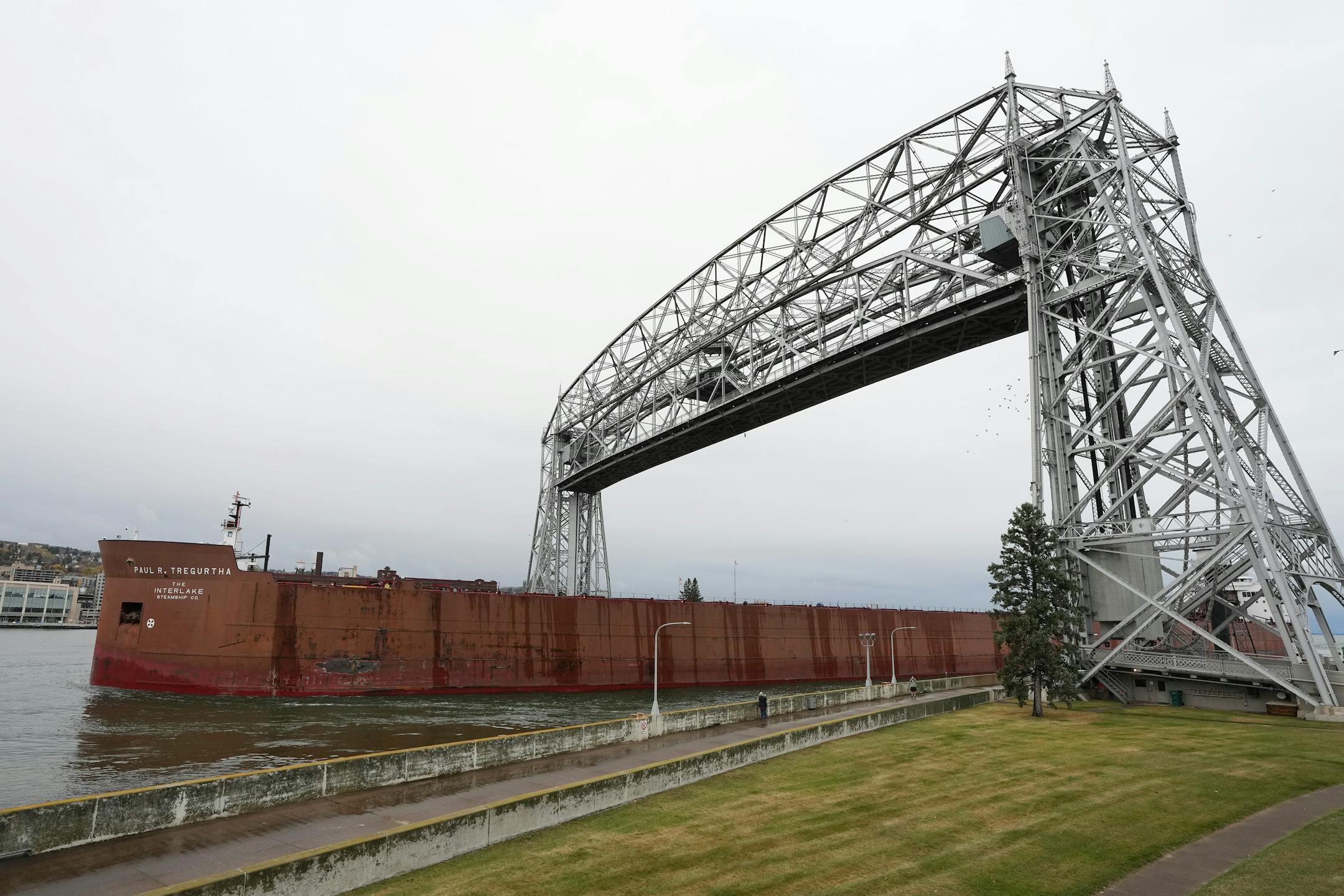
The bulk carrier MV Paul R. Tregurtha passes under the Aerial Lift Bridge as it arrives in Lake Superior Harbor in Duluth on Oct. 30, 2024. (Anthony Soufflé/The Minnesota Star Tribune)

Opinion editor’s note: Strib Voices publishes a mix of commentary online and in print each day. To contribute, click here.

•••

Ships that pass beneath Duluth’s Aerial Lift Bridge do more than excite tourists and spawn Instagram posts. They carry the economic output of several states, especially ours.

Water shipping is the most economical and environmentally friendly way to transport goods in the world. A Duluth laker moves as much tonnage as 2,800 trucks with one-tenth the amount of fuel.

The Port of Duluth and neighboring Superior, Wis., send iron ore, grain, coal and other goods across the Great Lakes and to foreign lands. A ship laden with Minnesota cargo may touch the warm waters of the Mediterranean Sea.

More ships mean more trade, which means more jobs somewhere up the road. We might count a lot more ships if the United States weren’t stalled in a trade war and economic slowdown. Regardless, we can make more use of this inland port in our rapidly changing world.

Last week, the Duluth Seaway Port Authority released a midseason shipping update. Tonnage in nearly every category was down, with total tonnage down 8.6% in the 12 months prior to Aug. 31.

“Anything that affects global trade affects this port and the region as a whole,” said Kevin Beardsley, the port authority’s executive director.

Iron ore, the bell cow of Duluth shipping, was down 9.4% year to year. Beardsley attributed the decline to reduced shipments to Canada, where steel mills are using less American ore. But U.S. iron ore demand is falling, too. The economy is one reason, but newer steelmaking technology requires less raw ore. This fact nibbles at Minnesota’s iron shipments each year.

The most dramatic drop at the port came from a 31% decline in grain exports. If late-season grain orders don’t increase — and that’s looking iffy — Duluth will record a 140-year low in grain shipments. For perspective, that dates to when many Great Lakes ships were made of wood.

Last week, the CHS grain elevator at Superior closed, laying off 18 workers. The facility loaded oceangoing ships, called “salties,” with grain bound for international ports. The company cited changing supply chains as its reason for closing the facility, likely anticipating what now appears to be a collapse in foreign demand for U.S. grain.

Duluth and Superior still have five other grain elevators in regular operation, though CHS shipped the most. The Port of Duluth competes with the Mississippi River to move grain. Barges from the Twin Cities head south for overseas shipping when the river is high enough. But with reduced demand, everyone is shipping less this year.

But good news sails in with the bad. This is the 20th year that Duluth has been a terminus for international wind turbine components, and this year was especially good.

Sitting at a Subway restaurant, I once watched trucks loaded with wind turbine blades navigate the turn on Hwy. 2 in Grand Rapids. Beardsley said the port’s secondary transportation infrastructure is another advantage, with ample railroads and wide highways in all directions.

Another 2025 success story has been the port’s new program for break bulk container shipping. It takes a lot of goods to fill a whole international ship, so the port now helps coordinate shipping by individual container.

“This is a growing opportunity for us in the port,” said Jayson Hron, spokesperson for the port authority. “Bringing cargo into the port from around the globe has been going very well. It’s been more challenging to find cargo to send out.”

For small and midsize businesses this is an enormous opportunity to ship overseas. If more businesses use this service, ships could leave more frequently.

Beardsley hopes to boost exports in coming years with sustainable aviation fuel.

Air travel represents a significant source of carbon emissions. Major companies like Shell, Chevron and BP are developing fuels from nonpetroleum sources like used cooking oil, woody biomass, food waste and other fats, greases and oils that produce fewer emissions.

This means that sustainable aviation fuel could be produced from industrial byproducts found throughout Minnesota, a prospect made uniquely plausible by the Port of Duluth.

Despite trade conflicts, the Duluth port continues to develop new relationships with trading partners. Just this week, the port hosted 45 grain procurement professionals from 14 countries on five continents.

Shipping stats are just one part of the economic picture in our region, but they provide some clear findings.

One is that you can’t play politics with global trade without hurting American businesses and workers who export products. Uncertainty might be unavoidable, but it can be reduced with steady policy. And while “the market” might not always be a friend to “the people,” it can provide important feedback. For instance, Minnesota’s iron mining industry must adjust to new steelmaking technology, or it will never grow again.

When times get tough, it’s important to take stock of the strengths and weaknesses of your position. In Minnesota, we struggle with weather and the changing nature of our legacy industries. However, the ability to ship worldwide from the middle of a vast continent must be counted as an enormous advantage.

Instead of closing off our trade partnerships, we should double down on the quality of the goods we mine, farm and make in Minnesota. Unlike most of our neighbors, we can project our commodities and labor to the rest of the world with relative ease. It’s hard to predict what policy whims come out of Washington these days, but Minnesota may yet compete worldwide to further diversify and protect our unique economy.

about the writer

about the writer

Aaron Brown

Editorial Columnist

Aaron Brown is a columnist for the Minnesota Star Tribune Editorial Board. He’s based on the Iron Range but focuses on the affairs of the entire state.

See Moreicon

More from Columnists

See More
card image
Joel Koyama/The Minnesota Star Tribune

Plus: Minneapolis Chamber embezzlement case, rescuing food waste, SilverSneakers fitness program cuts and more.