
Opinion | If we don’t get our act together soon, Duluth is destined to become a ghost town

This is your wake-up call.

August 10, 2025 at 9:00PM
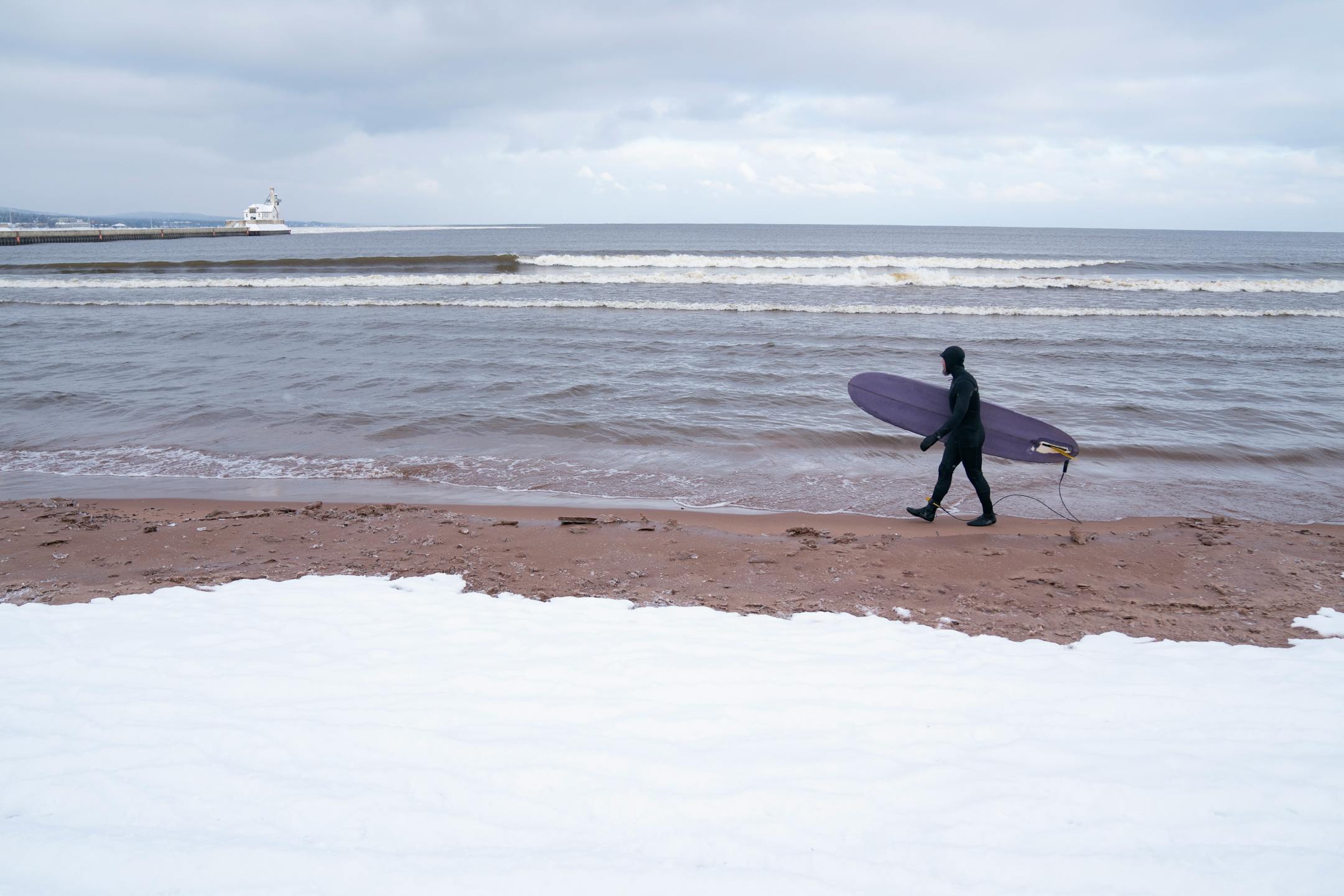
A surfer walked along the snow-covered shore of Lake Superior in Duluth on a January day.
A surfer walked along the snow-covered shore of Lake Superior in Duluth on a January day. (Alex Kormann/The Minnesota Star Tribune)

Opinion editor’s note: Strib Voices publishes a mix of guest commentaries online and in print each day. To contribute, click here.

•••

Let’s not sugarcoat it, Duluth. Ten years from now, we’re either thriving on purpose — or limping along on nostalgia and denial. And judging by our current trajectory, it’s looking a heckuva lot more like the latter.

Sure, Lake Superior will still be there. She’ll still roll in with that perfect mist and slap against the breakwall like a metronome for the city’s heartbeat. But here’s the truth we keep dodging: We treat her like a backdrop, not a strategy. We toss her on the cover of brochures, drone-shot and heavily filtered, while the real decisions about her future get made behind closed doors — in boardrooms we’re not invited to.

Make no mistake: By 2035, that lake won’t just be for photo ops. It’ll be a strategic global resource, and the world knows it. The billionaires know it. The server farms know it. The bottled-water barons are already circling. And if you think Duluth has the political spine to say no when a trillion-dollar company wants to “borrow” a billion gallons to cool its cloud storage racks? Then you haven’t been paying attention to our track record. We’ll host the ribbon-cutting, slap a nice sign on the pump station and call it a win — while our grandkids inherit a water crisis.

And what about our port, that once-proud engine of grit and cargo? It could still be something — a hub for clean shipping, rare-earth exports, maybe even modular manufacturing if we grow a vision. But let’s be honest. We’ve studied it to death. If the next 10 years look like the last 10, we’ll see another $4 million feasibility report, another consultant flown in from Denver and no steel in the ground. Meanwhile, Thunder Bay’s running laps around us.

Health care? Still shiny. Still growing. But let’s talk about who it’s growing for. CEOs? Consultants? The real story is nurses driving 45 minutes because they can’t afford Duluth rent. It’s single moms pulling double shifts and retirees rationing meds to make property taxes. Don’t let the glass towers fool you — the health of this city doesn’t show up on a hospital billboard.

Education? The University of Minnesota Duluth is already quietly shrinking. Enrollment’s flatlining and the dorms are half-full. The kids who do show up? Most leave the second their lease is up. They’ll tell you they love Duluth — the lake, the trails, the vibe. But not enough to stick around and make $16.25 an hour running room service in a tourist economy while their rent eats half their paycheck. We’ve become a launchpad. A quaint, snowy stepping stone.

And while we bleed talent, we bury our heads in branding campaigns. “Crafted by nature,” we say. “Authentic by design.” Meanwhile, young families pack up their SUVs and head for the Twin Cities, or Boise or anywhere with jobs, child care and housing that doesn’t feel like financial roulette.

Which brings us to the real reckoning: the people still here.

By 2035, this city will be older than ever — and more economically divided. Seniors who’ve paid into the system for five decades are now being punished for staying. Their homes are taxed like gold mines while they live on fixed incomes that don’t stretch past the mailbox. Some have to sell to survive. And the working poor? They’re not “climbing the ladder.” They’re hanging from it, praying it doesn’t snap.

We talk a big game about equity, but our actions scream otherwise. We’ve let short-term rentals devour our housing stock. We’ve taxed the lifeblood out of essential workers. We’ve patted ourselves on the back for every new trail while entire neighborhoods wonder who they’re really being built for.

And while all this unfolds, what are our leaders doing? Arguing about flower pots. Launching new logos. Running public engagement surveys no one reads. No plan for tax relief. No vision for keeping our kids. No courage to challenge the status quo.

So here’s your Duluth, 10 years out:

  • Lake Superior, now partially leased to cool the global internet.
    • The port, mostly studied.
      • Downtown, hollow after 6 p.m.
        • The hospital, full — and the bus routes to it, cut.
          • The schools, consolidated into a former big-box store.
            • Tourism booming, sure — but good luck living here if you work in it.

              This isn’t pessimism. It’s the trajectory. And unless we start asking real questions — and answering them with spines, not slogans — this city will be a beautiful ghost town with great branding.

              We need to protect our water. House our workers. Cap taxes for the people who actually live here, not the ones cashing in from Denver. We need to give young people something more than Instagram views and seasonal jobs. We must stop trying to impress travel writers and start serving the residents who stuck it out through every snowstorm, budget cut and broken promise.

              Because if we don’t, the 2035 headlines won’t be kind. And neither will history.

              Howie Hanson publishes at HowieHanson.com, a Duluth site covering politics, sports and local news. He is a former member of the Duluth City Council.

              about the writer

              about the writer

              Howie Hanson

              More from Commentaries

              See More
              card image
              Aaron Lavinsky/The Minnesota Star Tribune

              The council’s blatantly political decision to target the mayor’s office budget will result in not a stronger city, but a divided one.

              card image
              card image