
Advertisement

Opinion | You can’t be a Black journalist and not reflect on the road that brought us to 2026

Proximity to pain is the through-line. Those who don’t have it have been too willing to marginalize it.

February 21, 2026 at 7:30PM
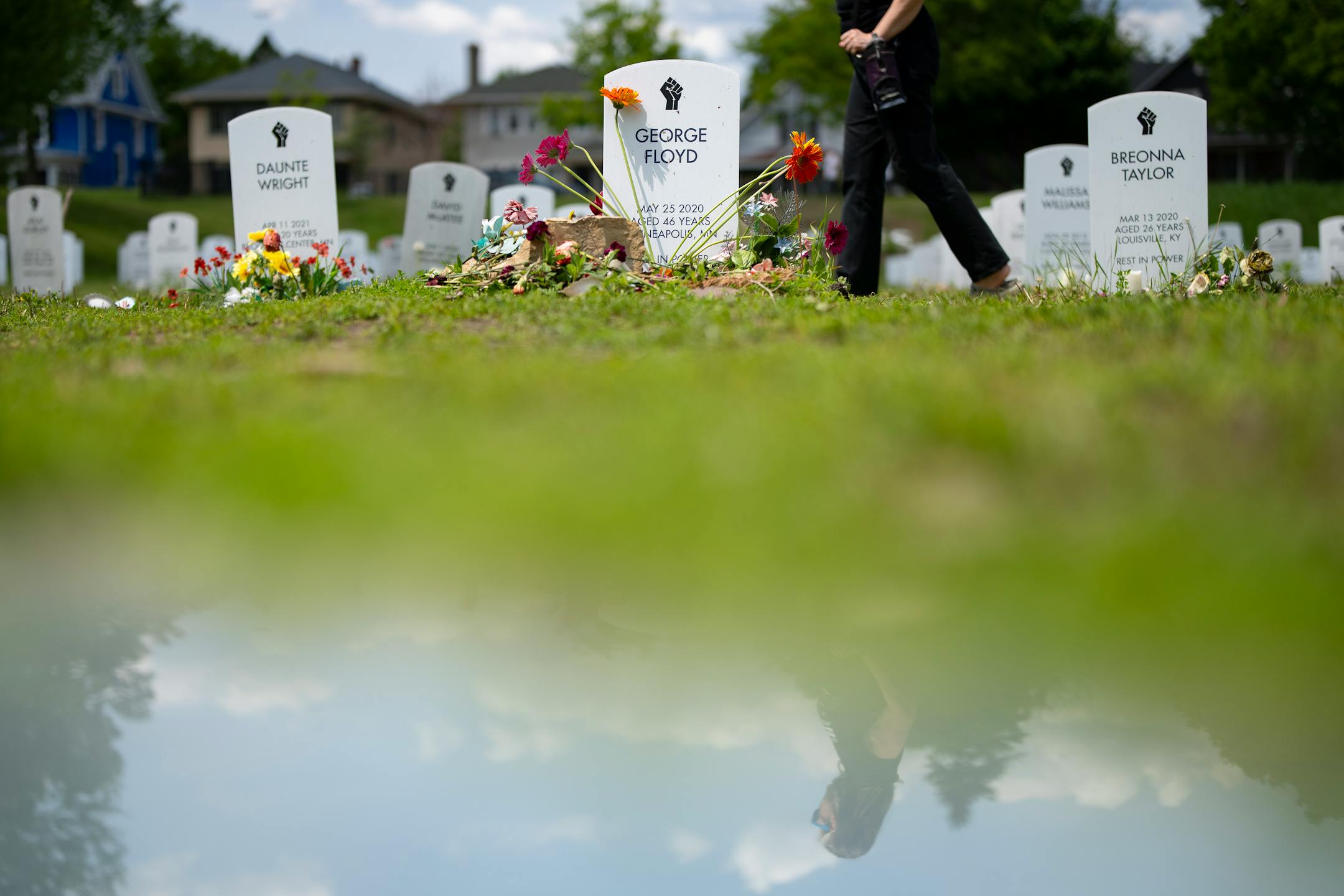
A visitor walks among the makeshift tombstones at the Say Their Names graveyard near George Floyd Square in Minneapolis on May 25, 2025. (Alex Kormann/The Minnesota Star Tribune)
Advertisement

Opinion editor’s note: Strib Voices publishes a mix of guest commentaries online and in print each day. To contribute, click here.

•••

I’m a Black journalist living in Minneapolis. “Retired.” That word is in quotes because a journalist never stops being a journalist. Forever curious, with an unquenchable thirst for what’s known and unknown.

You can’t be a Black journalist in America and not reflect on the road that brought us to 2026. Proximity to pain is the through-line.

I think about it in January. Renee Good was murdered on Portland Avenue, a street I drive but rarely stop on. Her death hit me with sadness and frustration. As a human I made the calculations. “Could this happen to me, my loved ones?” In seconds the answer came back … not likely. So, I went about my life worrying how we as a city would respond. Would there be violence? Would it be 2020 all over again? Would the city give the president a reason to escalate?

Then two and a half weeks later I was sitting at the Gophers basketball game with my son. I checked my phone and saw that someone else was killed. Alex Pretti.

I watched the video, as I did with Renee’s death, but this time it was different. As Immigration and Customs Enforcement agents were wrestling Alex to the ground, I noticed the design on the storefront behind them. It was familiar. “I know that place!” I said out loud. I looked at the story and saw that his murder happened on Nicollet Avenue. Instantly I was mad. White-hot rage filled me to my fingertips and pulsated in my hands through the rest of the game.

ICE agents killed Alex in my neighborhood. In front of my 88-year-old mother’s favorite restaurant. Across the street from our family’s doughnut shop. The place where my wife was thinking about going that day. It could have been her lying in the street with multiple gunshot wounds and no one allowed to help.

Advertisement

Proximity to pain changed things. I couldn’t distance myself from what happened. I couldn’t explain it away. I could see myself or my loved one in pain and there was no avoiding it.

This pain is acute and very public. So many cameras. So many angles. This is what George Floyd and Darnella Frazier taught us. Humans need to witness the pain in order to believe it, to feel it.

Frazier, who recorded Floyd’s murder on her phone, did what traditional media couldn’t — or wouldn’t — do. Witness and reflect her community in pain.

As journalists, it is our job to bear witness and reflect what we see. But we can only accurately witness places and people we spend enough time with, where we see their humanity.

In this moment I’ve been thinking about the Black press and how it covered the overpolicing and harassment of communities of color. For decades, these news organizations reported the outsized use of force that was basically ignored by traditional media outlets. The industry called these community institutions biased and their journalists activists. It was just proximity to pain.

Those Black journalists and organizations had no choice. The danger was real and tangible. They couldn’t ignore reporting on stories affecting them and their loved ones. Traditional media could. Majority white newsrooms had the luxury of not feeling that pain. They could dismiss certain community voices and put their trust in the paid professionals. The police. The state.

Advertisement

Now what seemed to be a “them” problem has become an “us” problem. Before, traditional newsrooms were disheartened that Black men and women were being killed by the police, but the majority of the journalists were still able to say “not us.” The ability for those institutions to dissociate allowed folks to avoid pain. What people didn’t know is that we were only postponing it. What’s done to any human by another can be done to you.

Violence, like any action once practiced, can bleed into unexpected places. This is what we’ve been seeing as ICE has moved through our neighborhoods and our streets. While we were worried about how crime (one kind of violence) could spread we ignored the other, the militarization of the police. The price a civil society had to pay.

Majority journalists, our historical witnesses, aimed their lens at what was comfortable, what they understood, their experiences. Because believing the truth of what was happening in communities of color meant that they too were at risk. That seemed so unlikely.

Then January 2026 happened.

Our society is here because we didn’t understand that all violence is a virus. Traditional media only told part of the story. The one that was most convenient. This negligence enabled that virus to spread.

You didn’t listen to your neighbors when the plague was at their doorstep. You just assumed you were protected. By the police. By the state. By rule of law. Black media and regular citizens like Darnella Frazier have been witnesses to these broken truths for centuries.

Advertisement

It’s not just time to listen to the Black press and community news organizations, it’s time to partner and learn from one another. Create a shared history and a shared future as equals. It’s the only way we get a true reflection of who we are as a society and have a chance at a true democracy.

Kyndell Harkness is a cultural design consultant living in Minneapolis and is a former photojournalist, photo editor and head of culture and community for the Minnesota Star Tribune.

about the writer

about the writer

Kyndell Harkness

More from Commentaries

See More
card image
Alex Kormann/The Minnesota Star Tribune

Proximity to pain is the through-line. Those who don’t have it have been too willing to marginalize it.

card image
Advertisement