
Advertisement

Minnesota Human Services Commissioner: What we’ve done — and will do — to fight Medicaid fraud

The goal is to achieve a lasting cultural shift in oversight.

February 21, 2026 at 7:29PM
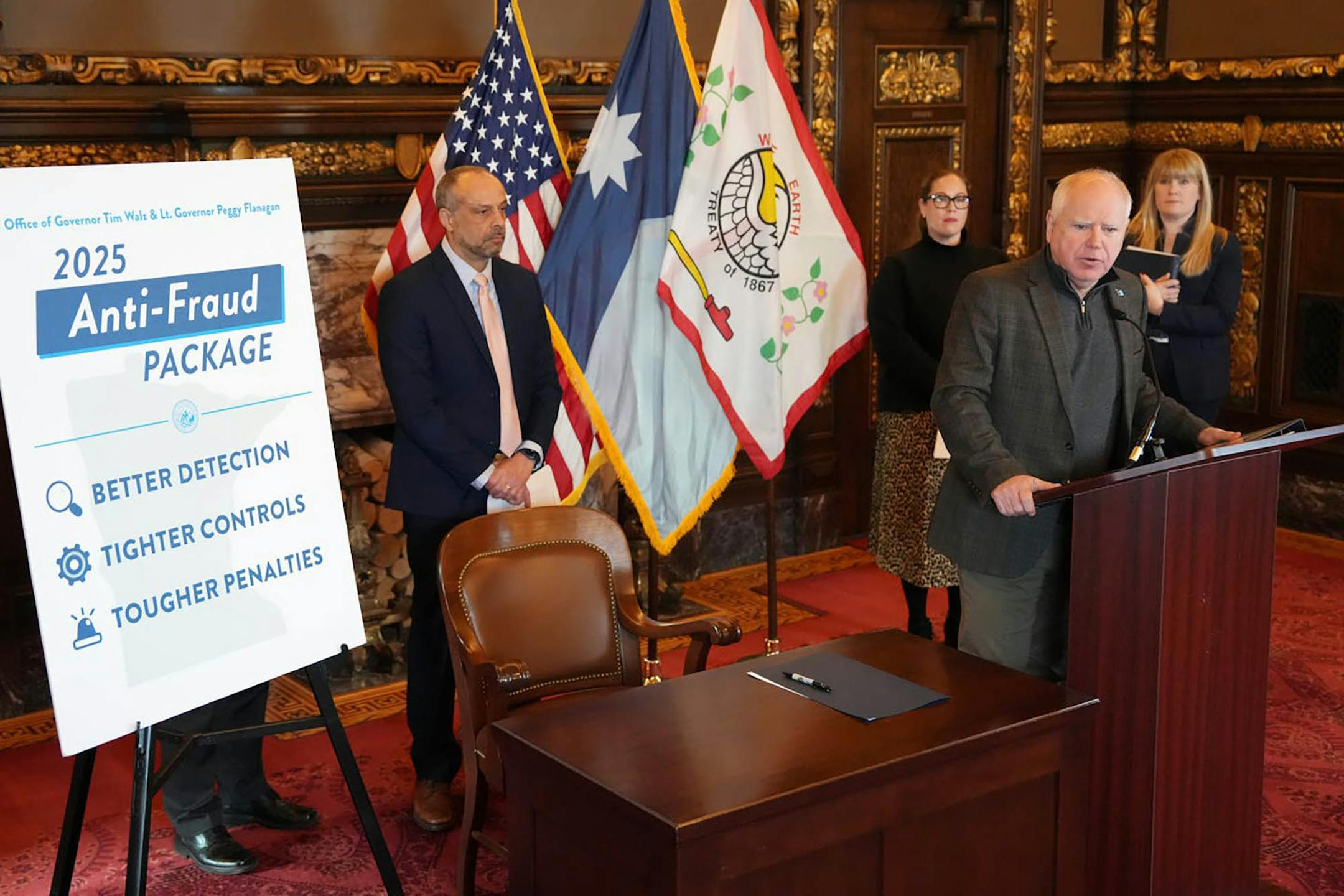
Gov. Tim Walz speaks after signing an anti-fraud executive order during a news conference on Jan. 3, 2025, in St. Paul. (Anthony Souffle/The Minnesota Star Tribune)
Advertisement

Opinion editor’s note: Strib Voices publishes a mix of guest commentaries online and in print each day. To contribute, click here.

•••

A year ago I became temporary head of the Minnesota Department of Human Services. My directive from Gov. Tim Walz was clear: Minnesota has zero tolerance for fraud.

Minnesota taxpayers want to know that people are receiving the services our taxes fund. So do I. When I took the job last year, I heard concerns inside and outside the department that there were deeper fraud issues. I set a plan to quickly assess the situation, address what we found and make changes to protect Medicaid services. Every dollar of fraud or improper spending is a dollar not serving a person in need.

Criminals have become increasingly sophisticated. Instead of individual bad actors, organized bands of providers are gaming the system. We needed more aggressive, proactive approaches. So we dug in systematically — and urgently.

Minnesota has a nation-leading health care system. About 1.2 million Minnesotans — including almost 600,000 children — get health care coverage from Medicaid, also known as Medical Assistance. They depend on us to protect vital services — everything from wellness screenings to cancer treatments and supports that help people with disabilities and older Minnesotans live in their homes.

Thousands of good providers have dedicated their businesses and careers to caring for our neighbors. Criminals have eroded public trust in the Medicaid provider community. We couldn’t let it continue.

Our first step was to use data analytics to identify program vulnerabilities, possible evidence of fraudulent activities and potentially suspicious patterns. In 2025, we halted payments to 540 providers due to credible evidence of fraud — more than double the number of times in recent years.

Advertisement

Based on these analyses, we are taking action to harden our programs against fraud, which led us to put intense focus on 14 Medicaid services we identified as high risk. Ultimately, the analytics for Housing Stabilization Services led us to make the difficult decision to end the program, working with the federal government. To continue the analyses, we contracted with an outside auditor to review past billing data to assess weaknesses in our systems.

Designating services as high risk sets stricter requirements for screening owners, including criminal fingerprint background checks, and gives us stronger investigative tools, such as unannounced site visits. We’re also moving upstream by requiring a third-party audit of claims before paying claims for these high-risk services. And we’re tightening oversight by temporarily pausing new businesses from providing these services and disenrolling providers who haven’t billed in more than a year.

Recently, we launched an unprecedented effort to conduct site visits of 5,800 businesses across the state that provide high-risk Medicaid services — requiring us to temporarily redeploy about 170 state employees.

These steps have rooted out many fraudulent providers, and our expectation is that by the conclusion of the revalidation process in May, we will be able assure the public that these businesses have met heightened state and federal qualifications.

Changes are also happening inside the department. We are enhancing training for employees who work on Medicaid and bringing in external expertise to help us incorporate program integrity into every facet of our work.

The goal is to achieve a lasting cultural shift in Medicaid oversight in Minnesota.

Advertisement

Early indications show we are making a difference. Optum, based on its expertise, attributed a significant decrease in claims in late 2025 to our enhanced fraud prevention efforts, which have likely served as a deterrent. And while we can’t know this for sure, it suggests that the new efforts in combating fraud could have caused bad actors to not push through potentially fraudulent claims.

Despite our actions — many in partnership with the U.S. Centers for Medicare & Medicaid Services — the federal government now alleges that Minnesota doesn’t have a plan for Medicaid program integrity, and it is threatening to withhold more than $2 billion a year. This would have catastrophic consequences for the state. We are appealing this decision and have submitted a second corrective action plan to protect this funding. Medicaid is under attack in Minnesota.

The threat of an unprecedented federal fund withholding comes at the same time a federal review of Medicaid spending in Minnesota found an error rate of 2.1%, well below the national average of 6.1%. We routinely see staggering headlines about fraud schemes uncovered in other states. During a recent meeting with federal CMS leaders, I asked if there is another state doing more to fight fraud than Minnesota. They could not come up with an example.

Program integrity work is never done. Criminals will continue to look for new ways to exploit our systems for financial gain. And we need to keep learning and adapting to their methods. Safeguarding Medicaid is going to take more than the Minnesota Department of Human Services. We need federal officials, legislators, providers, managed care organizations, counties, tribal nations and all Minnesotans to partner with us on real solutions.

As long as I serve, program integrity will be my top priority.

Shireen Gandhi is temporary commissioner of the Minnesota Department of Human Services.

Advertisement
about the writer

about the writer

Shireen Gandhi

More from Commentaries

See More
card image
Alex Kormann/The Minnesota Star Tribune

Proximity to pain is the through-line. Those who don’t have it have been too willing to marginalize it.

card image
Advertisement