
Draft ‘MAHA’ plan to improve kids’ health leaked. Here’s what’s in it.

A leaked draft of the “Make Our Children Healthy Again Strategy” avoids a crackdown the food and agriculture industries had feared.

The Washington Post
August 16, 2025 at 3:37PM
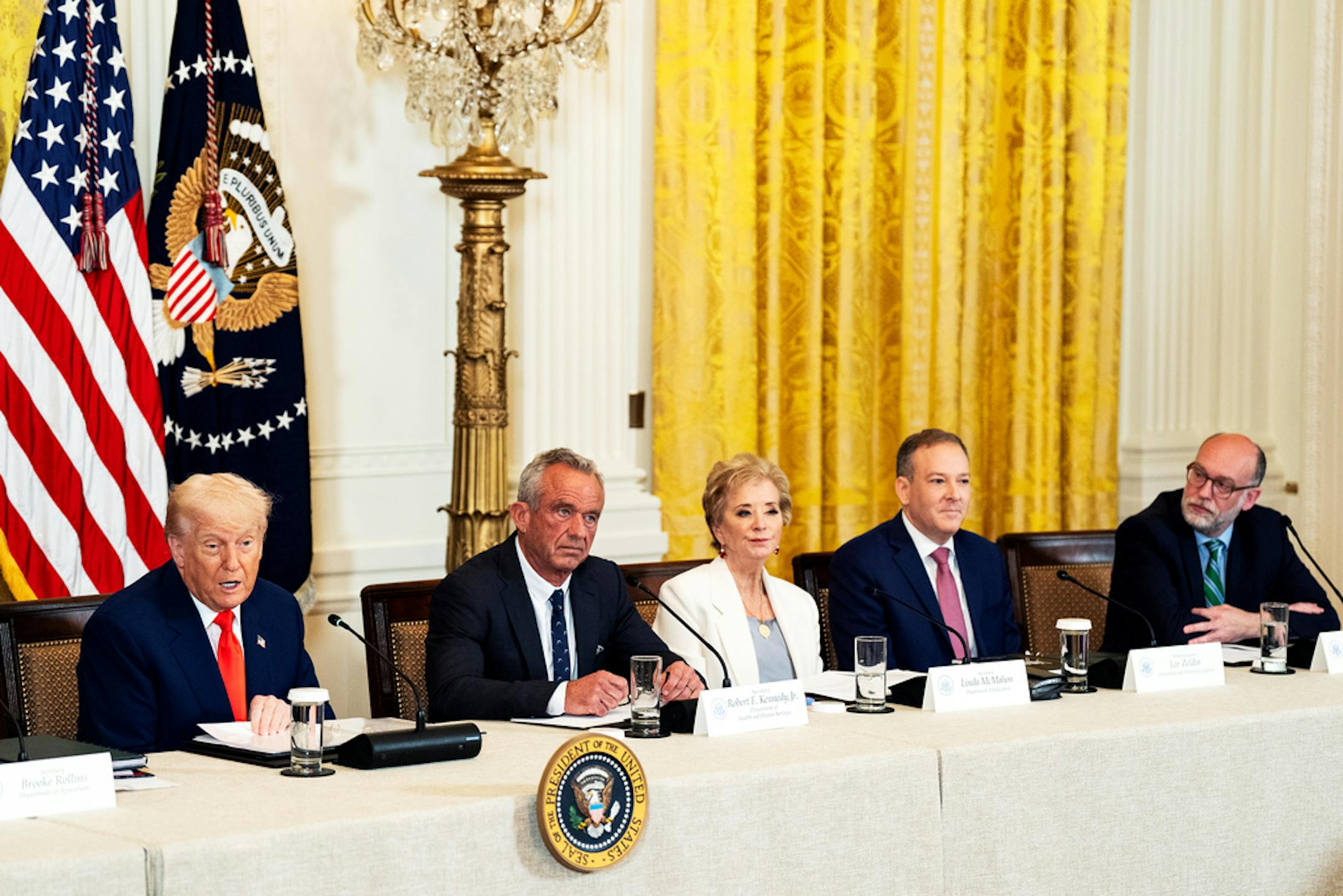
President Donald Trump delivers remarks during a Make America Healthy Again Commission event in the East Room of the White House on May 22, 2025. (Demetrius Freeman/The Washington Post)

The Trump administration has identified ultra-processed foods and chemical exposure as potential hazards in its plan to improve the health of American children, but does not propose widespread restrictions on such foods or pesticides, according to a draft of the report obtained by the Washington Post.

Instead, the “Make Our Children Healthy Again Strategy” — which isn’t final and may not be publicly released for weeks — said the government will continue efforts to define ultra-processed food and work to increase public awareness and confidence in how pesticides are regulated.

That approach is in line with some recent policy proposals but falls far short of the major changes some of Health and Human Services Secretary Robert F. Kennedy’s supporters have called for. It’s unlikely to provoke fury from the food and agriculture industries Kennedy has railed against and that once feared a sweeping crackdown on their products.

President Donald Trump formed a “Make America Healthy Again” commission chaired by Kennedy to address the root causes of chronic disease and childhood illness. The commission released a report in May identifying the causes of childhood chronic diseases that are shortening Americans’ lifespans. The latest report is meant to serve as a blueprint to cure those ills.

The draft report, first reported by the New York Times, provides new details on how health agencies will try to address broadly recognized dangers to American health, including air and water pollution, exposure to microplastics, and poor nutrition. It also targets long-established public health practices including vaccination and the fluoridation of drinking water. And it calls for new working groups and research into health issues, including a task force focused on chronic disease.

It’s unclear whether the draft was revised before the Tuesday deadline to submit it to Trump.

An HHS spokesman declined to comment and referred questions to the White House. Kush Desai, a White House spokesman, said “any document purported to be the MAHA report should be treated as speculative literature” unless it has been released by the administration.

Here are some of the takeaways:

Pesticides

The draft report characterizes the Environmental Protection Agency’s reviews of pesticides as “robust” — a far different tone from how Kennedy has previously talked about the chemicals used widely in U.S. agriculture, saying they are contaminating the food supply.

It doesn’t directly mention the pesticides glyphosate or atrazine referenced in the first MAHA report in May. Instead it just says the EPA “will work to ensure that the public has awareness and confidence” in the agency’s “robust pesticide review procedures.”

The May MAHA report also took a far milder tone than some people associated with the movement expected. That report expressed a commitment to the prosperity of farmers who, along with chemical manufacturers, had pushed back on efforts to more strictly regulate the pesticides they rely on to produce large crops. Kennedy has repeatedly said he would not pursue policies that would put farmers out of business.

Agriculture Secretary Brooke Rollins, who calls pesticides “crop protection tools,” recently said Kennedy and his team have met with 130 groups representing the farming and ranching industry.

“I have rarely seen anyone more open to understanding and learning,” she said at a news conference earlier this month. “I’ve also heard [Kennedy] say that we can’t compromise our farmers and their ability to feed and fuel and clothe the world.”

Food and pharmaceuticals

The draft raises concerns about reduced-fat food, which became popular decades ago but is now questioned by many nutritionists. It proposes removing restrictions on the sale of whole milk in schools and mandates for reduced-fat foods purchased through the Women, Infants and Children food assistance program. And it calls for better food in hospitals and for veterans.

The draft says HHS will explore developing potential “industry guidelines” to limit the direct marketing of “certain unhealthy foods to children” and will increase oversight of advertising by drug companies. But it does not propose immediate new restrictions. It points to some efforts already underway, such as pushing food companies to remove synthetic dyes from their products.

It also promises transparency around fees paid by pharmaceutical companies to the Food and Drug Administration, which Kennedy supporters have characterized as giving the industry undue influence over drug approvals.

Families

The report addresses a number of issues around raising families. It promises to update infant formula requirements, encourage breastfeeding and launch an education campaign to boost fertility rates.

Vaccines

The draft promises to develop a new vaccine framework to ensure “America has the best Childhood Vaccine Schedule” and address vaccine injuries.

Kennedy has long been critical of the childhood immunization schedule, which he has contended has too many shots and could be linked to chronic disease and shortened lifespans.

Public health experts have said the array of shots provided to children and their cumulative health effects have been extensively studied and deemed safe. This week, HHS revived a defunct Task Force on Safer Childhood Vaccines, a move anti-vaccine activists had demanded in an attempt to overhaul the immunization schedule.

Fluoride

Kennedy and others in the MAHA movement have called for the removal of fluoride from drinking water, a practice widely hailed for improving oral health.

But the draft doesn’t outright call for removing fluoride from water. Instead, it says the government will “educate” Americans on appropriate levels of fluoride and raise awareness of getting fluoride through toothpaste. It references the Centers for Disease Control and Prevention revisiting its long-standing recommendation to add fluoride to drinking water and the FDA’s review of prescription fluoride supplements.

Research has found the health benefits of fluoride have diminished in recent years as the mineral became widely available through toothpaste and mouthwash. Studies have also shown fluoride can have harmful health effects at high concentrations that are well above levels considered safe for drinking water.

Electromagnetism

The draft report said HHS would partner with other agencies to study electromagnetic radiation to identify “gaps in knowledge, including on new technologies to ensure safety and efficacy.”

Some people have been leery of electromagnetic radiation from modern technology such as cellphones, WiFi routers and Bluetooth technology, but there is little research to back up those concerns. Kennedy has previously echoed the conspiracy theory that 5G high-speed wireless network service is being used to “harvest our data and control our behavior.”

The World Health Organization in 2016 said scientific evidence does not confirm health consequences from exposure to low-level electromagnetic fields, but more research is needed. The American Cancer Society in 2022 said most studies have not identified strong links between cancer and exposure to extremely low frequency sources of electromagnetic radiation such as computers and power lines.

Psychiatric drugs

The report calls for the creation of a government working group to scrutinize the use of psychiatric medication by children. Kennedy has long criticized the use of these drugs, such as antidepressants and Adderall, and has made false claims about them.

Medical associations and mental health experts have raised concerns about the Trump administration’s scrutiny of the medicines, saying they have been shown to be beneficial when prescribed judiciously.

The draft does not mention the use of weight loss drugs by children, which Trump’s executive order establishing the MAHA commission characterized as a potential “threat.”

Lauren Weber contributed to this report.

about the writer

about the writer

Paige Winfield Cunningham, Rachel Roubein

The Washington Post

More from Health Care

See More
Nancy Ingham gives newborn Sophia Rash a hepatitis B shot several hours after she was born, Jan. 17, 2006.
Renée Jones Schneider/The Minnesota Star Tribune

A federal vaccine advisory committee voted on Friday to end the longstanding recommendation that all U.S. babies get the hepatitis B vaccine on the day they're born.

card image
Nancy Ingham gives newborn Sophia Rash a hepatitis B shot several hours after she was born, Jan. 17, 2006.