
Word of 2026 for Minnesota agribusiness CHS: ‘Efficiency’

Low commodity prices are likely to loom amid a global grain glut and trade reshuffling, which will continue to dent the Inver Grove Heights-based co-operative’s bottom line.

The Minnesota Star Tribune
December 8, 2025 at 11:31AM
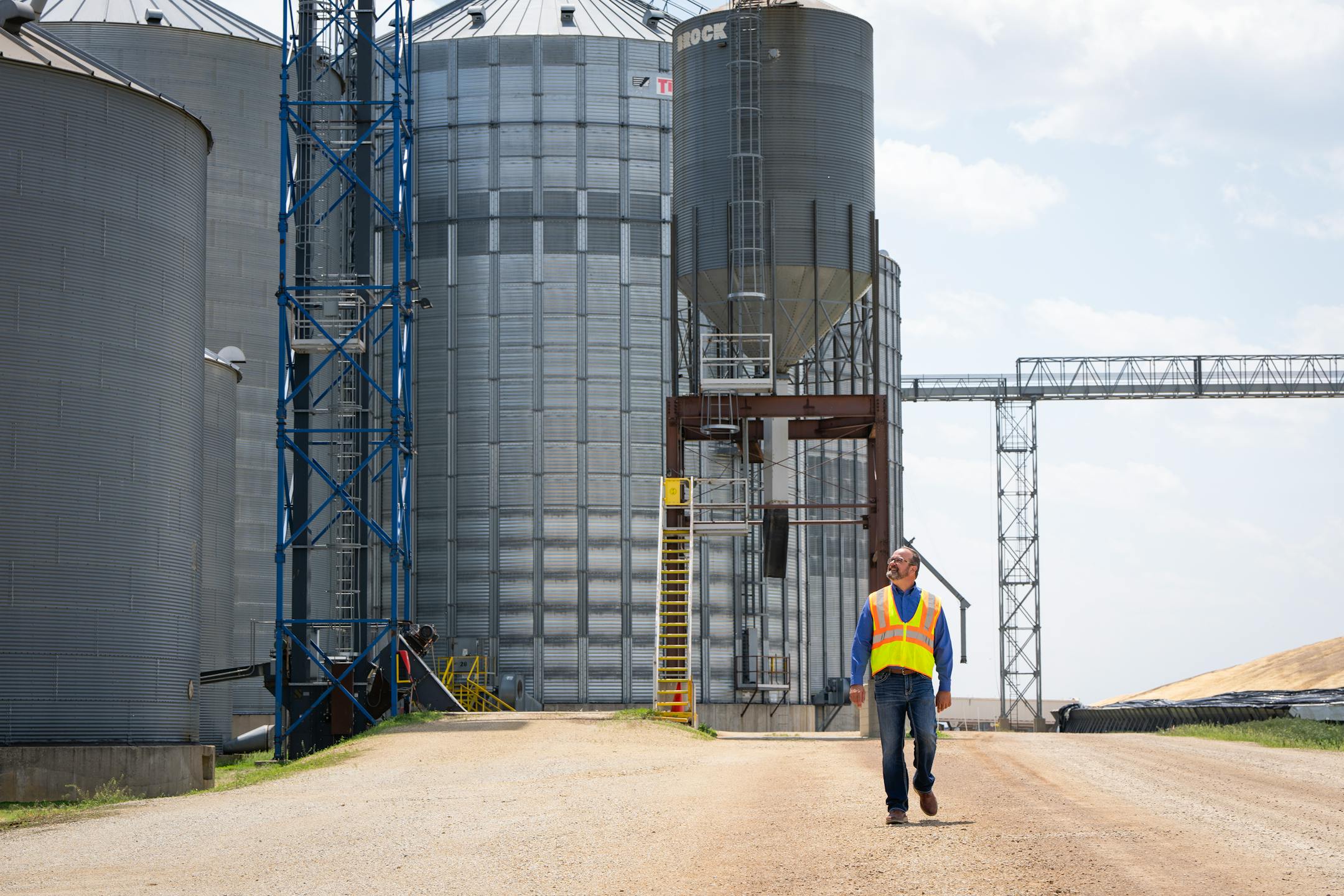
Bryan Lewis, director of operations at CHS Rochester, gives a tour of the CHS Grain Elevator in Ostrander in June. (Leila Navidi/The Minnesota Star Tribune)

The outlook for agriculture next year is murky, given all the unknowns around global trade and depressed commodity prices.

But so far, it’s looking a lot like what agribusinesses like CHS experienced in 2025: lean times.

“We don’t think agriculture today can afford any inefficiency,” CEO Jay Debertin said. “We’re going to have a mindset of making sure we continue to watch costs, look for efficiency and serve our customers better to navigate those waters in 2026.”

The Inver Grove Heights-based co-operative has frozen hiring and reduced headcount by an undisclosed number as CHS grapples with a stark drop in profit and revenue, especially compared with recent record-setting years. Fellow ag giants Cargill, based in Minnetonka, and ADM have also reduced staff in the past year as profit margins run thin amid a global glut of grain, higher costs and trade spats.

“We do better when the farmers do better, and we feel the issues that the farmers feel at CHS, too,” Debertin said. “The people that own us and have been doing business with us for as long as they have, they know that.”

More than controlling costs, though, the nation’s largest ag co-op is aggressively seeking new markets for grain at home and abroad.

At CHS’ annual meeting in downtown Minneapolis last week, the co-operative’s farmer-owners learned about efforts to expand exports to Mexico, Colombia, Vietnam and Egypt.

As China increasingly turns to South America for cheaper soybeans in response to President Donald Trump’s tariffs, the hunt is on for the “next China.”

“How can we get to those new and emerging markets and provide those consumers with calories in the forms of whole grains: corn, soybeans and others,” Gary Halvorson, executive vice president of enterprise customer development, said at the meeting. “We won’t, in one fell swoop, replace 100 percent of what the Chinese consumption provides us.”

Soybean prices have recently spiked as China makes good on a promise to buy American beans after holding out for months during this year’s trade war.

“It’s not a quick fix or a miracle cure, but it’s definitely optimistic that we have seen them follow through,” said John Griffith, executive vice president of ag business at CHS.

Yet with higher costs for fertilizer and other crop inputs, the break-even price for many crops is well above pre-pandemic norms.

It’s not just soybeans. Corn, too, has suffered from robust harvests and too little demand, and wheat futures are trending down. And sugar beet growers learned last week Moorhead-based American Crystal would pay significantly less per ton for this year’s harvest, according to Agweek.

CHS is lobbying hard for year-round E15, which would give a boost to corn consumption and prices. Currently, the Clean Air Act forbids selling the 15% ethanol fuel blend in summer without a waiver from the Environmental Protection Agency.

“E15 would be, frankly, the easiest and first thing that should be accomplished,” Debertin said.

And while California’s renewable-fuels mandate has boosted soybean-based diesel blends, CHS leaders say they need a national standard to move the needle further and inspire more investment.

“For me as a business leader, while somebody might say, ‘Really, you want to mandate?’ The positive of that is, you have certainty,” Darin Hunhoff, executive vice president of energy at CHS, said at the annual meeting. “We’re wrestling our way through how to move that floor up, and while there’s been some growth in renewable diesel, unless other states go to a low-carbon fuel standard, right now, it’s really hard to grow.”

Coming off record-setting years when the co-operative sent billions back to owners in patronage, next year will see $120 million in profit sharing.

Chief Financial Officer Olivia Nelligan said at the annual meeting that CHS is being “judicious with every dollar.”

Though low prices, high costs and uncertainty stretch into 2026, Debertin said there’s no permanent peril.

“We know that there isn’t a magic fix that we can just go to, but we also know that the circumstances change over time,” he said. “We’ve had low commodities prices before. We’ve had high commodity prices before. Those are the cycles of agriculture.”

about the writer

about the writer

Brooks Johnson

Business Reporter

Brooks Johnson is a business reporter covering Minnesota’s food industry, agribusinesses and 3M.

See Moreicon

More from Agriculture

See More
card image
Leila Navidi/The Minnesota Star Tribune

Low commodity prices are likely to loom amid a global grain glut and trade reshuffling, which will continue to dent the Inver Grove Heights-based co-operative’s bottom line.

card image