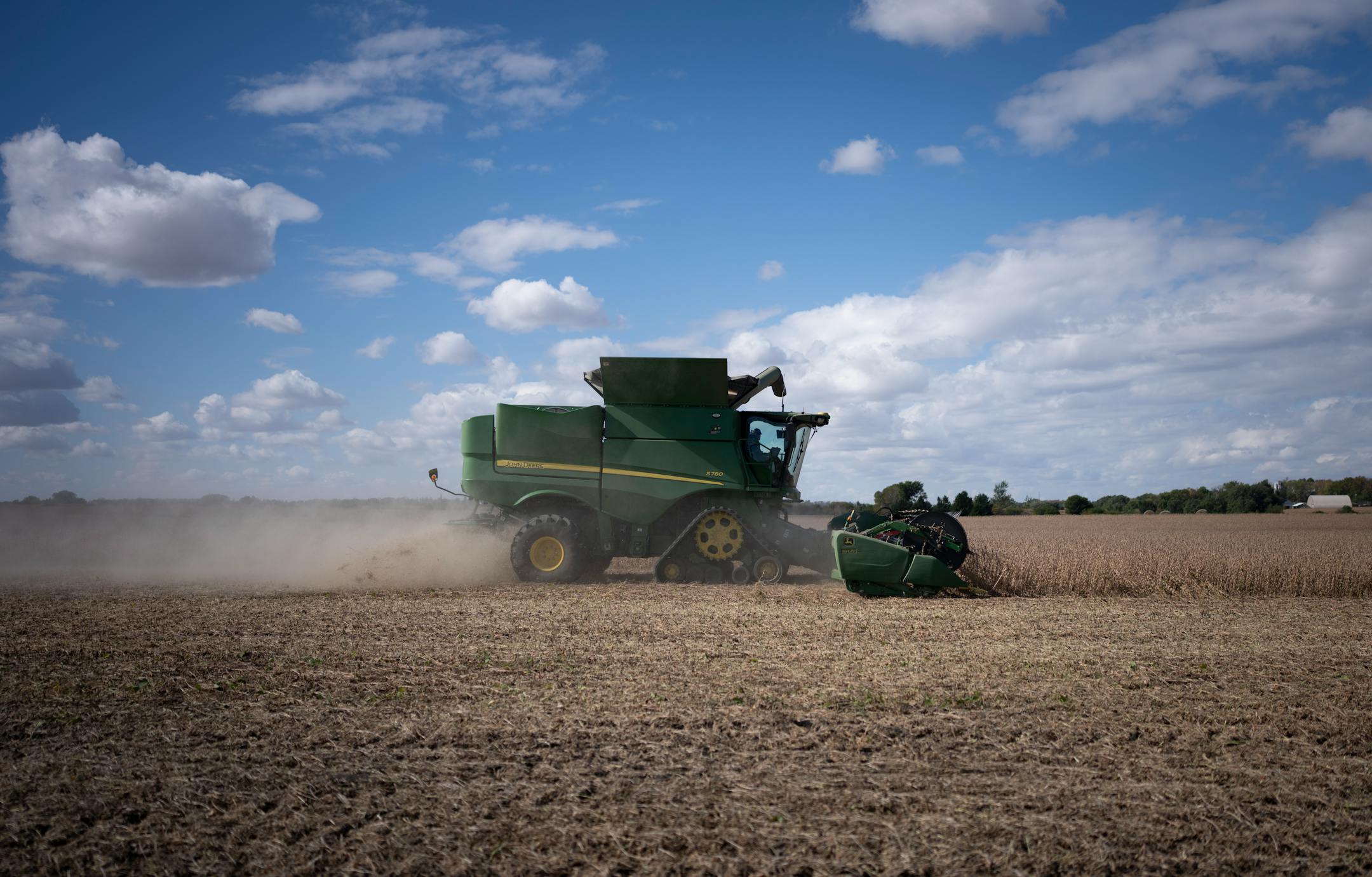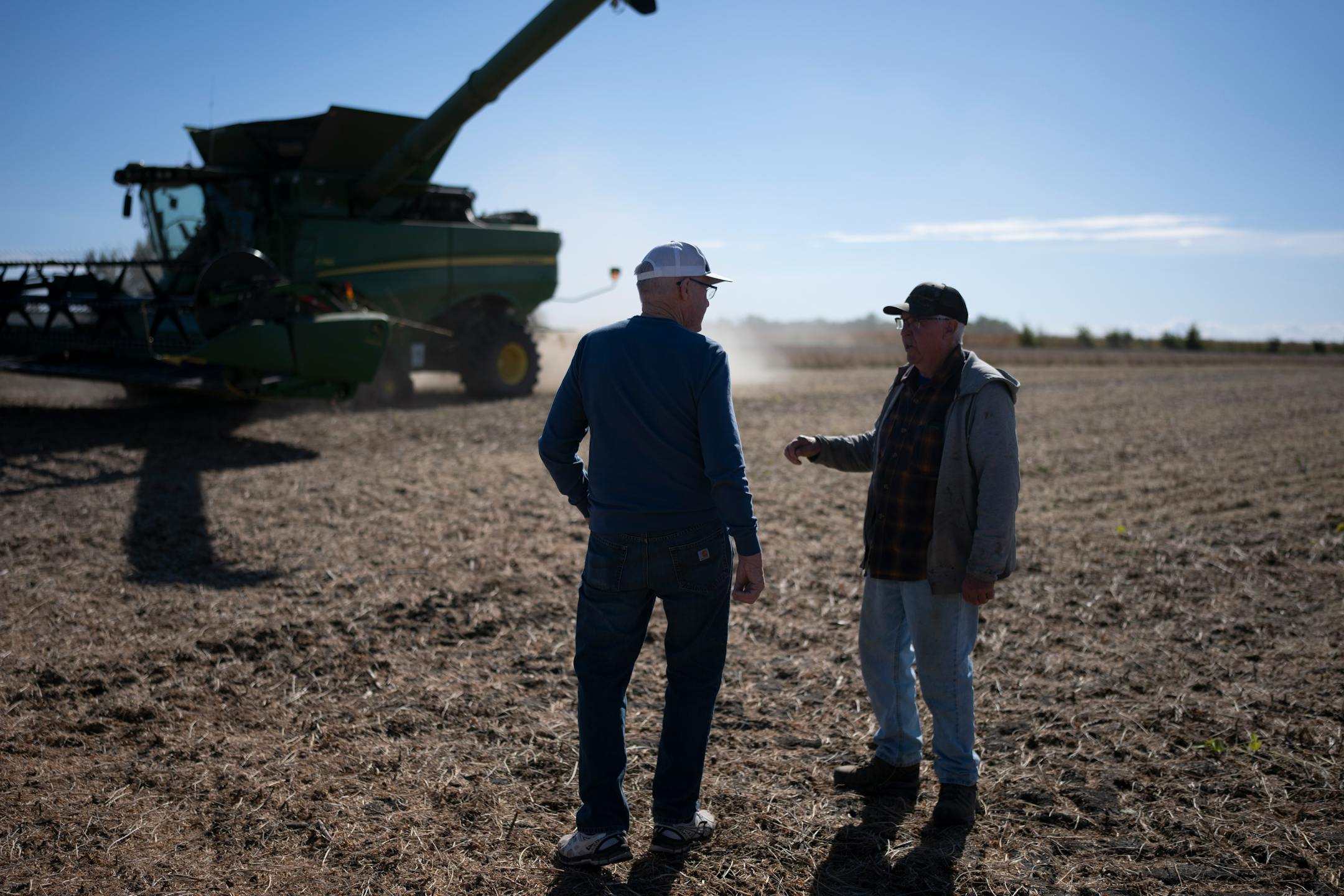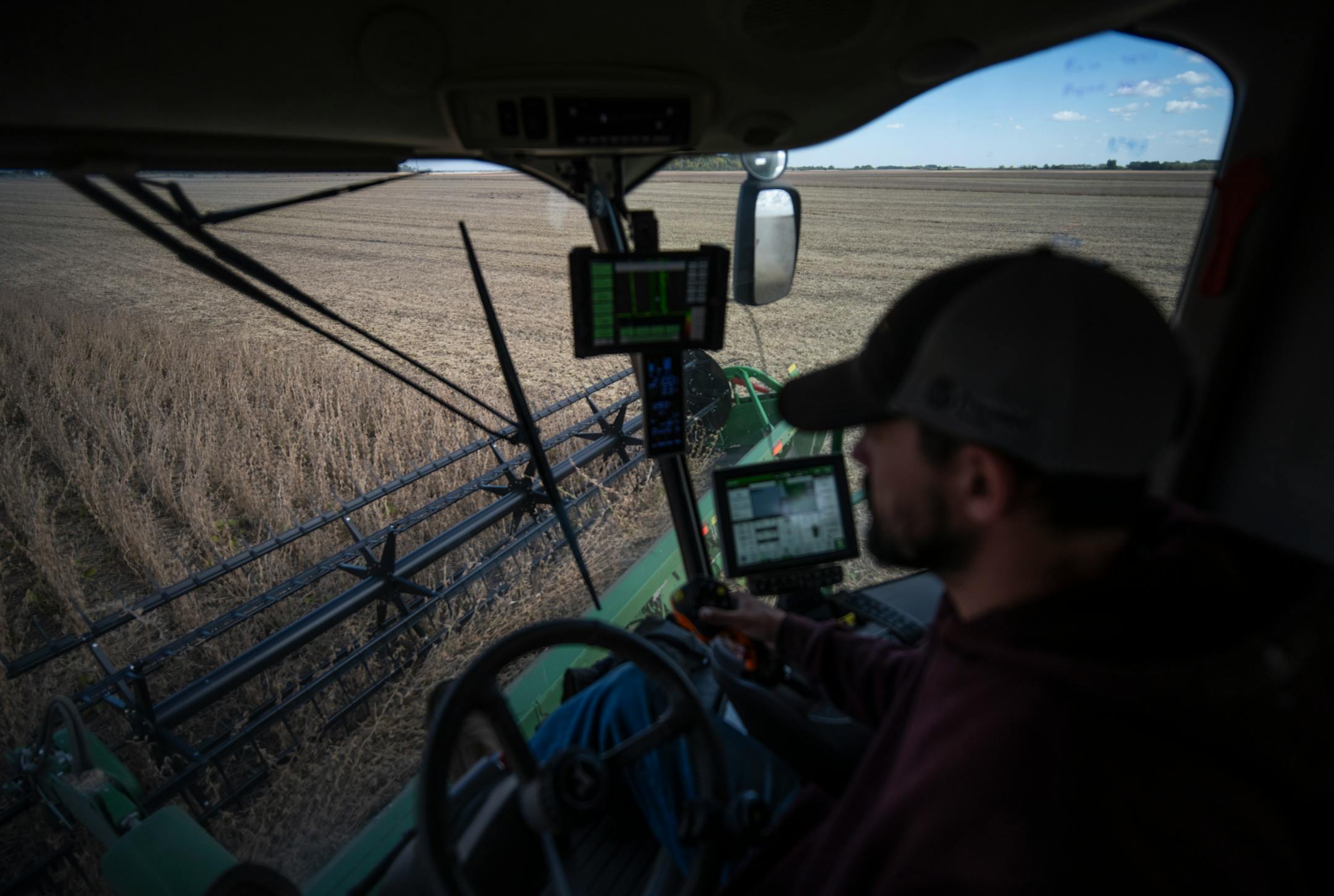
TRACY, MINN. – Months into a trade war with China, steel grain bins across rural Minnesota sit plump with soybeans without a market, and farmers are nervously eyeing balance sheets.
On Wednesday, news broke across an ocean that, ahead of a planned meeting between President Donald Trump and China’s president, Xi Jinping, China had purchased three cargoes of U.S. soybeans, ending a monthslong embargo. The news was welcome. But more would be needed.
In southwestern Minnesota, including Tracy, local economies follow the soybean markets. In good years, farmers use profits to buy pickups from area car dealerships and make down payments on land. In lean years, they tighten belts.
Trump’s trade war with China could not have come at a worse time. It’s the lean years in the soybean markets, and up until this year, every third row went to China.
So, farmers argue, they are losing money on every acre of soybeans they plant because of a crisis not directly of their own making.
And the crisis affects the entire state. Soybeans are Minnesota’s largest export commodity — generating $2.4 billion annually. Now farmers fear they are seeing the start of a permanent market shift that will change the soybean industry.
Farm country and state officials are all watching closely this week. Trump meets Thursday with Xi, and a blueprint for a possible deal floated Sunday evening sent soybean markets 20 cents higher overnight.
After another year of economic distress, being stuck in the middle is a pain felt particularly hard in areas politically friendly to the president.