
Struggling soybean farmers look to Washington for help on tariffs, but resources less available this time

The recent federal spending bill took away billions in flexible spending that President Donald Trump’s first administration used to offset farmers’ hardships from tariffs.

September 30, 2025 at 11:00AM
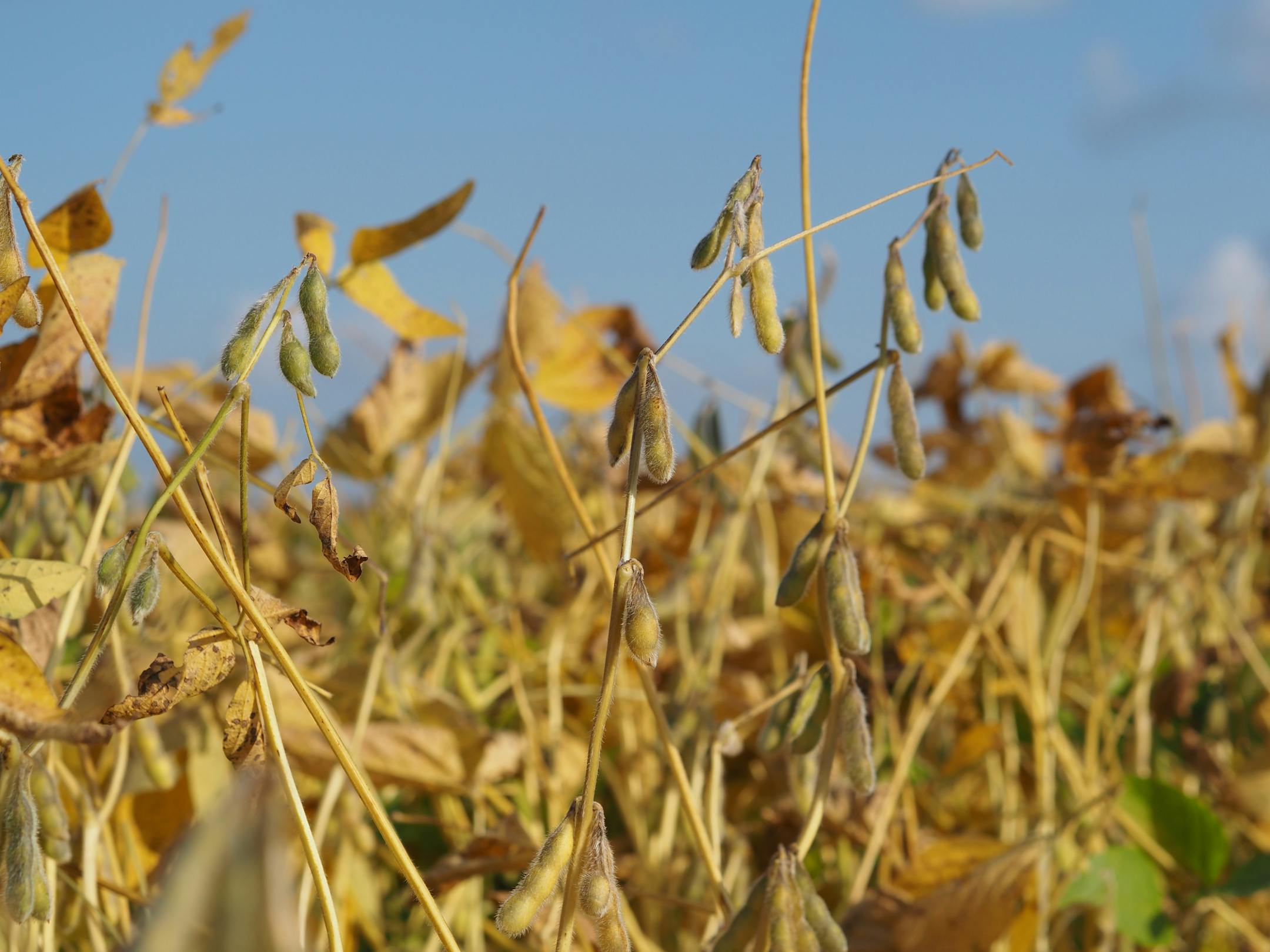
Soybean pods dry out before harvest in a field outside Redwood Falls, Minn., on Sept. 10. China is not buying U.S. soybeans this year in retaliation for tariffs on its exports, leaving a lot of beans without a buyer and prices so low farmers are asking for extra assistance from the federal government to get by. (Jp Lawrence/The Minnesota Star Tribune)

The White House came to farmers’ rescue during President Donald Trump’s first trade war.

This second time around a bailout isn’t so simple.

That’s because this summer, Trump’s big tax and spending bill drained the Commodity Credit Corporation (CCC), a $30 billion financing arm of the U.S. Department of Agriculture (USDA), to instead fund crop-stabilization programs.

Now the White House and Congress are scrambling to deliver emergency aid to row-crop farmers after the administration’s trade war with China tanked their soybean markets.

“I don’t know if [farmers] can expect what happened last time to happen this time,” said Gbenga Ajilore, a former USDA staffer and chief economist at think tank Center on Budget and Policy Priorities.

In 2018 and 2019 during the previous trade war with China, Trump paid farmers by tapping $28 million from the CCC. Former President Joe Biden also used the fund to offset fertilizer price increases after the Russian invasion of Ukraine.

China, in retaliation for tariffs on its exports, isn’t buying U.S. soybeans this year. That’s pushed prices well below break even for most farmers, especially given the rising costs of farming, from fertilizer to machinery.

When Republicans, via the spending bill, spent a large chunk of next year’s CCC funds on price-loss programs this summer, it left very little for tariff relief. And soybean farmers are hurting now.

“Everyone’s talking about, ‘How do we get farmers through to October of ’26,’” said Jennifer Ifft, an agriculture economist at Kansas State University. “They might have to go to Congress.”

Bleak outlook

Joel Schreurs, a farmer in Tyler, Minn., recently did the math on crop prices for corn and soy.

“If you farm 1,000 acres, you could be looking at a $170,000 deficit,” he said. “I don’t think people realize how much of a need there is for more markets, higher prices or some kind of compensation.”

Schreurs, also a Minnesota Soybean Research & Promotion Council board member, said a friend summed it up well: “It’s the perfect storm of ugly.”

Some politicians have floated sending tariff revenue to farmers, but those billions are on hold while the Supreme Court weighs whether Trump’s tariffs are legal.

“Not only did we get nailed on the product we’re trying to sell, we’ve also been paying extra for a lot of the chemicals that come out of China or other countries,” Schreurs said.

Any aid package will take careful engineering in a closely divided Congress.

“If we’re going to be used as a bargaining chip,” he said, “there’s got to be some type of compensation.”

‘Going to be hurt’

Last week, USDA Secretary Brooke Rollins spoke about aid for farmers who, in her words, “are facing very, very difficult times.”

“We are currently in conversations here at the White House, across the government, on a farmer aid package,” Rollins said.

Sen. Amy Klobuchar, the highest-ranking Democrat on the Senate Agriculture Committee, said Congress should approve aid for soybean farmers but called any action a “short-term fix.”

She’d prefer pairing a bailout with restoring SNAP payments through a new farm bill and enacting year-round sales of E-15 fuel.

“The farmers I know would rather have trade [than aid],” Klobuchar said. “The number one thing is to get rid of these tariffs.”

Trump himself acknowledged farmers’ pain when he brought up redirecting tariff revenue to farmers.

“We’re going to give it to our farmers who are, for a little while, going to be hurt,” Trump said last week. “Until it kicks in, the tariffs kick in, to their benefit.”

Rep. Brad Finstad, a southern Minnesota Republican who sits on the House Agriculture Committee, told WCCO Radio last week he has experienced the soybean market crunch on his own family farm.

“We have sat with our head in the sand being content that China was gobbling up 60 percent of our soybeans, and we did nothing to diversify our partners and our trade opportunities,” Finstad said.

Finstad did not respond to a request for further comment.

Minnesota Department of Agriculture Commissioner Thom Petersen said farmers deserve to know how long the pain will last.

“What does that mean to him, how long?” he said. “Because a lot of our farmers, on the calls I’m getting, they don’t have a lot of time.”

Cole Reynolds is a Northwestern University student reporter on assignment for the Minnesota Star Tribune.

about the writers

about the writers

Brooks Johnson

Business Reporter

Brooks Johnson is a business reporter covering Minnesota’s food industry, agribusinesses and 3M.

See Moreicon

Christopher Vondracek

Washington Correspondent

Christopher Vondracek covers Washington D.C. for the Minnesota Star Tribune.

See Moreicon

Cole Reynolds

intern

Cole Reynolds is an intern for the Minnesota Star Tribune.

See Moreicon

More from Agriculture

See More
The Abbey Church is a landmark on the St. John's University campus located in Collegeville.
The Minnesota Star Tribune

Local nonfiction: “Greater Minnesota” travelogue details a home-grown returnee’s conversion.

card image
card image