Another shocking act of political violence leaves Minnesotans asking: Where do we go from here?

The assassination of conservative activist Charlie Kirk added to an unsettled feeling that’s all too familiar in Minnesota.

The Minnesota Star Tribune
September 12, 2025 at 3:18PM
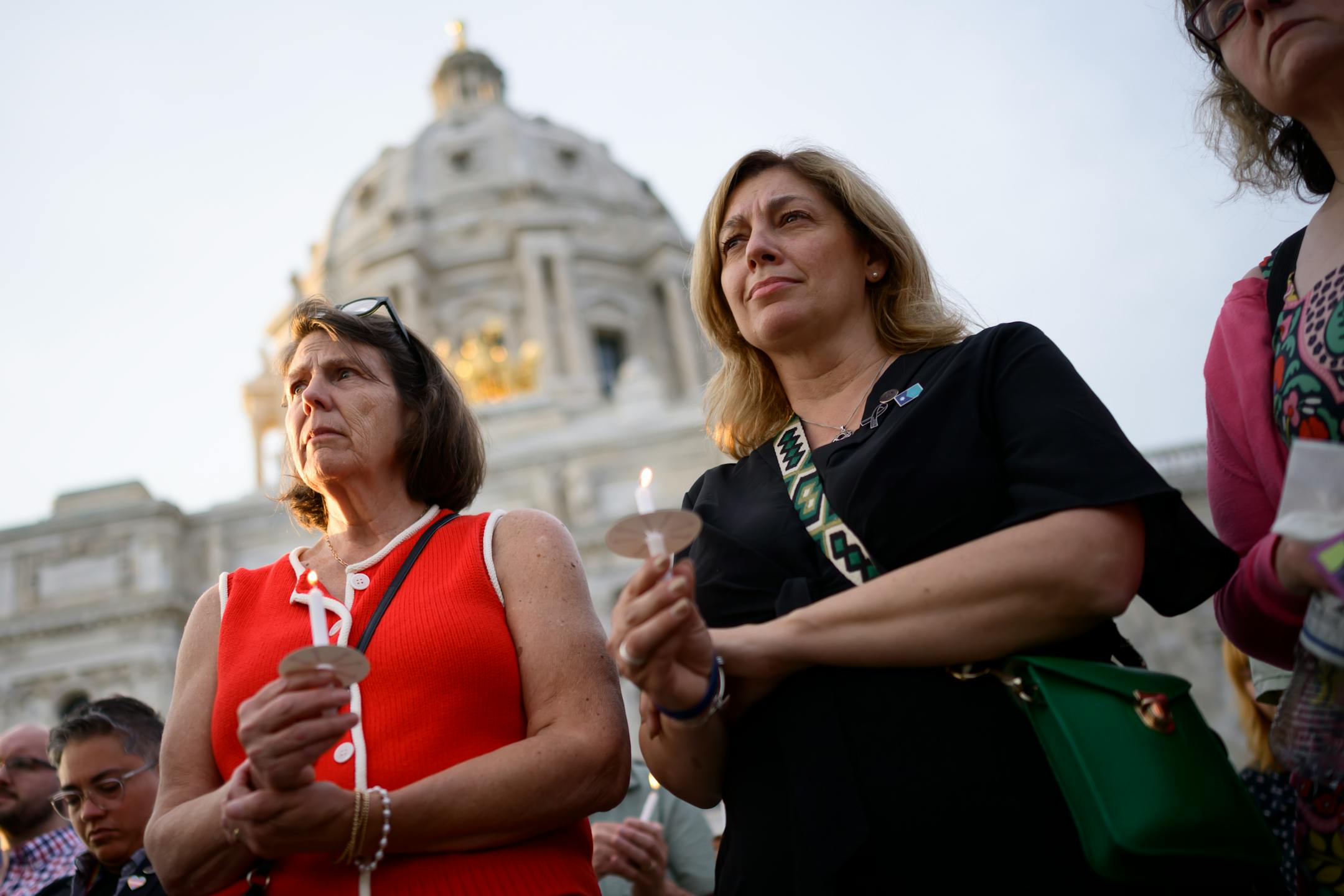
Minnesota DFL Rep. Julie Greene, right, takes part in a June 18 candlelight vigil for Melissa and Mark Hortman, who were killed in what officials have called a targeted act of political violence. (Aaron Lavinsky/The Minnesota Star Tribune)

The images change but the sensation is the same.

President Donald Trump leaning on a podium at a campaign rally when eight bullets nearly kill him and, instead, kill a fireman in the crowd. UnitedHealthcare CEO Brian Thompson walking to an investors’ conference in New York City and being shot dead before sunrise.

A man wearing a nightmarish mask, caught on home surveillance cameras throughout the Twin Cities suburbs, pounding on doors in the middle of the night trying to kill state politicians. A mother running barefoot down a leafy Minneapolis street to find out if her child is dead inside a church.

And on Wednesday, Charlie Kirk, engaging in public, political debate on a Utah college campus, when he is shot in the neck. He died in front of thousands of students.

The assassination of Kirk, who was to speak here in two weeks, has added to an inflamed political landscape at a time when the American discourse is soured by social media, a national mental health crisis has been declared by the Centers for Disease Control and Prevention, guns are everywhere and solutions are hard to find.

Minnesota has been at the center of that unsettled feeling for years, from the killing of George Floyd and the riots that followed in 2020 to the shooting and assassination of state Democratic politicians and the shooting of schoolchildren inside a church this summer.

Its residents are searching for the way forward.

“We have been here before,” said state Sen. Julia Coleman, a Republican who, fresh out of college, worked with Kirk at his nonprofit Turning Point USA. “I believe we can either let it continue to divide us or we can take these moments to continue to truly turn this country around.”

Coleman, who represents Carver County, recalled Kirk as humble and driven by faith. She remembered the thrill everyone felt when he did his first interview on Fox News. Coleman eventually started a Turning Point branch at the University of Minnesota before running for political office. Kirk eventually became the most prominent voice for young conservatives in America.

Coleman got a phone call Wednesday, before it was announced to the rest of the world, that Kirk died. Then someone sent her a video.

“I watched my friend take a bullet to the jugular and bleed out onstage,” Coleman said. “That’s not something you’re ever supposed to see.”

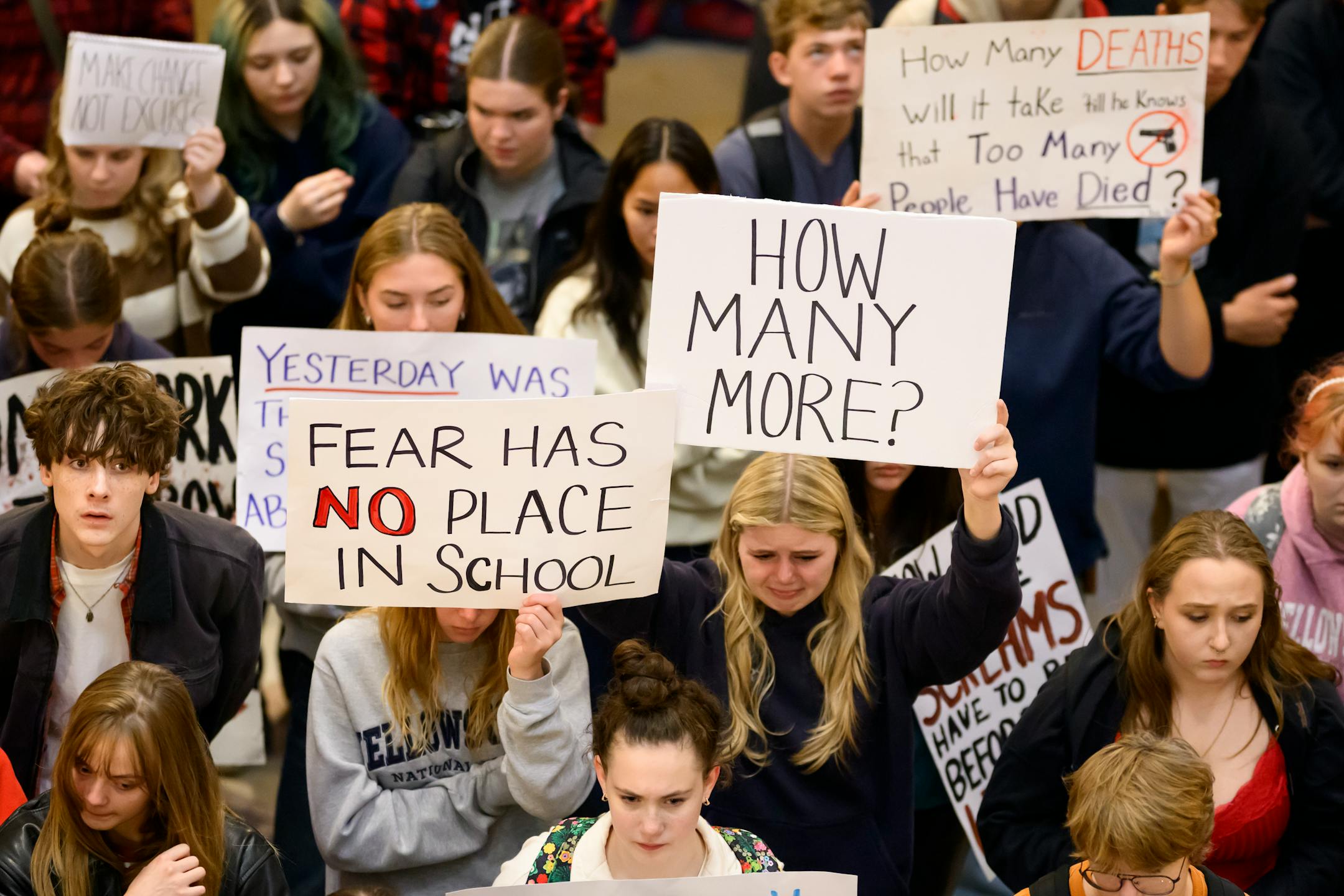
Paige Tronstad, 17, center right, a Highland Park Senior High student, becomes emotional during a Sept. 5 rally calling for the ban of assault weapons, at the Minnesota State Capitol in St. Paul. (Aaron Lavinsky/The Minnesota Star Tribune)

The Great American experiment

The past several months of political violence have made some experts question if we are entering a time similar to the 1960s when President John F. Kennedy, his brother Robert Kennedy, Malcolm X and Martin Luther King Jr. were assassinated.

Earlier this summer, DFL state Rep. Melissa Hortman and her husband, Mark, were shot and killed inside their home in the middle of the night. The alleged assassin attempted to kill several other Democratic lawmakers and shot DFL state Sen. John Hoffman and his wife, Yvette.

Coleman said she has to honor the death of her colleague and her friend. She is focused on carrying forward Hortman’s message of bringing people together for political solutions and Kirk’s ability to engage in political dialogue.

“We are not going to be the generation that lets the great American experiment fail,” Coleman said.

Luke Hellier, the Republican mayor of Lakeville, said the safety measures needed to have a functioning society have become part of everyday routine in the United States.

He talked about ballistic walls and security control centers in schools and how when Lakeville hosts the Pan-O-Prog parade around the Fourth of July there are drones in the sky and police on rooftops. He walks that route with confidence, but fears someone coming to his house or approaching him with his family at the grocery store.

He is disgusted with how conservative and liberal political commentators are incentivized to jump on Instagram and TikTok to say the most vitriolic things against each other in the wake of tragedies.

But he also said it’s too easy to blame social media. He brought up U.S. Sen. Charles Sumner nearly being beaten to death on the Senate floor in 1856 by Congressman Preston Brooks. Historians have said it was a tipping point in the leadup to the Civil War and a sign that civil discourse had broken down in America.

“History repeats itself,” Hellier said. “I think it’s cheap to say today is a new level. I don’t think it is. I think there’s so much attention and reaction from people.”

Hellier said in the last 15 years, American discourse has devolved in a way that lacks dialogue and respect.

“Both the left and the right have become too committed to our beliefs,” he said.

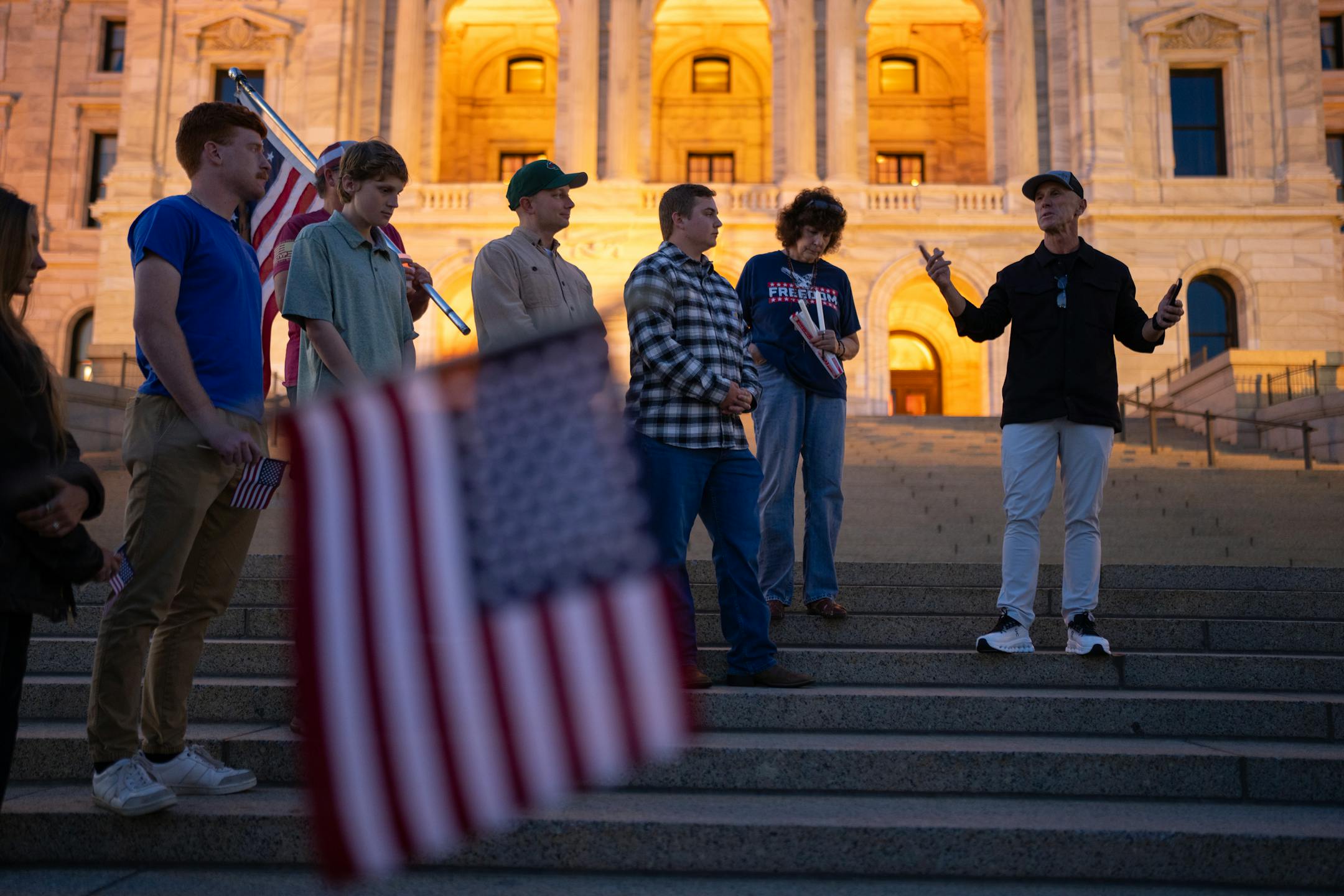
A man introduced as Vince Miller speaks about Charlie Kirk before he led a group of more than 50 people in prayer at a vigil Wednesday at the State Capitol in St. Paul. Attendees were urged to bring Bibles, candles, and American flags. (Jeff Wheeler/The Minnesota Star Tribune)

‘It’s escalating and it’s escalating’

University of Minnesota professor Richard Painter worked as the legal ethics counsel to President George W. Bush from 2005-2007.

Painter said we have to stop attributing political motives to killers.

He pointed to Elon Musk posting on X that “The Left is the party of murder,” and former Minnesota DFL House majority leader Ryan Winkler responding, “Melissa Hortman was shot by the Right. This is a problem of radicalism and guns.”

Painter said when someone picks up a gun and murders someone it ceases to be about politics.

Kirk, who was 31 when he was killed, had become one of the most influential voices in the Republican Party because of his ability to connect conservative ideas with young voters. He posted video commentaries on social media but would also travel to college campuses, unfold a table, sit down and talk politics with anyone.

His views on abortion, gun rights and immigration often infuriated progressives.

“Disagreeing with Charlie Kirk is a constitutional right; picking up a gun and shooting him is not,” Painter said. “That’s a crime. That’s murder. I’m a crazy person to do that.

“The politicians need to stop and think before they make these statements. That includes the president of the United States and on the floor of the House of Representatives.”

Winkler said his post was an attempt to say that labeling one party as the party of murder was wrong, but he didn’t know if it helped the discourse. When he heard that Kirk was shot, Winkler said a dark heaviness came over him. He couldn’t imagine Kirk’s children someday being able to see what happened to their father.

He said the response to the shooting was just as disheartening. That feeling is pulsing through Minnesota’s electorate: “If a level of moral fervor and indignation is driving America to extremes right now, we might be experiencing a heavier dose of that here than other places.”

Wednesday night, about 75 people gathered at the steps of the Minnesota State Capitol carrying candles, Bibles and American flags for a vigil in honor of Kirk.

Attendees took turns speaking about the impact he had on their views. Several speakers referred to the assassination of the Hortmans, and the Annunciation Church mass shooting, calling for an end to the tensions tearing at the nation.

“I personally just feel like it’s escalating and it’s escalating and it’s escalating, and we just saw it get worse,” said Vince Miller, a Twin Cities religious leader who attended the rally. “We’ve watched people die because people don’t know how to mediate their own pride, their own insecurities, their own anger, bitterness and somehow peaceful dialogue has gone out the window.”

Elliot Hughes of the Minnesota Star Tribune contributed to this story.

about the writer

about the writer

Jeff Day

Reporter

Jeff Day is a Hennepin County courts reporter. He previously worked as a sports reporter and editor.

See Moreicon