
Personal security benefits for CEOs increase after killing of UnitedHealth executive

Annual survey of public company proxies also finds CEO pay is at record levels, increasing 11% this year.

The Minnesota Star Tribune
October 23, 2025 at 4:29PM
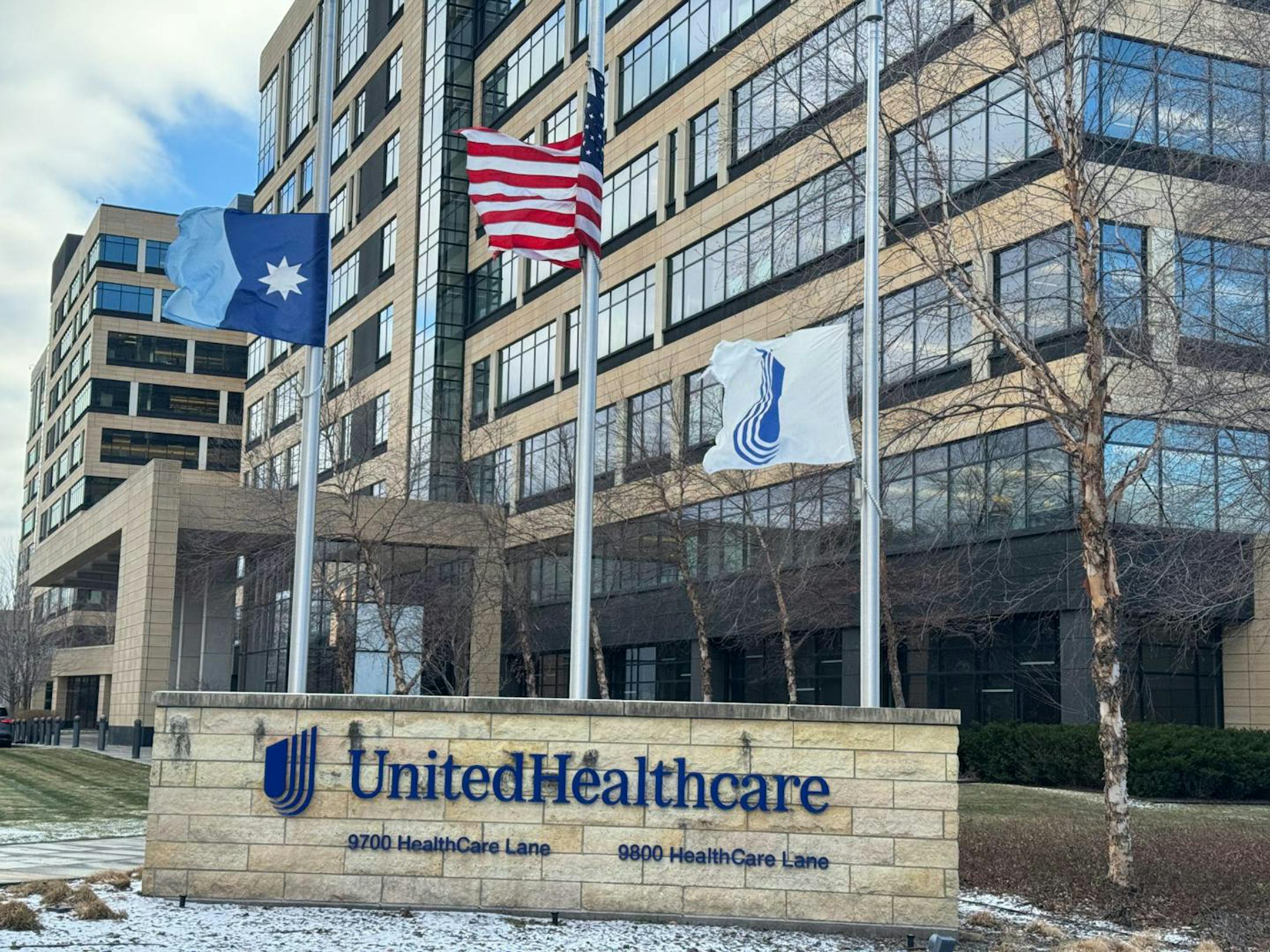
Flags flew at half mast at UnitedHealthcare headquarters in Minnetonka last December after the insurer's CEO, Brian Thompson, was murdered in New York City. Since the murder, companies nationwide have increased personal safety benefits for executives. (Jerry Holt/The Minnesota Star Tribune)

The slaying of UnitedHealthcare Chief Executive Brian Thompson has prompted companies nationwide to increase personal security benefits for their CEOs.

ISS Services, an advisory company, does an annual analysis of public firm proxies.

This year shows that CEO pay as a whole across U.S. public companies increased 11% to record levels.

That’s more than the average increase for Minnesota CEOs, which was 7%, according to the Minnesota Star Tribune’s annual analysis.

The most notable increase to CEO pay, according to ISS, was in private security benefits. The analysis also found that more companies are removing diversity and social governance goals from compensation packages, following a wider pullback in those areas.

Since 2020, the number of S&P 500 companies offering private security benefits has increased from 11.6% of companies to 21.3%.

The median value of security benefits from S&P 500 companies that pay them increased more than 275% since 2020 to $28,382, with most of that increase occurring last year.

Much of that was in response to Thompson’s death, ISS found.

UnitedHealth Group awarded $1.6 million worth of security benefits to its top executives in 2024, after not listing any private security benefits the prior year.

Thompson, who led UnitedHealth’s insurance arm, was killed in December on his way from a hotel to the company’s investor meeting in New York City.

These include home security and, at the recommendation of security experts, requiring certain executives to use corporate aircraft on personal as well as business travel.

The reduction in environmental, social and governance (ESG) metrics used in executive pay packages comes amid political pressure, sometimes extreme.

Companies had been increasingly incorporating such measures, including diversity and inclusion metrics, into pay plans, but the trend lines reversed in 2024.

In the past year, goals using ESG metrics decreased 42%, ISS found.

“While many companies eliminated DEI metrics altogether,” the report said, “some adjusted the way they disclose these metrics, using more nuanced terms such as ‘culture’ or ‘belonging’ instead of diversity.”

Medtronic, which is run out of Fridley, and Golden Valley-based General Mills each removed the mention of DEI goals from the non-financial metrics of executive pay plans in respective proxy filings made in August.

The median total compensation for S&P 500 companies in 2024 was $16.4 million, up 11% from the prior year, ISS found.

The Star Tribune’s annual list of the 50 highest-paid CEOs in Minnesota uses a different formula. It found that in Minnesota, the average CEO pay was $5.8 million.

about the writer

about the writer

Patrick Kennedy

Reporter

Business reporter Patrick Kennedy covers executive compensation and public companies. He has reported on the Minnesota business community for more than 25 years.

See Moreicon

More from MN Fortune 500

See More
card image
Carlos Gonzalez/The Minnesota Star Tribune

From past iterations of shopping carts to a salvaged Target Center “T,” these researchers can trace the Minneapolis-based retailer’s roots back to Dayton’s department store in the early 1900s.

card image
card image