
How close can a public bus stop be to someone’s home?

Metro Transit added a new stop in Uptown. Some neighbors aren’t happy about it.

The Minnesota Star Tribune
August 22, 2025 at 11:00AM
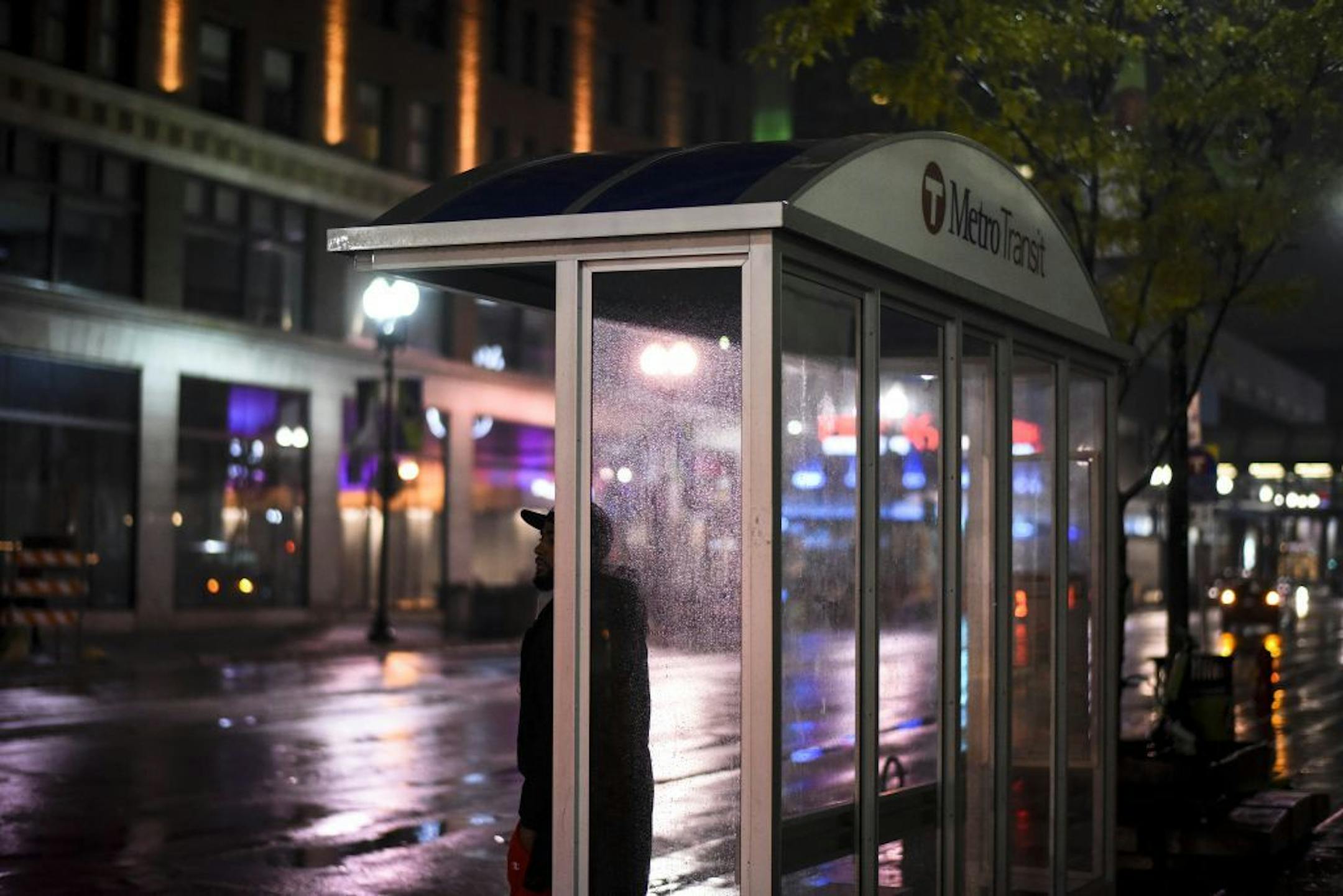
A Metro Transit bus stop along Hennepin Avenue, shown last year.
A Metro Transit bus stop along Hennepin Avenue, shown last year. (The Minnesota Star Tribune)

Listen and subscribe to our podcast: Apple Podcasts | Spotify

Last fall, a new Metro Transit bus stop opened across the street from Edward Hopkins’ Uptown home.

He wishes it hadn’t.

A neighbor across the street, whose bedroom is about 14 feet from the stop, is bothered by the noise, Hopkins said. Because the new stop has no bench, riders waiting for a bus sometimes sit in the building’s window sills.

Hopkins reached out to Curious Minnesota, the Strib’s reader-powered reporting project, to ask: “How close can bus stops be to someone’s home or apartment?”

The short answer: There’s no minimum distance a stop needs to be from private property, as long as public transit agencies in Minnesota place the stop within the public right of way, like a street or sidewalk. (Some buses also make stops on private property, such as at a shopping mall. These stops have led to legal disputes in the Twin Cities metro area.)

Minnesota’s public transit agencies do seek community feedback and take safety into account when planning.

“We try our best to not be located in spots that would be disruptive to the adjacent neighbor, but also sometimes can’t avoid it,” said Duluth Transit General Manager Chris Belden.
An expanding network

In the Twin Cities area, Metro Transit has recently been expanding its bus rapid transit network.

There are currently seven lines. Two of them, the B and Gold lines, opened in 2025. A third line is expected to open in December.

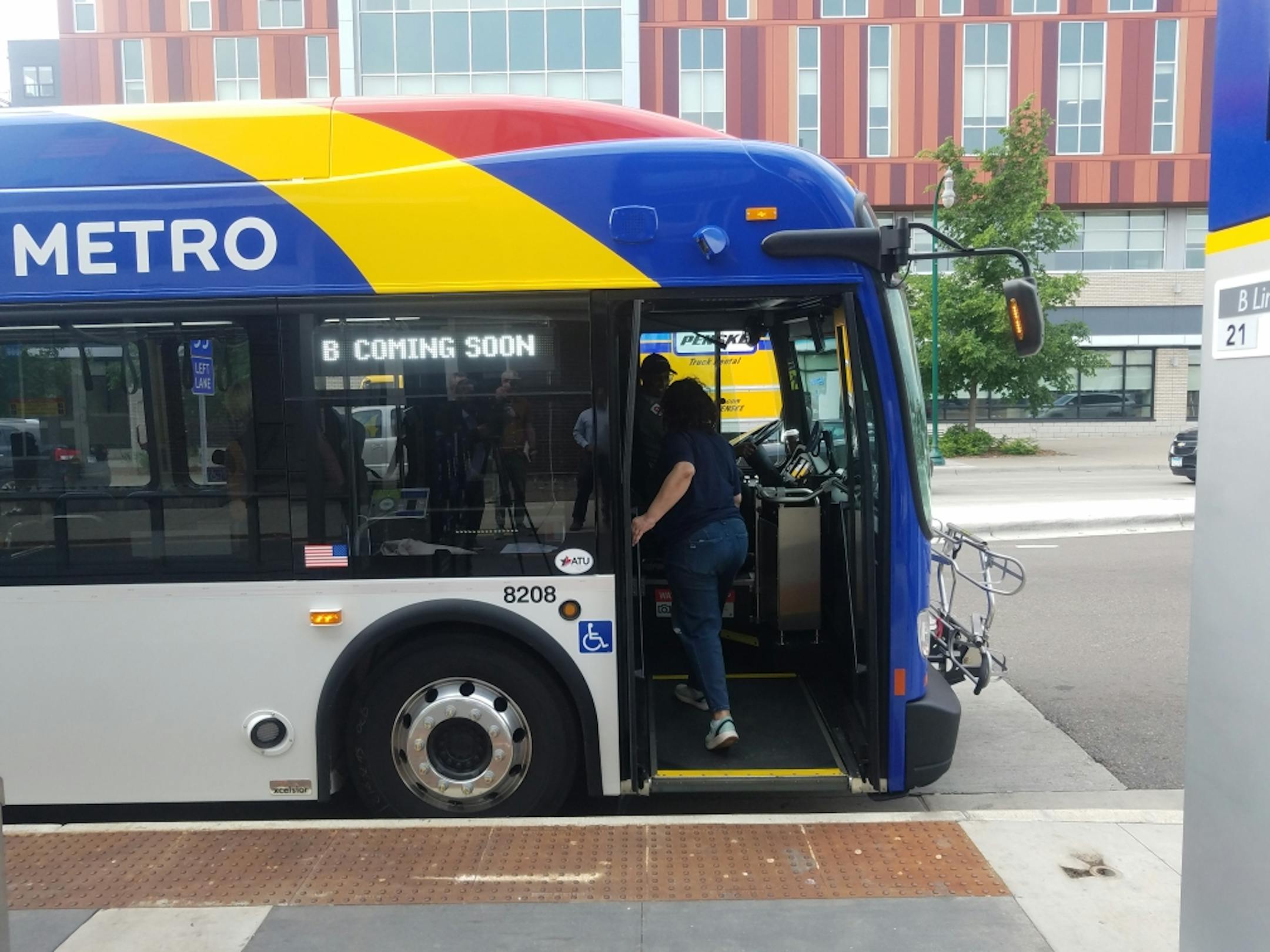
A Metro Transit B Line bus makes a training run ahead of the line's opening. (Tim Harlow/The Minnesota Star Tribune)

As Metro Transit expands the network, it has sought community feedback for every project, including on stop placement, according to Metro Transit spokesman Drew Kerr.

For the B Line, the agency hosted four open houses and attended or hosted 26 community events. But in the end, it does not need any external approvals when it comes to building stops.

“Bus stops are allowed in the public right of way and there is no minimum distance or setback from a private property line or building,” Kerr said in an email.

A new stop on Lagoon

The new bus stop across from Hopkins’ home opened on Lagoon Avenue near Humboldt Avenue last October.

The new stop was added as part of the B Line project. The new line runs from St. Paul’s Union Depot to W. Lake Street. As part of the project, Lake Street and Lagoon Avenue were resurfaced. One of the general travel lanes on Lagoon Avenue was converted into a bus-only lane. New bus stops were also added.

The new stop across from Hopkins doesn’t directly service the B Line but was built to connect bus rapid transit stops with local routes. Routes 17 and 38 both use the stop, with buses running from 5:21 a.m. to 11:51 p.m. At peak times, roughly seven buses serve the stop an hour.

The buses’ air brakes are noisy, and there’s often trash left near the stop, Hopkins said. He has also seen public drug use and people having a mental health episode at the stop, he said.

“We’ve been trying to figure out if this is allowable,” Hopkins said.

If you’d like to submit a Curious Minnesota question, fill out the form below:

Read more Curious Minnesota stories:

about the writer

about the writer

Lincoln Roch

Intern

Lincoln Roch is an intern for the Minnesota Star Tribune.

See Moreicon

More from Curious Minnesota

See More
"Santa" waved to people as he made his way to the Christmas photo booth at Southdale Mall, Friday, December 4, 2015 in Edina, MN.
Elizabeth Flores/The Minnesota Star Tribune

Southdale’s architect had a vision to thwart the cold and create an indoor town square in Edina where it was always 75 degrees.

card image
card image