
Bloomington spent nearly $1 million in federal COVID relief money on City Hall bathroom

A city official said the remodeling project provided a much needed update for an aging facility. Some residents, however, have questioned the city’s priorities.

The Minnesota Star Tribune
October 12, 2025 at 11:00AM
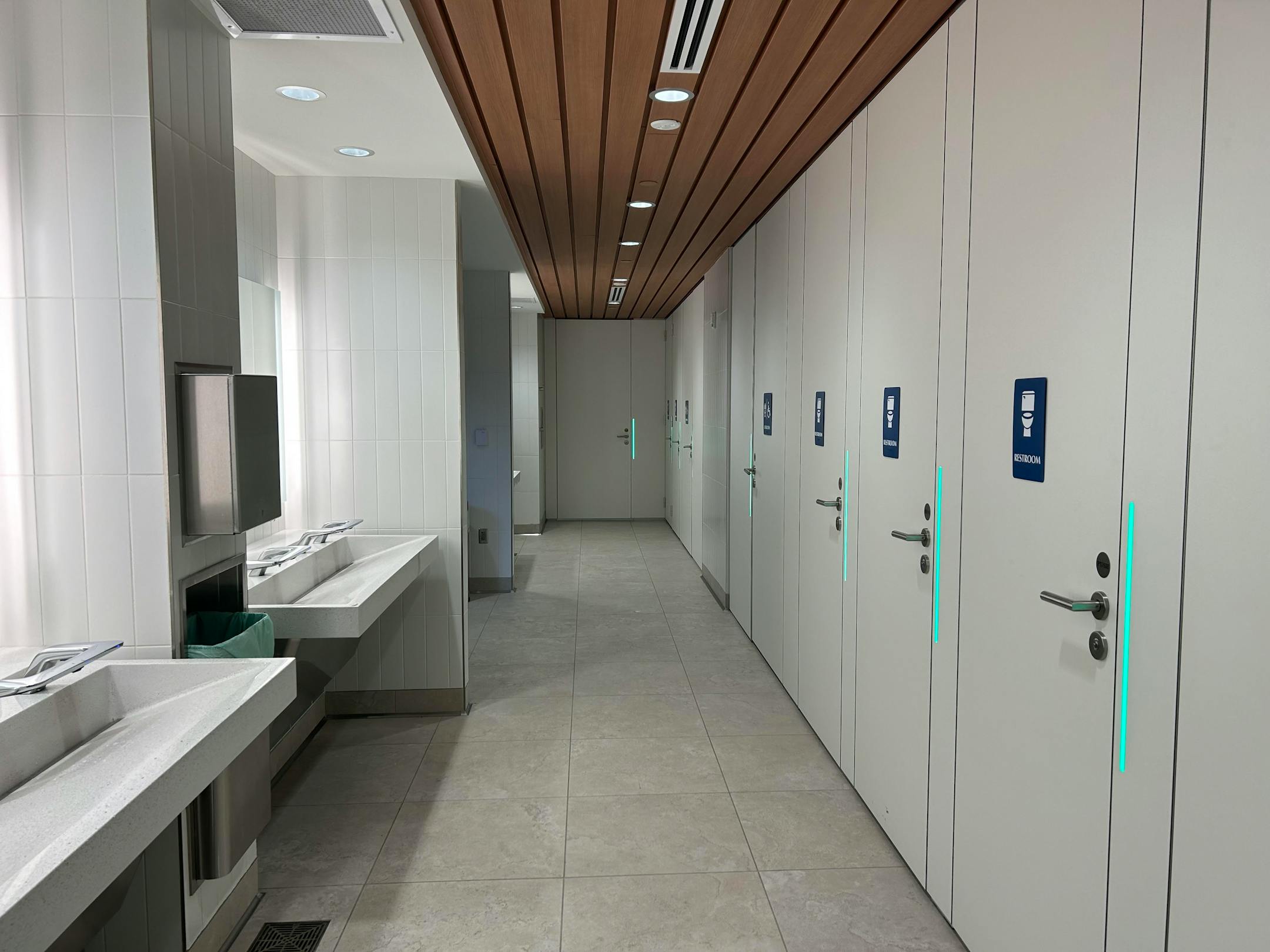
The remodeled first-floor bathroom at the Civic Plaza in Bloomington features individual stalls and cost the city nearly $1 million in pandemic relief money. (Eva Herscowitz/The Minnesota Star Tribune)

The sleek new bathroom at Bloomington City Hall is airy and modern, with sensor-operated sinks and fully enclosed individual stalls, their status indicated with strips of light: green for vacant and red for occupied.

Just outside, an “art wall” that will feature community work is still taking shape.

The city paid for the remodel with $980,000 in federal pandemic relief money it received through the American Rescue Plan Act, a fact that’s irritating some residents who contend the costly upgrade wasn’t necessary.

“When you think of rescue, you think of a dog rescued from a shelter — stuff that’s neglected,” Bloomington resident Andrew Thul said. “This didn’t call for rescue money.”

The tension over the project’s price tag and source of its funding underscore just how contentious Bloomington city spending has become in recent years. Three candidates running for an at-large City Council seat have all raised concerns throughout their campaign about creeping unaffordability in Bloomington, where property taxes could rise by as much as 9.5%.

The bathroom remodel is one of over two dozen projects Bloomington funded with about $11.4 million in COVID-era relief money. Bloomington officials say the restroom needed an upgrade, and they note that national guidelines allowed them to spend the pandemic cash infusion on the project.

The new, gender-neutral space, featuring 11 stalls and a “urinal room,” replaces an aging restroom that the city hadn’t updated for around 20 years, Capital Project Manager Deb Williams said.

“The wear and tear on those facilities is pretty extensive,” she said.

Long-planned project

The new bathroom opened this summer — roughly five years after city officials started talking about replacing the sinks and countertops in all four of the bathrooms in Civic Plaza, according to Williams and meeting minutes from January 2020. But the projected high cost of that idea pushed the City Council to abandon it, Williams said.

When the pandemic hit, Bloomington, like thousands of other cities nationwide, received stimulus money from the federal government. An online tracking tool from the U.S. Treasury Department shows Bloomington spent that money on the bathroom and at least 24 other projects — from renovating a water treatment plant, to helping people pay rent, to replacing a roof on a city building.

Cities could only use the COVID-era stimulus money for certain things, such as improving infrastructure and paying essential workers.

Mayor Tim Busse noted that funds allocated to the city through the American Rescue Plan Act could be invested in infrastructure improvements. The online tracker notes the money that paid for the bathroom renovation helped Bloomington maintain “vital public services” amid pandemic-related revenue declines — an allowable use.

Busse added that the bathroom re-do was a one-time investment.

“The rescue plans were out there, and gave us an opportunity to use it for a one-time project,” he said. “We didn’t certainly want to invest it in ongoing expenses.”

The tracker also states the old restroom in Civic Plaza, which houses the council chambers, police department and a performing arts space, needed to be “more inclusive” and accommodate people with disabilities.

Bloomington officials worked toward that goal last fall, releasing a survey seeking public feedback on the project. The City Council greenlit it a few months later — one of many items on a December 2024 consent agenda that leaders approved without public discussion.

‘Accessible to all’

Upgrading city buildings can be costly, with price tags varying based on projects’ scope. In Burnsville, construction is underway on a $81 million effort to modernize City Hall and the police department. Recent renovations to government and police buildings in Eagan totaled $15 million.

The Bloomington bathroom cost a fraction of that and has benefits beyond its aesthetics.

Williams said its gender-neutral design meets modern needs, allowing a parent or caregiver to take a child or patient of a different gender to the restroom. (The other three bathrooms in Civic Plaza are traditional facilities, with separate spaces for men and women.)

Three large stalls offer more comfort for people with disabilities, added Julie MacLeod, a principal at the architecture firm Alliiance, which helped design the space. And two exits make the bathroom feel roomy, a feature intended for people who aren’t fully comfortable with the lack of gender separation, MacLeod said.

“It was really thinking about, how can we create a space that is accessible to all?” she said.

But some residents say it’s the price tag that stands out.

Jonathan Minks, who’s running for an at-large City Council seat, balked at the cost of the project. Minks isn’t the only candidate who has criticized Bloomington’s budgetary priorities, though he has been particularly vocal about city spending, sounding alarms about Bloomington’s reliance on consultants, and salaries for top leaders.

As for his thoughts on the brand-new bathroom?

“I think that was excessive and an overreach,” he said. “I mean, we didn’t need to spend a million dollars on a bathroom.”

about the writer

about the writer

Eva Herscowitz

Reporter

Eva Herscowitz covers Dakota and Scott counties for the Star Tribune.

See Moreicon