Banks hoping to gain new clients in Minnesota after recent acquisitions

As Bremer Bank clients move to Old National following a corporate acquisition, competitors vie for Bremer customers with targeted tactics.

The Minnesota Star Tribune
December 4, 2025 at 11:00AM
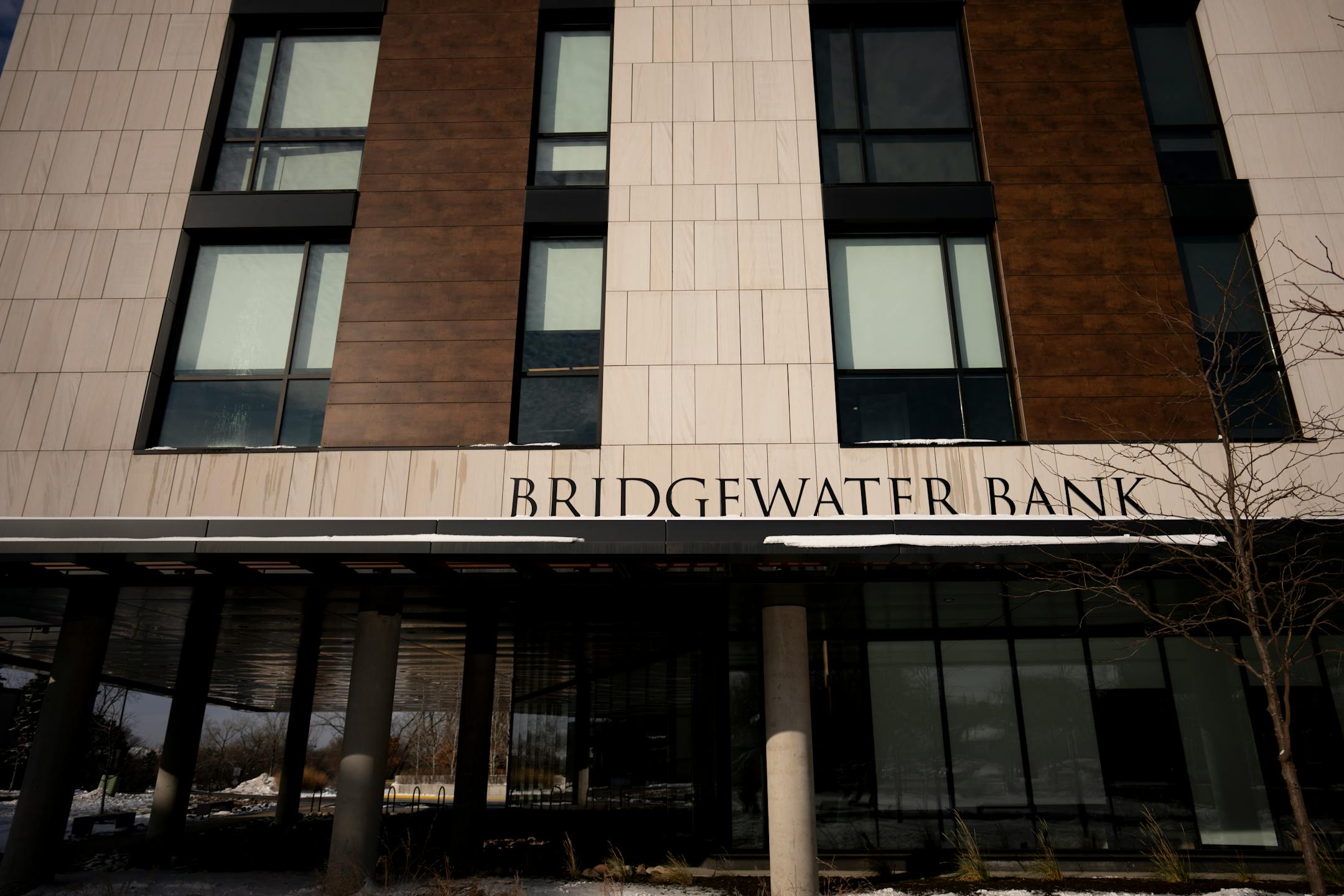
Bridgewater Bank in St. Louis Park on Tuesday. (Renée Jones Schneider/The Minnesota Star Tribune)

The Twin Cities banking scene looks different this year, especially in the wake of the major acquisition of Bremer Bank by Indiana-based Old National.

Some small banks see more consolidation to come — and an opportunity to gain clients. And they are making it known with not-so-subtle billboards cropping up across the Twin Cities.

After an 82-year run touting itself as Minnesota’s local bank, the Bremer brand went extinct following a changeover that finished in late October.

Other consolidations followed. In the past few weeks, two competitors from Green Bay, Wis. — Associated Bank and Nicolet National Bank — announced plans to buy up smaller branch networks and grow their Twin Cities footprints.

The number of banks chartered in Minnesota has dropped by about half over the past 25 years, to 235, according to the Minnesota Bankers Association. Ten went away between 2024 and 2025, said Joe Witt, CEO of the Minnesota Bankers Association. Minnesota still has more banks than most states, but consolidations may be on the verge of rising.

Consolidation in banking has been ongoing for decades, but some experts see the potential for an increase under the Trump administration, which has eased its oversight of the nation’s most regulated industry.

Banks buy competitors in new markets to grow their deposits and expand their business. But consolidations can create hassles for loyal customers while involuntarily moving all their money into businesses they’re not familiar with, prompting some to consider switching banks.
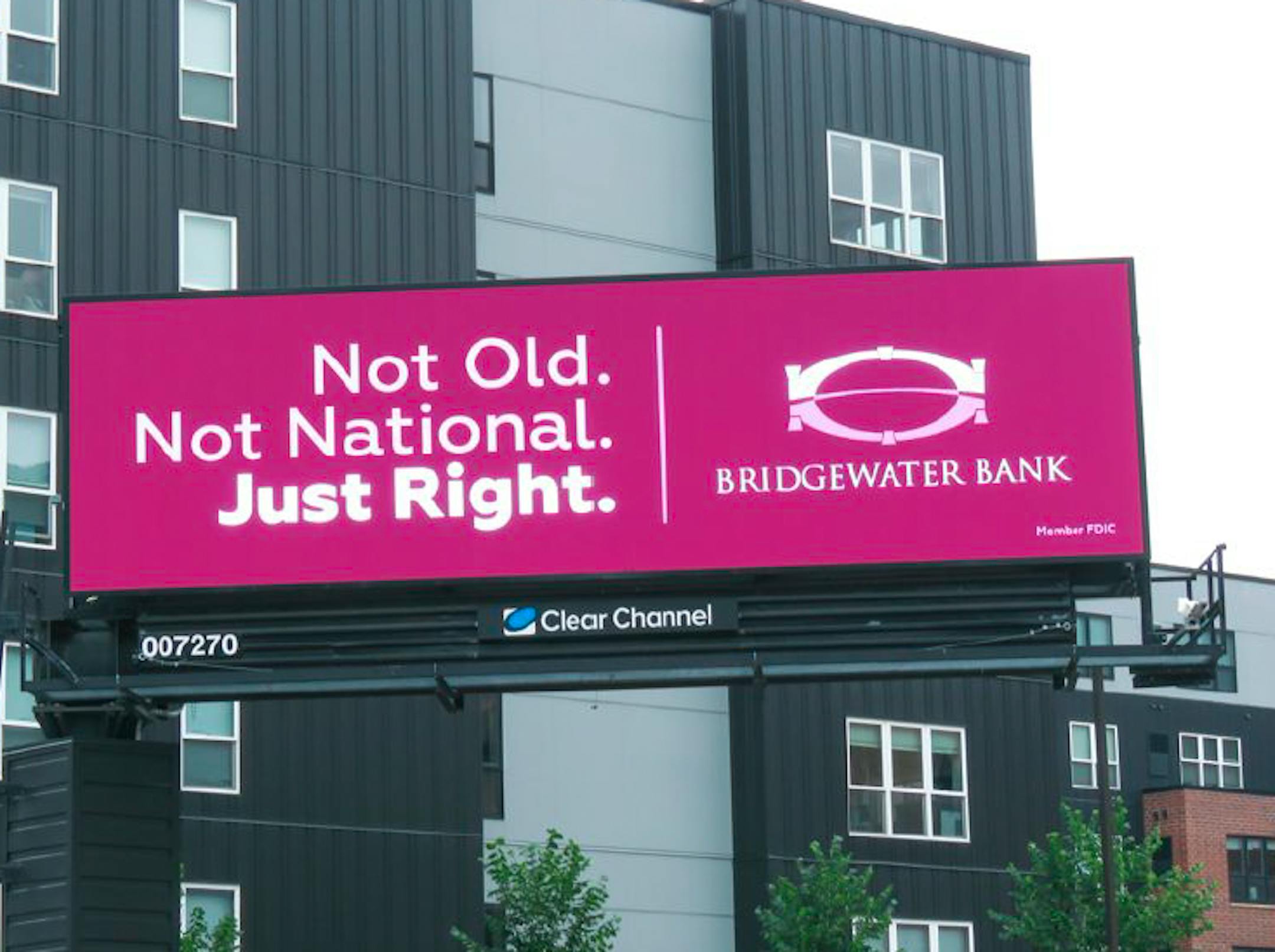
A Bridgewater Bank billboard. (Provided by Bridgewater Bank)

St. Louis Park-based Bridgewater Bank is reaching out to former Bremer clients directly. Earlier this year, its team greenlit a series of billboards teasing the Old National brand, including one that reads: “Not Old. Not National. Just Right.”

CEO Jerry Baack said the campaign is attracting clients and talent to Bridgewater, now the Twin Cities’ ninth-biggest bank and the second-largest based in Minnesota, after U.S. Bancorp. Bridgewater, built around entrepreneurial and business banking, opened in 2005 and has grown to manage more than $5.4 billion in deposits.

Baack thinks more acquisitions could be on the horizon because there is a “pent-up demand.”

“I think a lot of owners of banks feel like, ‘Well, this is my opportunity to sell,’ because the regulatory process isn’t going to be as brutal” as it could be under a new administration, Baack said.

“For us, it’s an opportunity,” he added. “We’re here. We have no interest in selling. We have no interest in combining with another larger institution.”

Bridgewater Bank CEO Jerry Baack at the bank in St. Louis Park on Tuesday. (Renée Jones Schneider/The Minnesota Star Tribune)

Also putting up billboards to capitalize on the moment is privately owned Fargo-based Bell Bank, which encourages customers to switch before their bank does. Erin Procko, the bank’s Twin Cities president, said Bell has seen new relationships in consumer and business banking attributable to movements in the market.

When banks change hands, she said, clients “don’t want to get lost in the shuffle.”

At Old National, executives are noticing some “runoff” — industry speak for accounts leaving — as a result of the merger. Though more support calls are coming in from customers, Old National CEO Jim Ryan said in an October earnings call the process of merging with Bremer is the smoothest he’s seen.

“I’ve been doing these integrations now for more than 20 years at Old National Bancorp, and I can tell you this is the best one we’ve ever done,” he said.

In a statement to the Minnesota Star Tribune, Tom Rickers, Old National’s executive overseeing integration of the banks, acknowledged the process has resulted in change for clients and the bank appreciates their “patience and understanding throughout the process.”

“While the name has changed, clients will continue to see the same familiar faces and receive the same dedicated, relationship-focused service,” he said. “As a result of the partnership, clients will now have additional resources available, which will better equip them to thrive.”

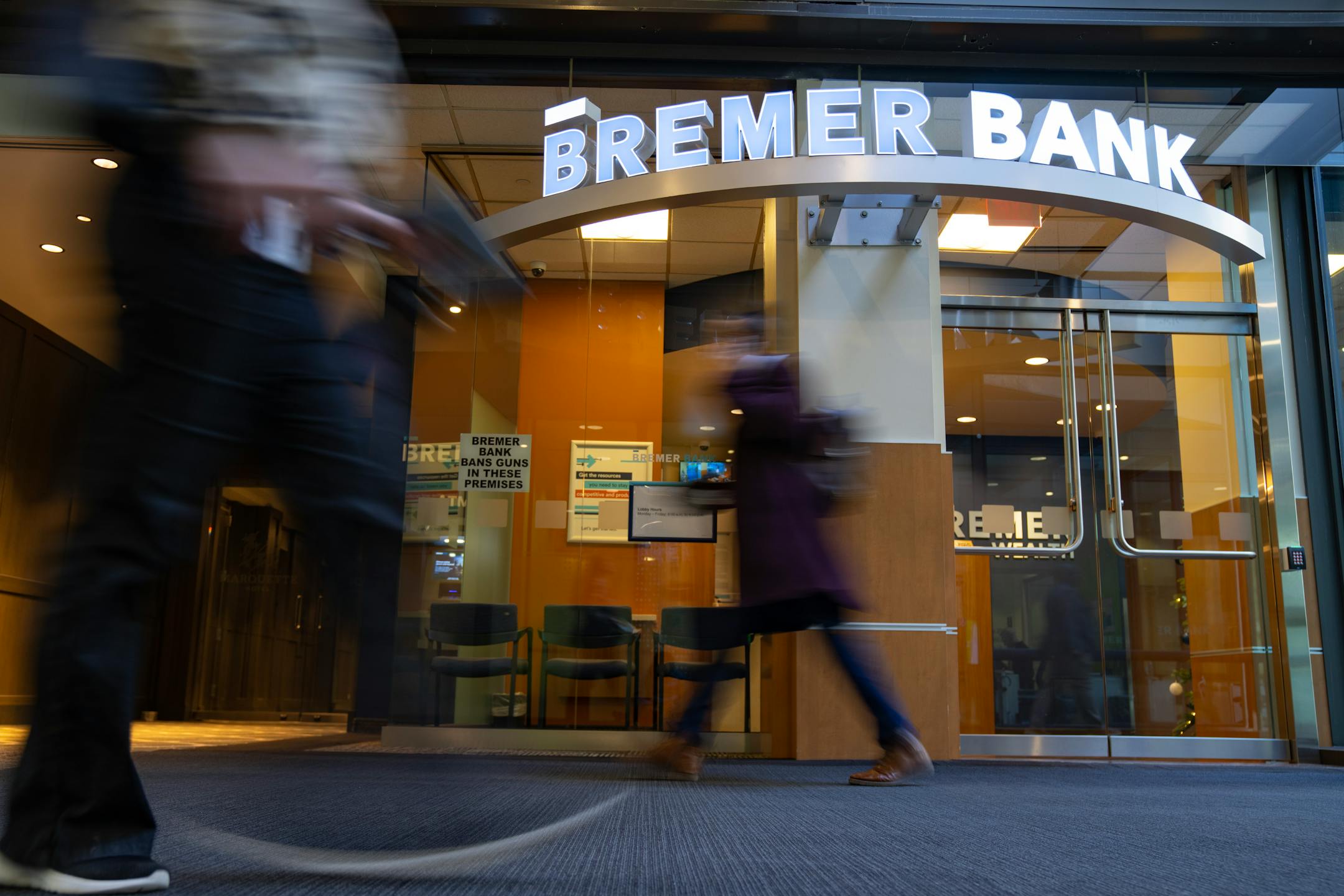
People walk past a Bremer Bank branch in the skyway in downtown Minneapolis on Jan. 23. (Alex Kormann/The Minnesota Star Tribune)

Customer glitches

Some former Bremer accountholders are reporting glitches or dissatisfaction with the transfer, like chips in their credit cards not working, getting locked out of online account management or losing historical account information.

In 2021, Jody Wheeler, 52, a Twin Cities area resident, joined her husband, Brad Kramer, 55, on an account at Bremer, where he’d banked for more than 30 years.

After the switchover, Old National sent a new debit card in the mail with only Kramer’s name on it. He called customer support and said his wife needed one, and the bank sent another — again with only his name.

Wheeler said she never got a clear answer why. But she said she ultimately learned Old National had removed her name from their joint account.

“You can imagine how pissed off I was, pardon my French,” Wheeler said. “I don’t appreciate being erased off the bank account where my paycheck goes.” She and her husband are looking for a new bank.

Michael Iselin, an associate professor of accounting at the University of Minnesota, said growth through acquisition has long been a trend in the banking industry. He agreed that in the last year the regulatory environment has taken a sharp turn toward making acquisitions easier.

Some policy statements from federal regulators that required more rigorous review processes, especially with regard to larger bank mergers, were officially rescinded, a move Iselin said has been consistent with the Trump administration’s approach to regulatory burdens and oversight.

Minnesota still has a relatively high number of community banks as well as large out-of-state institutions with a local presence, the trade association’s Witt said. Big drivers of consolidation include the compliance costs that come with oversight and the expensive technology needed to run a modern bank.

Despite the trend, Witt said, businesses, families and farmers still have great banking options to choose from.

“Minnesota’s still in great shape,” he said.

about the writer

about the writer

Bill Lukitsch

Reporter

Bill Lukitsch is a business reporter for the Star Tribune.

See Moreicon

More from Business

See More
card image
Khalid Mohamed/Sahan Journal

The new café was born when owners decided to open a third space especially welcoming to Palestinian and Salvadoran customers.

card image
card image