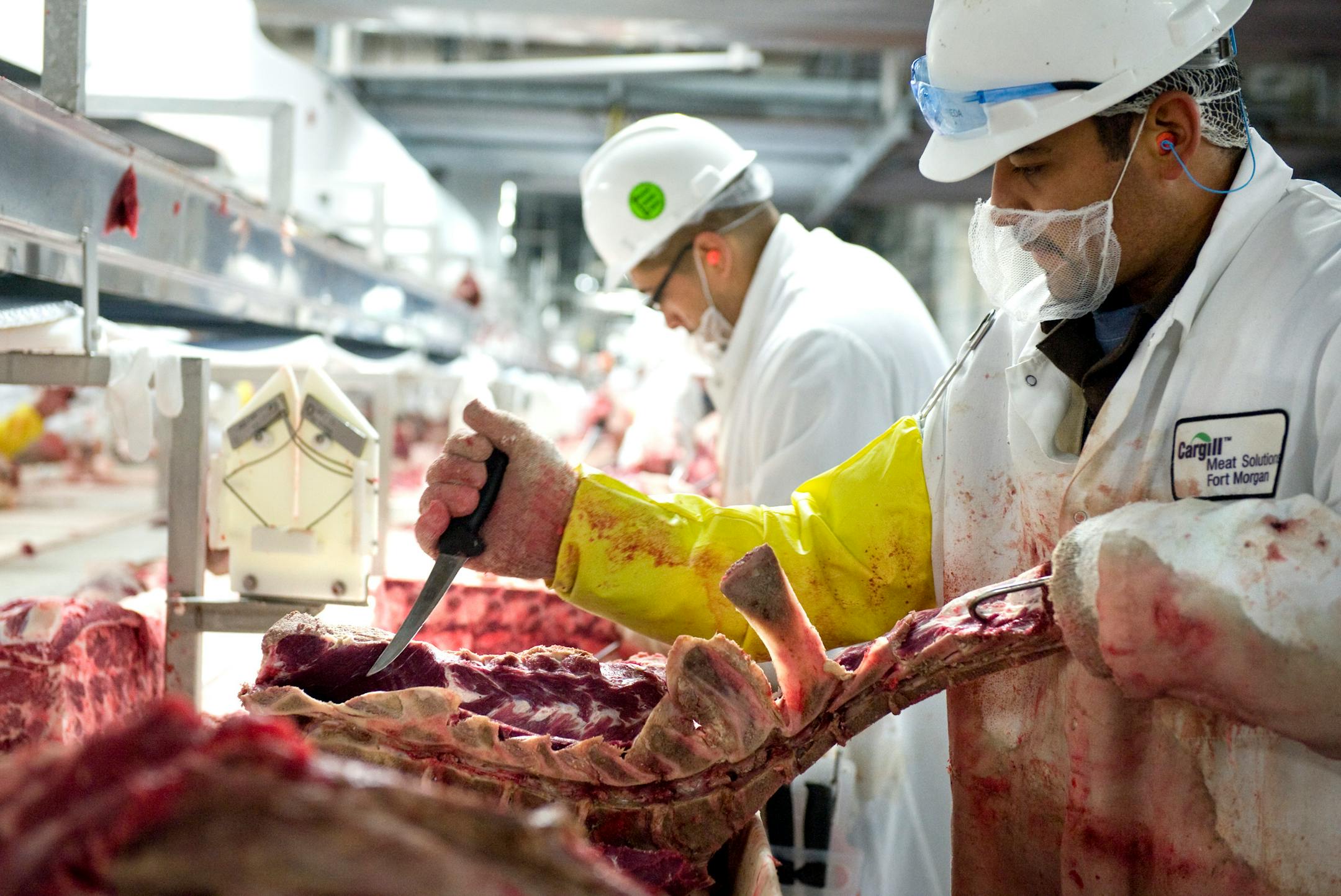
At a Cargill slaughterhouse in Texas, AI-equipped cameras scan every cattle carcass and let workers know when they’re literally leaving too much meat on the bone.
Even a 1% improvement in yield could produce millions more pounds of meat a year thanks to artificial intelligence.
“I do believe it’s the most transformative technology or innovation of my lifetime,” Cargill CEO Brian Sikes said at an event in Iowa last month. “There will be companies that embrace this and those that don’t, and I think we’ll look back in a decade, and those that don’t embrace the opportunities that it brings will be in the graveyard.”
Minnetonka-based Cargill is one of many food companies enthusiastically embracing artificial intelligence, adopting the technology to make innovation, supply chains, marketing and manufacturing more efficient.
The rapid uptake of AI across the economy has many worried about the other side of increased efficiency — lost jobs — especially as layoffs ripple through tech companies. But the food industry still needs plenty of people, industry leaders say.
“If you get replaced, it will be by somebody that’s willing to engage with the technology,” Sikes said.
General Mills has been investing heavily in recent years to get ahead of the competition on AI, CEO Jeff Harmening said: “There’s no prize for second place.”
For the cereal-maker, AI is about building new capabilities that help the company “stay on top of evolving consumer behaviors and external trends,” Harmening said during the company’s October investor day at its Golden Valley HQ.