Architect transforms two century-old N.Y. row houses into four sleek contemporary homes

Stephen Chu, the architect behind the $85 million makeover of a beloved amphitheater in Central Park, has spent over two decades remaking his home in Ridgewood, Queens.

The New York Times
October 1, 2025 at 4:25PM
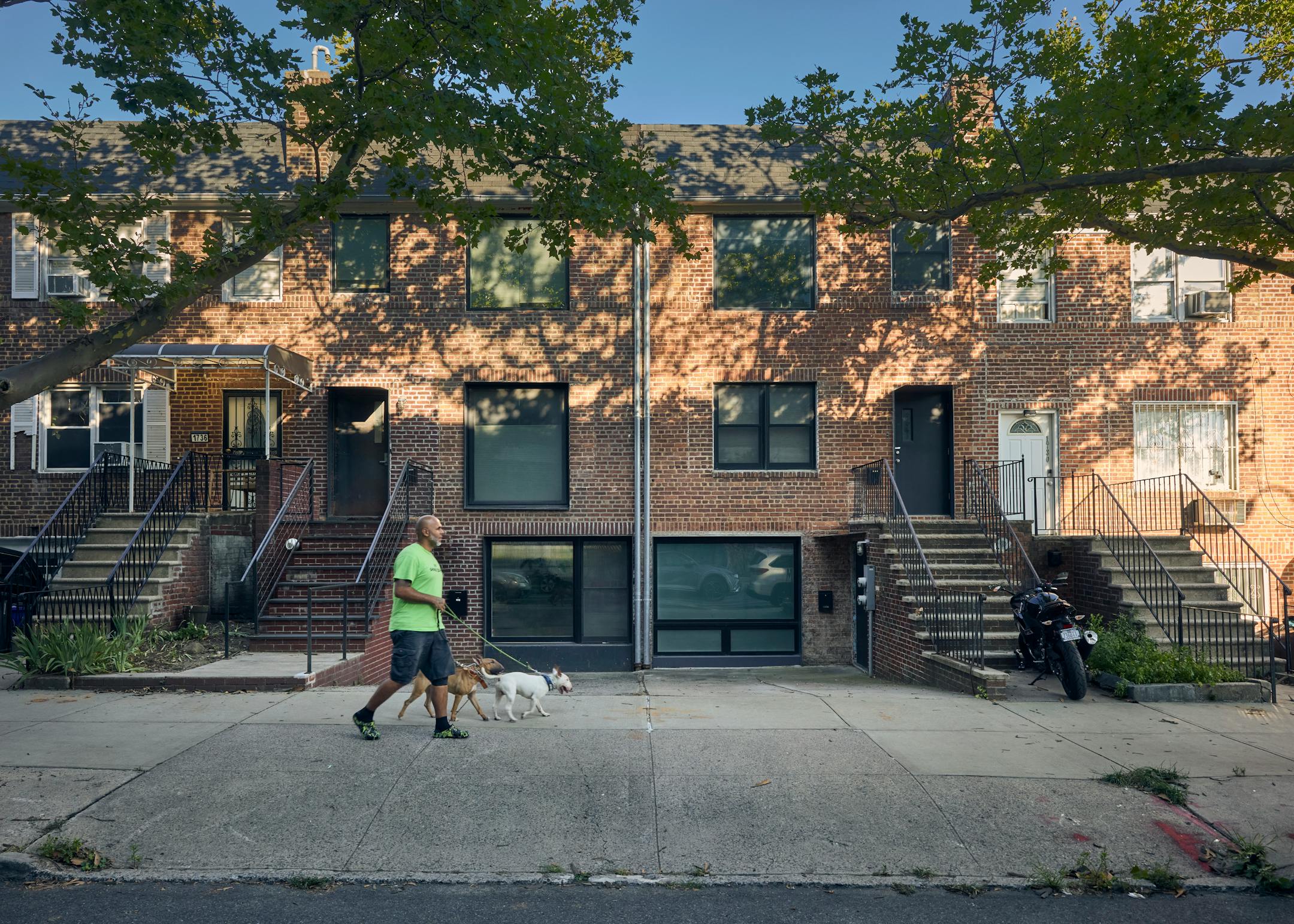
The front of the two 1930s rowhouses that make up architect Stephen Chu’s home in Queens. (ASHOK SINHA/The New York Times)

NEW YORK — When architect Stephen Chu bought a row house in New York City’s Queens borough more than 20 years ago, the neighborhood was far enough off the radar and cheap enough to be an architectural playground for a young designer.

The two-family brick house in Ridgewood, with faint outlines of the old-fashioned decorative shutters long removed, was across from a warehouse on a quiet street. Chu bought it with his partner at the time for $380,000. “We broke up and I kept the house,” he said.

Chu, 54, now has a portfolio filled with landmark designs, including the newly renovated Delacorte Theater in Central Park, which reopened in August with a production of Shakespeare’s “Twelfth Night.”

He said his home was “never intended to be my architectural showpiece.” Still, his decades of home renovations in Ridgewood reflect a thoughtful approach to preservation. The Delacorte was built in 1962 as a “pop-up,” in Chu’s words, and he and his team at Ennead Architects, where he is a partner, took pains to spare hawthorn roots when trenching the site. “Central Park is a scenic landmark, so the trees are protected,” he said.

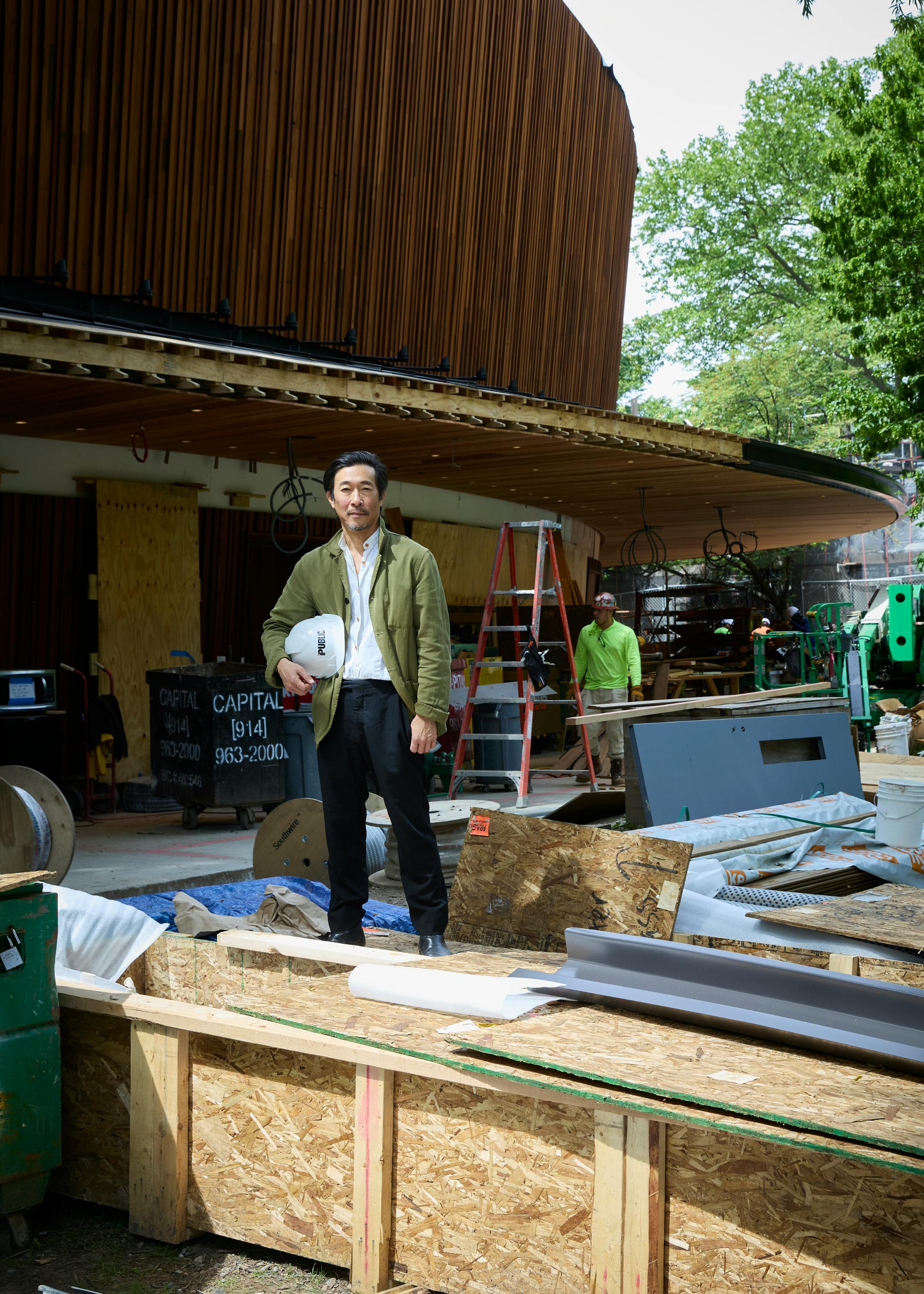
Cracked structural footings, some without rebar, received new jackets of reinforced concrete. A soaring torqued canopy now cantilevers over the entry gates and box office. The redwood ribbed siding that now hides the grandstand is a variegated patchwork of locally sourced water tower staves salvaged from old tanks.

The $85 million renovation of the Delacorte, home to the Public Theater’s Free Shakespeare in the Park performances, began two phases of construction in 2022 and required a cast of thousands.
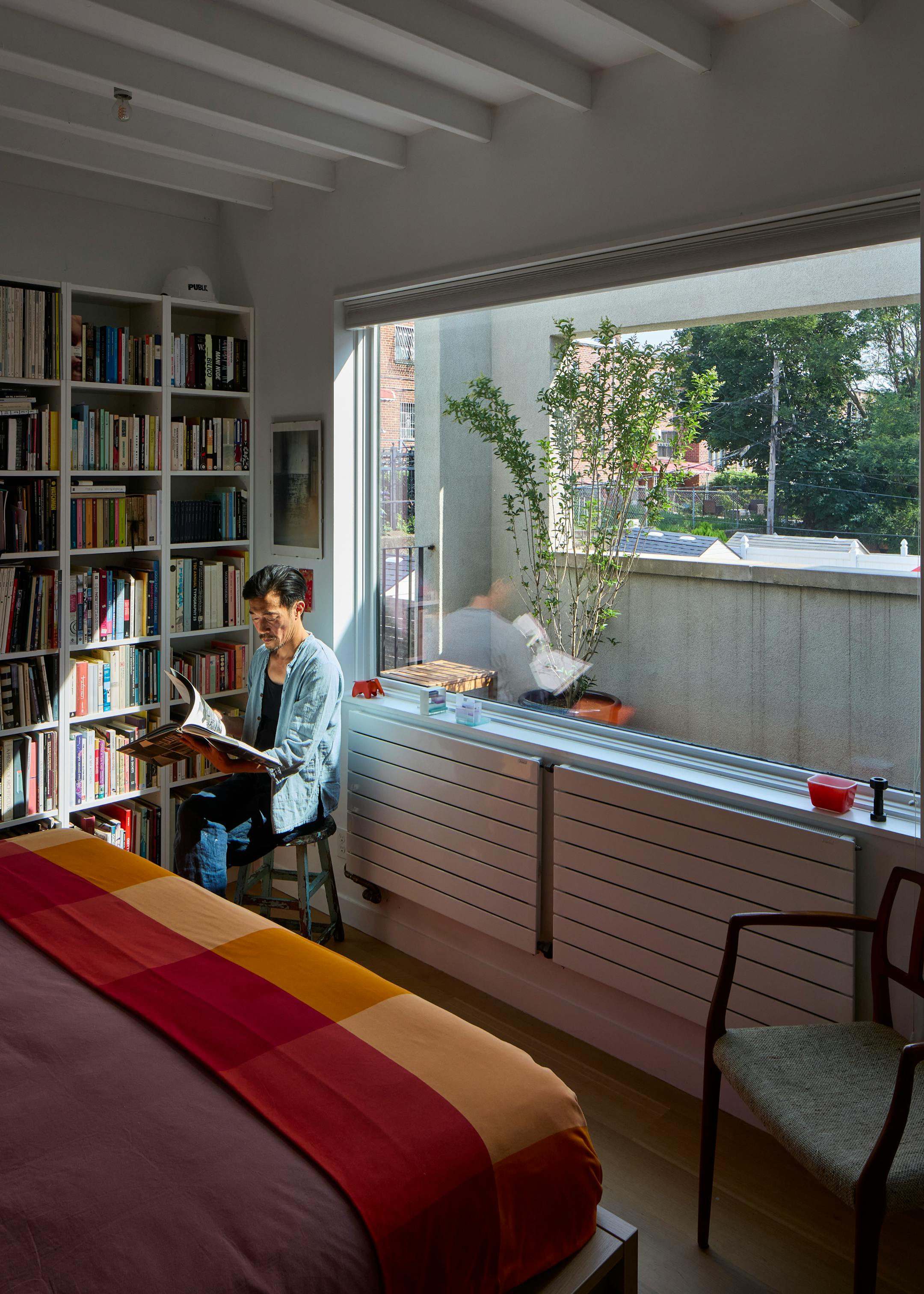
Architect Stephen Chu in his home's primary bedroom, on the upper floor of the modern addition he added to the rear of the 1930s rowhouse. (Ashok Sinha/The New York Times)

In Queens, Chu’s initial renovations of his two-family 1930 row house were a solo show. He recalled how he had cut a series of holes in the floor of the unit he lived in to enhance spatial flow, “crawling around on my hands and knees with a circular saw.”

In 2008, he met his current partner, Cristina Ottolini, who is a graphic designer and former professional dancer. Her parents and sister are architects, and her grandfather was Carlo De Carli, the architectural protege of renowned designer and editor Gio Ponti. Ottolini, 53, said she saw potential in the row house. “It wasn’t very polished,” she said, but Chu “clearly had taste.”

When Ottolini was pregnant with their oldest child, Edo, now 14, Chu took a year off. He was burned out at work, in need of “a reset,” and the house needed refashioning to accommodate a family. (The couple’s second child, Siena, 12, came soon after.)

This second phase of renovation was more ambitious, converting the garage into a living room. The kitchen of the family unit was gut renovated, a half bath was added and the bathrooms of both units were replaced.

Chu didn’t stop there. A decade ago, he bought the row house next door — the owner, he said, was a police officer who wanted to retire to Florida. The houses shared a driveway that was bracketed between their two front stoops. Although the house next door was a mirror image of Chu’s, it cost more than twice as much as the $380,000 he’d spent, and Chu sold a family property, in Saratoga, California, outside San Jose, to afford it.

Buying the second house kicked off another cascade of creativity, as Chu began to noodle concepts for transforming the row houses together.

“I’ll say a hundred, but realistically it was 50 plans,” Ottolini recalled. Chu admitted, “I was like a fire hose shooting ideas at her.”

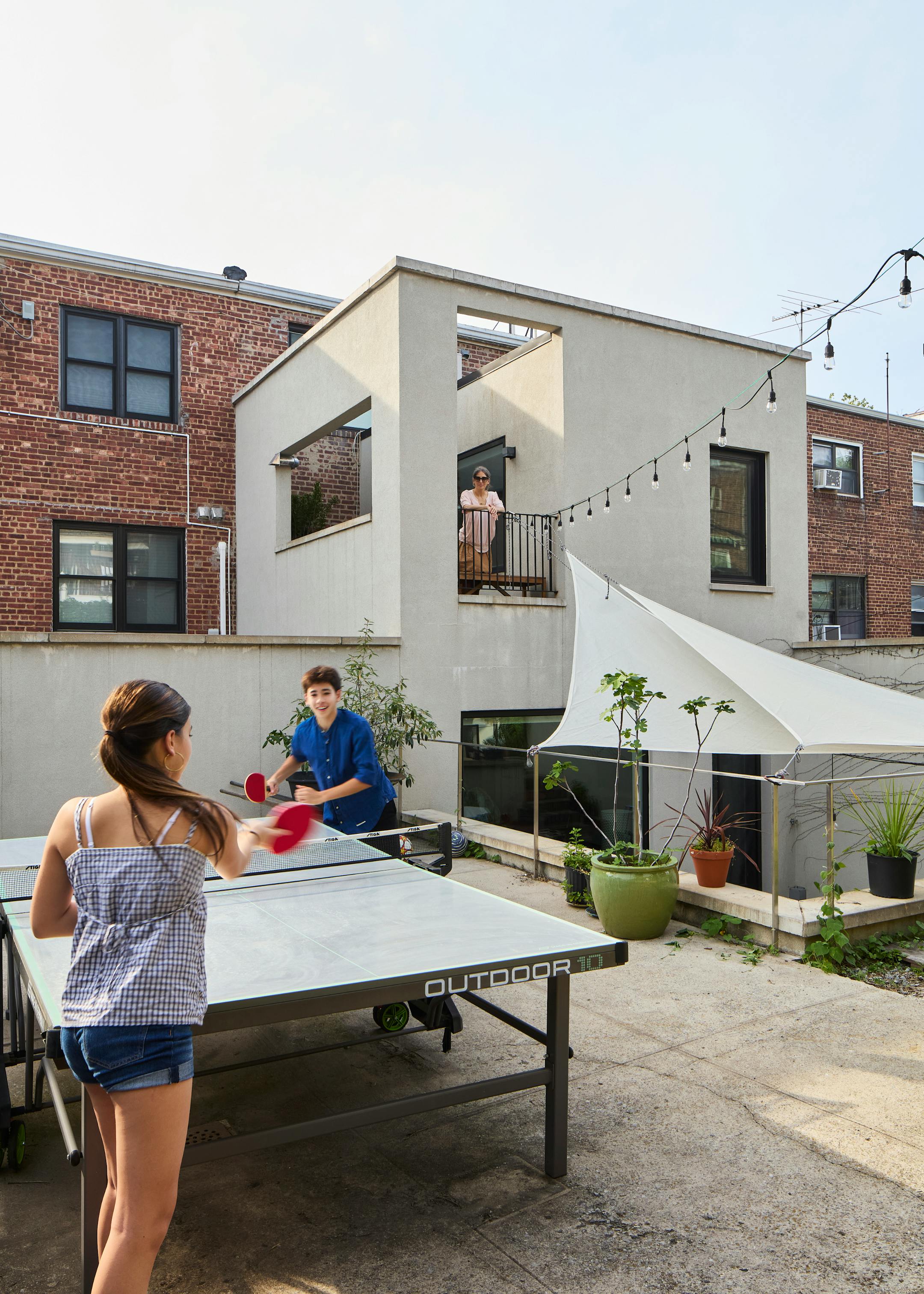
Architect Stephen Chu’s children Siena and Edo play at the family’s home, behind the modern stucco addition Chu added, in Queens. (Ashok Sinha/The New York Times)

The result was the most significant of his Ridgewood renovations by far, revising nearly everything. Each two-family house still has two units, which interlock like a Jenga puzzle that can’t be toppled. At just under 2,000 square feet, the family unit has become the largest of the units — a duplex with a bold new two-story stucco extension in the rear garden hosting a living room on the ground level and a primary bedroom and outdoor terrace on top. Each of the four of the units got a new kitchen, with Ikea white plastic laminate cabinets. Two of the original bathrooms were renovated, two have been moved and two are new additions.

Ottolini occasionally provided design feedback, when asked, but she pressed Chu for extra closets since “his vision does not include storage,” she said.

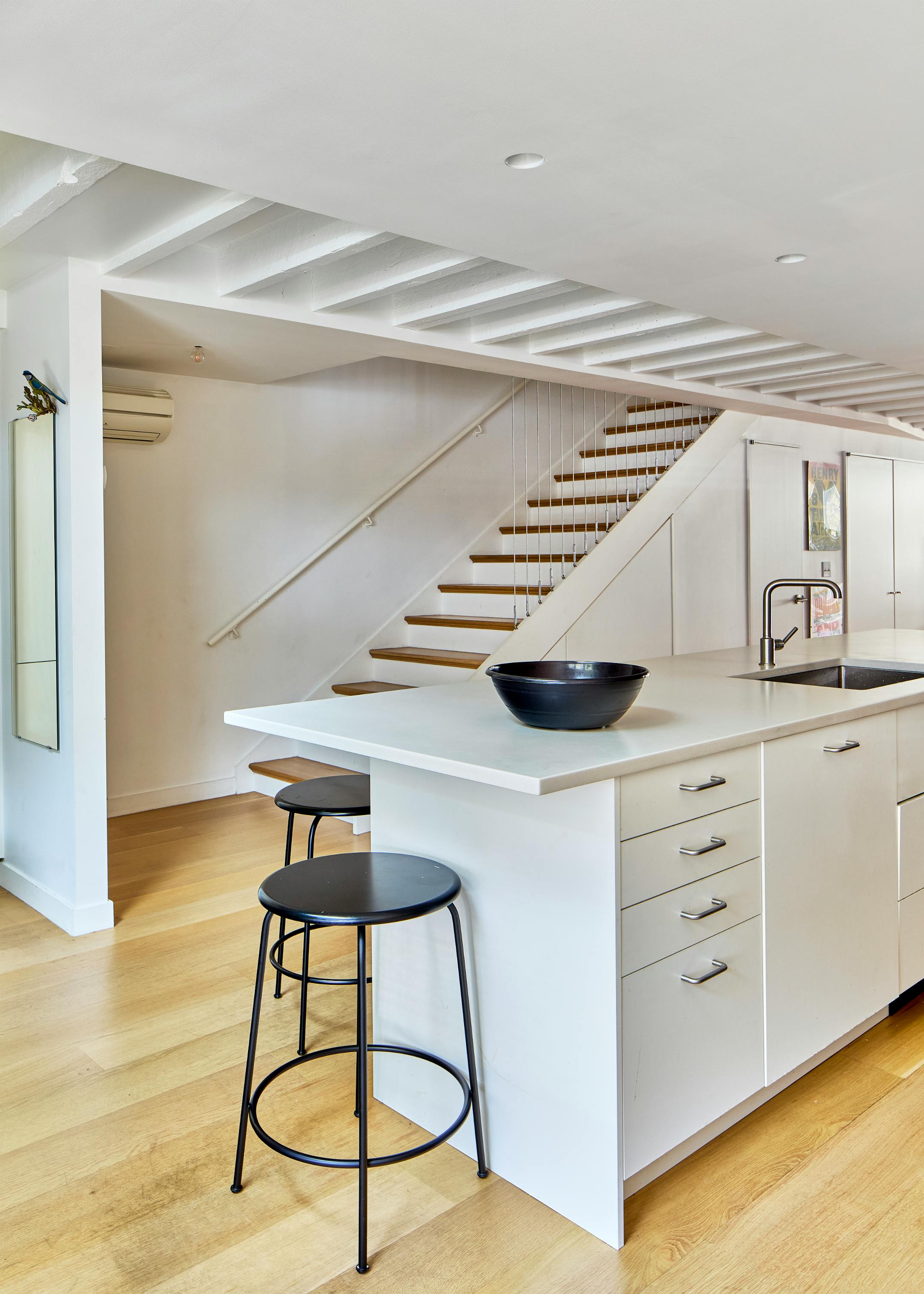
The sleek white kitchen, in a former garage tucked beneath the front of architect Stephen Chu’s original rowhouse in Queens. (Ashok Sinha/The New York Times)

The entrance to the family unit is a rusty black steel door under the stoop of the original row house, where the brickwork has been restored.

The garage door opening is now glazed with an oversize fixed window of reeded glass, for privacy. The former garage, no longer a living room, is now an open kitchen that flows into the dining area. The dining table and sideboard are a teak set his parents purchased years ago on vacation in Denmark.

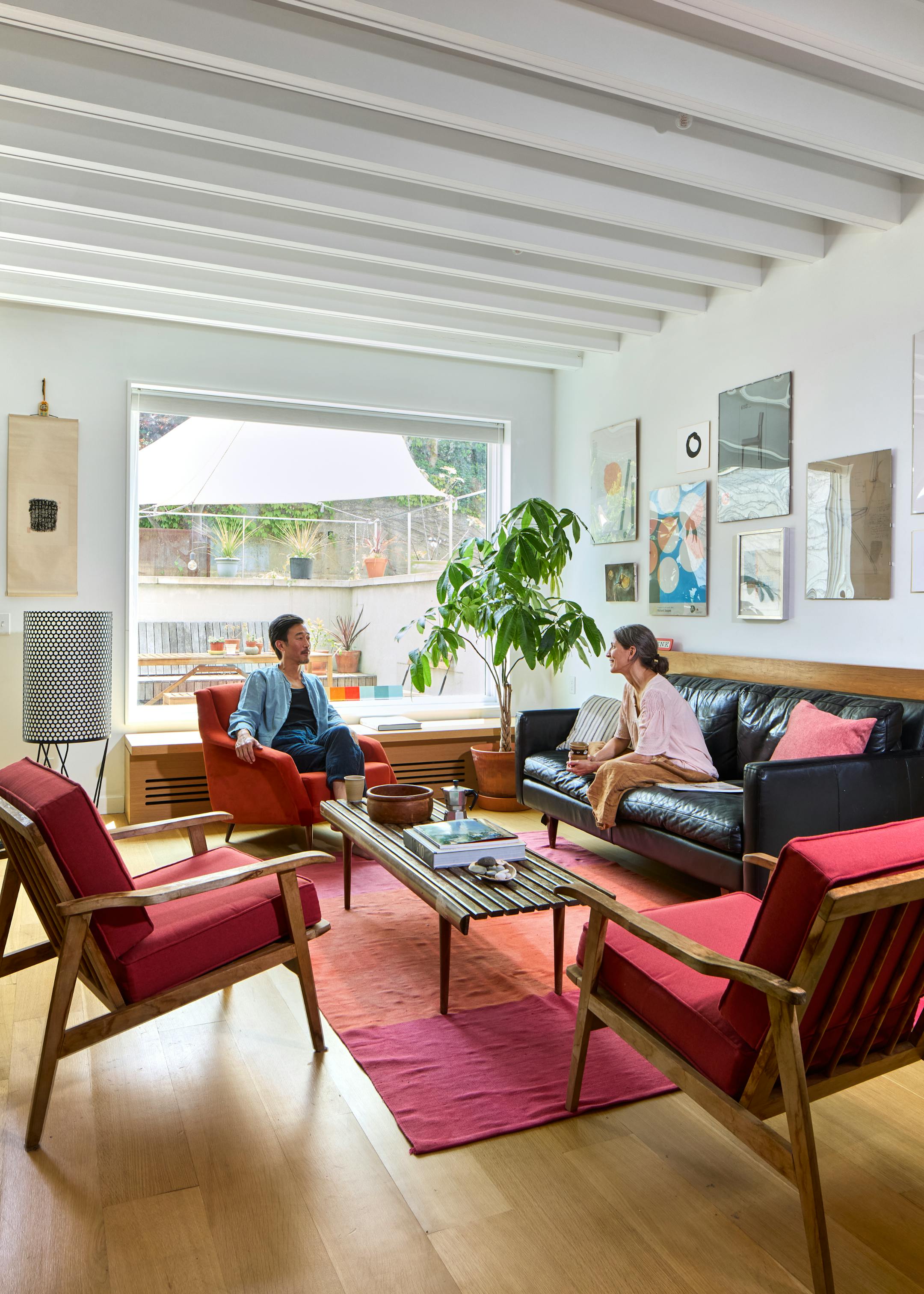
Rather than shut themselves in their bedrooms upstairs, the children spend time on the garden level. The dining area opens into the stucco extension, where the beamed ceiling bumps up 2 feet, and an oversize living room picture window and glass door look onto a dining patio deck excavated from the hillside beyond.

It gives an Italian flavor, like “when I am in Tuscany at a table in an olive grove eating pasta,” Ottolini said by phone from a seaside summer Italian getaway in Ventimiglia, on the Mediterranean Riviera.

Stephen Chu sits in a chair by Carlo De Carli, the grandfather of his partner Cristina Ottolini, right, in the living room they added to the rear of their rowhouse. (Ashok Sinha/The New York Times)

On Chu’s birthday this year, his family received a gift from Ottolini’s mother, who lives in Milan. The present, an angular armchair, which now sits in their living room, was released by Carlo De Carli in 1950 and recently reintroduced in scarlet velvet by Gubi, the Danish manufacturer.

Having so much history under his roof, not to mention the possibility of more family someday living in the three other units, Chu argues, is “not just Italian, it’s also Chinese.”

Architect Stephen Chu on site for renovations at the Delacorte Theater at Central Park in New York, in the first half of 2025. (Ashok Sinha/The New York Times)

He is at work completing an enormous international performing arts center in Shenzhen, China, that is amorphous in shape and clad in shiny gold panels. Every evening, downtown high-rises throughout the city play a Las Vegas-style light show on their facades, but Chu is resisting any LED lights embedded like pimples in his golden facade. “Why do we have to be part of that chaos?” he asked. “We are looking for timeless, not gimmicky.”

And in New York, Chu, who was appointed to the city’s Landmarks Preservation Commission in 2023, is working on the renovation of yet another Manhattan landmark: the theater at Studio 54 for the Roundabout Theater Company.

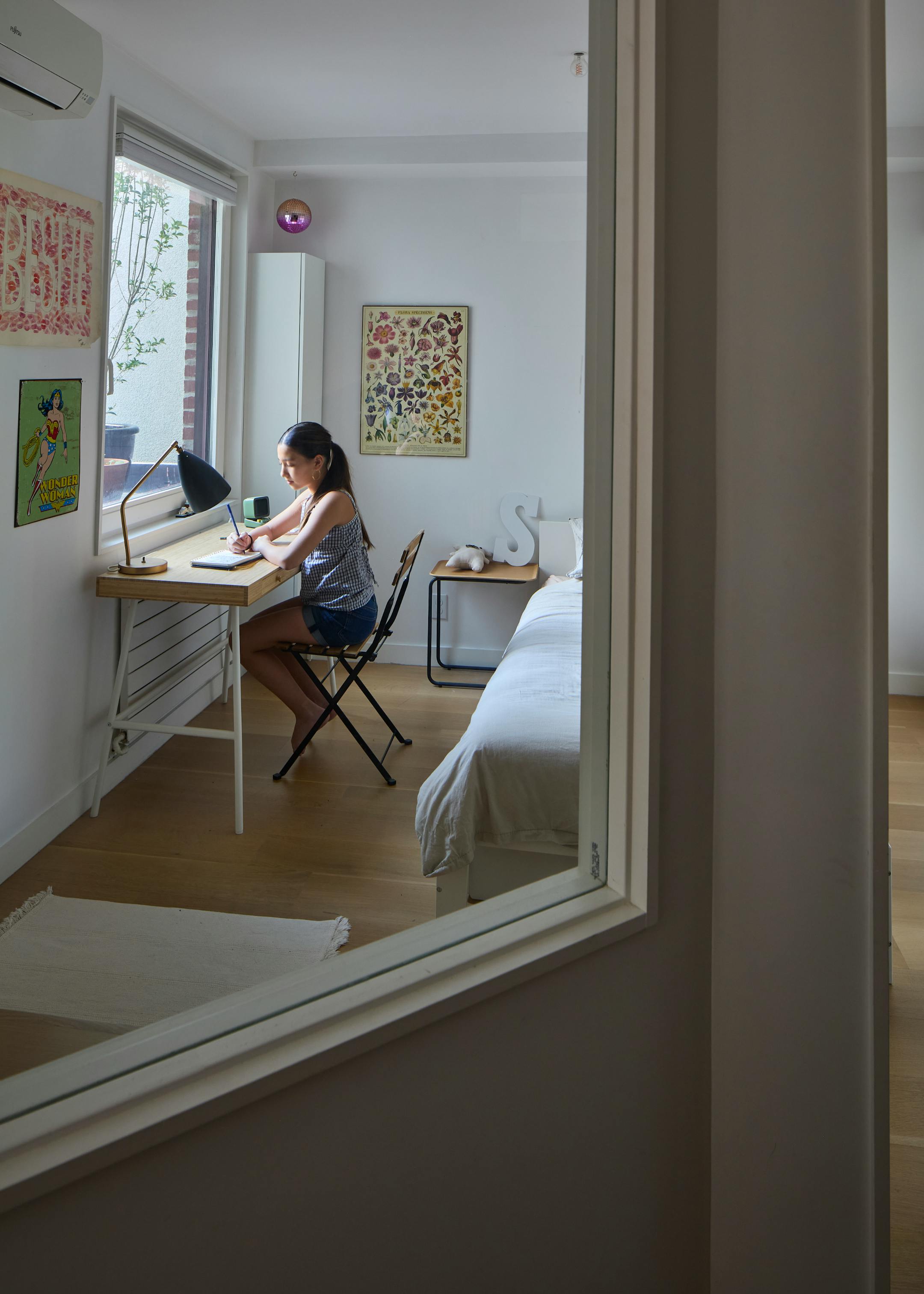
Architect Stephen Chu’s daughter Siena in her bedroom, which is in the historical footprint of the original 1930s rowhouse. (Ashok Sinha/The New York Times)
about the writer

about the writer

Craig Kellogg

More from Home & Garden

See More
A barred owl on a tree branch in daylight.
Bob Hilbert

Plus homely cardinals, missing goldfinches and a life-and-death battle between a hawk and a snake.

Plants in the home of Brendan and Alexi Coffey in Redding, Conn., on Dec. 7, 2020.
Kelley Proxmire had carpet cut specifically to fit the space in her own dining room, making it look larger. Proxmire uses lots of green plants in her work, and is adamant that they look healthy. Illustrates DESIGN-STAGE (category l), by Jura Koncius, (c) 2014, The Washington Post. Moved Thursday, August 28, 2014. (MUST CREDIT: Kevin Allen.)