After ‘bad tactics’ of federal agents, local law enforcement regarded in a new light

In the nearly six years since George Floyd’s killing, police have begun to rehabilitate their image, though mistrust lingers.

The Minnesota Star Tribune
February 14, 2026 at 12:00PM
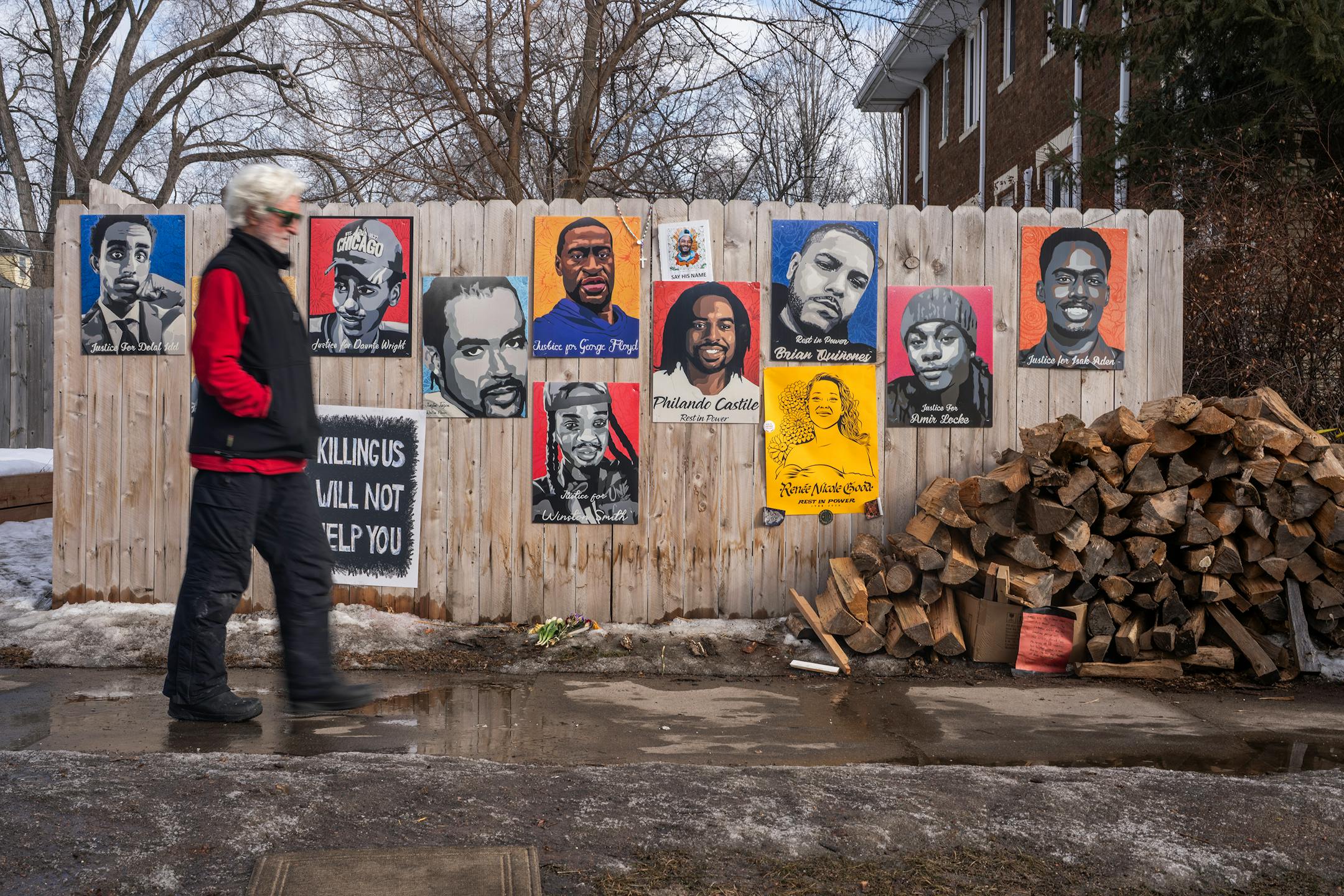
An image of Renee Good has joined the posters on a fence on Portland Avenue, showing those who have died at the hands of law enforcement. (Richard Tsong-Taatarii/The Minnesota Star Tribune)

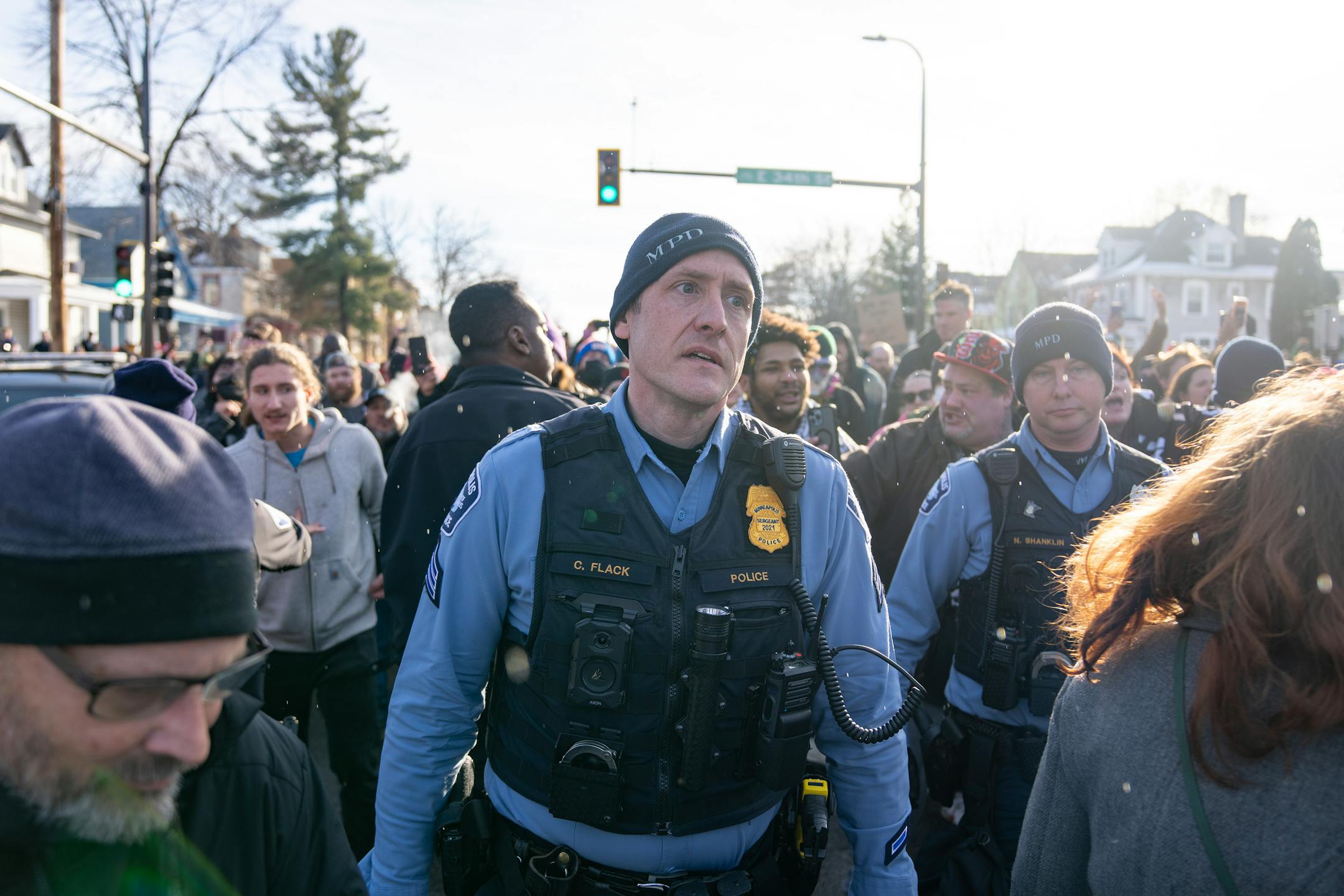
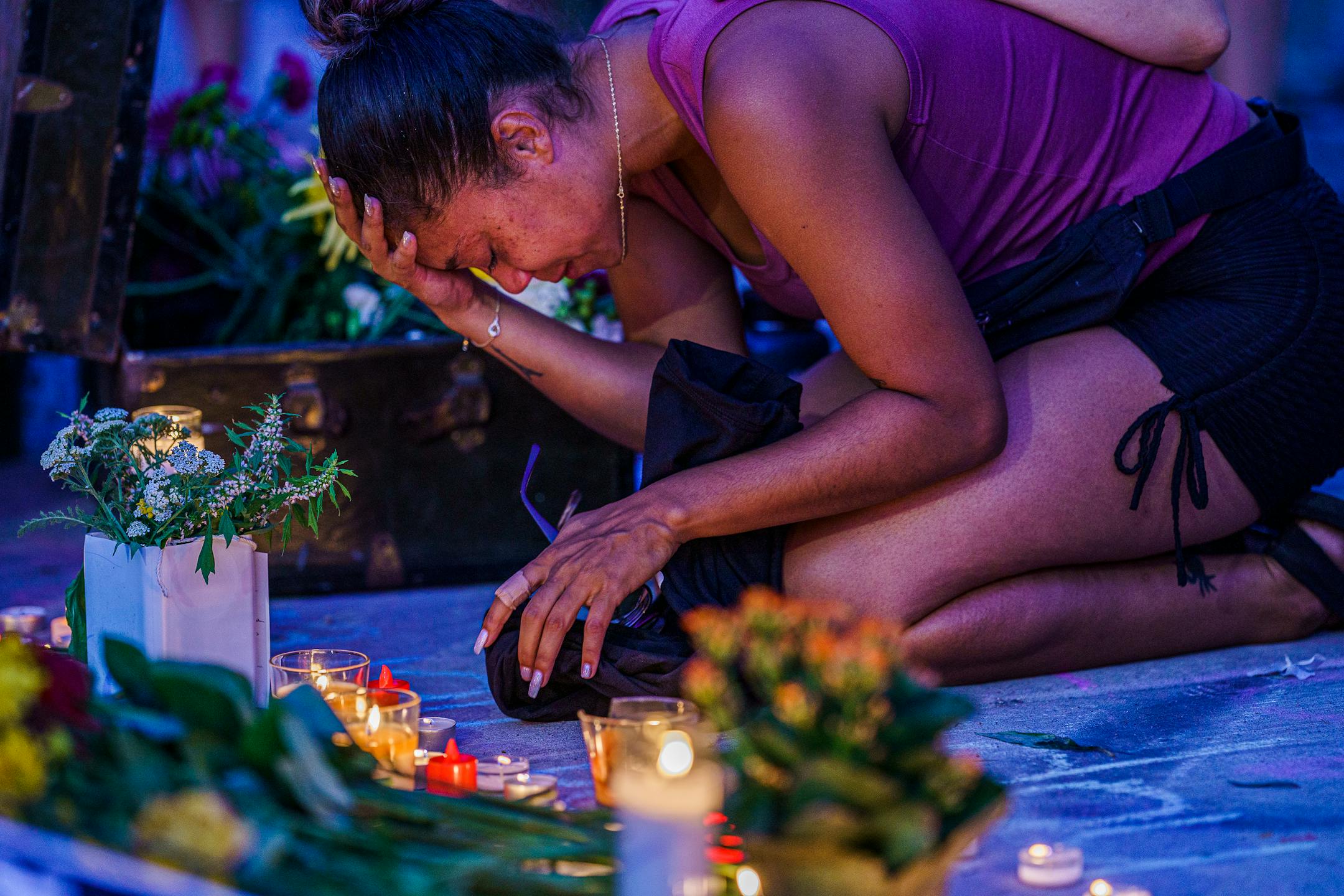
Minneapolis police officers have maintained a regular presence near the memorials for Renee Good and Alex Pretti, standing guard as mourners come to pay their respects each day.

Residents frequently approach to shake their hands — or envelop them in hugs — and talk about how the sweeping federal immigration crackdown has upended their lives.

It’s a scene that would have been nearly unimaginable six years ago.

Yet today, the aggressive tactics of masked federal agents are casting local law enforcement agencies in a new light as they struggle to rehabilitate their image and rebuild trust after George Floyd’s murder.
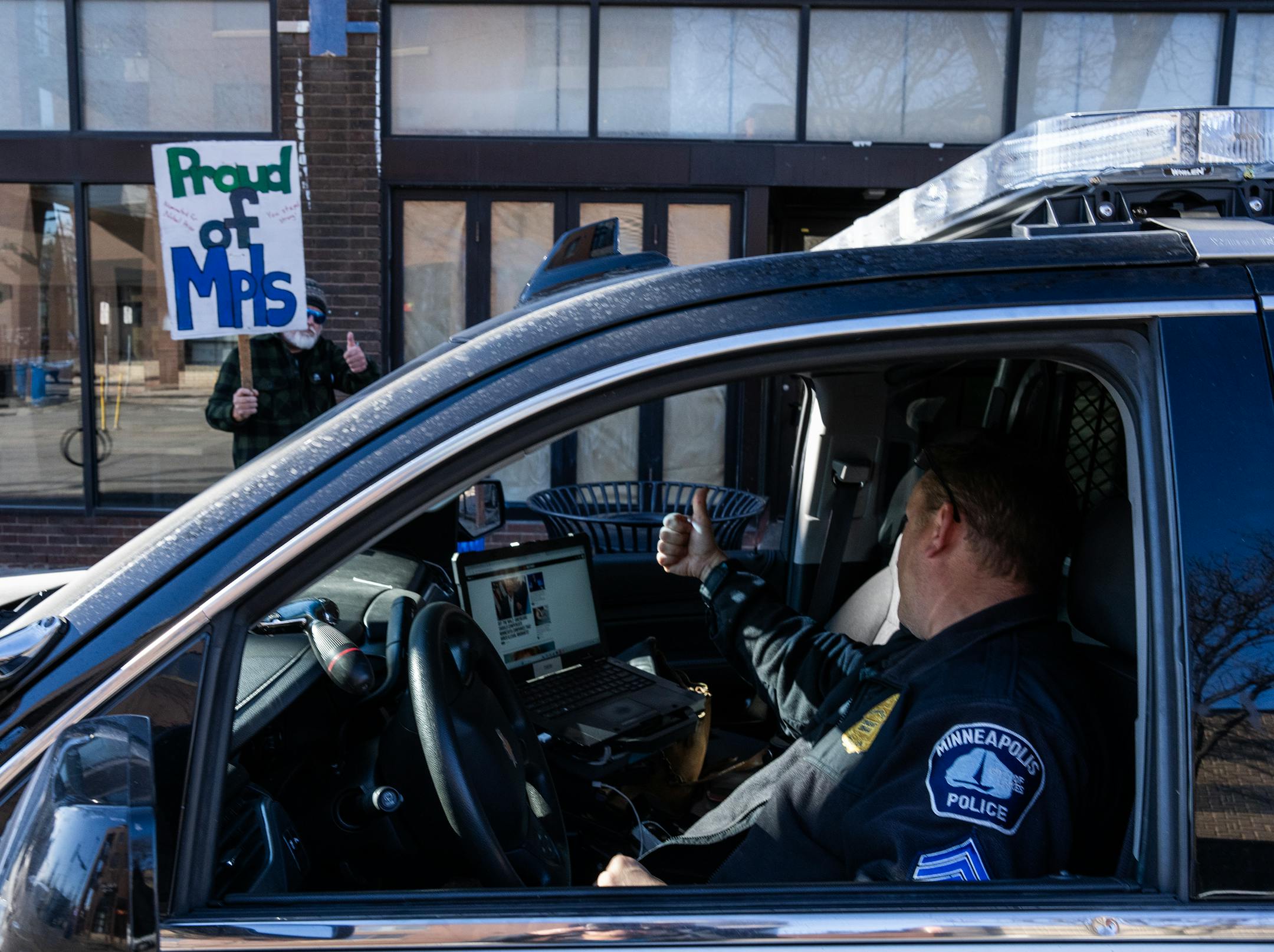
A passerby gives Minneapolis police Sgt. John Hawes a thumbs-up as Hawes stands guard in his squad car half a block from the Alex Pretti memorial site on Nicollet Avenue in Minneapolis on Feb. 13. (Richard Tsong-Taatarii/The Minnesota Star Tribune)

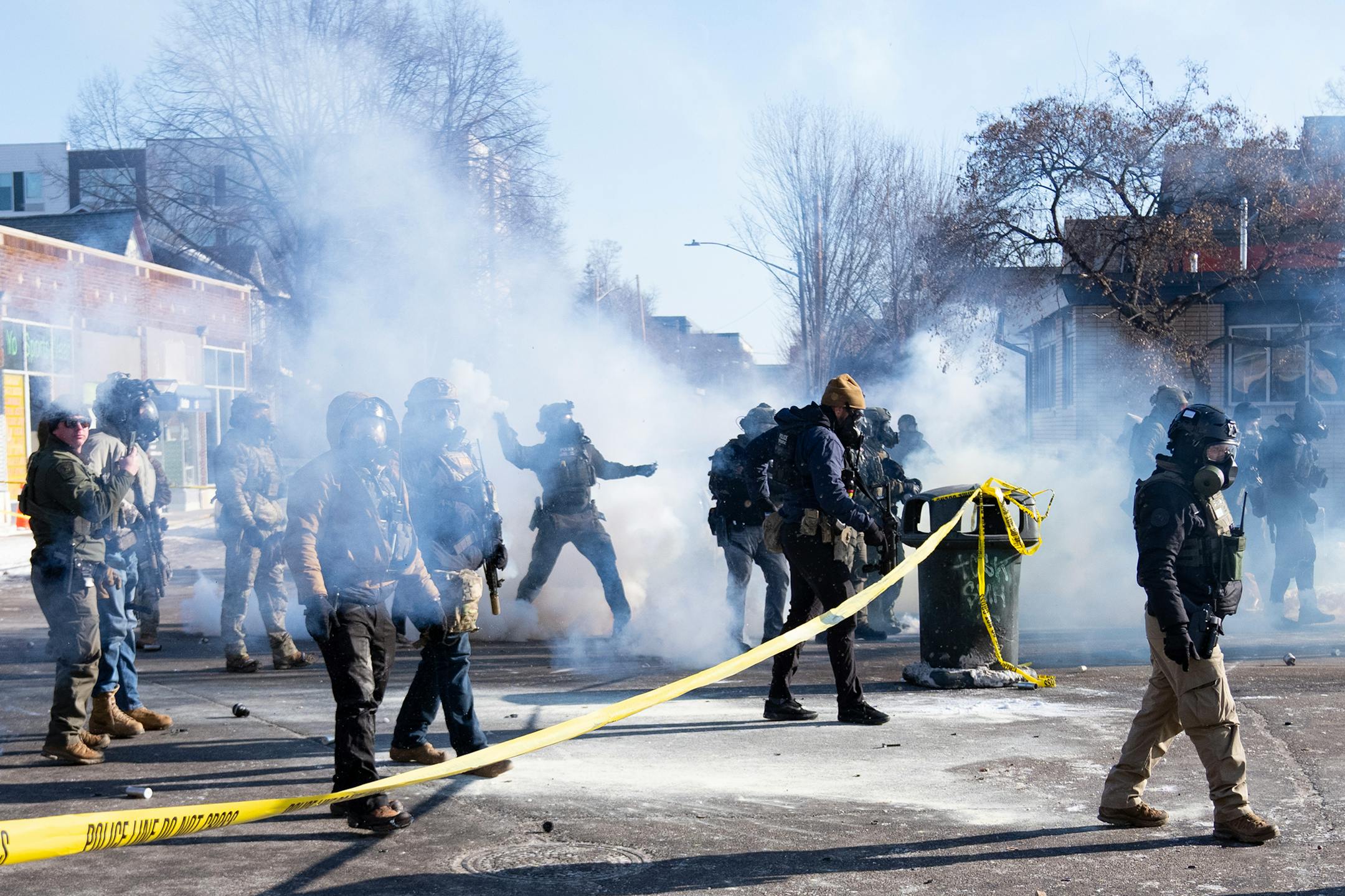
Some still approach officers with hostility and frustration over what they see as a continuation of state violence. Federal agents’ use of chemical munitions and recorded brutality toward observers has sparked a nationwide debate over the Trump administration’s harsh immigration enforcement tactics. Their behavior also marks a clear juxtaposition with city cops, who are readily identifiable, subject to a stricter code of conduct and beholden to state laws.

“We didn’t hear anything about our officers throwing people to the ground and pepper-spraying them — all the things we saw ICE doing,” said Cynthia Wilson, president of the Minneapolis NAACP. “It made us recognize we could have 600 jerks running around who don’t care about anything but themselves.”

Since 2020, community leaders say, the Minneapolis Police Department has made slow and steady progress reforming the embattled department. Those changes are revealed in big and small ways, from friendlier interactions on the street to a packed Target Center crowd erupting in applause for Chief Brian O’Hara at a recent Timberwolves game.

O’Hara is quick to point out in national media TV appearances that the only deadly shootings by law enforcement in the city this year have been at the hands of federal agents. Minneapolis police have not had a fatal encounter that resulted in major protest since the February 2022 killing of Amir Locke.
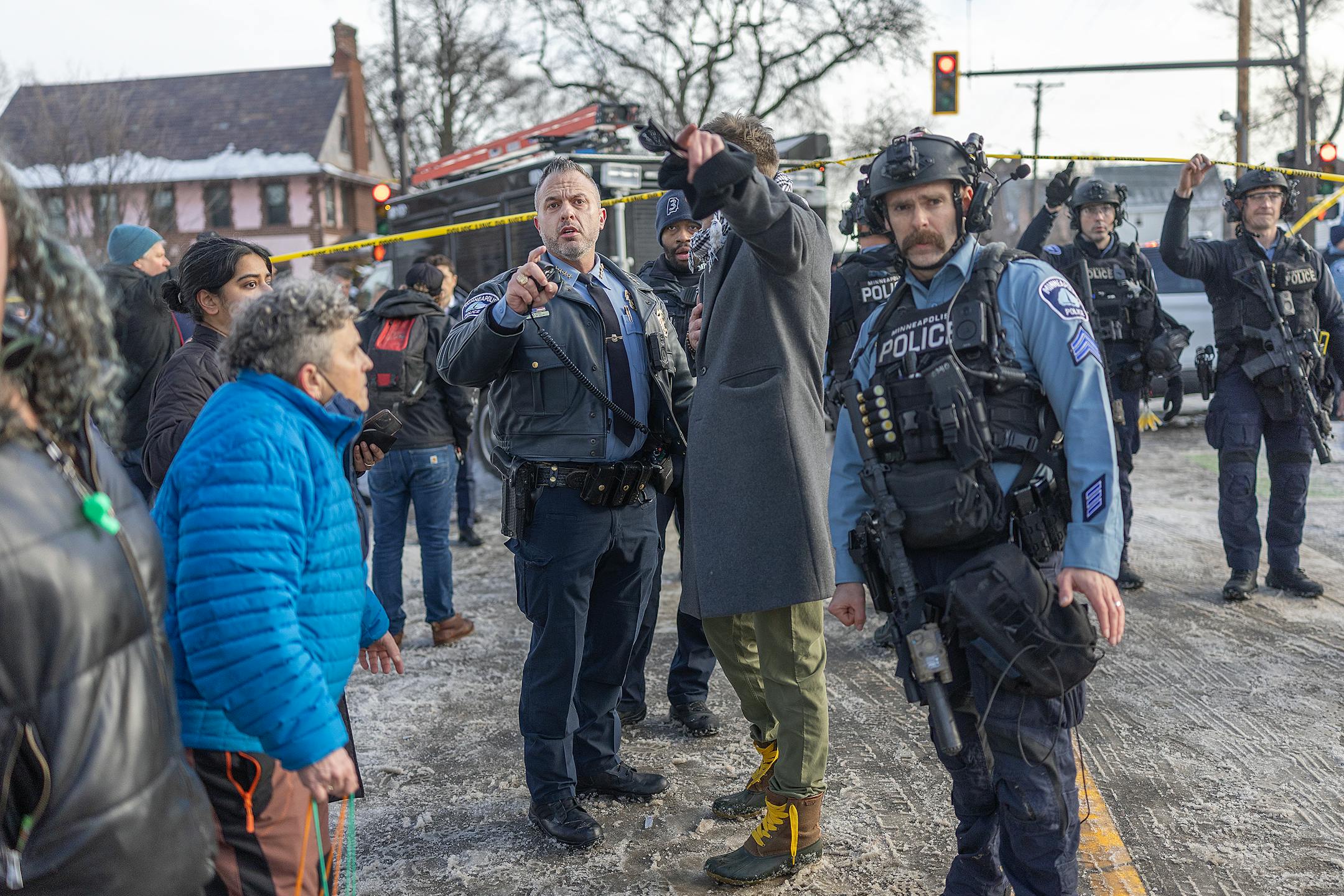
“I’m not saying everything was perfect,” Wilson said, but she noted that change was happening and could be felt in the way officers interacted with civilians. “I would give them a passing grade, for sure.”

Many now fear the combative actions of federal officers may erode whatever goodwill Minnesota authorities have managed to restore over the past five years. The federal agents’ methods, roundly criticized by fellow law enforcement leaders and civil rights organizations, threaten to undermine critical partnerships forged by local police, sheriff’s deputies and Minnesota state troopers.

In an interview, Minnesota Department of Public Safety Commissioner Bob Jacobson said he doesn’t want to “see local law enforcement suffer from that lack of trust” introduced by federal agents’ “bad tactics.”

“From watching the videos, I’m not seeing a lot of dignity and respect,” Jacobson said. “They don’t know Minnesota. They don’t know the people that are here.”

Minneapolis Police Chief Brian O'Hara, center, arrives at the scene after Renee Good was fatally shot on Jan. 7. (Elizabeth Flores/The Minnesota Star Tribune)

No-win situation

Across the Twin Cities, local agencies are grappling with how to navigate the Trump administration’s deeply unpopular immigration enforcement efforts.

Many departments have policies preventing them from cooperating with Immigration and Customs Enforcement (ICE), and view that work as outside the bounds of their own public safety mission. Yet it forces them to walk a tightrope at sometimes chaotic scenes where they are expected to de-escalate situations involving federal agents.

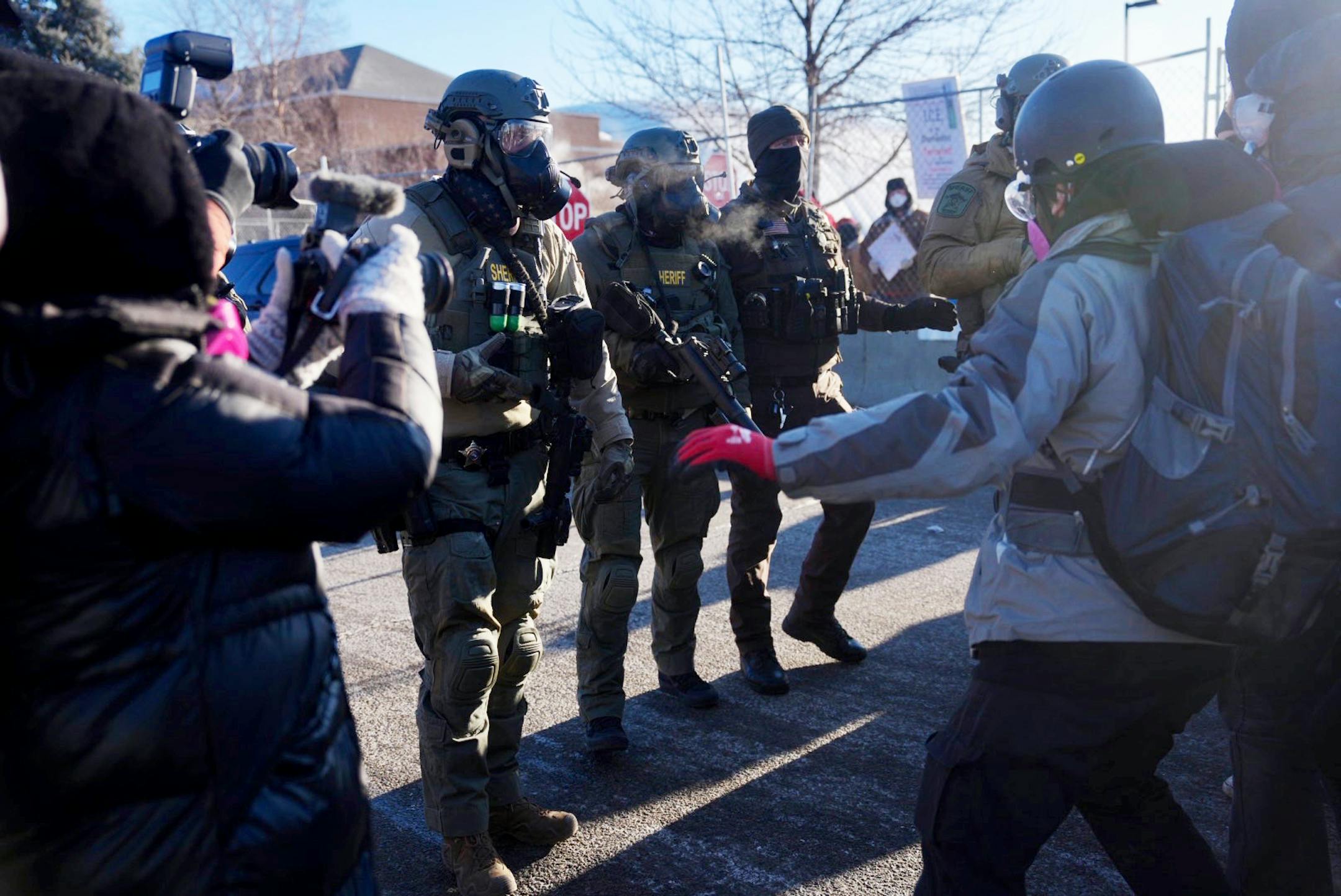
At the Whipple Federal Building, the government’s main detainment facility near Fort Snelling, Hennepin County sheriff’s deputies stationed outside have clashed with protesters who gather daily on the perimeter.

Those deputies are a constant target of the crowd’s frustration, regularly cursed out and accused of working with ICE.

Hennepin County Sheriff Dawanna Witt said because Whipple is in the agency’s primary patrol area, her deputies are required to keep the peace as long as protests continue.

“It’s not about protecting them,” Witt said, referring to ICE. “Our job is to protect everyone. ... I feel fearful that if we didn’t take a position there, that things would be much worse.“

However, Witt said the department would prefer not to maintain staff at Whipple long-term, because it is siphoning limited Sheriff’s Office resources from other parts of the county, where crimes are still occurring.

It also opens the department up to frequent criticism. On Jan. 31, Witt launched an internal investigation into deputies who were captured on video tackling and arresting protesters standing on a sidewalk filming outside Whipple. It marked the second straight day of public outcry about the treatment of observers by deputies.

“I do not tolerate anything less than professionalism,” Witt said. She said there is a system in place to hold deputies accountable, unlike with ICE agents, but she also denounced the verbal abuse deputies endure for hours each day.

Sheriff's deputies push back protesters that had moved onto the street in front of the Whipple Building on Jan. 30. (Renée Jones Schneider/The Minnesota Star Tribune)

Compared to sheriff’s deputies, MPD is less visible near regular ICE activity on the street.

Police respond to calls for aid by federal agents if there’s legitimate concern of escalation, but the department has also ordered officers out of situations where threats were unfounded or if MPD’s presence would further inflame tensions.

Local officers often face backlash regardless of their actions. If they show up to a volatile scene, they may be accused of collaborating with ICE. But when they don’t respond, they are lambasted for not protecting residents.

Assistant Minneapolis Police Chief Katie Blackwell said the department’s position amid the ICE surge “is probably the most challenging dynamics that we faced.”

“We’re trying to stay on the right side of the community’s hearts and minds that we’ve worked so hard to restore and repair and rebuild,” she said.

O’Hara warned rank-and-file officers that if they witness federal agents use excessive force on civilians and fail to intervene, they could be fired. Officers have not yet intervened, Blackwell said, because they have not directly observed such abuses.

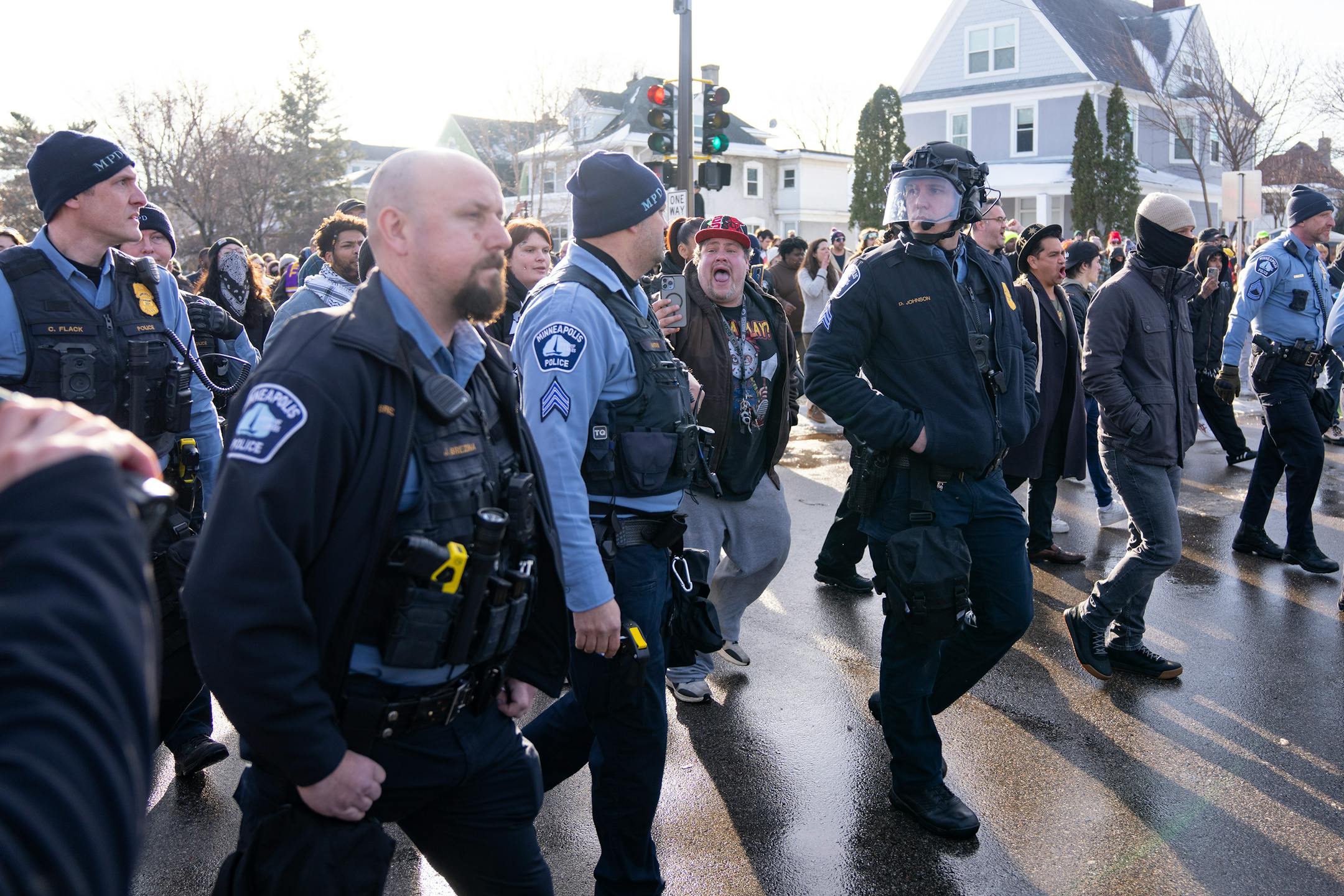
Typically, MPD responds to assist with crowd control after a critical incident — as they did following the killings of Good and Pretti last month. In both situations, ICE eventually fled the area, leaving local police to deal with the aftermath.

Minneapolis police officers at the scene where federal agents fatally shot Renee Good on Jan. 7. (Alex Kormann/The Minnesota Star Tribune)

On Jan. 7, shortly after an agent fatally shot Good in her vehicle, Minneapolis officers formed a line protecting the crime scene for hours. Distraught neighbors engaged them in dialogue, Blackwell recalled, sometimes shaking their hands and leaning in for hugs. Several of those people later held back a small group attempting to throw snowballs and ice chunks at cops.

“It’s heartwarming,” said Blackwell, a Minneapolis native. “It makes you more proud to wear this uniform.”

Still, after weeks of high tensions, Witt and MPD leadership fear that the mental toll may spark another exodus of law enforcement like that after Floyd’s killing.

At a private event Feb. 3, O’Hara told a crowd of lawyers that 10 officers filed for PTSD leave over a two-week period last month. The chief, who declined to speak to the Star Tribune for this story, said the department also burned through its allotted overtime budget for all of 2026 before the end of January.

“I’m concerned about holding the whole thing together, holding the department together. Because I know for a lot of them, it is taking them back to what they experienced in 2020 and the aftermath,” he said. “So it’s been a difficult time. And it seems like a no-win situation for the cops.”

Some people yell at Minneapolis police officers as they leave the scene where federal agents killed Renee Good. (Alex Kormann/The Minnesota Star Tribune)

‘Pointing the finger’

For protesters and press on the front lines of anti-ICE demonstrations, the atmosphere is similar to 2020 but amplified with an outside agency the target of outrage.

Tim Evans, a local freelance photographer, said the use of force by federal agents has been “so aggressive and consistent and arbitrary at times” that for local agencies, “it’s hard not to look good by comparison.”

“I think [local law enforcement] are trying to be different and separate in that they don’t want to be the story du jour,” he said. “They don’t want to be looked at as the agency that’s effectuating this enforcement.”

He has observed restraint by local law enforcement during the ICE surge. But he said after an ICE raid in St. Paul in November, police officers there used aggressive tactics on him and other photojournalists. The day federal agents killed Pretti, they used an excessive amount of tear gas, Evans said, worse than anything he experienced in 2020 and 2021 following Floyd’s murder and the Brooklyn Center police killing of Daunte Wright. State troopers and Minneapolis police arrived later to help disperse the crowd, deploying even more gas.

MPD and troopers also deployed tear gas alongside federal agents following a non-fatal ICE shooting on Jan. 14 in north Minneapolis.

People protest near the Brooklyn Center Police Department in response to the fatal police shooting of Daunte Wright, Wednesday, April 14, 2021 in Brooklyn Center, Minn. Former Brooklyn Center police officer Kimberly Potter was charged with second degree manslaughter after the shooting. ] RICHARD TSONG-TAATARII ¥ Richard.Tsong-Taatarii@startribune.com
After the shooting of Daunte Wright in 2021, protesters gathered outside the Brooklyn Center Police Department. (Richard Tsong-Taatarii/The Minnesota Star Tribune)

Evans was part of a class action lawsuit against law enforcement, including deputies who attacked him outside the Brooklyn Center precinct. A settlement was reached in September.

“The behavior is more moderated today than it was in 2020 and 2021,” he said. “But that doesn’t mean the abuses aren’t happening.”

Federal agents try to clear out protesters with tear gas and other crowd-control munitions on Nicollet Avenue on Jan. 24. (Alex Kormann/The Minnesota Star Tribune)

Activists in the Twin Cities invoke the names of residents killed by local law enforcement — Floyd, Wright, Locke, Philando Castile — in the same breath as Pretti and Good. A fence in a south Minneapolis neighborhood is covered with posters depicting those killed by local law enforcement the past decade, the majority Black and brown men.

“Everything that was happening then is the same thing that’s happening now. Just a different badge,” said Minneapolis resident Courtney Armborst. “It just fully demonstrates this is a systemic issue, that you’re all in cahoots, but you all are pointing the finger at each other.”

She led days of protests in Uptown following the killing of Winston Smith in 2021 by sheriff’s deputies with a U.S. Marshals task force, during which she witnessed a driver crash into a crowd of protesters, killing Deona Marie Knajdek. It led to more violent clashes between mourners, police and state troopers. She said that history makes it difficult to trust now.

Courtney Amborst grieved for her friend Deona M. Knajdek whom she had known for 10 days since the beginning of the Winston Smith protests.
Courtney Armborst mourned the death of Deona Knajdek, killed during protests after the death of Winston Smith. (Richard Tsong-Taatarii/The Minnesota Star Tribune)

The deputies who killed Smith after he pulled a gun have never been publicly identified, which Armborst said is eerily reminiscent of ICE agents now — masked and unidentified.

Evans said local officers stand out from federal agents simply because they aren’t wearing masks.

“I’m sure there are people who have more confidence and trust in those agencies, and in many respects they should,” he said, “because they are doing simple things like not masking their identity constantly.”

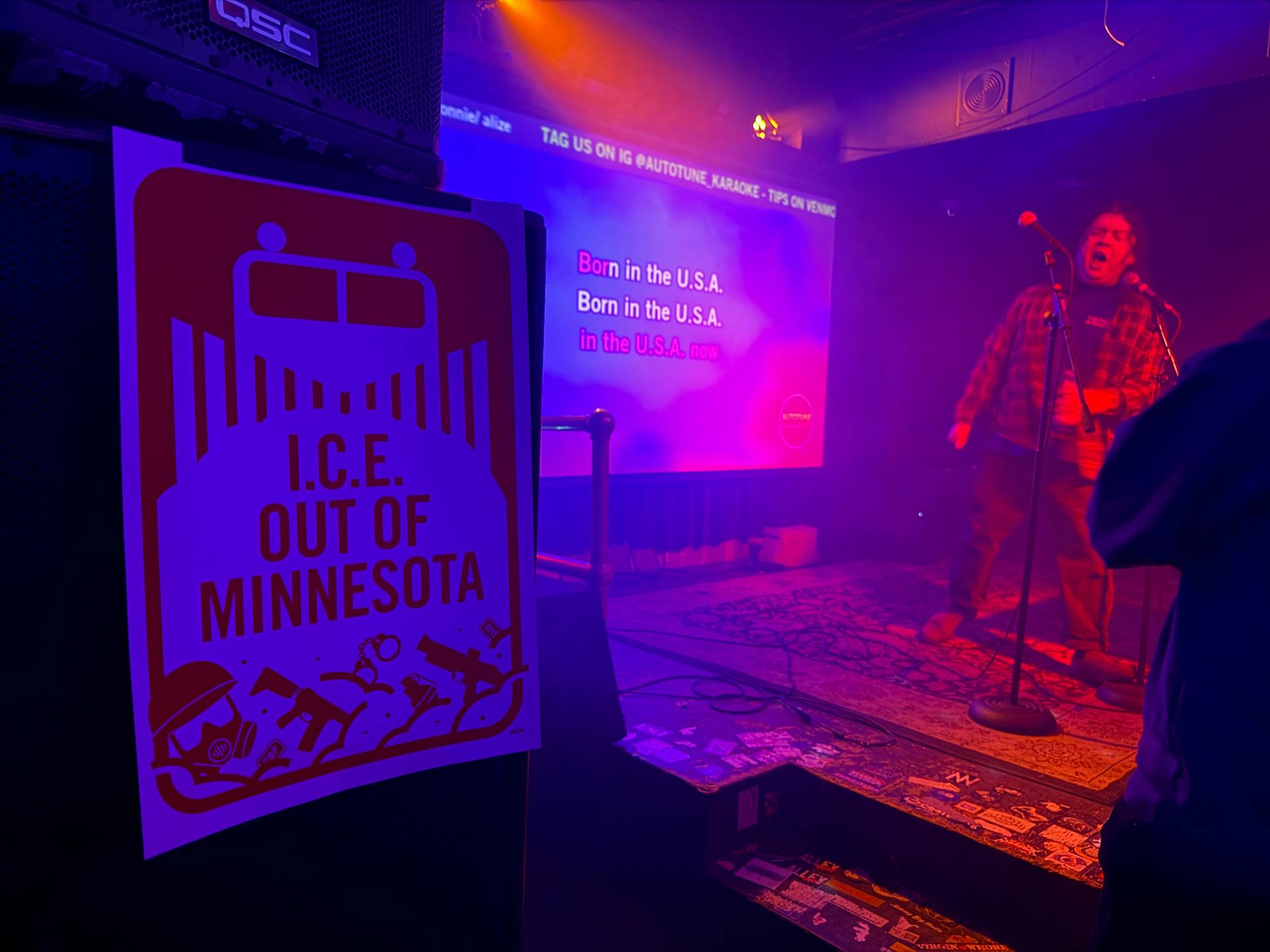
Julian Flores dedicated his rendition of “Born in the USA” to former Border Patrol Cmdr. Greg Bovino during a recent karaoke night at Mortimer's Bar in Minneapolis. (Kim Hyatt/The Minnesota Star Tribune)

After ICE

It was karaoke night at Mortimer’s Bar late last month, and Julian Flores dedicated his rendition of “Born in the USA” to former Border Patrol Cmdr. Greg Bovino, who earlier that day was removed from his post in Minneapolis.

At the end of the song, Flores told the crowd that he didn’t care whether they were born in this country or not. “You’re all welcome here at Mortimer’s karaoke,” he said.

Flores, a teacher at Minneapolis charter school who protests against ICE on the weekends, sat in a booth at the local dive bar and talked about how strange it felt to direct his rage at Bovino. In his eyes, the feds are a temporary replacement for local agencies like MPD, historically the target of protests after killings involving officers. He wondered whether it’s “just back to regular programming” when the surge ends.

“Maybe there will be less killings, but at the same time, when they leave, have we done anything to address MPD? Have we actually moved the needle in any way that’s good?”

Two weeks later, on Feb. 12, White House border czar Tom Homan announced a drawdown of federal agents and the end of Operation Metro Surge. Local leaders greeted the news with cautious optimism.

Community Safety Commissioner Toddrick Barnette said fewer federal agents in town means there’s “less potential for something bad to happen.”

Their presence forced the city — and local officers — to navigate a complex, unprecedented situation. MPD approached highly emotional situations with compassion, Barnette said, evidence that years of training and de-escalation efforts have paid off.

“They’ve treated people with dignity,” he said. “I think what you’ve seen from the federal law enforcement agents is the opposite of that.”

about the writers

about the writers

Kim Hyatt

Reporter

Kim Hyatt reports on North Central Minnesota. She previously covered Hennepin County courts.

See Moreicon

Liz Sawyer

Reporter

Liz Sawyer  covers Minneapolis crime and policing at the Star Tribune. Since joining the newspaper in 2014, she has reported extensively on Minnesota law enforcement, state prisons and the youth justice system. 

See Moreicon