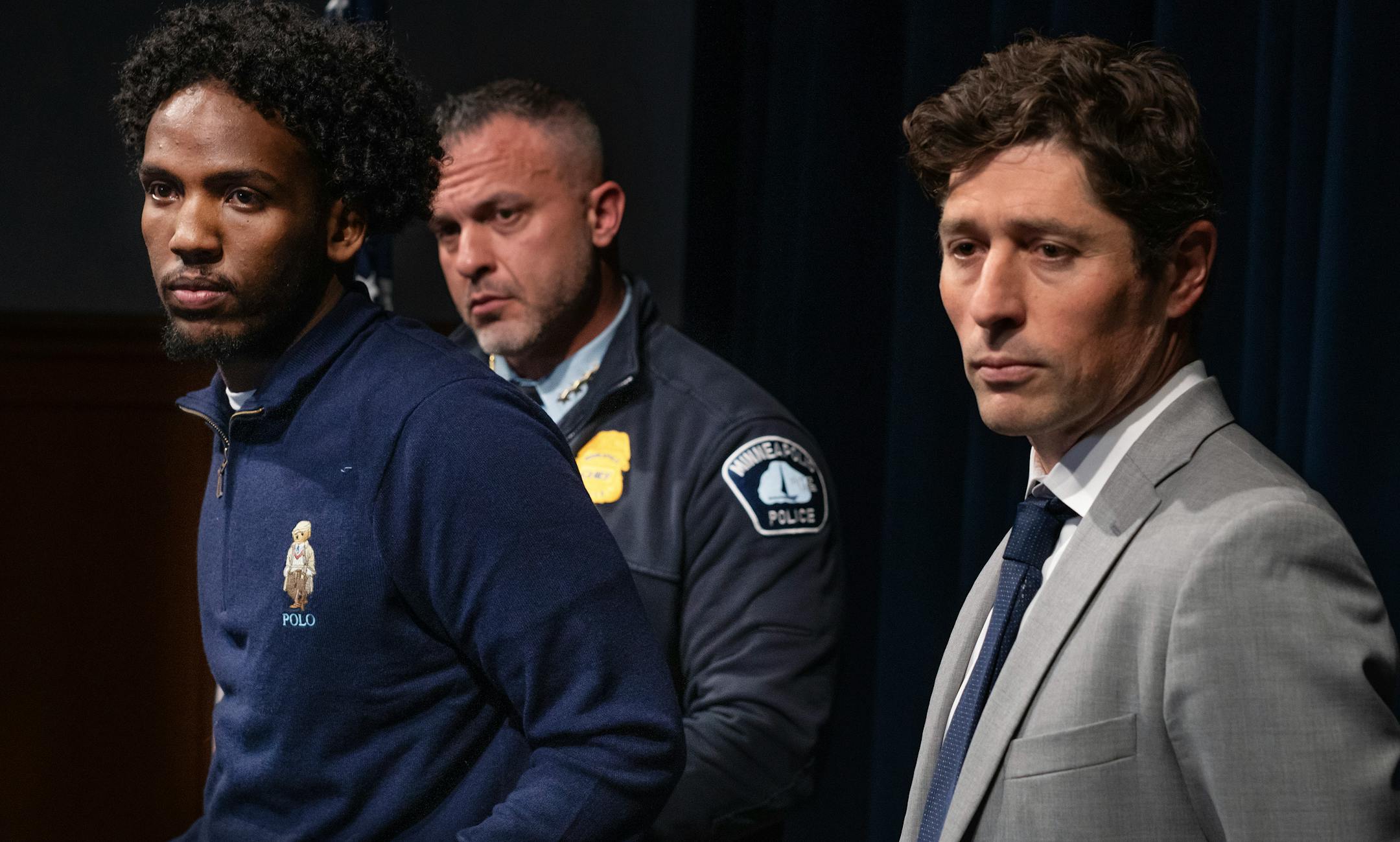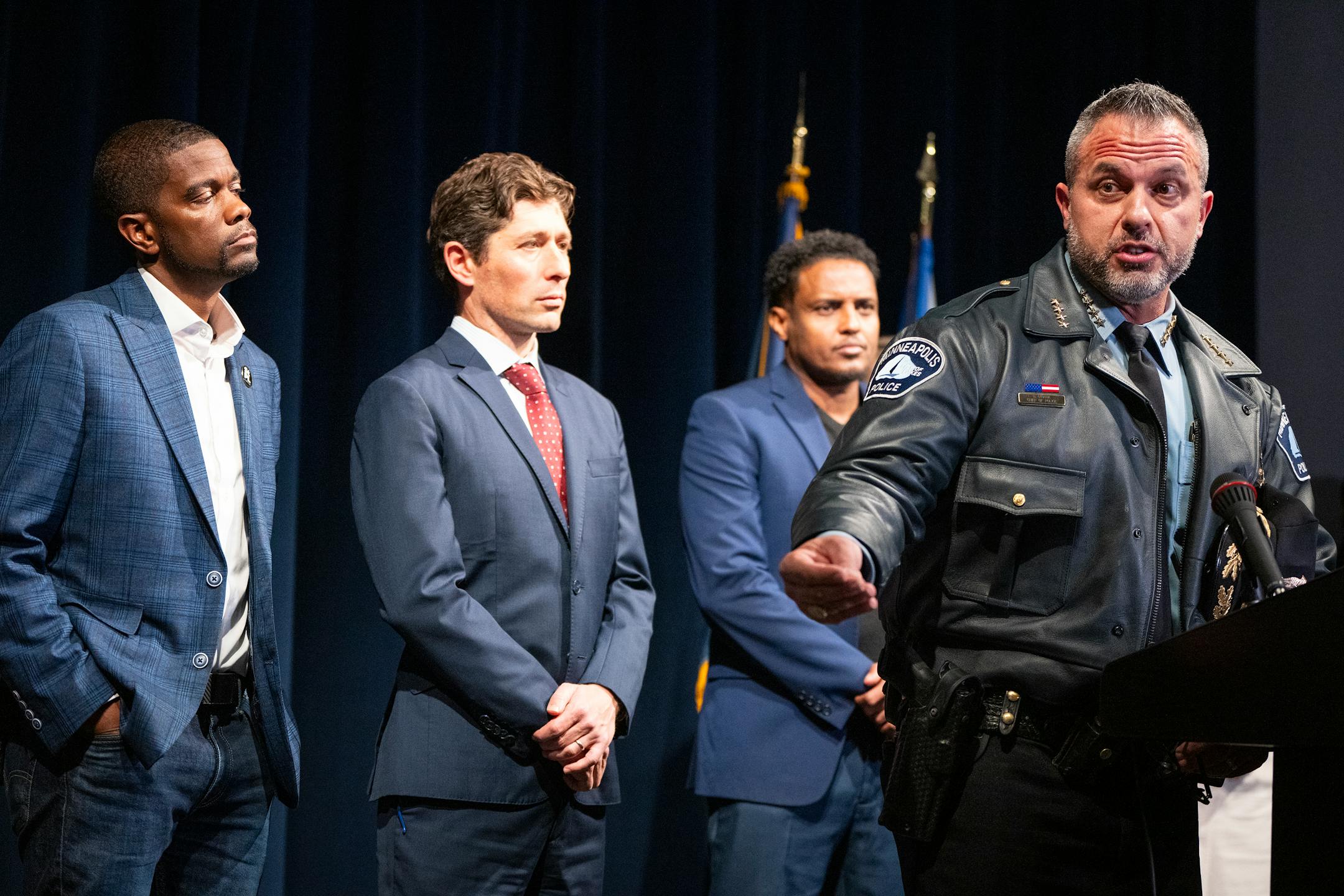
Hours after news of an impending federal immigration crackdown sent shock waves through the Somali community, Chief Brian O’Hara stood in solidarity with vulnerable residents.
At a news conference, he reiterated that his officers do not cooperate with immigration enforcement and that his agency is not notified in advance about ICE raids. He also encouraged people to call 911 if they questioned whether masked men grabbing people on the street were, in fact, law enforcement.
The backlash was swift.
People mocked O’Hara on social media for what they interpreted as permission to call the police on the police. Tom Homan, the Trump administration’s border czar, decried his comments as “shameful” on Fox News, saying: “He oughta put his badge in the desk drawer and walk away.”
Amid President Donald Trump’s attacks on the Somali diaspora and ramped-up deportation efforts in the Twin Cities, O’Hara has emerged as among the most outspoken law enforcement leaders in the nation condemning ICE tactics. Other chiefs have opted to side-step politics.
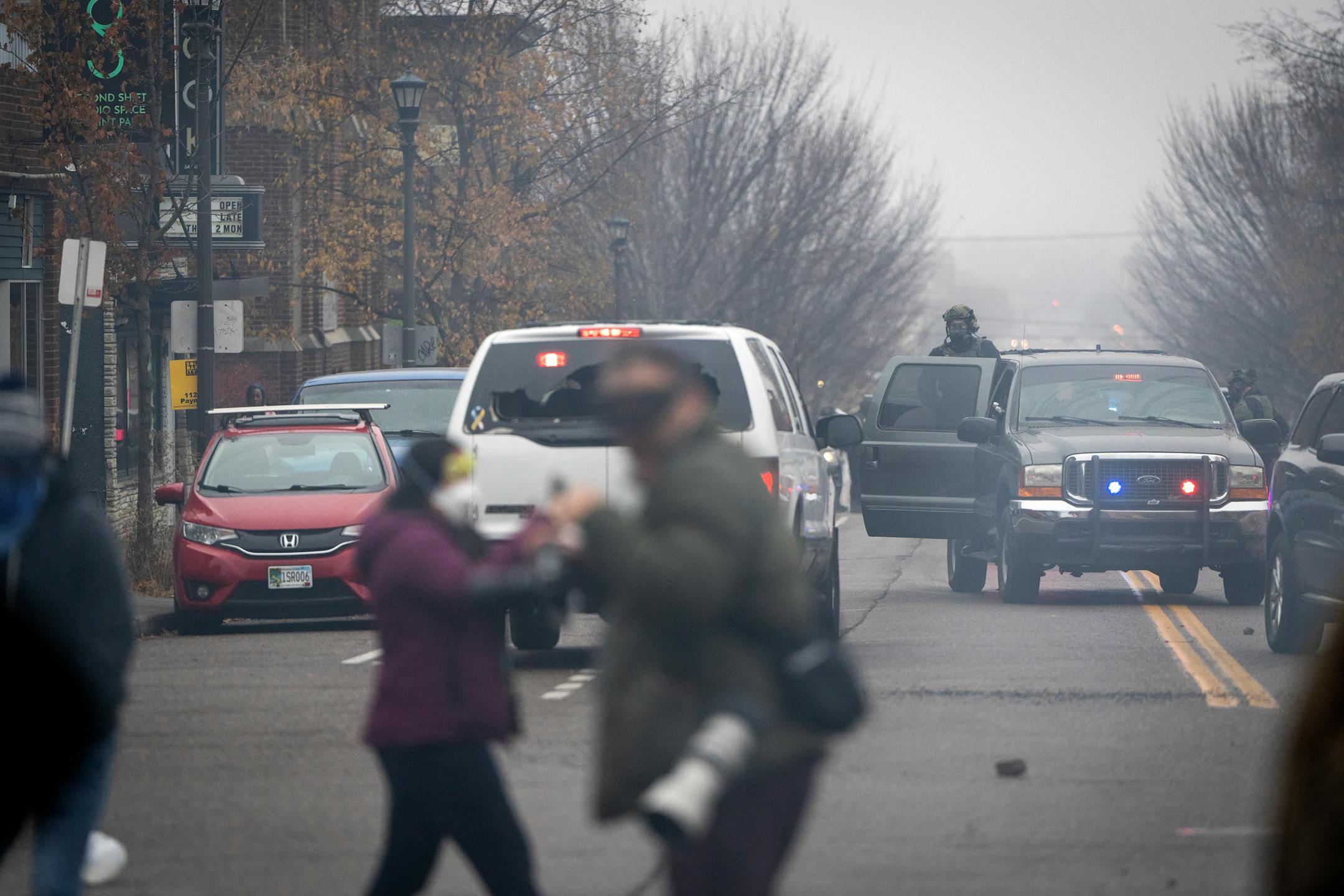
Across the Twin Cities, local police officials are grappling with how to navigate immigration enforcement. Many departments have policies preventing them from cooperating with federal immigration authorities, and they view that work as outside the bounds of their public safety mission. But that is opening them up to criticism from some corners where they typically enjoy support and creating difficult decisions about when to intervene to keep the peace when protesters clash with ICE agents.
Avowed law enforcement supporters, some of whom proudly post Blue Lives Matter flags in their bios, have berated police departments online for refusing to partner with ICE. Meanwhile, the presence of local cops on the perimeter of an immigration operation can inflame tensions and lead to accusations of collaboration.
The balancing act is especially delicate in Minneapolis, a city that has been struggling to rebuild community trust since the murder of George Floyd.