What THC drinkers in Minnesota should know about the U.S. ban

Don’t panic, THC makers and sellers say, as federal prohibition of the popular hemp drinks is still a year off and will be fought.

The Minnesota Star Tribune
November 30, 2025 at 12:00PM
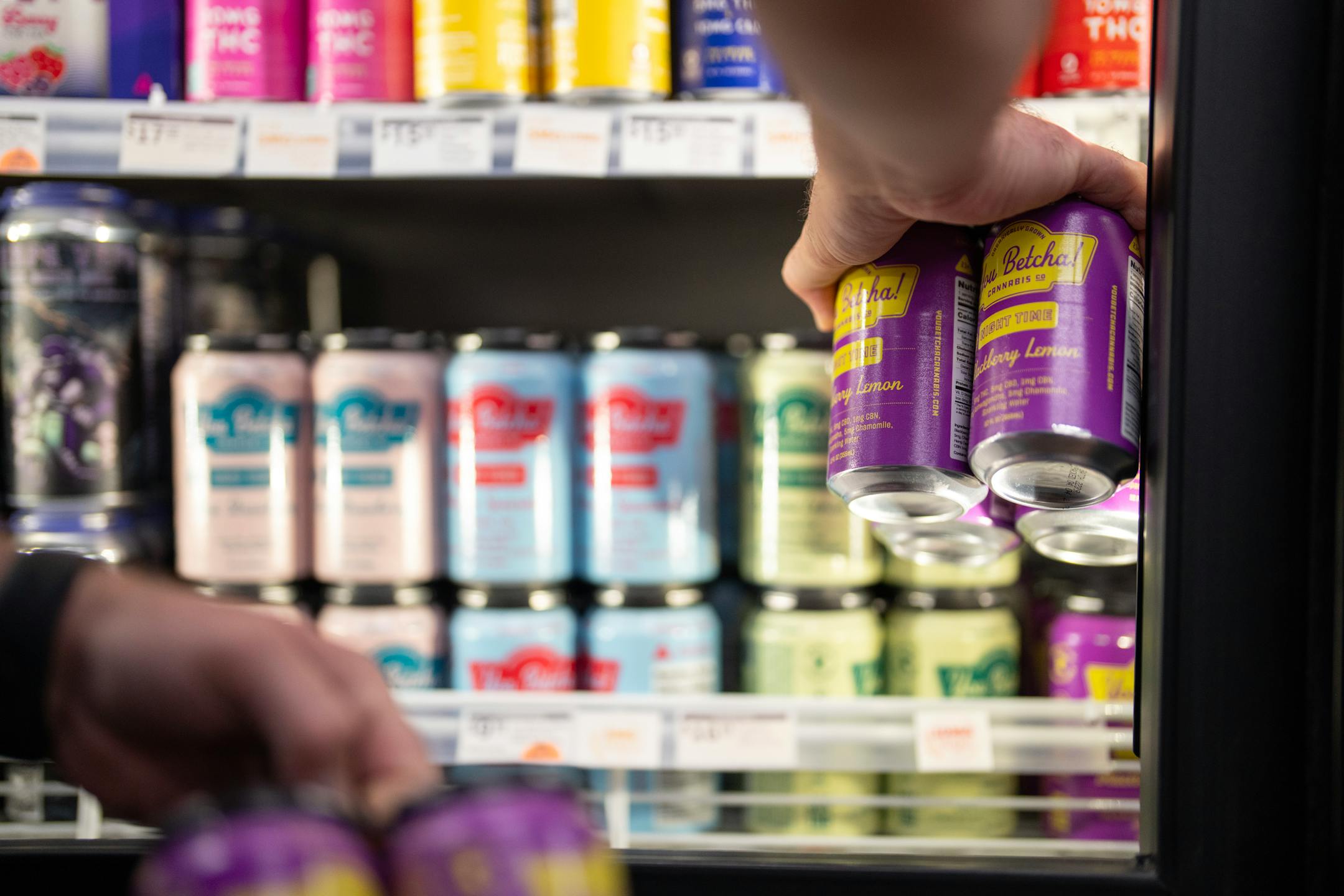
A sales representative restocks THC-infused beverages in a cooler at Elevated Beer Wine & Spirits in Minneapolis, one of many stores that will continue to sell hemp drinks despite a pending ban nationwide. (Alex Kormann/The Minnesota Star Tribune)

THC drinks in Minnesota could go out the same way they came in: fast and unexpectedly.

Legalized by a state bill in 2022 — which famously caught some unaware Minnesota legislators off guard on what they voted for — the marijuana-adjacent beverages are due to be prohibited in a similarly surprising way across the country next fall.

A federal ban on both hemp-derived beverages and edibles was tacked onto the bill U.S. Congress passed last month to stop the government shutdown. The move effectively bans hemp products with more than 0.4 milligrams of THC per container. In contrast, Minnesota allows edibles containing up to 5 milligrams of THC per serving and beverages containing up to 10 milligrams.

It all has Minnesota breweries feeling like they’re being kicked when they’re down.

(Sign up for Nuggets, our free weekly email newsletter about legal cannabis in Minnesota.)

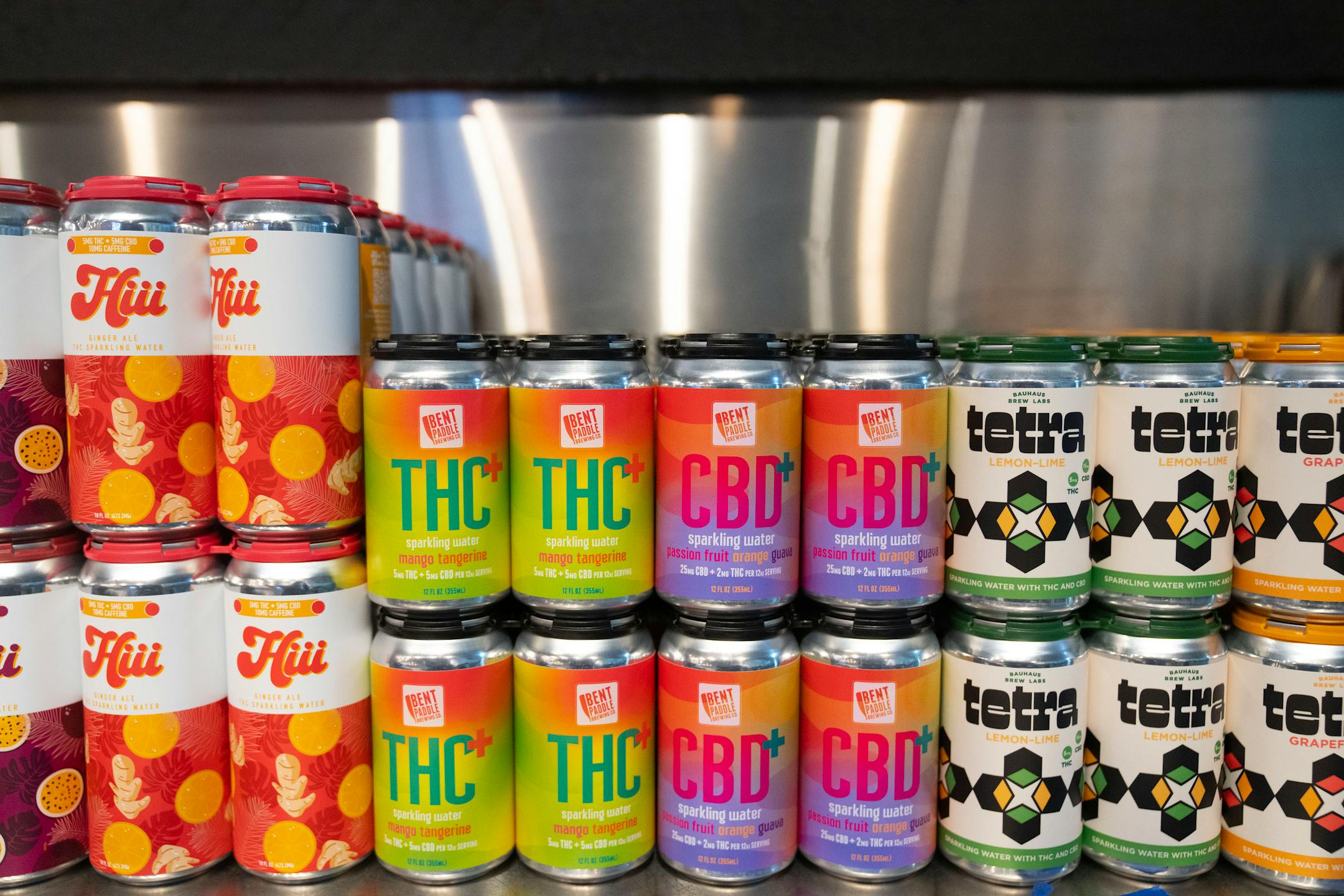
Facing slumping sales from declining alcohol consumption in recent years, beer makers, cideries and other beverage makers around the state have come to heavily rely on THC drinks for revenue. Some breweries, including big Minneapolis craft-beer mainstays Surly and Fulton, counted THC sales as nearly equal to beer sales in recent years.

“It was a godsend to Minnesota breweries at a vital time,” said Fulton CEO Ryan Petz, “and it really was the consumers who led the way and asked for it.”

A big boost to the beverages’ popularity locally came from their proliferation in retail shops, with most liquor stores and even Target and Cub Foods in Minnesota agreeing to stock the relatively low-dosage THC drinks.
Dan Justesen, founder of Utepils Brewing and its THC drink brand Bandwagon, said, “I think a lot of people picking up THC cans at a liquor store or grocery store still aren’t comfortable going into a dispensary. Which is what they’re going to have to do if this doesn’t change.”

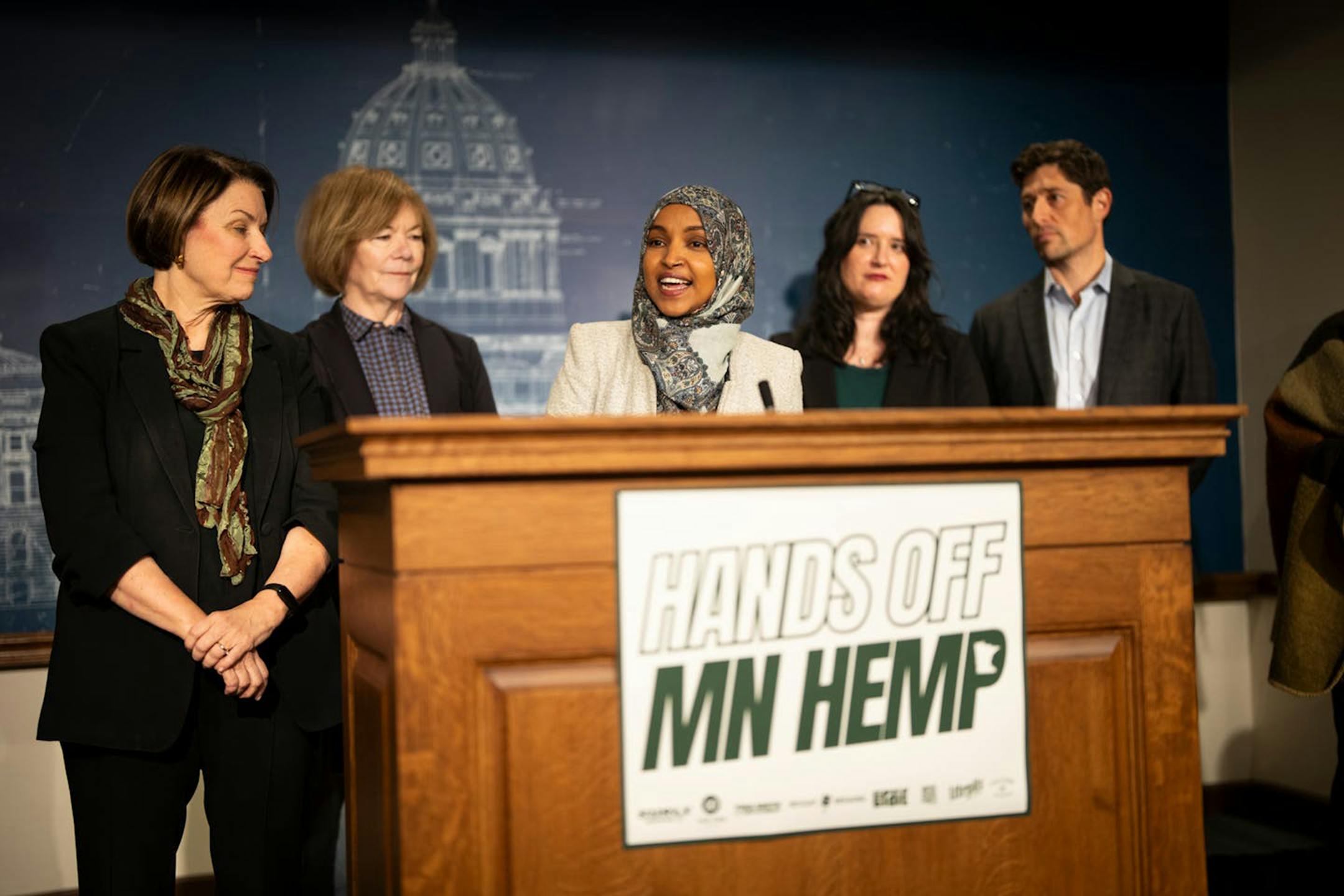
Justesen, Petz and several other brewery operators spoke out at a news conference at the State Capitol last week, where both of Minnesota’s U.S. senators and U.S. Rep. Ilhan Omar denounced the ban. All pledged to lobby over the coming year to keep THC products legal.

U.S. Rep. Ilhan Omar spoke at a Nov. 24 news conference at the Minnesota State Capitol addressing the pending federal ban on THC drinks and other hemp products. (Renée Jones Schneider/The Minnesota Star Tribune)

We know where Minnesota brewers and now some of our lawmakers stand on the issue. But what should consumers look for? What can Minnesota THC drinkers expect in the coming year leading up to the ban?

Here are some facts that hemp-beverage drinkers in Minnesota will likely want to know, along with opinions from experts on the subject.

THC products are still being widely produced.

The federal ban isn’t due to go into effect until Nov. 12, 2026. Breweries and other makers of the popular drinks and edibles are still making their product in the meantime.

“We’ll keep making it until we can’t,” Indeed Brewing’s chief business officer Ryan Bandy said of the Minneapolis company’s popular THC products, which take about six weeks from start to store shelves (shorter than most beers). “There’s some flexibility there, and no reason to stop making it while we figure all this out.”

Said Justesen at Utepils, “People don’t need to start stockpiling it in their basement. Not yet.”

Retailers are going to keep selling them, too.

Minnesota liquor store owners were also part of the news conference at the capitol, and they seemed as committed to THC products as the makers were. Melissa Surdyk, co-owner of Surdyk’s Liquor & Cheese Shop in Minneapolis, echoed brewers’ contention that shop owners are listening to consumers on this front.

“Customers tell us they enjoy these products because they help them focus, feel motivated or help them unwind,” Surdyk said, “and because they fit naturally in their daily routines.”

If it does come down to stockpiling, the cans have a decent shelf life.

Some Minnesota breweries were so, um, green on the THC beverage front at first, they mistakenly used certain types of aluminum cans in which the potency essentially bled out too fast. Those problems were quickly resolved, though, and now most makers of THC drinks say the beverages are good for well over six months and oftentimes up to a year.

A more apt shelf-life comparison than beer is soda, since sugar is a common ingredient in hemp drinks that can go bad. More sugar equals less shelf life. Also, THC drinks with real fruit in them might go stale a bit sooner.

Cans of THC infused beverages from various Minnesota breweries first hit store shelves in late 2022. (Alex Kormann/The Minnesota Star Tribune)

Your voice could actually count here.

The state’s THC product makers seem to agree that U.S. Congress members who voted for the ban simply were unaware of how popular THC products had become — and also how much they have benefited farmers and added hundreds of rural and urban jobs. Look for a serious lobbying and educational effort next year to try to overturn the ban.

“This isn’t just stoners,” said Justesen. “This is every-day, hard-working people who’ve come to enjoy [a THC drink] because it relaxes them or helps them sleep or whatever. So I think there can be real momentum here.”

Even if you don’t get formally involved, Indeed’s Bandy added, there’s still a way to support your favorite locally made THC product: “Just keep buying it,” he said. “That will certainly help bolster the effort.”

State-legalized marijuana will still be available.

The federal bill that passed in October was intended to close a loophole created by the Farm Bill of 2018, which legalized hemp on a federal level, not marijuana. If a cannabis plant or product contains 0.3% or less Delta-9 tetrahydrocannabinol (THC, the compound that gives users a high), then it was considered hemp, per that 2018 bill.

Minnesota legalized recreational marijuana in 2022, and licenses are now starting to trickle out to a growing number of dispensaries to sell “real weed” within the state.

“The dispensaries are popping up all over and are fine,” said Justesen, “but I think those are very different customers from the ones we’re trying to serve.”

about the writer

about the writer

Chris Riemenschneider

Critic / Reporter

Chris Riemenschneider has been covering the Twin Cities music scene since 2001, long enough to earn a shoutout from Prince during "Play That Funky Music (White Boy)." The St. Paul native authored the book "First Avenue: Minnesota's Mainroom" and previously worked as a music critic at the Austin American-Statesman in Texas.

See Moreicon

More from Eat & Drink

See More
Two hash browns with ginger scallion sauce.
Joy Summers/The Minnesota Star Tribune

Those congee hash browns really do live up to the hype. Plus, unforgettable tortillas, obsession-worthy caramel rolls and dunking sauces.

Cafe Lurcat's bar area. ] (AARON LAVINSKY/STAR TRIBUNE) aaron.lavinsky@startribune.com Restaurant review: Cafe Lurcat, a revisit to the 15-year-old D'Amico flagship on Loring Park reveals disappointments and happy surprises. We photograph the restaurant on Friday, April 8, 2016 in Minneapolis, Minn.
card image