Yuen: Has Trump actually ever met a Somali Minnesotan?

The president’s comments about Somali Americans aren’t just racist. They’re wildly disconnected from the reality.

Columnist Icon
The Minnesota Star Tribune
December 4, 2025 at 9:16PM
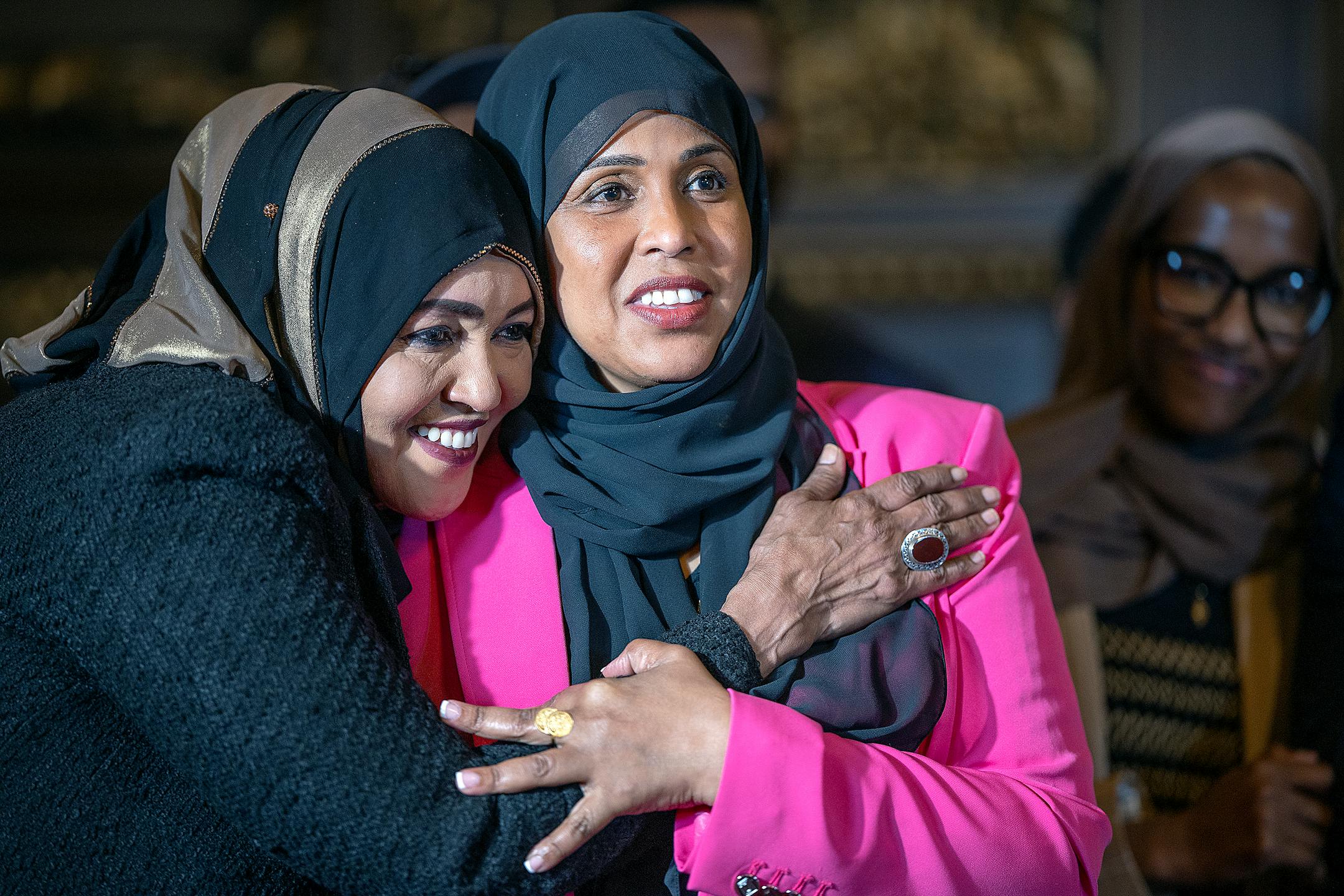
Hodan Hassan, then a DFL legislator from Minneapolis, received a hug after Gov. Walz signed the pay minimums for ride-hail drivers into law at the State Capitol in St. Paul last year. (Elizabeth Flores/The Minnesota Star Tribune)

Has Donald Trump even met a Somali person?

The president’s remarks about Somali Americans this week were vile and racist. He referred to them as “garbage,” which was an astonishing attempt to dehumanize them. But his comments also rang comically untrue for anyone who’s familiar with the community.

“He called us lazy,” said Hodan Hassan, in disbelief. “I’m sorry — do you want to meet my mother?”

Hassan, a former DFL state legislator from Minneapolis, couldn’t help but laugh. She was reminded of all the times as a kid when her mom roused her out of bed at 6 a.m. on the weekends for no good reason. Most Somali Minnesotans I know are like that — disciplined, with a propensity to hustle. Their participation rate in the labor force is higher than the state average. Trump claimed they “contribute nothing,” “these aren’t people that work” and “they do nothing but bitch.”

That’s absurd. We in Minnesota, home to the nation’s largest Somali population, have a different reality. We’ve seen how Somali Americans have strengthened our communities. They have revitalized our main streets, educated our rambunctious kids, looked after our aging parents and heightened our spice tolerance.

On Wednesday, U.S. Rep. Tom Emmer erroneously stated that 80% of the crimes in Minnesota and the Twin Cities were committed by local Somalis. While he parrots Trump’s cruel hyperbole, it’s worth noting he once vigorously defended Somali Minnesotans who lived in his district. About a decade ago, the Minnesota Republican noted that Somali immigrants are “some of the fastest-assimilating populations that we’ve had.”

“When you move to a community, as long as you are here legally, I am very sorry but you don’t get to slam the gate behind you and tell nobody else that they’re welcome,” he said at a town hall meeting where St. Cloud residents pushed to ban Muslims from moving to their city. “That’s not the way this country works.”

The enormous fraud scandals that have since rocked our state, perpetuated by a sliver of the local Somali population, should enrage all of us. But these crimes should not hijack the reputation of the entire community, and people like Emmer know that.

I asked Hassan what Somali Americans needed now. Her plea to Minnesotans was simple: Tell the world about the Somalis you know. A kind co-worker, a generous neighbor, or “a doctor or nurse who went above and beyond to heal you,” she said.

“Please share your stories. It shows we have allies. Those small acts of kindness amplify.”

OK, here goes. I interacted with very few Somali Minnesotans before I started reporting on the community in 2008 after some young men had traveled to their parents’ homeland to join the terrorist group al-Shabab.

While many Somalis here were reluctant to talk about such a sensitive topic, I also encountered dozens of people who bent over backward to make sure I got a complete and accurate story. They did not sugarcoat the problems in their community. Over hours-long conversations over coffee and sambusa, they shared with me their culture, history and a desire to root out the truth.

“We’ve got to help this girl,” one college student said to his friends, a testament to both his generosity and my cluelessness at the time.

Over time, some of the Somali people I interviewed or mentored became dear friends. One brought me a pan of tiramisu after the birth of my first child. Another helped me retrieve my towed car at the impound lot. I have danced at their weddings. We have held each other’s babies.

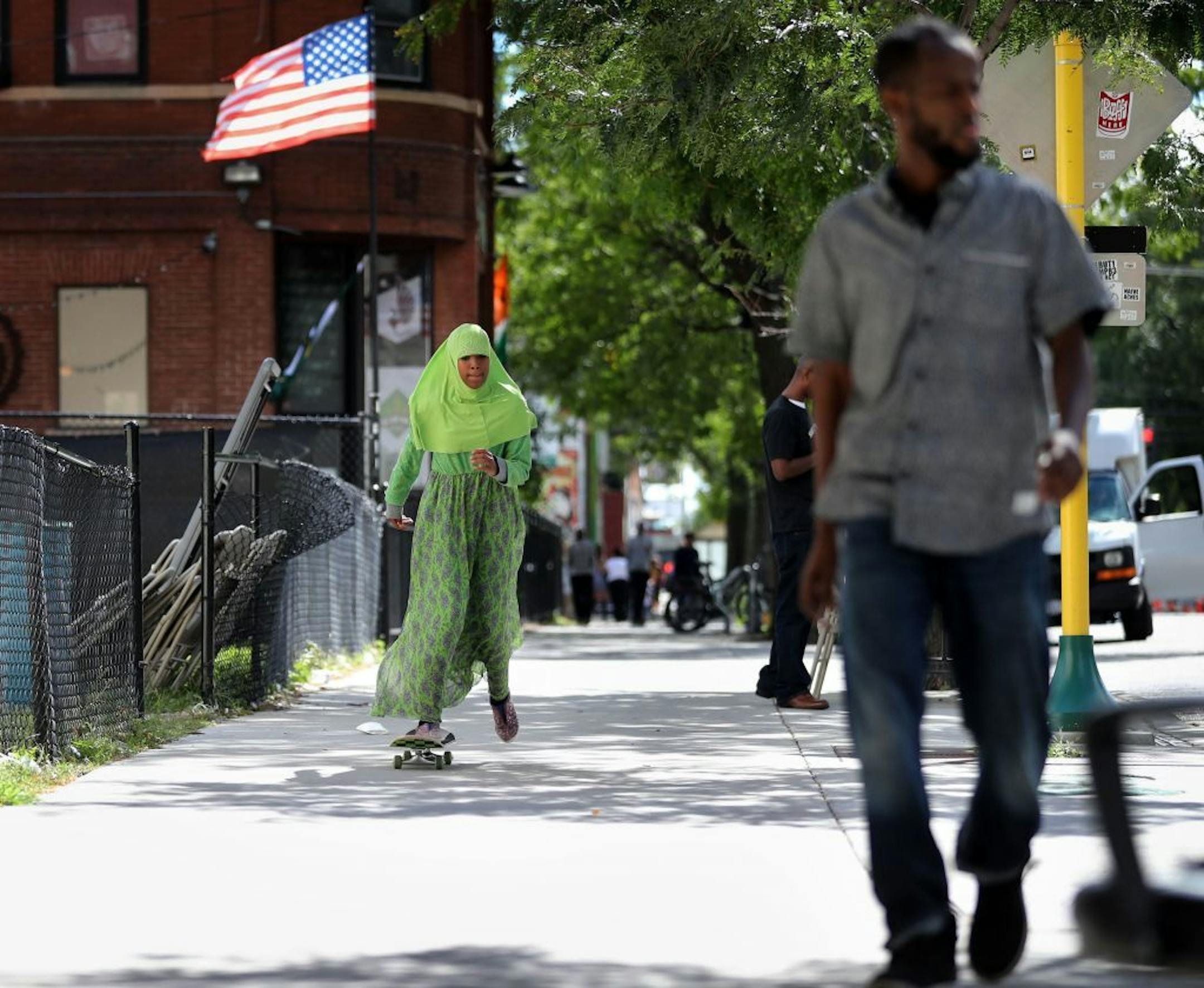
The Cedar-Riverside neighborhood along Cedar Avenue, known to some as "Little Mogadishu, " is home to many Somali immigrants and youth, as well as other East African immigrants. Here, while waiting for the festival to fire up, Fadumo Ahmed, 11, of Minneapolis skateboarded along the closed Cedar Ave. S. during the First Annual West Bank Block Party Saturday, Sept. 10, 2016, in Minneapolis, MN.
The Cedar-Riverside neighborhood is home to many Somali immigrants and youth. In 2016, while waiting for a festival to fire up, Fadumo Ahmed, 11, of Minneapolis skateboarded along the sidewalk. (Star Tribune/The Minnesota Star Tribune)

As a massive counterterrorism investigation got under way in Minnesota, some of its tentacles ensnared innocent citizens. I interviewed two men who broke down sobbing when they recalled how they were stopped by federal agents on suspicion of having ties to terrorism. One man was a community leader. The other, who was interrogated while traveling through an airport, was a Minneapolis cop.

“I’m out there to get the bad guys,” the officer told me through tears. “And I felt I was the bad guy.”

The overzealous questioning that Somali Americans faced back then shows what happens when a protective instinct bleeds into reckless suspicion. That’s where we are today. But now it feels even more frightening.

Many refugees who survived the trauma of civil war are being triggered by new reports that the Trump administration is cracking down on Somali immigrants in the Twin Cities. Tawakal Ismail, an imam in Minneapolis, said he knows of 11 individuals who were stopped by ICE this week, including two American citizens. Many are afraid to leave their homes. Those who have been citizens for decades are now carrying their passports as a precaution.

Ismail, who identifies as a conservative, supported Trump during the last election and encouraged residents in the Cedar-Riverside neighborhood to vote for him, too. This week he decided he could no longer back Trump or the Republican party. “I’m very disappointed,” he said.

Trump’s rhetoric has dangerous implications. Salma Hussein, a principal at a Burnsville elementary school, posted a video this week defending her community from Trump’s xenophobic smears.

Shortly after, she received a threatening email: “Fair warning, you are being hunted,” it said. “It’s time we take out the trash in this country.”

Principal Salma Hussein began her first day at Gideon Pond Elementary School in Burnsville by greeting pupils and their parents — in English and Somali. She recalled how much it would have meant to her to see someone who shares her background leading one of her schools. "I want, for these little ones, to have that much sooner," said Hussein. 
Principal Salma Hussein began her first day of the 2022-23 school year at Gideon Pond Elementary School in Burnsville by greeting students — in English and Somali. (Elizabeth Flores, Star Tribune/The Minnesota Star Tribune)

Hussein worries about her family’s safety, but her profession fills her with hope. About 40% of her students are of Somali descent. The kids brim with joy and innocence. They do not talk about what Trump said, even though the staff has been instructed to make sure every child feels seen and safe.

Now is not the time for the brand of Minnesota Nice that keeps people at an arm’s length. Check in on your neighbors. Offer to walk their children to school if the parents are fearful of being stopped. Write your elected officials. Document ICE activity. Notice who’s supporting Somali Minnesotans, and who is trying to divide us.

“I don’t want anyone to feel sorry for the Somali community,” Hussein said. “We don’t need to be rescued. What we need is for people to use their voice and to be good neighbors.”

That starts with countering the lies with facts. Now is the time to stand up, lock arms and simply speak the truth.

Sign up here to follow Laura’s columns by email.

about the writer

about the writer

Laura Yuen

Columnist

Laura Yuen writes opinion and reported pieces exploring culture, communities, who we are, and how we live.

See Moreicon

More from Culture

See More
card image
The Minnesota Star Tribune

She’s Green, Samia, Gully Boys and Alan Sparhawk were among the local acts offering adventurous listens this year.

Diane Bjorkman, second from right, co-owner of Gentle Transitions, talked with Shawna Hedlund, daughter of the homeowners, about the move while Diane Saterdalen, left, wrapped dishes as she spoke with company co-owner Bill Lehman.
Lissie