
Downsizing during the holidays? What to do when your kids don’t want your stuff

As more Minnesota baby boomers age, they’re increasingly confronting the downsizing dilemma as younger generations refuse to take family heirlooms.

The Minnesota Star Tribune
December 25, 2025 at 11:30AM
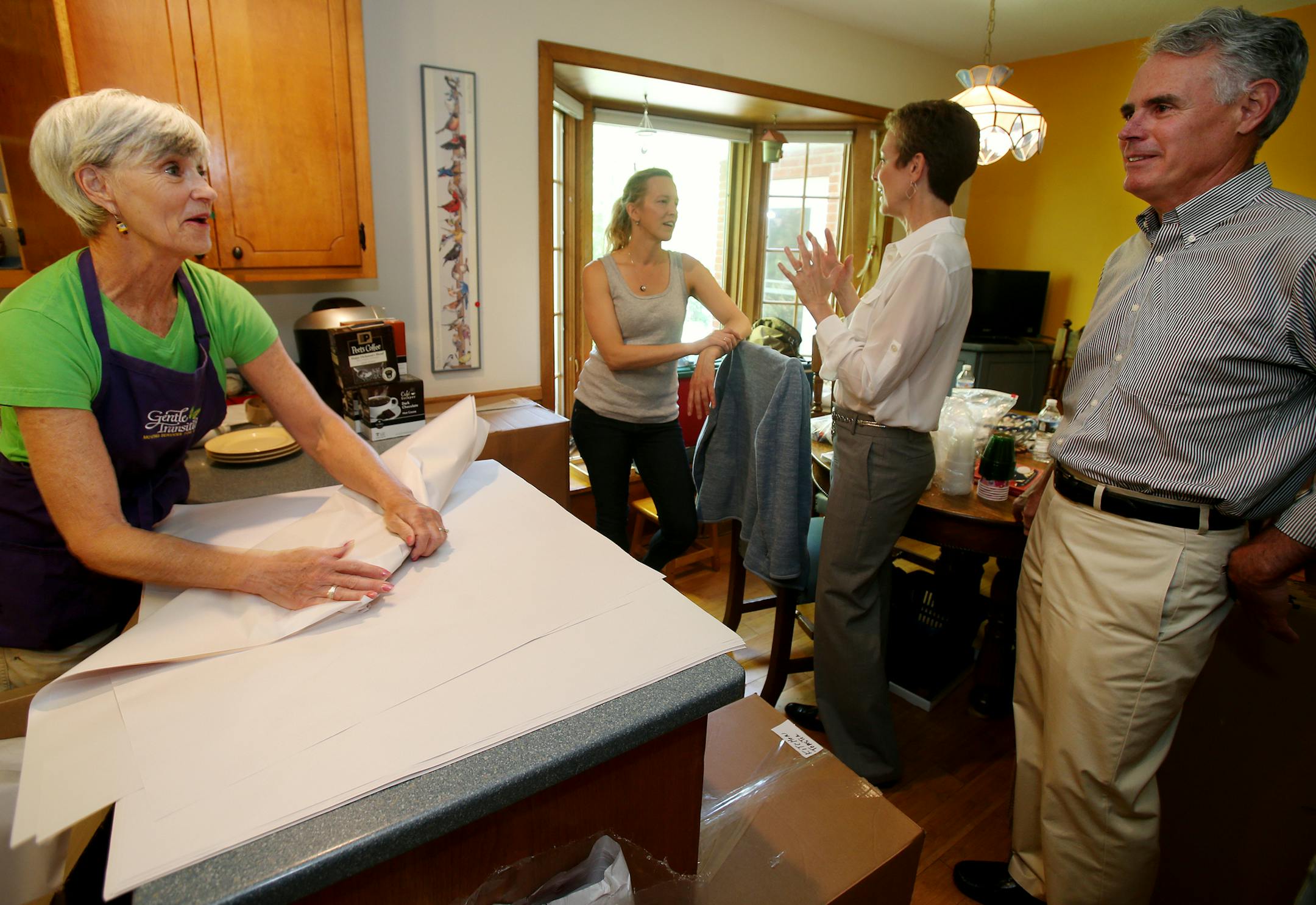
Diane Bjorkman, second from right, co-owner of Gentle Transitions, talked with Shawna Hedlund, daughter of the homeowners, about the move while Diane Saterdalen, left, wrapped dishes as she spoke with company co-owner Bill Lehman.
Diane Bjorkman, second from right, co-owner of Gentle Transitions, talked with Shawna Hedlund, daughter of the homeowners, about the move while Diane Saterdalen, left, wrapped dishes as she spoke with company co-owner Bill Lehman. (The Minnesota Star Tribune)

Holiday gatherings once risked becoming relationship-bruising debates over which younger family members had dibs over Mom’s heirloom china set or the collectible crystal glasses she’d received as a wedding gift.

Now? More and more, downsizing and estate sale experts say, your kids don’t want your stuff.

With Minnesota’s population aging and with younger family members less likely than ever to accept what had once been valued family items, the result is a growing glut of goods filling storage units or collecting dust in basements and garages.

“They’re less sentimental. They’re more minimalist. They would rather have fewer things,” said Diane Gilmore, a Vadnais Heights woman who launched Organize to Rightsize three years ago to help seniors declutter and get ready to move. “They’re OK not having as much stuff.”

Finding new homes for beloved items requires lowering expectations, experts say, either in how much younger family members value those items or how much money they’ll fetch in sales.

Dana Arvidson, a former probation officer who started Estate Sales Minnesota in 2013, said the decision whether to take an item often comes down to personal taste — and available space.

“I get excited when a client says their kid wants the china or flatware. But the more common thing is they don’t want it,” Arvidson said. “It doesn’t meet their style or the color scheme in their home.”

Lisa Bevens founded Home to Sweet Home, an online auction service, in Stillwater 12 years ago.

“With all the Baby Boomers downsizing, there’s a lot more out there than there is demand for,” Bevens said. “We have to talk people down all the time from disappointment with a daughter not taking things. We kind of help them with the emotion of their decisions.”

How to downsize with family heirlooms

In a 2021 article for the Downsizing Institute, “Why Your Kids Don’t Want Your Stuff,” institute founder Deborah Moyer noted growing frustration among downsizing families over what to do with the things they can’t take with them to a new home.

“Most automatically assume that their adult children will want many of the precious items that they’ve lovingly acquired from previous generations and accrued throughout their own life,” Moyer said. “But the uncomfortable reality is that your kids don’t want your stuff.”

The days of children expecting, or accepting, their mother’s china, silver and crystal sets have mostly passed, Moyer wrote.

A Rose's Daughter employee helped box up a client's belongings in 2018. (Provided)

“One of the reasons your kids might not want your stuff is because they don’t share the same interests or aesthetic taste as you do. It’s not that it’s good or bad, it’s just different,” she said. “Another reason your kids might not want your stuff is that it often comes down to not having the space to be able to store items, even if they really do want or need items being offered.”

In St. Paul, Ron Gust, owner of Gust Estate Sales, said most of his customers fit that profile.

“Kids are more minimalist too,” he said.

So, if giving heirlooms to kids is less of an option now, what should downsizing seniors do with the things for which they hope to find new homes?

Sharon Kadet of Rose’s Daughters, a Twin Cities company that helps seniors find new homes, said one option is to help seniors bring the memories of those things to their new homes even if they cannot bring the items themselves.

That can also help to get younger family members involved, she said. For example, rather than accepting a box of items from their grandparents’ trip to Japan, what if younger members of a family learned the story of how the grandparents acquired them and brought them home?

“Some people are taking pictures of items, or even writing a story about them, creating a book,” Kadet said. “And young people have an interest in that.“

She added: “Those stories bring people together and help with the whole transition. It’s less stressful and less about the stuff.”

And when family members aren’t an option, she said, make a plan to check with neighbors and friends.

“There’s not one way to do this,” Kadet said.

Finding a new home for treasured items

Bevens said there’s always a demand for certain types of collections and items. But it can take time to find new owners. And, she said, it may mean being more generous. It may also require them to be more realistic. After all, items are sometimes only worth the value someone else gives them.

“So many people get caught up in the belief that they have to make money,” she said. “But what about rehousing those items with people in need? We know we can find new homes for these things immediately if you donate.”

Key to that, Bevens said, is reflecting on what “was your hope for it?”

One of her customers moved in August from a 3,500 square-foot home in St. Paul to a 1,200 square-foot home in Rochester. Although they had beautiful furniture, Starr Kirklin said, “our kids did not want our old stuff.”

With only a month to make the move, Kirklin said he and his wife “out of desperation” gave most of what they had to nonprofits — except for one beautiful piece.

During a conversation with their parish priest, Kirklin said he asked: “You don’t need a dining room table do you?”

Turns out, he did. And the 12 chairs that went with it.

It’s important, Bevens said, that families start the process of finding new homes for beloved items much sooner than their move-out date.

“We tell people to start a lot earlier,” she said. “If they’re thinking of downsizing in five years, do a little bit now. And do a little bit next week.”

about the writer

about the writer

James Walsh

Reporter

James Walsh is a reporter covering social services, focusing on issues involving disability, accessibility and aging. He has had myriad assignments over nearly 35 years at the Star Tribune, including federal courts, St. Paul neighborhoods and St. Paul schools.

See Moreicon

More from News & Politics

See More
Diane Bjorkman, second from right, co-owner of Gentle Transitions, talked with Shawna Hedlund, daughter of the homeowners, about the move while Diane Saterdalen, left, wrapped dishes as she spoke with company co-owner Bill Lehman.
card image