
What’s in the White House’s ‘Make Our Children Healthy Again’ report

The report, largely in line with a draft document that leaked last month, is unlikely to draw condemnation from powerful food and agricultural industries.

The Washington Post
September 10, 2025 at 2:31PM
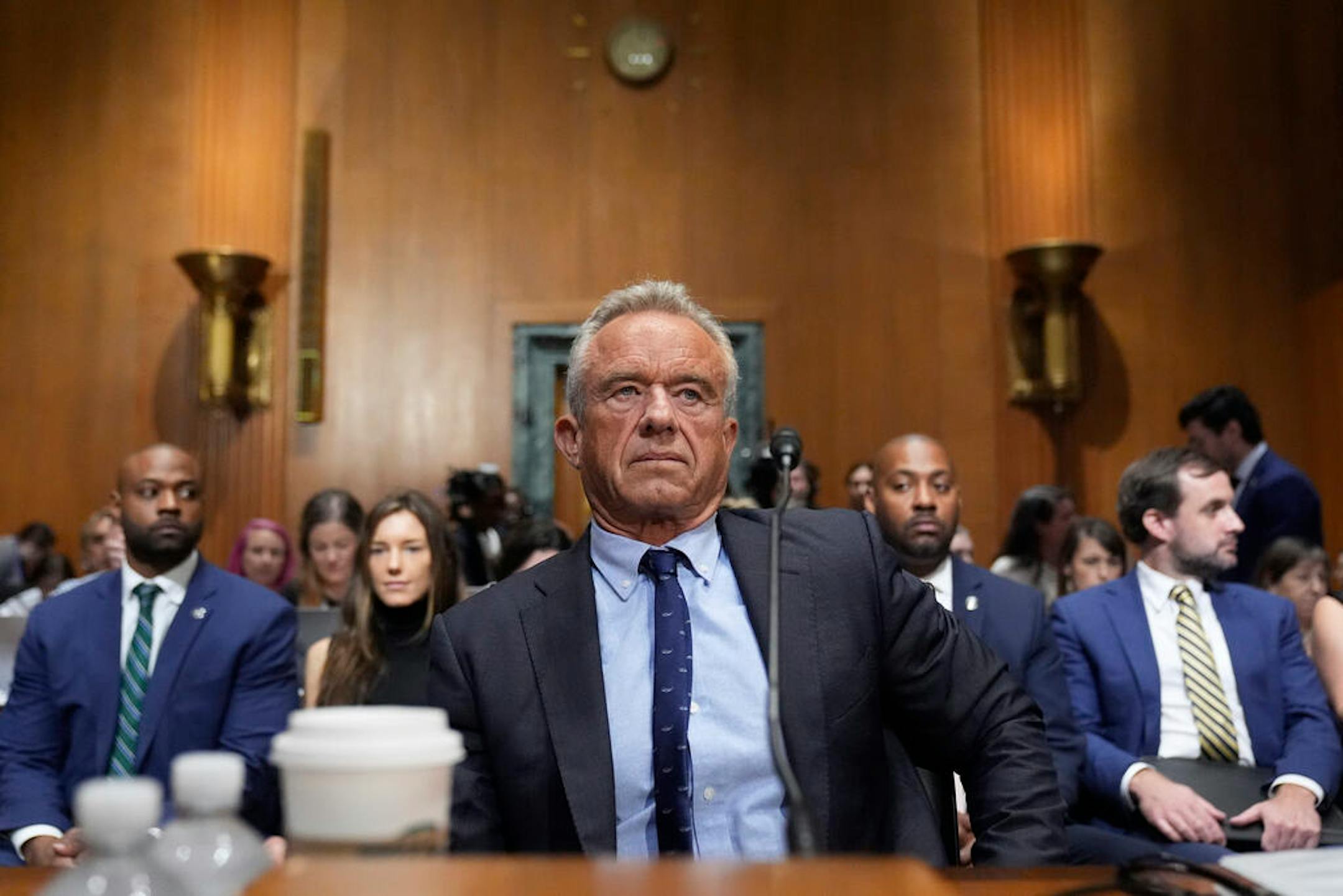
The report avoided proposing restrictions on ultra-processed foods and commonly used pesticides, both of which Secretary of Health and Human Services Robert F. Kennedy Jr. has pointed to as hazards to children’s health. (Mark Schiefelbein/The Associated Press)

The Trump administration promised Tuesday to expedite research into chronic diseases, push for healthy foods in schools and federal nutrition programs, and revisit childhood vaccination as part of a plan to “Make Our Children Healthy Again.”

The proposals were detailed in a strategy report released by the White House and crafted by a commission led by Health and Human Services Secretary Robert F. Kennedy Jr. It notably avoided proposing restrictions on ultra-processed foods and commonly used pesticides, both of which Kennedy has pointed to as hazards to children’s health.

The 19-page report, which is largely in line with a draft document that leaked last month, is unlikely to draw condemnation from the powerful food and agricultural industries that Kennedy has often railed against. It’s unclear how the various initiatives will be funded. Some nutrition experts said the document includes proposals that could improve health, but is light on specifics and regulatory action to mandate change.

“We have the most business-friendly president probably in the history” of the country, Kennedy said at a Tuesday news conference announcing the report. “But there’s never been a president in my lifetime that is more willing to challenge businesses when they overreach, that is more fearless about challenging entrenched interests in our society.”

President Donald Trump signed an executive order creating the “Make America Healthy Again Commission” earlier this year and named Kennedy as chair. In a May report, the commission blamed exposure to environmental toxins, poor nutrition, physical inactivity and overprescription of medication as potential drivers of childhood chronic diseases. Some of that report’s suggestions stretched the limits of science, medical experts told the Washington Post, and drew a firestorm online because of signs that artificial intelligence influenced the findings, including garbled scientific references and citing studies that did not exist.

The latest report is meant to serve as a policy blueprint for how the Trump administration can address chronic diseases shortening Americans’ lifespans.

Some of the proposals reiterate actions the administration has already announced. The vaccine recommendations follow growing Republican skepticism about Kennedy’s moves to upend the nation’s vaccine infrastructure. Yet Trump and his advisers have viewed Kennedy’s “Make America Healthy Again” movement as a potent political message and have stood by Kennedy. On Tuesday evening, Trump issued a memorandum to crack down on direct-to-consumer prescription drug advertising and to push for companies to disclose more side effects.

Democrats said Tuesday that Kennedy’s avowed MAHA agenda was misleading, pointing to his other moves to limit vaccine access, fire career health officials and take other steps that public health experts predict will lead to worse outcomes and less preparedness to fight future infectious-disease outbreaks.

The report questions some long-standing public health practices, such as the childhood vaccine schedule and fluoridation of drinking water. It also launches a new chronic disease research initiative housed at the National Institutes of Health as well as other efforts aimed at studying electromagnetic radiation, antidepressant prescribing patterns, the microbiome and the root causes of autism.

The report promotes existing initiatives embraced by the MAHA movement, such as helping states bar the use of food stamps to buy junk food, prioritizing healthy food in schools and reestablishing the presidential fitness test in schools.

Gun violence, the leading cause of death for children and teens in 2020 and 2021 according to the Centers for Disease Control and Prevention, is not mentioned in the report. When asked about the omission, Kennedy said there was a “sudden” onset of violence of mass shootings that began in the 1990s and psychiatric drugs could be to blame.

Mass shootings have become more common but they did occur before the 1990s. Some experts who have studied the issue said connections between the medications and violence are not grounded in science.

Pesticides and chemicals

The agriculture industry fought hard to avoid widespread restrictions on chemicals — and it notched a victory. Similar to the leaked draft, the report characterizes the Environmental Protection Agency’s reviews of pesticides as “robust,” a marked shift from Kennedy’s past criticism of pesticides as contaminating the nation’s food supply. The agency will work with industry to ensure that the public has “awareness and confidence” in the EPA’s pesticide review procedures, the report says.

The report also tasks the EPA with working to “reform the approval process” for chemical and biologic products that are aimed at protecting against weeds, pests and other diseases to increase the availability of “more innovative” solutions. The EPA, NIH and the U.S. Department of Agriculture are separately developing a research framework aimed at evaluating the “cumulative exposure” across various chemical classes.

The softer approach was foreshadowed back in May when the White House released the first MAHA report. That fell short of a widely anticipated attack on pesticides that farmers rely on to produce crops, and instead only raised questions about the health effects of glyphosate and atrazine on human health. Despite Kennedy’s past criticisms of pesticides, he has assured Republican lawmakers that he will partner with American farmers and will not pursue policies that could put them out of business.

But some of his allies have expressed frustration at the approach to pesticides.

“The omission of glyphosate and atrazine is a glaring example of chemical company influence on this report,” Zen Honeycutt, a longtime Kennedy supporter and the founder and executive director of the nonprofit Moms Across America, told reporters after the event ended.

The nation’s food supply

Kennedy has repeatedly said the nation’s food supply is “mass poisoning” this generation of children and made overhauling it one of his core priorities.

The report seeks to remove restrictions on whole milk sales in schools and eliminate reduced-fat food requirements in federal nutrition programs. Kennedy has said full-fat products have been unfairly demonized, an argument supported by many nutritionists.

Another effort is aimed at limiting the direct marketing of certain unhealthy foods to children, such as crafting industry guidelines to remove misleading claims.

More than half of the calories Americans consume come from ultra-processed foods, which studies have increasingly linked to health problems. Unlike Kennedy’s vaccine agenda, his policies around food have had broader appeal with some Democrats and Republicans applauding the focus on healthier eating. Yet some nutritionists and food advocates have said improving childhood obesity will require more sweeping policies than some of the measures — such as getting rid of synthetic food dyes — that Kennedy’s team has focused on so far.

“From the get-go, the executive order focused on the secretary’s pet peeves and half-baked scientific ideas, and at the end of the day, that’s what this final report delivers,” said Peter Lurie, executive director of the Center for Science in the Public Interest, which advocates for a safe food supply.

Vaccines

The report pledges to develop a framework focused on “ensuring America has the best childhood vaccine schedule,” while also “ensuring scientific and medical freedom.”

Such a move could lead to shifts in long-standing practice of how and when children are immunized, which has raised alarms from public health experts who say the schedule has been extensively studied and is deemed safe. The report also creates a new vaccine injury research program at the NIH Clinical Center.

At the MAHA commission event Tuesday, Kennedy claimed there has been “no investigation of vaccine injuries.” The United States tracks vaccine safety through multiple monitoring systems including electronic medical records from a variety of health systems.

Kennedy, the founder of a prominent anti-vaccine group, has a history of linking the vaccine schedule to a rise in chronic disease, autism and food allergies in the United States — claims that have been refuted by medical experts. Over the summer, Kennedy purged every member of a federal vaccine advisory panel and replaced the experts with his own picks, most of whom have criticized coronavirus vaccine policy. At its first meeting, the new panel announced it would examine the cumulative effect of the childhood vaccine schedule. He also revived a childhood vaccine safety task force to scrutinize the schedule.

Drug advertising

In addition to Trump’s memorandum on drug advertising, the Food and Drug Administration announced Tuesday that it’s sending thousands of letters warning drug companies to remove misleading ads and issuing roughly 100 cease-and-desist letters to companies with deceptive ads.

The agency is also moving to close a nearly 30-year-old loophole in the requirement to disclose the side effects of drugs in advertising. The proposed change would force the companies to disclose all side effects in the ads, instead of directing consumers to other places such as a website or toll-free numbers. Kennedy said the additional disclosure would “break the cycle of overmedicalization that drives America’s chronic disease epidemic.”

Pharmaceutical companies have dramatically increased spending on direct-to-consumer advertising in recent years, with a 2019 study finding they spent $9.6 billion in 2016, up from $2.1 billion in 1997.

Lauren Weber, Dan Diamond and Daniel Gilbert contributed to this report.

about the writer

about the writer

Rachel Roubein

The Washington Post

More from Politics

See More
card image
Elizabeth Flores/The Minnesota Star Tribune

The Twin Cities saw immigration enforcement operations targeting Somalis and Latinos carried out this week by federal agents.

card image
card image