

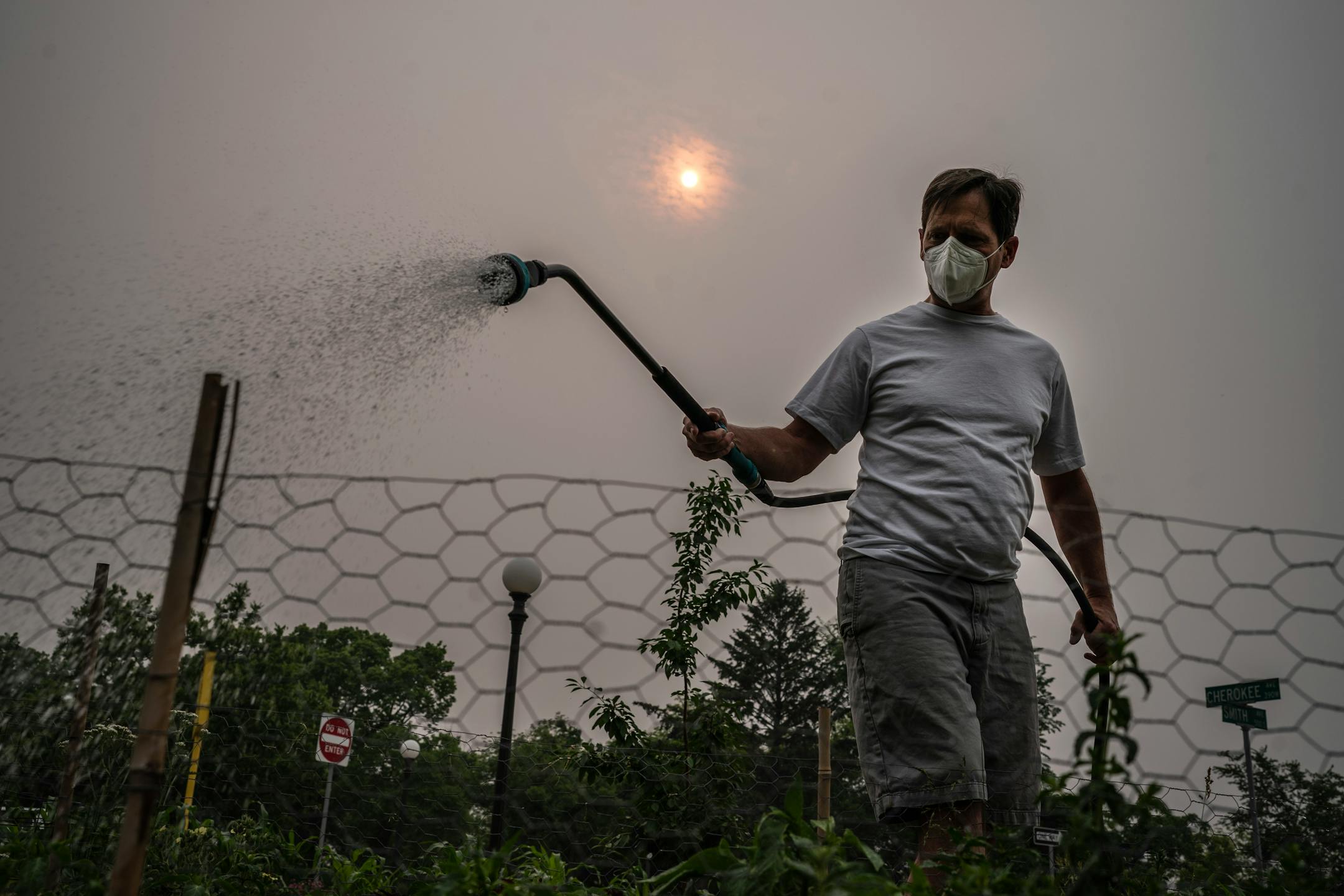
Wildfire smoke has been easy to spot in Minnesota this week, coating the Twin Cities in a brownish haze that obscured the downtown skylines. But experts in lung health are more concerned about the particles you can’t see.
Particles in the smoke are so small that they can evade some of the lung’s natural defenses, causing not only breathing problems but also other health concerns if they enter the bloodstream. Smoke particles are typically less than 2.5 micrometers in diameter, making them at least four times smaller than dust or pollen and 10 times smaller than sand grains.
“You can just think of them as little sandpapers and you inhale them and they are just in your lungs kind of irritating, irritating, irritating,” said Jessie Carr, an environmental epidemiology supervisor for the Minnesota Department of Health, who linked her gravelly voice Thursday to walking her dog Wednesday night. “And the smaller the particles, the deeper they get into your lungs.”
Air quality alerts because of wildfire smoke have been issued 30 times so far this year by the Minnesota Pollution Control Agency. That brings the state closer to the 41 alerts issued in parts of Minnesota in 2023 and the 37 alerts in 2021. The five-day statewide alert issued this week through Saturday is tied for Minnesota’s longest.
Preliminary state research has found an increase in emergency room visits during and immediately after wildfire smoke alerts in Minnesota. ER trips mostly increase among children and adults with respiratory conditions such as asthma and chronic obstructive pulmonary disease (COPD) that make them vulnerable to complications from smoke exposure.
Carr said the Health Department will be monitoring ER visits after future exposure events to validate the initial research. However, she said there is more than enough evidence over the health risks of wildfire smoke exposure to support its public health recommendations.
The Centers for Disease Control and Prevention found an uptick in heart attacks causing ER visits in the Midwest in 2023 on days when wildfire smoke resulted in poor air quality. Other patients are treated for bronchitis, severe asthma flare-ups and even strokes.
Prevention tips for people at elevated risk of health complications include staying indoors in air-conditioned environments. Basic surgical masks don’t reduce smoke exposure, but fitted N95 masks can help. Switching air conditioning in cars to the recirculating mode can help as well.



![Main entrance to the Gonda Building. For more than a century, the city of Rochester has been shaped and defined by the Mayo Clinic. Now the Mayo has a $6 billion vision to reshape the city and itself.Wednesday, February 21, 2013 ] GLEN STUBBE * gstubbe@startribune.com ORG XMIT: MIN1302211648220346](https://arc.stimg.co/startribunemedia/DW2TKC4EDLZZOGDOC5ZEYZNOJ4.jpg?&w=252&ar=3:2&fit=crop)
