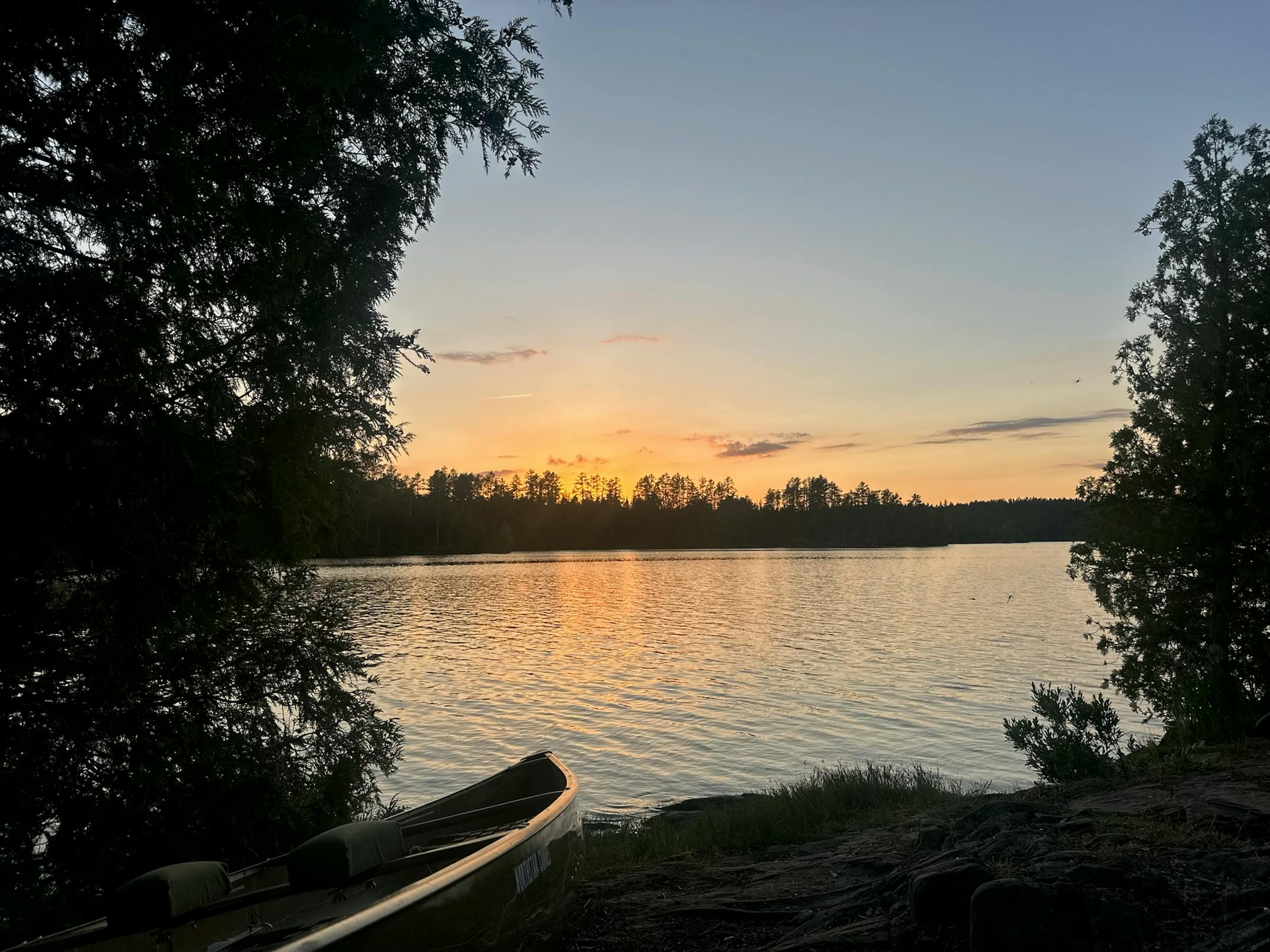
BOUNDARY WATERS CANOE AREA WILDERNESS — It was a sunset that campers dream of: perfect shades of red, orange and purple over a glassy wilderness lake.
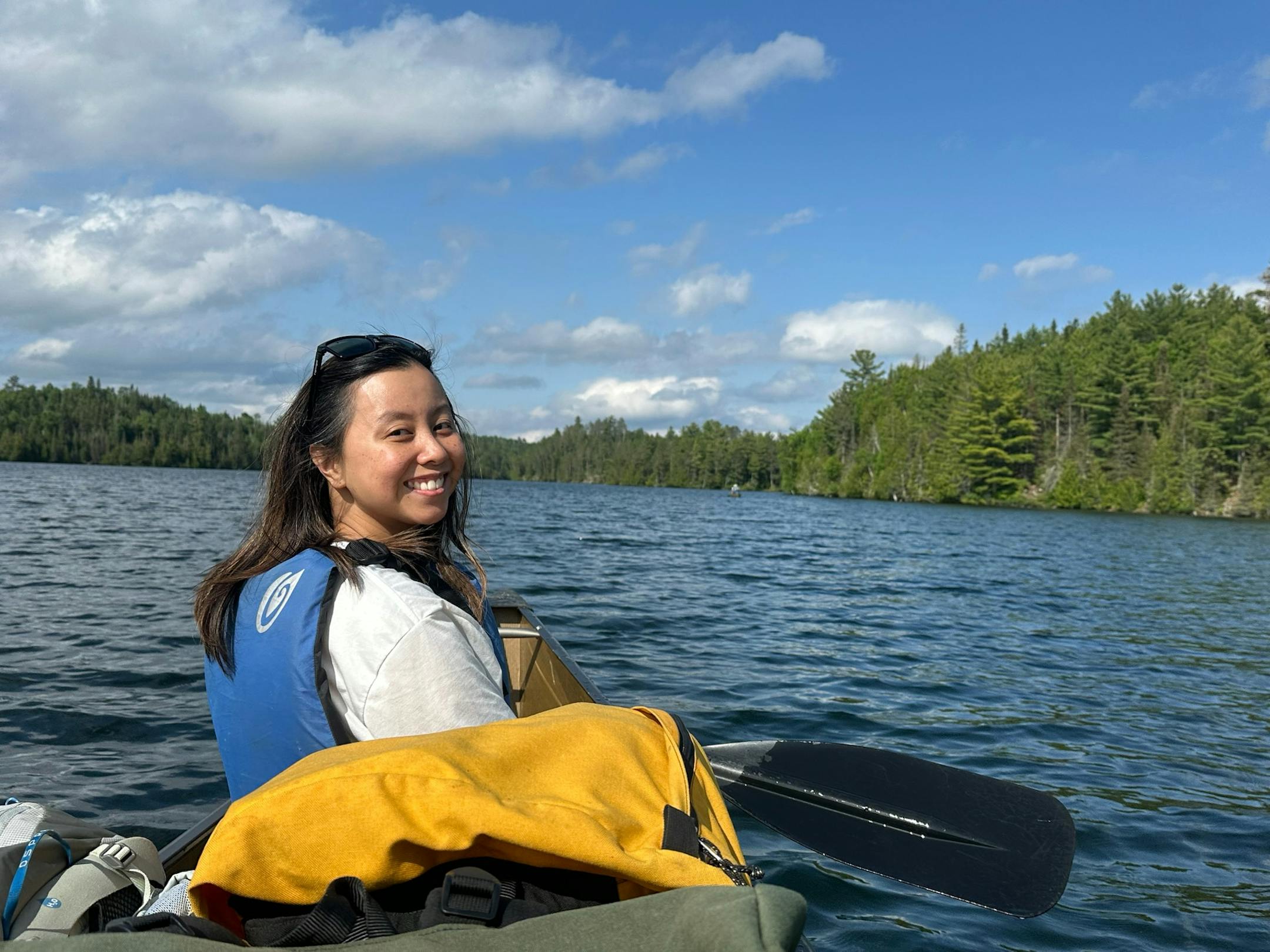
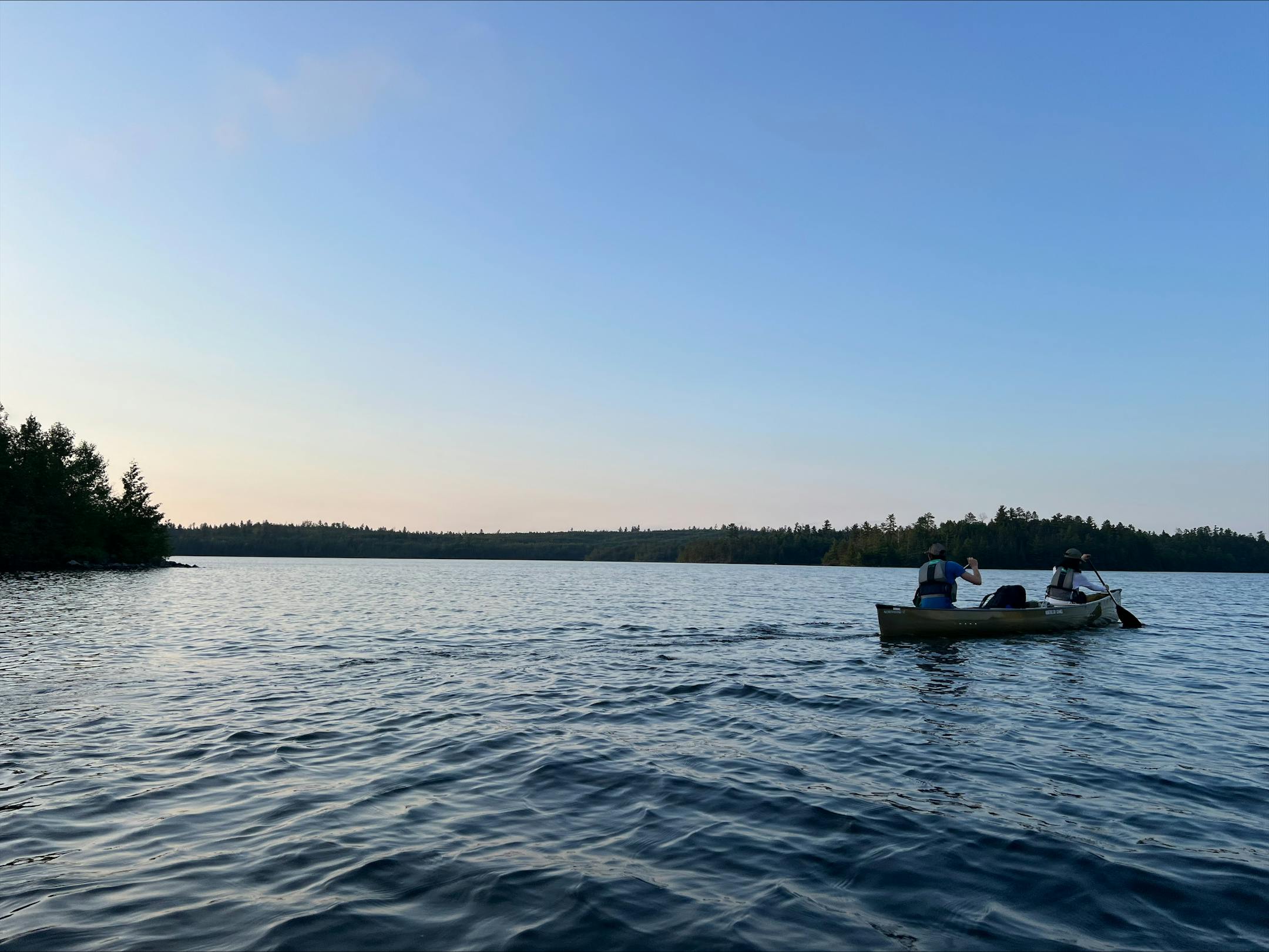
I could only glance at it over my left shoulder as I paddled deeper into the Boundary Waters Canoe Area Wilderness. On my first-ever night in Minnesota’s famed canoe country, panic was setting in as my group of five raced against the last vestiges of daylight in search of an open campsite.
After arriving in Ely, Minn., from the Twin Cities midafternoon, we passed the first available campsite we saw on Birch Lake because it had piles of stinky goose poop. We pushed onward on our mapped itinerary to Knife Lake, where we found every one of the 16 campsites we floated past were occupied.
I knew our beginner-friendly route would be popular, but I didn’t anticipate we’d have so much trouble finding a place to camp.
For years, I’ve wanted to visit the place where hardiest Minnesotans go — where danger meets beauty in a place that’s truly wild, without the hum of motors. I was hoping to see a bear or even a moose (in non-life-threatening situations, of course). I’d done a fair amount of car camping and kayaking, but this was my first time tenting in such a remote place.
As my arms throbbed from portaging gear and paddling nearly 10 miles, that first open foul-smelling, feces-littered campsite suddenly seemed like a luxurious five-star hotel.
In a last-ditch effort, we mustered our energy to portage our canoes and packs another 40 rods (about 40 canoe lengths, or approximately 0.12 miles), to the much smaller and less scenic Bonnie Lake, hoping one of two sites there might be open.
“If we can’t find a campsite, we’re going to have to set up on the portage,” I said, stubbornly, learning later that camping on such paths is a big no-no.