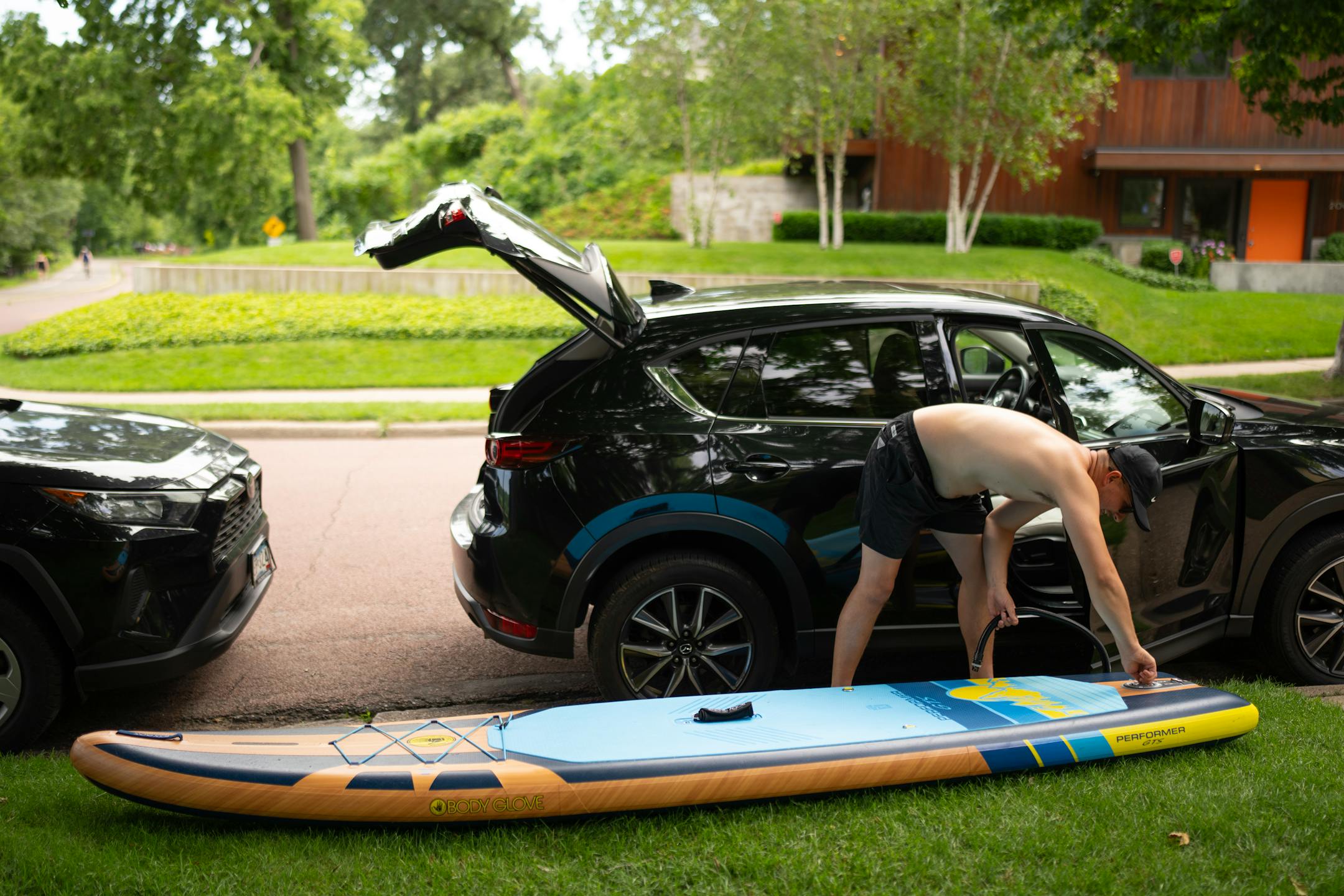
Austin Grove launched his watercraft Sunday afternoon into Cedar Lake — shortly after pulling it, folded like a mat, from the hatch of his SUV.
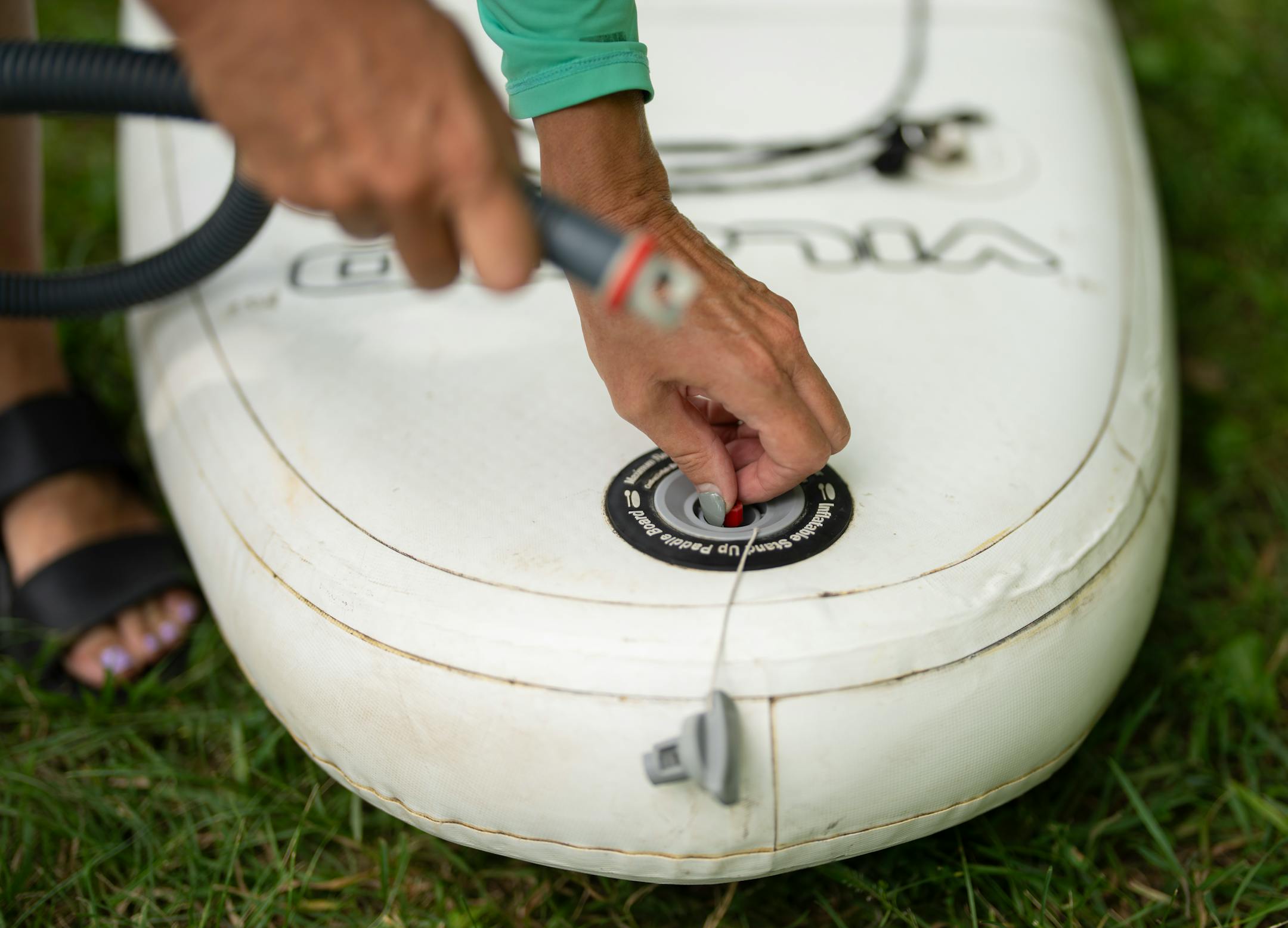
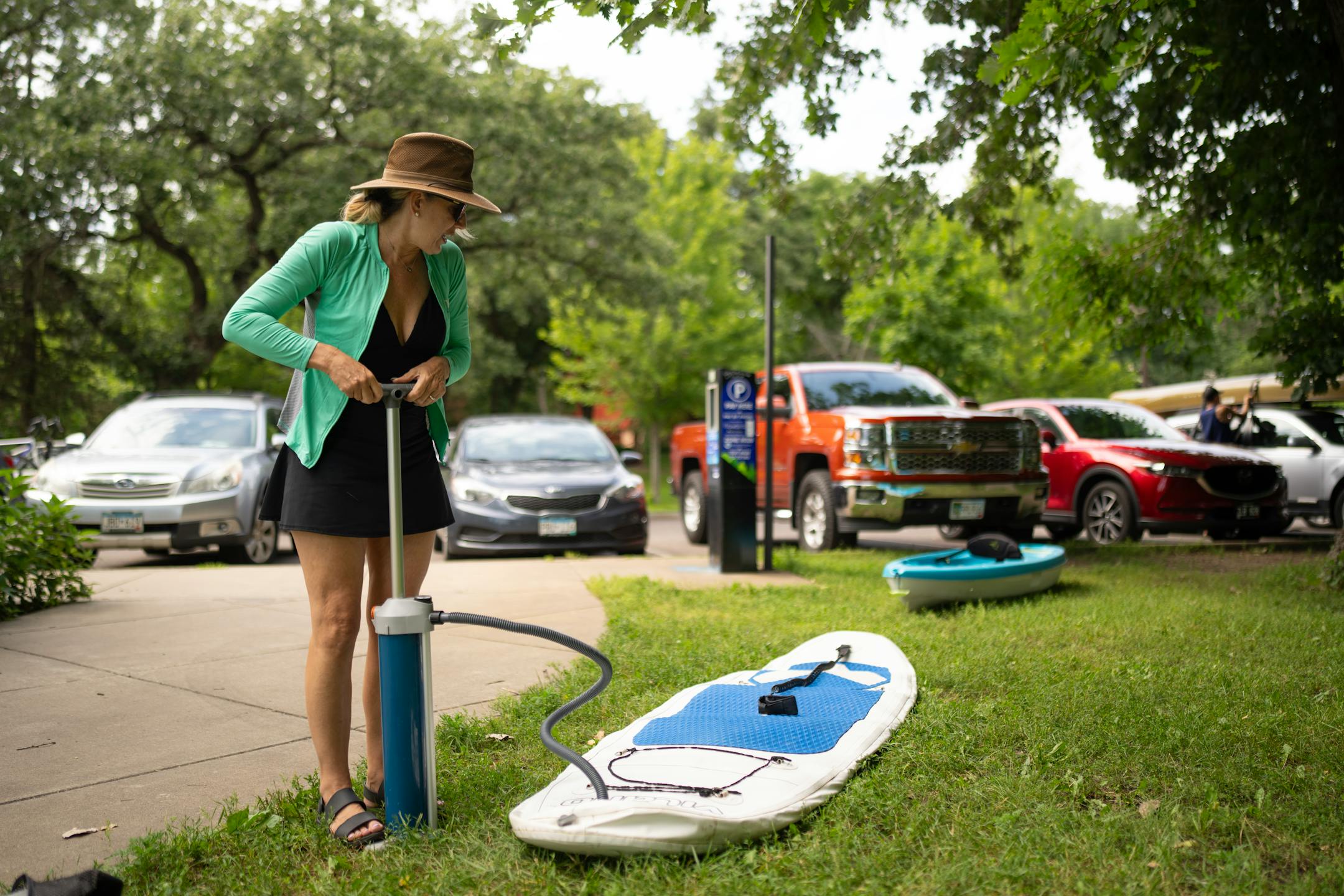
Within minutes after spreading it out and attaching an air pump, a rigid paddleboard sprang to life near the bustling Minneapolis lake.
Up until about two weeks ago, Grove was a committed canoe paddler. But buying an inflatable paddleboard — he got one for about $370 — has been a game-changer.
“It’s so nice to have a one-person operation,” said the Minneapolis man, his electric pump humming in the background.
In the land of 10,000 lakes, personal inflatable watercraft are now rivaling traditional vessels made of hard materials like fiberglass and polyethylene. And new creations are in the works.
While inflatable boats have been around for more than a decade, consumers questioned their quality when they first came out, equating them with cheaper, inferior floaties that someone might nab at a discount store.


But, while they are still susceptible to a hole or damage, today’s inflatables are more durable and reliable, both users and manufacturers say. They are commonly made up of “drop-stitch” fabric that includes woven polyester wrapped in a plastic synthetic called PVC. Together, they make the vessels rigid and resilient.
The appeal of inflatables flipped in people’s minds, said Peter Mogck, founder and co-owner of Paddle North, a Minnesota company that sells both inflatable and solid paddleboards and other gear. “Now, inflatables can perform near equal to solid [offerings]. It has widened the sport.”