
Advertisement

‘We should not rest’: Some greater Minnesota cities still debating immigration enforcement response

Duluth and Mankato city councils voted to take stances related to the federal government’s enforcement efforts.

February 24, 2026 at 9:47PM
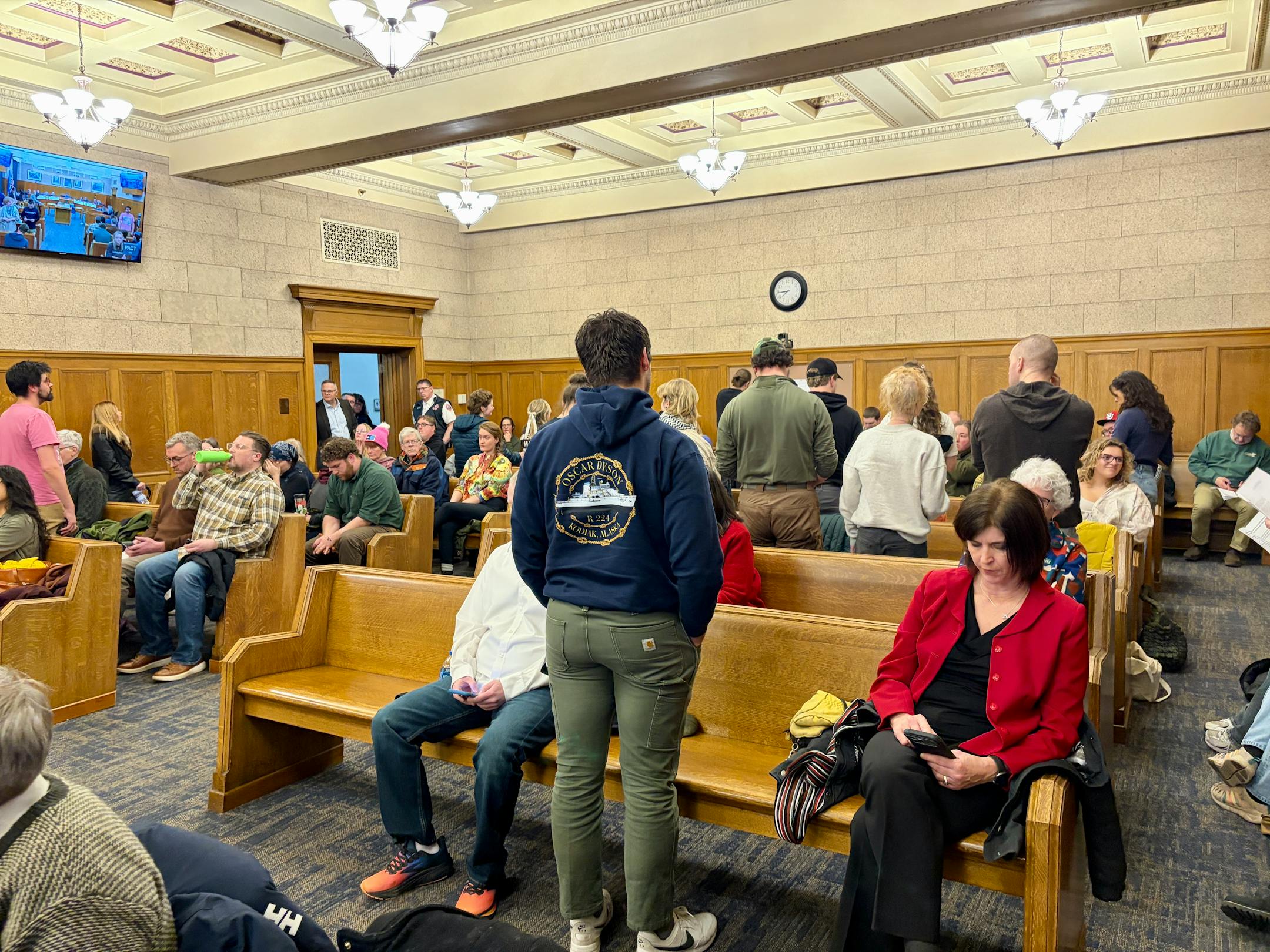
Audience members at a Duluth City Council meeting on Feb. 23 stand with their backs turned in opposition to a councilor speaking about why they didn't support an eviction moratorium for those affected by Operation Metro Surge. (Jana Hollingsworth/The Minnesota Star Tribune)
Advertisement

DULUTH – Activists were regular fixtures at City Council meetings in Duluth for months, pleading with city leaders to take a stance against federal immigration enforcement, even with few reports of detainments in northeast Minnesota.

As reports and videos of deaths, violent detainments and bystander abuse amid Operation Metro Surge grew in other areas of the state, so did the number of people packing into City Hall, critical of council silence. That hasn’t waned, despite the departure of hundreds of federal immigration agents in Minnesota.

It doesn’t matter that Duluth “already missed the moment,” Duluthian Harry Redmann told councilors at a meeting Monday, Feb. 23.

“It costs this council nothing, absolutely nothing, to ask this of [state] leadership,” Redmann said. “But it could cost families their homes if we do nothing.”

Even with the drawdown of federal immigration agents, some communities outside the Twin Cities are struggling with how far they should go to regulate enforcement or articulate a public stance, as residents continue to worry that agents are headed their way.

At the meeting in Duluth, councilors ultimately voted in favor of asking for rental assistance in lieu of a statewide eviction moratorium. Some cities and unions are calling on Gov. Tim Walz to enact a moratorium as immigrants are afraid to leave their homes to work, so they can’t pay their rent.

“We should not rest” despite reports that ICE is scaling back, Councilor David Clanaugh said. “I think we have enough evidence about how our federal government’s currently working to not trust these things.”

The League of Minnesota Cities offers online guidance on handling ICE, but declined to speak on the issue. Its guidance addresses ICE’s use of public space and whether cities can refuse to cooperate with the agency.

Advertisement

A sprinkling of greater Minnesota cities have taken a wide range of approaches.

Isle, Minn., population 800, recently became the only city to sign an agreement with ICE, capitalizing on federal money offered for training and equipment.

In Mankato, where advocates say about 10 people have been detained in the surge, the City Council passed an emergency ordinance Monday that would force law enforcement officers to unmask, identify whom they work for and wear body cameras. It includes an exception for undercover officers.

“When law enforcement officers are taking enforcement action — searching, seizing, and using police powers — in the city of Mankato, we want to know who these people are,” Public Safety Director Jeremy Clifton said.

The city has also filed an amicus brief in support of lawsuits against the federal government and set aside money for local food shelves to help immigrants afraid to shop, among other moves in support of immigrants and affected businesses.

St. Cloud has approved a resolution that declares the city welcoming to all.

Advertisement

The city’s mayor, Jake Anderson, said he tried to avoid a larger influx of agents there.

“The feds have been looking for folks to try to escalate so that [they] can escalate,” he said, pointing to what he saw in Minneapolis after leaders there spoke out against ICE. “My goal is not to enflame a situation that is already politically tense and quite frankly, emotionally tense.”

Rochester narrowly voted to support the state’s lawsuit seeking to stop the surge of federal agents, and its mayor, Kim Norton, wrote a letter to Walz supporting a statewide eviction moratorium.

In Worthington, a heavily immigrant community in southwestern Minnesota, the City Council passed a resolution that says the city won’t work with ICE without a warrant signed by a judge.

In Willmar, which was a target of high-profile ICE operations, the City Council approved sending a letter of concern to the federal government asking for information on detained residents. The vote came after a late January meeting where Police Chief Michael Holme shared his frustrations with secretive ICE operations.

Duluth leaders also approved an ordinance this week saying the city won’t work with federal agents on immigration issues, a stance it already had a policy against. ICE activity has been minimal inside the city, which has permanent Homeland Security personnel present because of its shipping industry.

Advertisement

The council wanted to consider that federal relationship and the enforcement work done related to trafficking and other non-immigration crimes, Duluth City Council President Lynn Nephew said recently.

“These are times nobody has sat through,” she said. “So, we’re trying to do it right.”

Jenny Berg and Trey Mewes of the Minnesota Star Tribune contributed to this story.

about the writers

about the writers

Jana Hollingsworth

Duluth Reporter

Jana Hollingsworth is a reporter covering a range of topics in Duluth and northeastern Minnesota for the Star Tribune. Sign up to receive the new North Report newsletter.

See Moreicon

Jp Lawrence

Reporter

Jp Lawrence is a reporter for the Star Tribune covering southwest Minnesota.

See Moreicon

More from Greater Minnesota

See More
card image
Brett Groehler/University of Minnesota Duluth

Dale “Hoagie” Haagenson, a volunteer assistant equipment manager, was the longest-serving volunteer in the history of UMD’s athletics program.

card image
Advertisement