

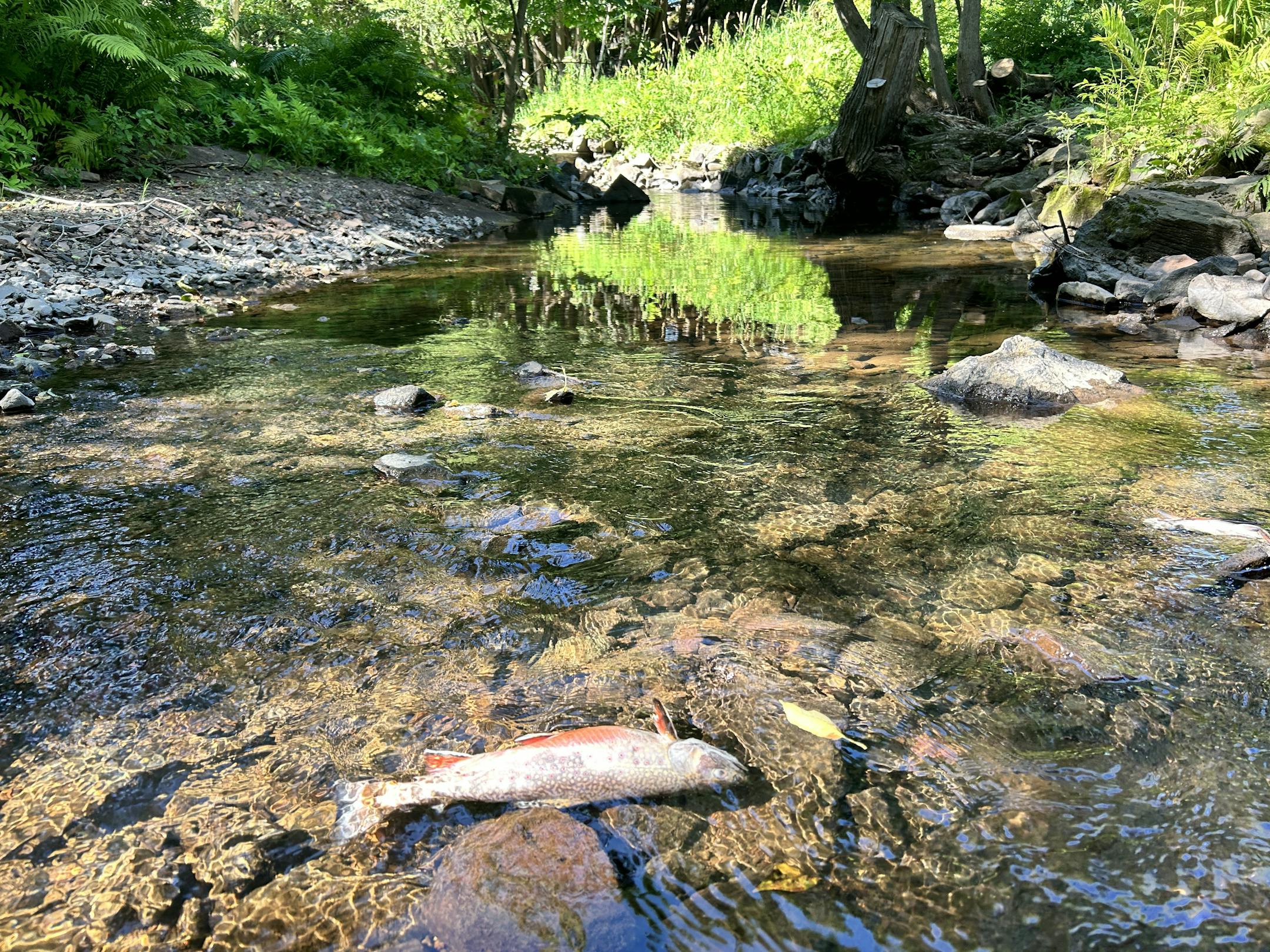
DULUTH – Chloramine-treated water that city staff released into Tischer Creek in 2024 was four times the lethal level for brook trout, a Minnesota Pollution Control Agency (MPCA) investigation found.
The state agency and the city of Duluth finalized a violation agreement Feb. 23 after a lengthy probe into the discharge of about 1.7 million gallons of treated water during maintenance of an eastern Duluth reservoir in July of that year.
The water flooded into 2 miles of the creek over 15 hours, killing nearly 1,600 brook trout and hundreds of other fish, as well as doing “extensive harm” to the broader ecosystem of the creek, according to the MPCA. The water wasn’t toxic to humans.
The MPCA fined the city $12,000 and ordered it to invest $190,000 in brook trout habitat restoration projects chosen by the MPCA and the state’s natural resources department.
Duluth Public Works employee Ryan Granlund told the City Council on Monday night that the MPCA estimates brook trout recovery on Tischer Creek could take at least eight years.
“This discharge to Tischer Creek did significant ecological harm,” Granlund said.
The eastern Duluth creek empties into Lake Superior through the grounds of Glensheen Mansion, and is one of the city’s 16 designated trout streams.
Chloramine is made up of chlorine and ammonia and is used to disinfect drinking water.


