More big-name Minnesota Democrats want to stick around for more than two terms

The slate of incumbents could mean a small group of elected Democrats will lead Minnesota’s biggest political institutions for nearly a generation.

The Minnesota Star Tribune
September 19, 2025 at 11:00AM
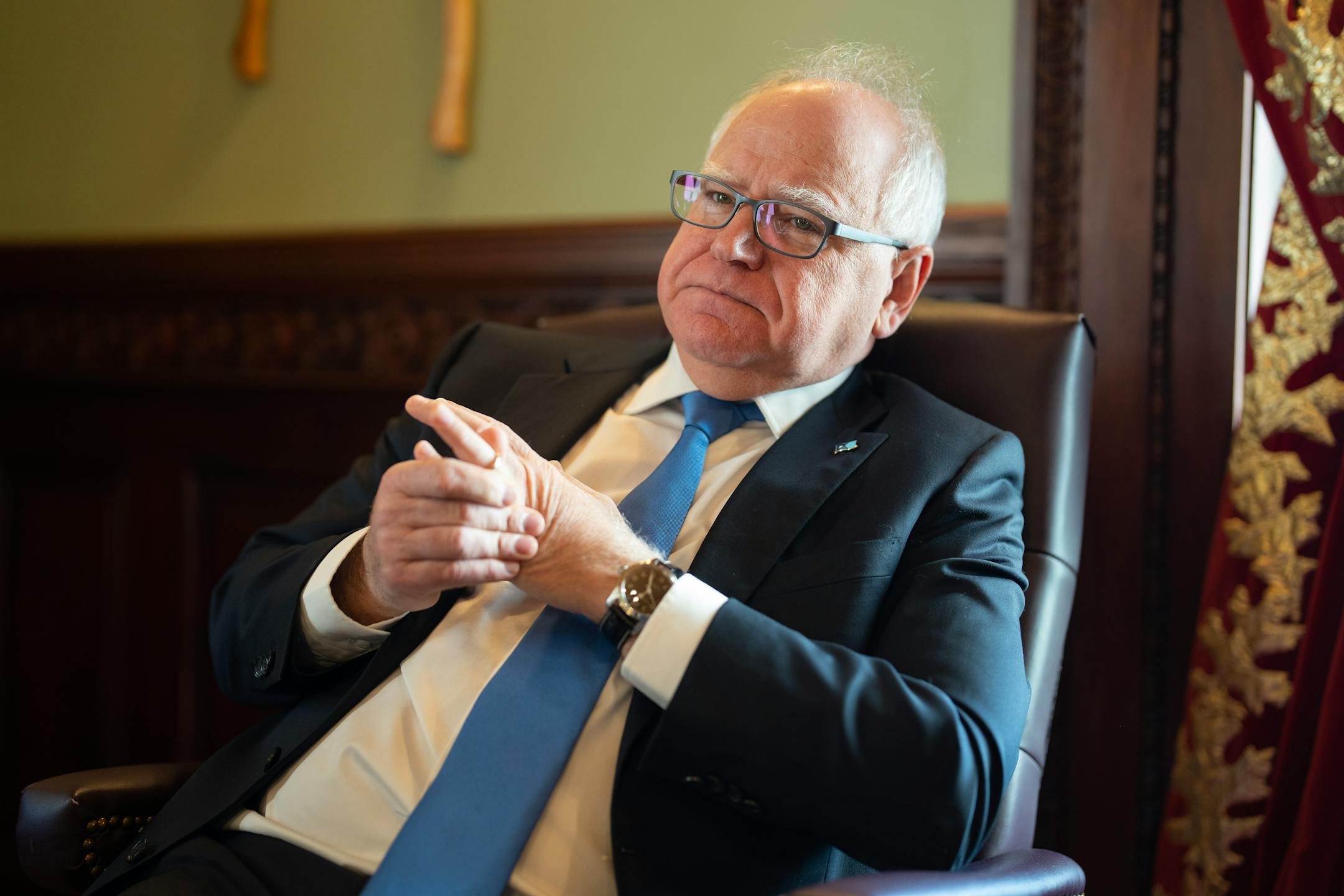
Gov. Tim Walz, shown in December 2024, touched on themes of stability in a video posted shortly before announcing his latest campaign. (Alex Kormann/The Minnesota Star Tribune)

Tim Walz is only the second governor in Minnesota’s history to ask voters for a third consecutive four-year term in that office. The first one lost.

That makes Walz a historical rarity. But in Minnesota, running again is in right now.

The mayors of Minneapolis and St. Paul are seeking third terms, and at least two other Democrats who have long held statewide office might ask for another four years.

None are guaranteed victory, but a slate of incumbents could mean a small group of elected Democrats will lead Minnesota’s biggest political institutions for nearly a generation. The lack of political turnover is driving debate about whether voters will reward or reject Democrats, what’s driving the trend — and whether it’s ultimately a healthy thing for Minnesota.

“I have to wonder if there’s a sense of, whether it’s the head of a city, the head of a state, of feeling like this is an incredible time of upheaval,” said state Sen. Erin Maye Quade, a DFLer from Apple Valley, citing the Trump administration deploying the National Guard to cities as an example.

“There’s always a learning curve with a new administration with any level of government,” she said. “It might feel dangerous to be having someone learn this job at this kind of point in time.”

Arne Carlson, a former Minnesota Republican governor who beat a Democrat aiming for a third consecutive term in 1990, lamented the old age of so many national figures.

“People want a new face,” Carlson said. “They want new ideas and they want youth.”
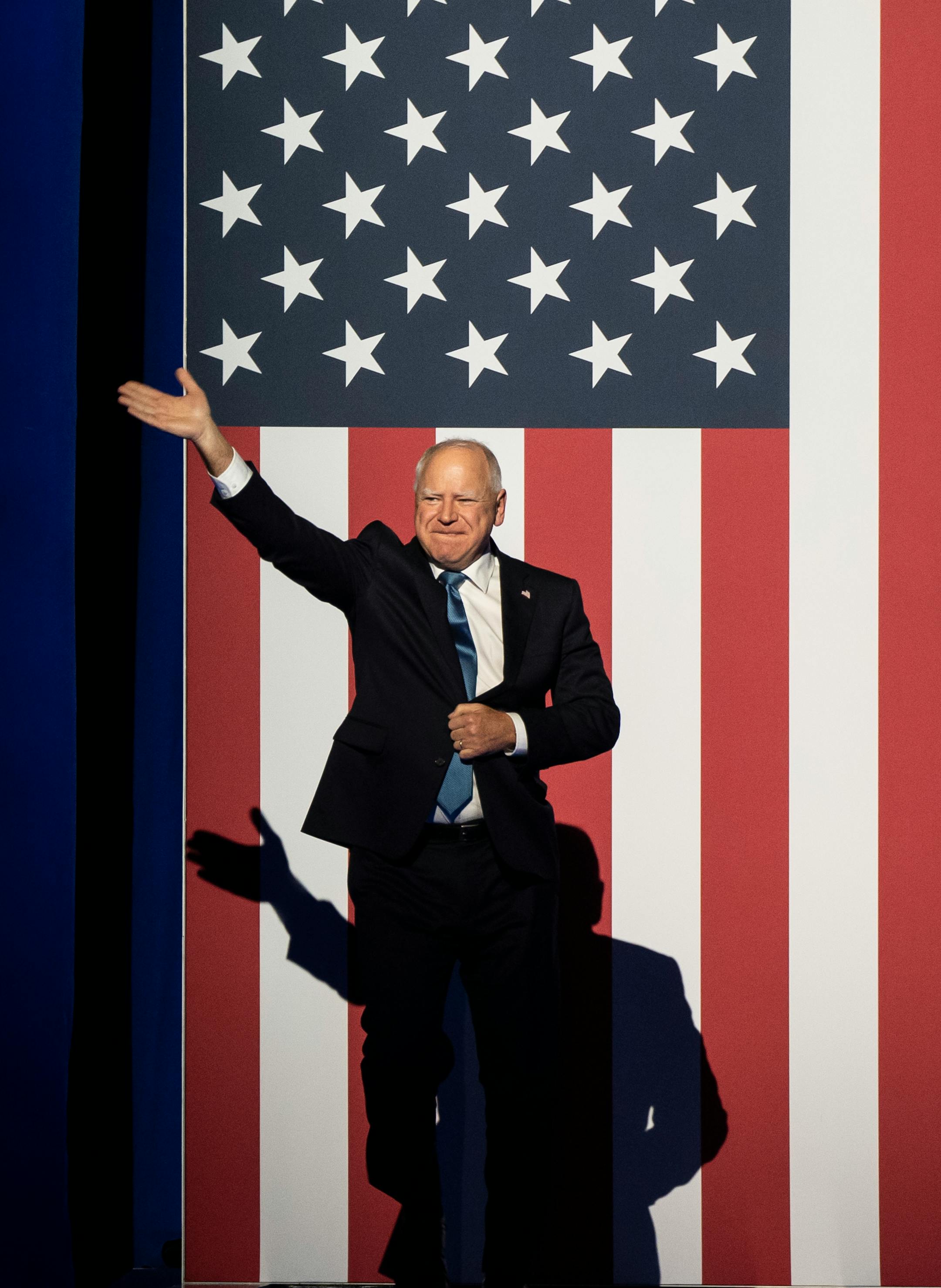
Gov. Tim Walz, shown in November 2024 at a rally in Milwaukee. (Renée Jones Schneider/The Minnesota Star Tribune)

Three terms a rarity for governor

A governor running for a third consecutive four-year term is unusual in U.S. history, not just in Minnesota, said Eric Ostermeier, a research fellow and elections expert at the University of Minnesota’s Humphrey School of Public Affairs.

Only 11 states have no restrictions on four-year terms, he said. But even among governors who were legally eligible, most have opted against trying, Ostermeier said.

Between 1970 and 2024, 28 governors have tried seeking a third term, according to Ostermeier. Only five have lost, including Minnesota’s Rudy Perpich in 1990 and former Wisconsin Republican Gov. Scott Walker, who was ousted in 2018 after two terms.

In 2018, former Republican Gov. Tim Pawlenty also ran for a third term in Minnesota and lost a GOP primary. But he ran again eight years after leaving the governor’s mansion.

It’s far more common for legislators or other statewide elected officials to stay on the job longer than eight years.

“Somehow people view the governor’s race differently,” said Tom Bakk, a former state senator from the Iron Range who served as a Democrat and an independent. “There’s plenty of history to show that.”

Democrat Joan Growe was Minnesota’s secretary of state for 24 years. DFLer Lori Swanson was attorney general for three terms. U.S. Sen. Amy Klobuchar was first elected to Congress in 2006.

DFL Secretary of State Steve Simon and Attorney General Keith Ellison may carry on that tradition. Both showed interest in the governor’s race but are now expected to seek another four years in their jobs.

Minneapolis Mayor Jacob Frey and St. Paul Mayor Melvin Carter are running for third terms.

A third term is rare but not unheard of in those cities. Chris Coleman won three terms in St. Paul starting in 2006, and George Latimer was mayor for more than 13 years starting in the 1970s. In Minneapolis, R.T. Rybak served three terms on the job beginning in 2002.

What’s behind the trend

Ostermeier said one reason more governors are staying in office this long is because voters may just be more comfortable with it now.

“Once things become normalized, then more people do them,” Ostermeier said.

Pat Garofalo, a former longtime GOP state representative from Farmington, said it’s a “pretty American tradition” to voluntary give up political power.

“There was a cultural expectation” in Minnesota, Garofalo said. “Like, ‘hey you’ve served your time, it’s time to give someone else a chance.’ If you don’t, then there would be enough swing voters that a person could lose.

“As things have become more polarized and entrenched, polarized and partisan. There’s just less of that,” he said.

Carlson, who served two terms after beating Perpich, said the growing influence of money in politics is also playing a role. Incumbents start with a cash advantage and fundraising networks. That is part of what helps them clear a field of potential primary competitors.

There’s another potential explanation for Walz’s decision to stay put: a desire among some Democrats for stability.

Walz first ran for governor in 2018, when then-Gov. Mark Dayton opted against campaigning for a third term. Maye Quade said that set off a chain reaction of elected officials seeking new or higher offices.

Nomination and primary debates exposed internal division within the party. That was also a midterm election year when Trump was president. But Maye Quade said this feels different.

“It felt urgent, but it didn’t feel dangerous,” she said of 2018.

Walz touched on themes of stability in a video posted shortly before announcing his latest campaign, referencing a “world that is crazy right now.”

Former DFL Chair Brian Melendez said all the longtime incumbents might “look like a new norm,” but it’s really just caused by Walz staying put. “Then everybody else kind of has stay in place until the next round of musical chairs,” he said.

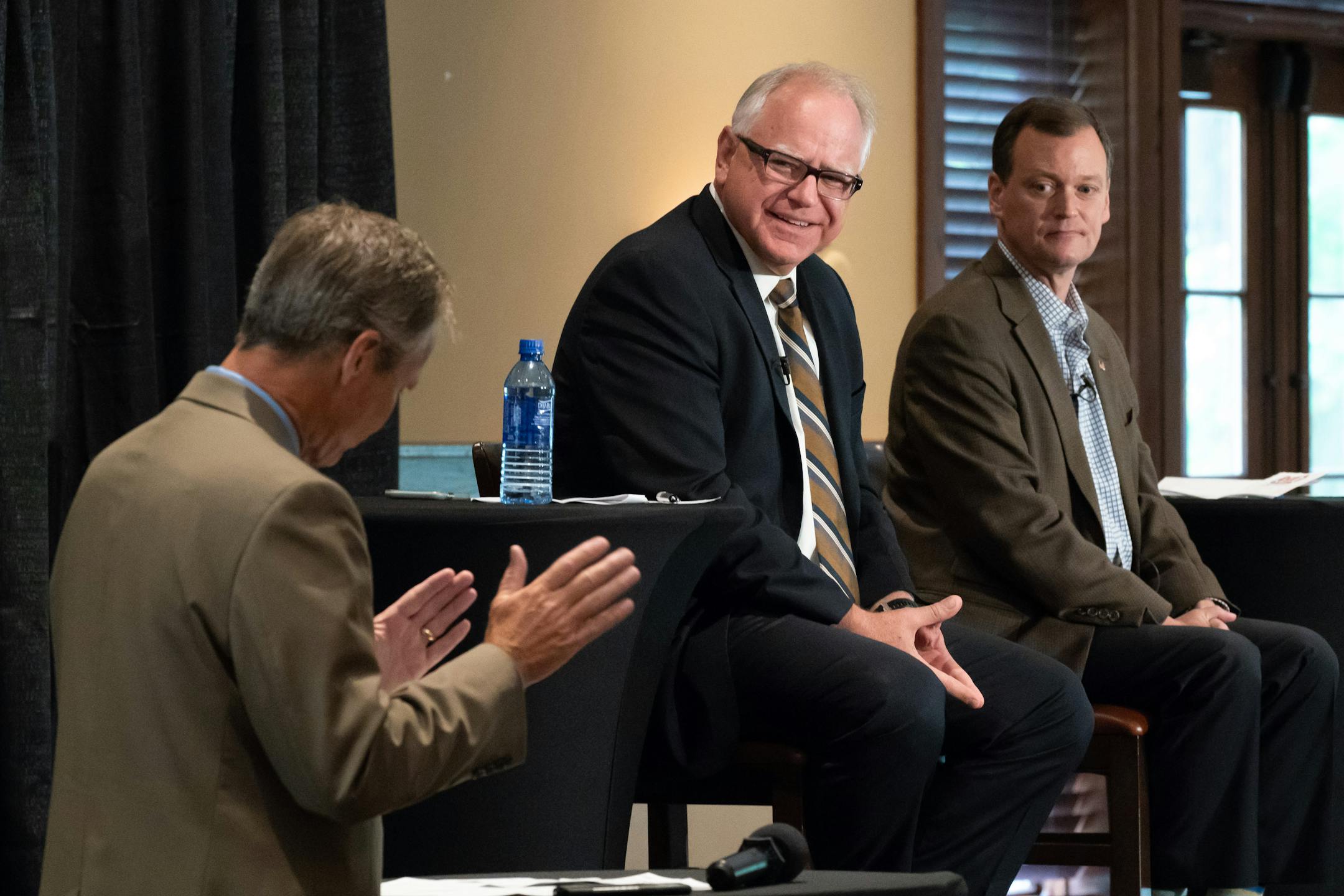
Tim Walz and Jeff Johnson, then-candidates for governor, debate at Grand View Lodge in Nisswa in August 2018. (Glen Stubbe/The Minnesota Star Tribune)

Baggage as a tradeoff

Garofalo said there are tradeoffs to political continuity.

“If you want fresh ideas, fresh energy, greater participation, then you don’t want to have a political machine or a political dynasty,” he said. “On the other hand, if you have the same person in office, you can just look to the past and know what you’re going to get in the future.”

Bakk said anyone urging Walz to run to avoid internal DFL infighting for a nomination is “not taking a long enough view of things.”

He said Democrats should be thinking about the best candidate to win in the general election, and that Walz will have baggage like fraud scandals and a looming budget deficit heading into the 2026 election.

“You’ve got to have a pretty compelling reason” for running again, Bakk said. “An agenda that you haven’t finished. I just don’t know what that’s going to be.”

In his 2016 book, Rybak wrote that winning a third term is “notoriously hard,” in part because “the bad calls start to pile up and the list of people mad at you keeps growing.”

Maye Quade said stability may feel good to some voters, but not to others.

“We are in a change era, whether we feel good about that or not,” she said.

Sydney Kashiwagi of the Minnesota Star Tribune contributed to this story.

about the writer

about the writer

Walker Orenstein

Reporter

Walker Orenstein covers energy, natural resources and sustainability for the Star Tribune. Before that, he was a reporter at MinnPost and at news outlets in Washington state.

See Moreicon

More from Politics

See More
card image
Dreamstime/TNS

The Supreme Court agreed on Friday to take up the constitutionality of President Donald Trump's order on birthright citizenship declaring that children born to parents who are in the United States illegally or temporarily are not American citizens.

Nancy Ingham gives newborn Sophia Rash a hepatitis B shot several hours after she was born, Jan. 17, 2006.
card image