

Opinion editor’s note: Strib Voices publishes a mix of guest commentaries online and in print each day. To contribute, click here.
•••
The “fraud” that internet influencer Nick Shirley thinks he exposed in the Minnesota child care system is a myth that does not and could not exist in real life. Shirley and much of the reporting that followed his childish video has resulted in dramatic raids and horrifying death threats toward providers, but it confuses two entirely different federal programs: the Child Nutrition Program (also commonly known as the school lunch program) and the Child Care Assistance Program (CCAP).
The Child Nutrition Program is funded by the U.S. Department of Agriculture and administered by state departments of education like the Minnesota Department of Education (MDE). This program operates to provide lunch and in many cases breakfast to schoolchildren from low-income households. Many thousands of such children in Minnesota have relied on the program for decades to stave off hunger by providing one or two meals per day without cost to the children or their families.
During COVID lockdowns, schools were closed and needy children reliant on free meals lost a vital source of nutrition. In response, the federal government authorized the MDE to expand nutrition providers far beyond school districts to include nonprofits and even for-profit restaurants providing food to any children (and their families) that showed up to collect it. For reasons that are easily understandable in the midst of a pandemic, food recipients did not have to apply for the program at all, let alone verify their identities or document their need.
A 2024 legislative auditor’s report documents in excruciating detail how lax MDE oversight allowed the nonprofit Feeding Our Future, led by Aimee Bock, to exploit this wide-open system to create, promote, recruit and proliferate scam operations in which the children to whom they claimed to serve hundreds of thousands of meals simply didn’t exist. The result has been dozens of indictments culminating in dozens of criminal convictions. While almost all of those criminally charged (so far) have been East African, Feeding Our Future’s leader and the architect of the entire scheme — Bock — is a white woman.
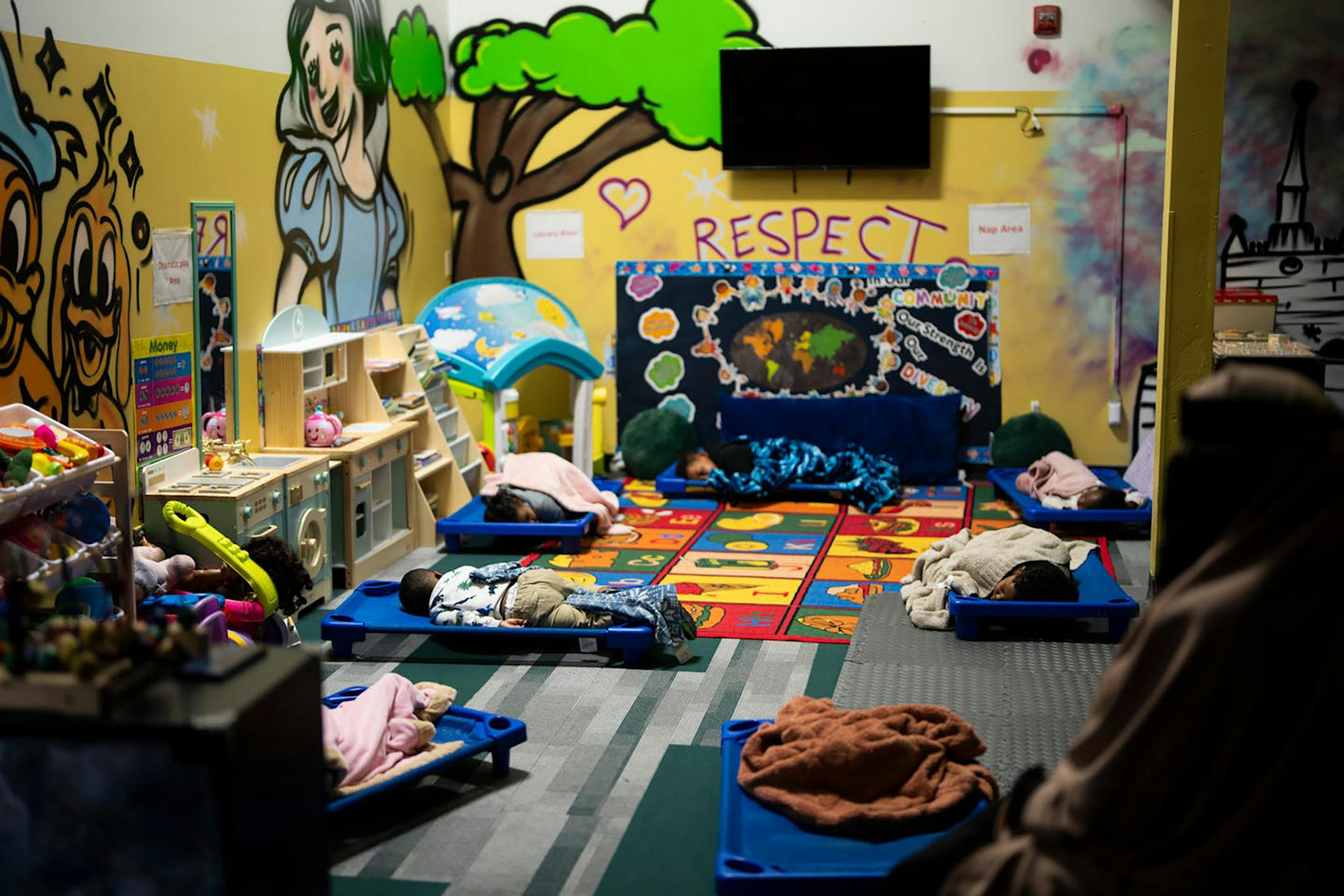
The fraud model of Feeding Our Future that Shirley assumed doesn’t transfer to child care because the CCAP program works differently in ways that make it impossible for “fake day cares” to exist. CCAP funds are provided by the federal Department of Health and Human Services and are administered by the Minnesota Department of Children, Youth, and Families (DCYF). Rather than being accessed by day care providers directly, CCAP funds must be applied for by parents, who have to provide documentation to county DCYF agencies of their children’s identities and ages and of their particular needs for child-care services in light of the parent’s employment schedule. Once a CCAP authorization is approved, the parents take the CCAP authorization to a licensed day care provider, who is then permitted to bill DCYF up to the amount of the CCAP authorization for day care services they actually provide to the parent’s children. Day care providers are required to maintain detailed attendance records, which are spot-checked during annual (sometimes semiannual) visits from DCYF inspectors. Day care providers must also meet detailed health and safety requirements in order to keep their licenses.
Day care providers that fail to keep complete and accurate attendance records can and frequently are barred from receiving CCAP funds, and some day care providers have been criminally charged for fraud based on allegations that they exaggerated attendance numbers. DCYF investigators also visit each licensed day care at least annually to ensure compliance with health and safety requirements.


